4.23.12 And then it rained

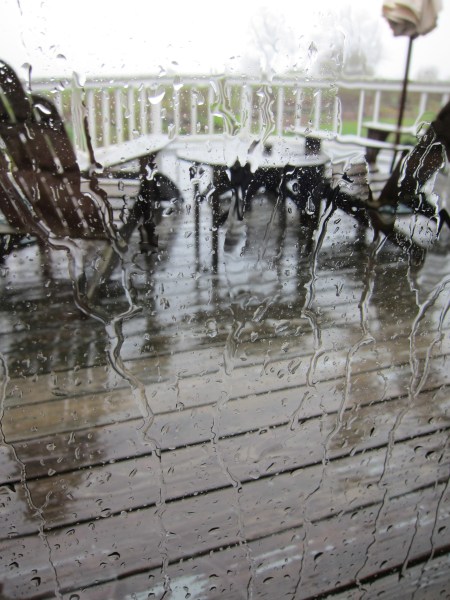
The sound of last night’s rainstorm lashing the house made it sound like an all-night carwash. By morning, it was still coming down so hard, water was running off the house in heavy sheets.

The storm tapered off by midday, leaving at least 4 inches of much needed rainfall, a good soaking amount. Such is the power of washing the windows to bring on rain.

Posted in garden | 4 Comments

4.22.12 Garden in transition

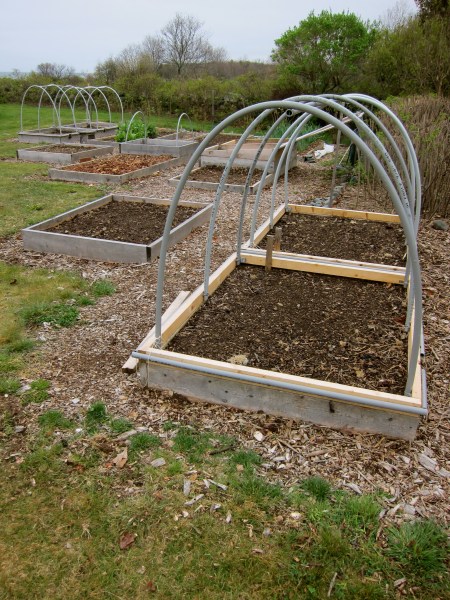
The winter covers have been pulled off, the fencing put back up, and the raised beds ready for another season.

The overwintered chard and kales are thriving, providing plenty of greens.

There wasn’t much left of the chard as we entered winter but, left alone, grew back.

The garlic is twice as tall as compared to this time last year.

A new generation of kale, chard, lettuce and arugula.

 While inside, Lane’s companion marigolds, newly transplanted, remain under grow lights alongside pomodorini, fennel, leeks and celeriac seedlings.

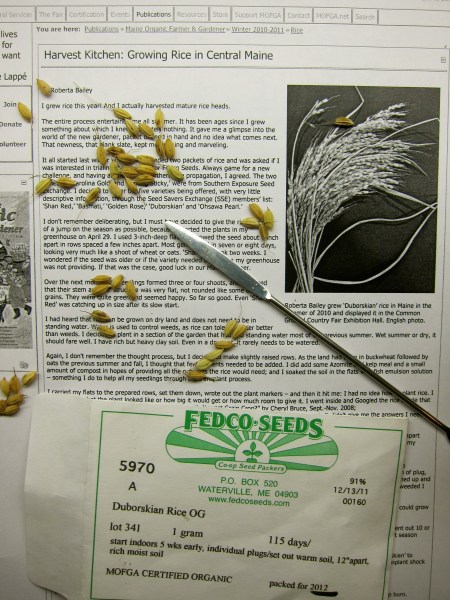
We also started some Duborskian rice, a dry land variety and one of this year’s experiments. Link to article: Harvest Kitchen: Growing Rice in Central Maine.

Posted in garden | Tagged , , , , | 22 Comments

4.22.12 Cellar onions and a lone tomato

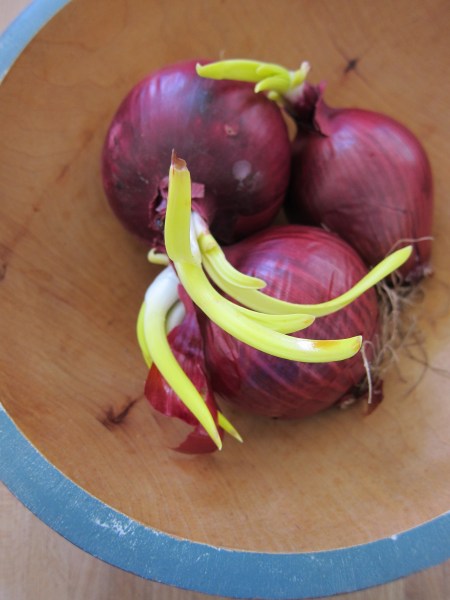
We took advantage of the rainy day by cleaning out the root cellar. Unseasonal warmth has shortened their storage life, and the sprouting onions and potatoes were consigned to compost. Though also beginning to sprout, we’ve still lots of usable garlic left.

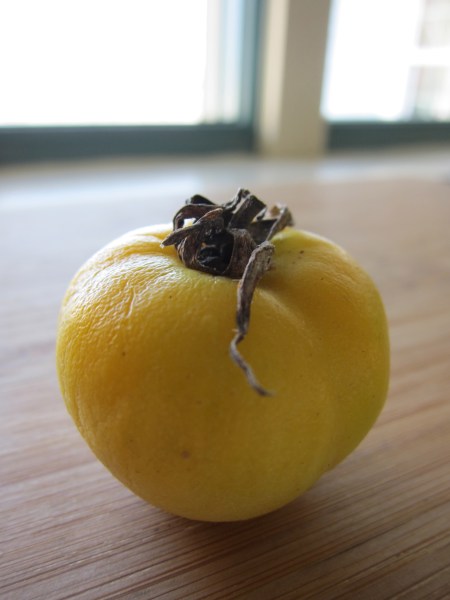
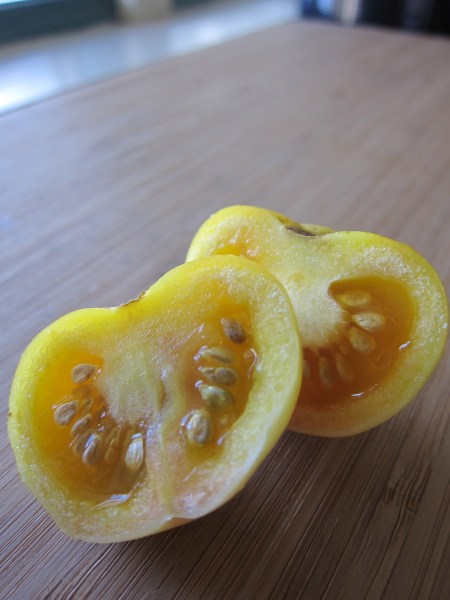
We found one lone Ponderosa tomato left in storage, a little wrinkly but looking surprisingly viable.

Sliced open, it was still moist and juicy inside. Tastewise, it was a little green, most likely from being picked too early last fall than being in storage.

Posted in garden, tomatoes / pomodorini | Tagged , , , | 6 Comments

4.19.12 Apple, quince, and fritillaria

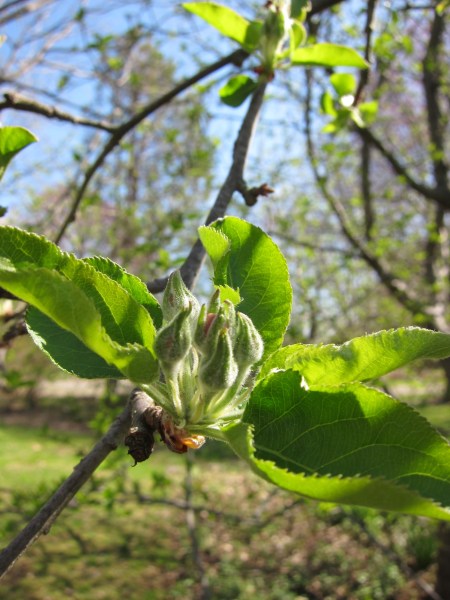
After fearing frost damage, it’s a relief to see the apple tree finally flowering, though it’s the first time we’ve realized that the leaves precede the buds.

We inherited several flowering quinces when we moved here,  just some of the previous owners’ collection of many thorny plants. After multiple transplantings, this one seems to have become established enough to promise harvestable fruit.

In a neglected patch outside of my studio, a fritillaria appeared one year, and every spring thereafter we wait for it to reemerge. What started out as a single bulb has ever so slowly increased in number.

Posted in garden | 4 Comments

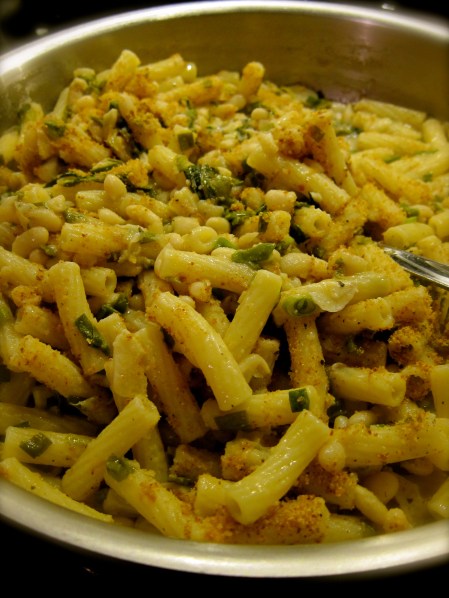
Maccheroni with White Beans, Dandelion Greens and Anchovy

“The question is not what you look at, but what you see.”
— Thoreau

We’re at the far edge of what farmers call the “the hungry gap,” the time in April when winter stores are waning and before we can depend on the new season’s growth. Foraging in our own backyard helps us to bridge that lack — where others may see invasive weeds, we’re discovering the potential opportunity for finding food.

Dandelions are among the easiest to begin foraging with. With their distinctive notched leaves, familiar sunny faces, and flyaway seeds, most of us learn to identify them early on and without much thought. Choose leaves while they’re still young and tender, before the heads have blossomed and their bite becomes bitter. Combined with fistfuls of the long, green stalks of Egyptian onions, they lend a tonic brightness to this classic combination of pasta and beans. Evenings here still hover in the low 40’s, and this dish provides both warmth against spring’s chill, and a hint of the good things to come.

The beans in this dish form a creamy sauce and serves as a base to a wide range of seasonal flavors; I’m already imagining this combined with walnut sage pesto once the sage plants return. The anchovies help to tame bitter greens, use a milder green if omitting their saline presence. Breadcrumbs toasted with olive oil add a pleasing crunch, more can be served alongside. As always, amounts are adjustable to taste or what you have on hand.

Maccheroni with White Beans, Dandelion Greens and Anchovies

1/4 cup extra-virgin olive oil
2 garlic cloves, thinly sliced
3 anchovy fillets
Large pinch of dried hot pepper flakes
1 cup dry white wine
1/2 cup water
2 cups cooked cannellini beans (white kidney beans)
1 bunch dandelion leaves
2 bunches of green onions
Sea salt
1 pound maccheroni (macaroni, or elbow pasta) or penne, ziti or rigatoni
3/4 cup grated Parmigiano-Reggiano cheese
Coarsely ground black pepper
Toasted bread crumbs

– Heat the oil  in a large deep skillet set over medium heat, add garlic, and cook until lightly browned, about 2 minutes. Add anchovies and pepper flakes, and stir with a wooden spoon to dissolve the anchovies. Add the white wine and water, and bring to a boil. Reduce the liquid slightly, then slide in the white beans. Once the beans come back to a simmer, crush 1/3 of the beans in the pan with the back of a spoon or with a masher, forming a creamy sauce.

– Stir in  greens, 1 teaspoon salt, and more water if pan is too dry. Continue to cook until the greens are tender. While greens are cooking, cook pasta in boiling, salted water until al dente (cooked through, but still firm when you bite). Drain pasta, add to greens mixture, and toss. If necessary, add pasta water to loosen sauce. Season generously with pepper and more salt, if desired. Finish with some good olive oil, and serve with breadcrumbs toasted in olive oil.

Recipe adapted from “Olives & Oranges: Recipes & Flavor Secrets from Italy, Spain, Cyprus & Beyond” by Sara Jenkins and Mindy Fox.

Local ingredients: Cannellini beans from Meadow’s Mirth; greens and garlic from the garden.

Posted in cooking | Tagged , , | 4 Comments

4.19.12 Provoking the weather gods

We had snow, we had hail, we had heat. What we haven’t had much is rain. It’s time to wash the windows and bring it on.

Posted in garden, tomatoes / pomodorini | 8 Comments

Flaky Cara Cara Orange Tart

I have a small Meyer lemon tree that is trundled outdoors when the weather warms up. Other than that, there’s not much citrus to be found growing around these parts. To help us stave off what I call locavore scurvy, there are many alternative sources for vitamin C — Brussels sprouts, kale, winter radishes, peppers, rhubarb, and strawberries, to name a few. However, none match the juicy, sweet acidic punch of fresh citrus. Like those oranges stuffed into the toes of Christmas stockings, they’re a precious treat.
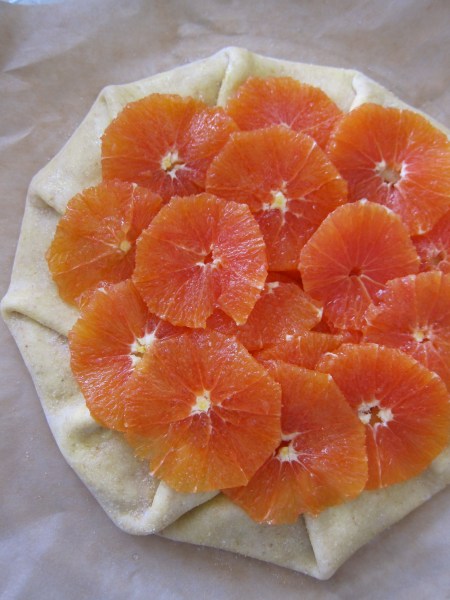
I mostly watch movies for the small details, and saw Cold Comfort Farm for the second time recently. In it, there’s a scene where Flora, a city girl living in the country, enters a village tea shop and orders a simple bowl of oranges with sugar on top. With that image in mind, I came upon this appealing tart via Smitten Kitchen, which features oranges in a suitably extravagant way. The original recipe calls for blood oranges, pinkish red Cara Cara ones were all I could find and worked well as a substitute, as would any navel-type orange.

I thought I could skip the salted caramel sauce but one bite of the finished tart told me otherwise. The round, milky notes of  the caramel are there for balance, and harmonize with the bright tartness of the oranges. In its place, fortunately, we had not one, but two jars of dulce de leche on hand to serve with the tart. Many thanks to Ana Maria for the gift from Argentina, and to Mary for your home-made version — once the tart was gone, we were consoled by spoonfuls of dulce de leche scooped straight from the jars.

Other than the type of orange, my version of this tart didn’t stray much. I substituted some of the flour for 1/2 cup of local whole wheat pastry flour, and, rather than refrigerating beforehand, filled the tart directly after rolling out. Make sure to allow enough time to set the tart by freezing before baking, at least 4 hours, overnight is even better. The tart will seep slightly while in the oven and, to contain the juices, I baked it on a parchment-lined round pizza tin. The slightly raised edges of the pan are enough to rein in the juices, yet still be able to slide the tart off later. I used 8 of the 10 oranges, which left 2 extra — one for a bowl of oranges with sugar on top while I waited for the tart to bake, the other set aside for the orioles sure to arrive soon.

Flaky Cara Cara Orange Tart

1 cup all-purpose flour, plus more for dusting
1/4 cup plus 2 tablespoons granulated sugar
1/4 teaspoon baking powder
1/4 teaspoon salt
1 stick (4 ounces) plus 1 tablespoon unsalted butter, the stick cut into 1/2-inch pieces and chilled
3 tablespoons ice water
8 to 10 Cara Cara or blood oranges (about 5 ounces each)
1 large egg yolk mixed with 2 tablespoons of water
Salted Caramel Sauce or Dulce de Leche

– In a food processor, pulse the 1 cup of flour with 2 tablespoons of the sugar and the baking powder and salt. Add the stick of cold butter and pulse several times, just until it is the size of peas. Sprinkle the dough with the ice water and pulse just until moistened crumbs form. Turn the crumbs out onto a work surface, knead once or twice and pat the pastry into a disk. Place the pastry in a container, cover and chill for 30 minutes.

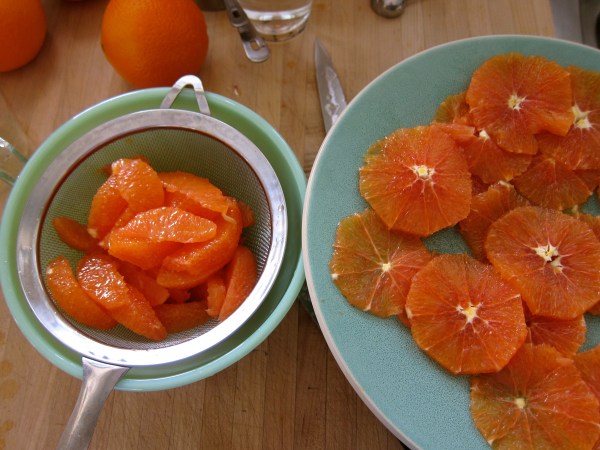
– Meanwhile, peel the oranges, removing all of the bitter white pith. Thinly slice 2 of the oranges crosswise; remove the pits. Transfer the orange slices to a plate. Working over a sieve set over a bowl, cut in between the membranes of the remaining oranges, releasing the sections into the sieve. Remove the pits and gently shake out as much juice as possible without mashing the sections; you will need 1 cup of sections. Reserve the orange juice for another use.

– On a floured work surface, roll out the pastry to an 11-inch round, about 1/4 inch thick. Transfer the pastry to a parchment paper–lined flat baking sheet. Arrange the orange sections on the pastry, leaving a 2-inch border all around. Sprinkle 2 tablespoons of the sugar over the oranges. Using a paring knife, thinly slice the remaining 1 tablespoon of butter over the oranges. Fold up the pastry over the oranges, leaving most of the oranges uncovered. Brush the pastry with the egg wash and sprinkle lightly with 1 tablespoon of the sugar. Arrange the orange slices on top, leaving a 1-inch border of pastry all around. Sprinkle the remaining 1 tablespoon of sugar on top. Freeze the tart until solid, at least 4 hours or preferably overnight.

– Heat the oven to 375° and position a rack in the center. Place a baking sheet on the rack below to catch any drips. Bake the tart directly from the freezer for 1 hour and 15 minutes, until the fruit is bubbling and the pastry is deeply browned. Transfer the cookie sheet to a rack and let the tart cool for 30 minutes. Carefully slide the parchment paper onto the rack and let the tart cool completely. Serve with the caramel sauce on the side.

Note: Unbaked tart may be wrapped and frozen for up to 2 weeks.

Recipe adapted from Zoe Nathan for Food and Wine.

Local ingredients: Whole wheat pastry flour and butter from Brookford Farm; eggs from Yellow House Farm; Mary’s dulce de leche made from Brookford Farm milk.

Posted in cooking | Tagged , | 4 Comments