

It’s the first week in February, and the witch hazel next to the library is flowering.

Witch hazel is usually the first to bloom, but it does seem earlier than usual.
It’s the first week in February, and the witch hazel next to the library is flowering.
Witch hazel is usually the first to bloom, but it does seem earlier than usual.

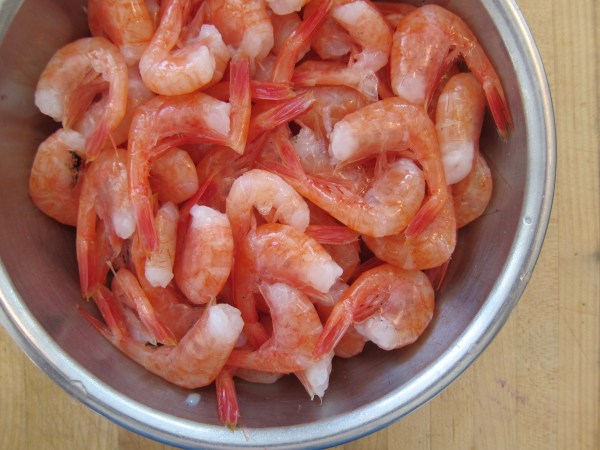
One of our favorite ways of having sweet, Northern shrimp is in a soupy braise with Bok Choy. This is more of a homestyle dish, the one we turn to often when we want something comforting yet light. With a supply of shrimp ready in the freezer, it can be put together quickly and served over steamed rice for a nourishing meal any time of the week.
The Bok Choy we brought home from the Winter Farmers’ Market was amended by the Tatsoi salvaged from the garden for a mix of the two. It could be due to the slight peppery bite of Asian greens, but this dish seems especially suited to them — Komatsuna, Napa cabbage, or Hon Tsai Tai — anything leafy with a crunchy stem will also do, and is an easy way to try out an unfamiliar green.
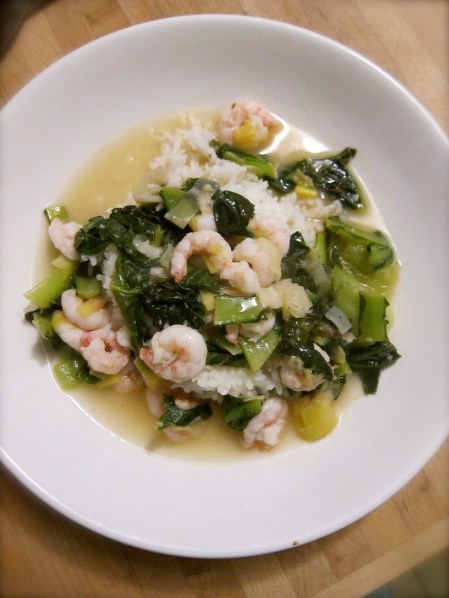
Northern Shrimp with Bok Choy
Cooking oil (peanut or sunflower)
1 onion, chopped (or a couple of leeks)
1 – 2 garlic cloves, minced
Pinch of red pepper flakes
1 knob of ginger, minced
1 cup white wine
1 cup of shrimp stock or clam broth
1 head Bok Choy (or 3 small-sized), cut into 1 inch pieces and washed
1 pound peeled northern shrimp
Scallions, chopped
Sesame oil
Sea salt and black pepper
– In a saute pan, fry the onion in cooking oil until translucent. Stir in the garlic, red pepper flakes and ginger, and cook briefly until aromatic. Deglaze with white wine, add the stock and bring to a boil.
– Add the Bok Choy, cover, and let simmer until the Bok Choy is barely cooked. Uncover, stir in the shrimp, and continue to simmer until the shrimp are tender and are beginning to become opaque. Season to taste with sesame oil, salt and pepper; garnish with chopped scallions and serve with juices over steamed rice.
Note: The shrimp will release their liquid as they cook. If you like it less soupy, decrease the amount of stock and wine.
Local ingredients: Henry’s sunflower oil from Bull Ridge Farm; ginger from Wild Miller Gardens; northern shrimp from the F/V Rimrack; Bok Choy from Hollister Family Farm; scallions from Riverside Farm; sea salt from Maine Sea Salt; Tatsoi, leeks, and garlic from the garden.
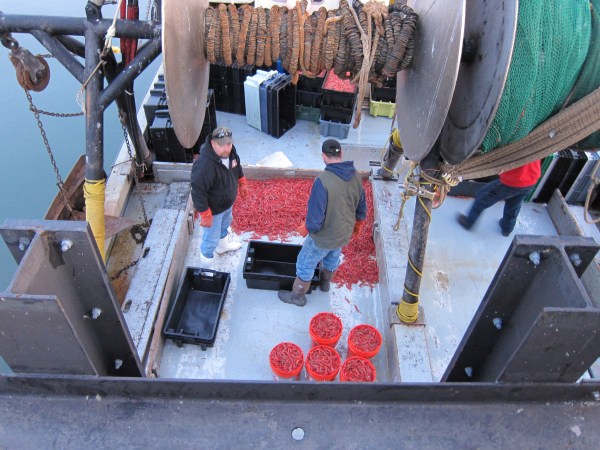
We made another trip down to Rye Harbor to pick up a second bucket of northern shrimp from the F/V Rimrack. The lengthening days gave us a chance to visit the dock while it’s still light out.
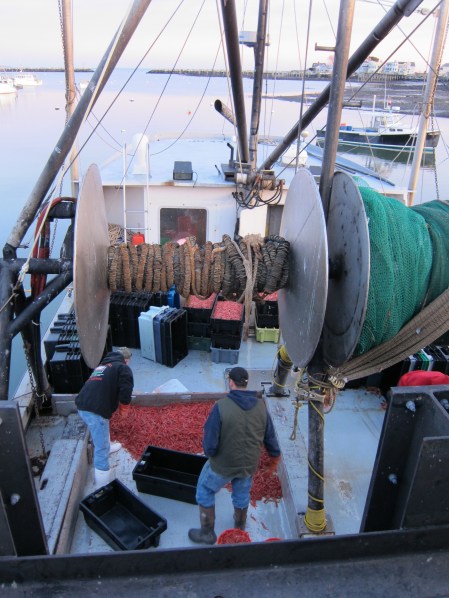
They expect the season to last through most of February. By now, most of the shrimp have dropped their eggs, and shrimp quality and size are now at their best.
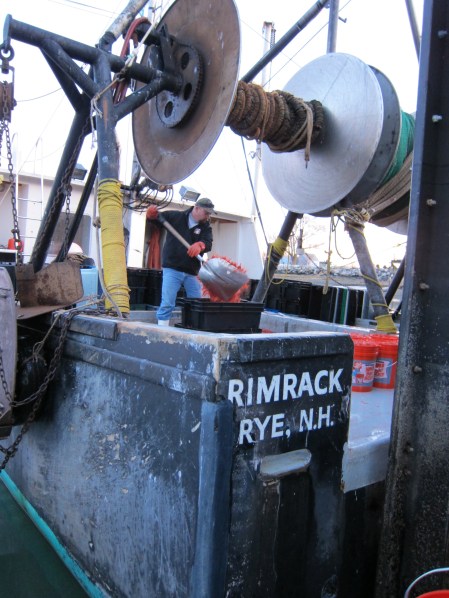
We froze a portion of the shrimp with the heads removed and shells left on. We’ll see if this makes any difference in preserving taste, mostly we’re interested in having the shells later when the recipe calls for stock.

For a glimpse of local food in deep winter here in Seacoast New Hampshire >
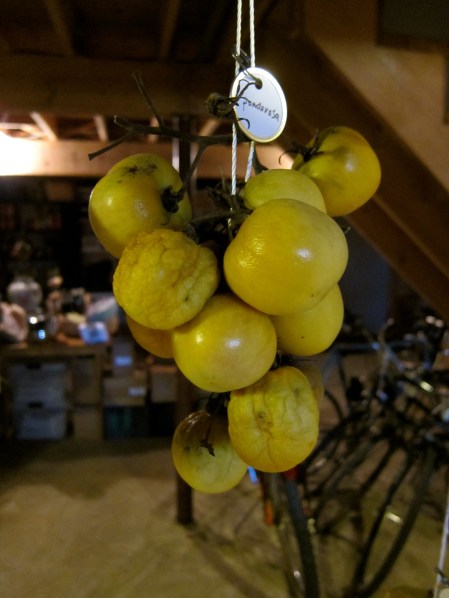
We have five small bunches of pomodorini, or hanging tomatoes, remaining in basement storage. Two of them are made up of Aprile tomatoes and three of Ponderosas, all harvested on September 16th. Pomodorini should be stored at their peak, however, the threat of last fall’s Tropical Storm Irene compelled us to bring them in early. Given the choice, we would have left them on the vine longer to ripen. They’ve been hanging in storage for almost 4½ months now and are slowly losing moisture, with some succumbing altogether.
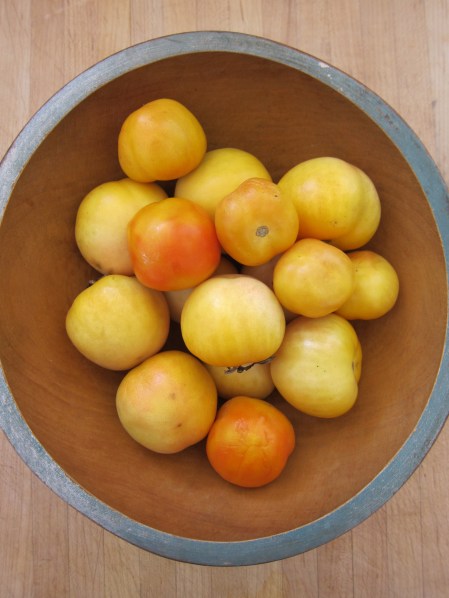
Once picked through and brought up from the basement into the light of day, their prospect brightens. The larger, yellow ones are Ponderosas, the smaller red ones are Aprile, and are all similar in size to a cherry tomato.

Though they were harvested too early, we cut a few open and found them surprisingly viable. Pomodorini aren’t meant to take the place of a ripe, summer tomato. Instead, they add a bit of welcome freshness during the winter months. These pomodorini ended up sauteed, then slid in with some scrambled eggs for a sunny mid-winter breakfast.
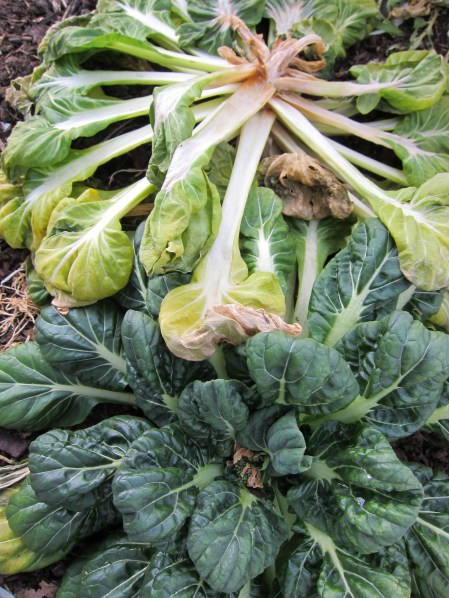
Temperatures have been bouncing between below freezing and, at times, almost 50°F. With a January thaw upon us, we checked the covered beds in hopes of having something to harvest. These were the last two tatsoi, one clearly too far gone. On closer inspection, the sturdier one had begun to rot at the stem end, most likely due to cell damage from the extreme cold, but still offered much that was edible.
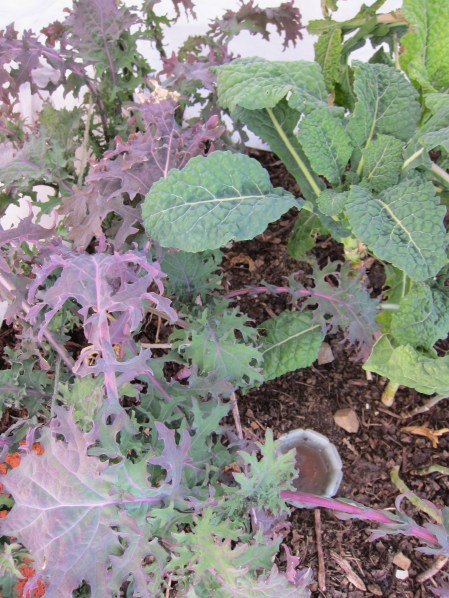
The Russian, Lacinato and Siberian kales are not only hanging on, but even show new growth coming in.

As does the Swiss chard, which is proving to be the hardier than the Rainbow chard. With February just around the corner, the days are noticeably longer and the plants that have survived thus far are beginning to respond to the additional sunlight.

We also harvested about a third of the winter carrots and a couple of leeks. The carrots are the Nantes variety, and at this point have taken on an ethereal sweetness and crunch. The bed of King Seig leeks have an extra covering of leaf mulch, yet it’s difficult to tell if their survival is due to their hardy nature or the mild winter.
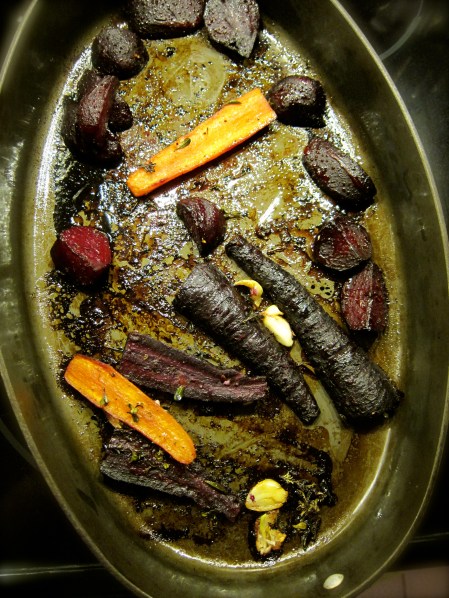 Carrots and beets, such winter stalwarts but it never occurred to me to combine them before. The problem lies in how beets bleed, leaving everything they touch magenta pink. This recipe from one of my favorite of Jaime Oliver’s cookbooks, Jaime at Home, offers a resolution by parboiling them separately. Ordinarily, I would find this fussy, but had a mix of purple and regular carrots as well as beets on hand, and couldn’t resist giving it a go. The real reason? Descriptions such as, “…they should be nice and sticky by now.”

As for the pork chops, look for something raised locally, a good way to ensure a nice rim of fat. Then score it so it’ll crisp up into crackly edges, and be patient when it’s done. The extra time spent resting the meat will be well-rewarded. The acidic note of the citrus is key to balancing the candy-like sweetness of the roasted vegetables, and provides a counterpoint to the well-seasoned meat. The lemon and orange may not be local but I like to think it’s at least in season someplace sunny and warm.
Roasted Carrots and Beets with the Juiciest Pork Chops
Local ingredients: Pastured pork chops from New Roots Farm; purple carrots from White Gate Farm; storage beets and carrots, garlic, and dried herbs from the garden.

 Diary of a Tomato