

These are some things we may have seen the last of.

While others are still hanging in.

And then there are those still going strong.
These are some things we may have seen the last of.
While others are still hanging in.
And then there are those still going strong.
Farm to table sourcing, nose to tail cookery. We hear these phrases often, but it took on a very real meaning when I attended a recent demonstration on butchering a whole pig. The workshop was sponsored by the Seacoast chapter of Chefs Collaborative. Under the leadership of Evan Mallett of Black Trumpet Bistro, this local initiative seeks to further educate chefs on sustainable food choices. In terms of sourcing local meat, this often entails knowledge on the part of the chef regarding whole animal butchery — how to break it down into primals, cut it into usable portions, and utilizing the lesser known parts for full use of the animal.
Meadow’s Mirth provided the woodland-raised Tamworth-Cross pig, which arrived from Adams Farm Slaughterhouse neatly halved. John “Popper” Medlin of Popper’s at the Mill and Popper’s Artisanal Meats, aided by his sous chef, Alex Thomas, demonstrated the craft on one of the halves. The other side was ably taken over by Ted McCormack of Blue Moon Evolution, Rob Martin of The Oaks, and Rob Booz, the Network Coordinator of Chefs Collaborative. Jay Curcio of The White Apron graciously welcomed the lot of us to his ample space and hosted the demonstration. As for the pig, it became a feature of this year’s Heirloom Harvest Barn Dinner, returning from whence it came and appearing in every course, farm to table, nose to tail.
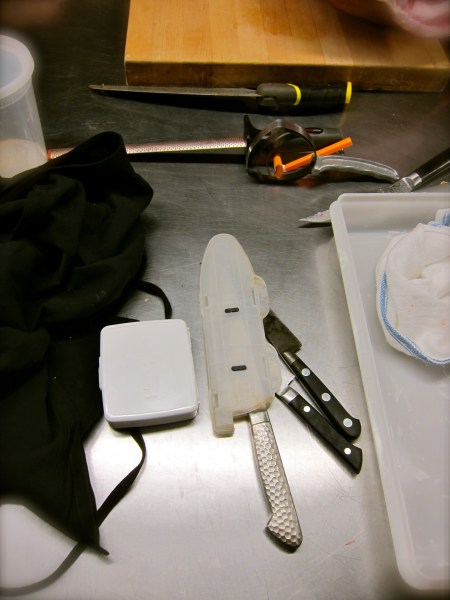
Shown above: Chef Medlin’s tools of the trade. To see more >
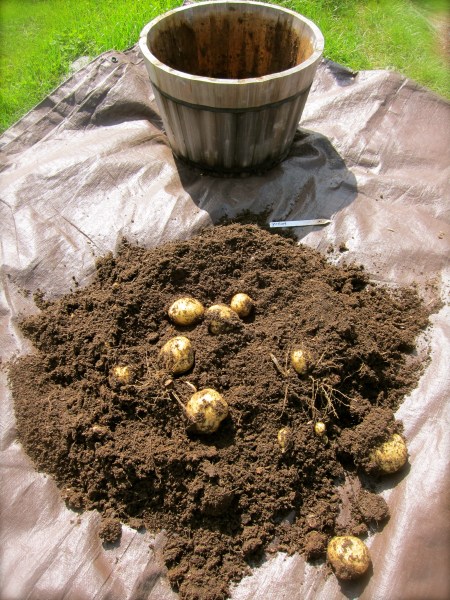
One of the challenges of growing potatoes in our home garden is having enough space to accommodate their needs. It’s recommended that they be planted no more than once within three seasons to avoid soil borne diseases, and shouldn’t be rotated with strawberries, tomatoes, legumes (beans or peas), since these crops can be infected with some of the same diseases that infect potatoes. Harvesting potatoes from raised beds adds another difficulty.
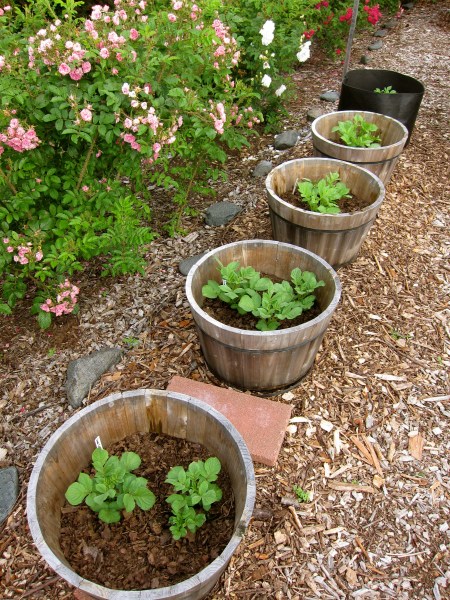
We were intrigued by Liz’s approach at Suburban Tomato, and started experimenting last year with growing potatoes in containers. Our first attempt yielded a meager crop, however, the ease of hilling and harvesting made it worth trying again. Armed with what we learned from last season, we set up five containers and planted them with two varieties of potatoes — Yukon Gold and Red Cloud — from Wood Prairie Farm, a small organic family farm in Maine that’s also been involved in challenging Monsanto.
The first year of using wooden containers, we placed gravel at the bottom to aid drainage, then found it difficult to separate the gravel from the used soil after harvesting. Now, in place of the gravel, all of the wooden containers have drainage holes drilled through their bottoms. The seed potatoes were green-sprouted before planting by leaving them in the basement with access to light. They are then placed whole and uncut on top of 2 inches of soil in each container, then covered with an additional 3 inches of soil. The potato plants were hilled up with a dirt-compost mix; we’ve found straw too damp, while mulch attracted mice and voles. At the end of harvest, the soil is marked to keep it from being reused in beds where nightshades are being grown.
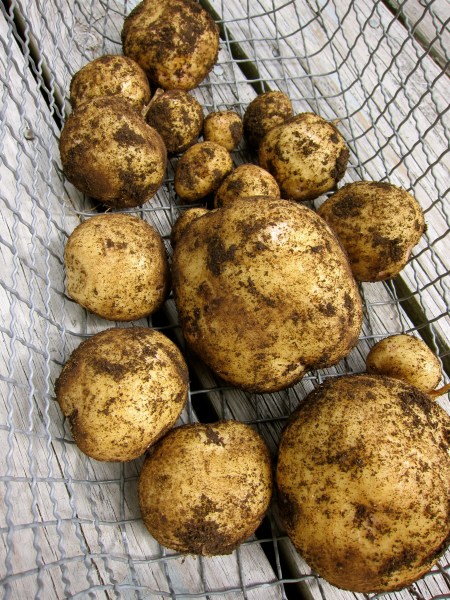
Caution: extreme garden geekery ahead. Two of the Yukon Gold seed potatoes were planted in each of three containers — one wooden and raised on bricks; another wooden and placed directly on the ground; and the third a fabric container that we purchased at the same time as the seed potatoes. The first container — wooden and raised on bricks — yielded a total of 3 lb. 6 oz. Yukon Golds, or 1 lb. 11 oz. per seed (shown above).
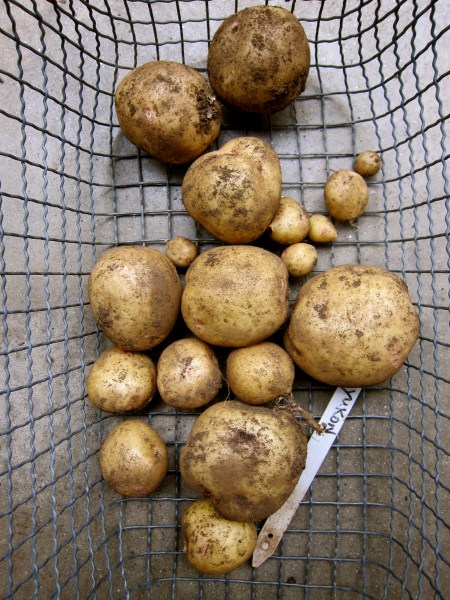
The second container — wooden and placed directly on the ground — yielded 4 lb. 2 oz. of Yukon Golds, or 2 lb. 1 oz. per seed. In addition to a higher yield, the soil was filled with earthworm activity. In comparison, the raised containers seemed to drain too quickly, while the other containers seemed to benefit from being placed directly on the ground, affording them a more even moisture level by capillary action.

The third container — fabric placed directly on the ground — yielded 5 lbs. 4 oz. of Yukon Golds. This higher yield may be due to the fact that the fabric container was larger than the wooden ones. The fabric kept the soil moist but also was a barrier to earthworms.
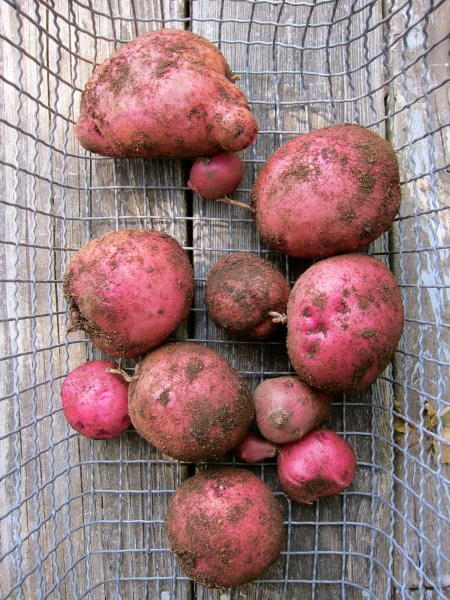
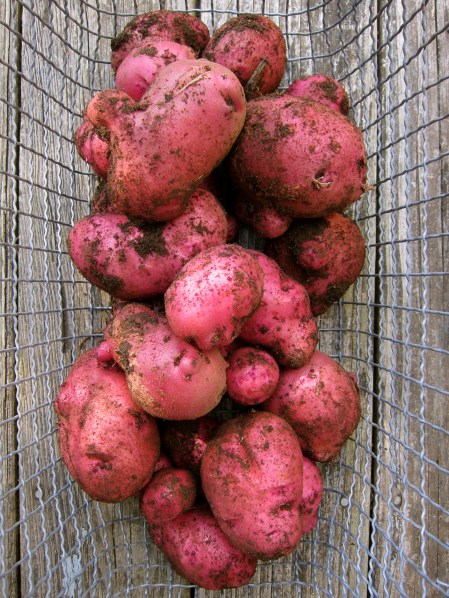
The last two containers, both wooden, were planted with Red Cloud. The raised container yielded 3 lb. 11 oz., or 1 lb. 13.5 oz. per seed potato (shown above). The container placed directly on the ground (shown below) gave us a whopping 7 lb. 8 oz. of Red Cloud, an unfair advantage as it was planted with three instead of two seed potatoes. When this is accounted for, the yield is still a high of 2 lb. 8 oz. per seed potato.
Summary
1. Yukon Gold, raised wooden container: 3 lb. 6 oz. / 1 lb. 11 oz. per seed
2. Yukon Gold, unraised wooden container: 4 lb. 2 oz. / 2 lb. 1 oz. per seed
3. Yukon Gold, unraised fabric container: 5 lb. 4 oz. / 2 lb. 10 oz. per seed
4. Red Cloud, raised wooden container: 3 lb. 11 oz. / 1 lb. 13.5 oz. per seed
5. Red Cloud, unraised wooden container: 7 lb. 8 oz. / 2 lb. 8 oz. per seed
11 oz. of seed potatoes yielded a total of 23 lb. 15 oz. potatoes. Overall, the containers placed directly on the ground had higher yields than the raised ones, with the Red Clouds slightly higher than the Yukon Golds. This is by no means a definitive trial, but we were surprised by the total amount that we eventually harvested, cause enough to try it again next season.
Note: If you decide to save seed from your own potatoes, this tells of the lovely surprises that await >
The eighth class in the Master Food Preserver Program built on knowledge gained in previous sessions, and introduced us to additional techniques for canning and preserving high acid foods, particularly fruit.
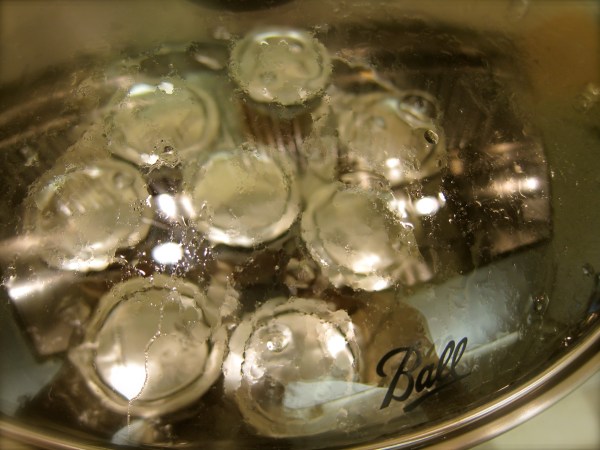
Shown above: The new stainless steel boiling water canner from Ball in use. The clear glass lid makes it easy to monitor the process, and a built-in vent keeps the lid from sputtering as steam builds up underneath.
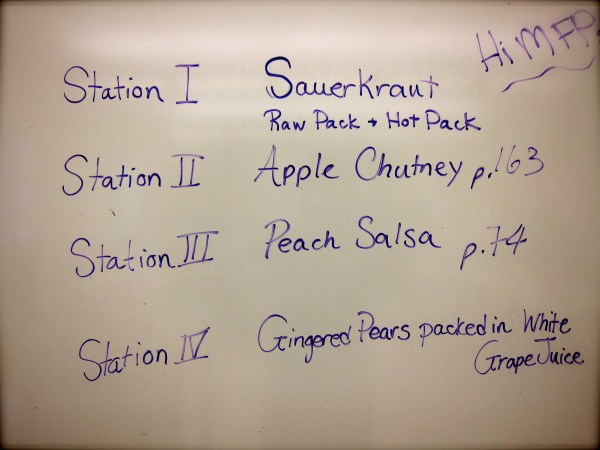
We’ve gone over various ways of freezing fruit, and tonight’s labs focused on a selection of recipes to expand our preserving repertory: Apple Chutney, Peach Salsa, and Gingered Pears. The Sauerkraut we made in the session on pickles and relish was also ready for processing.

It’s been four weeks since we packed this large crock with Sauerkraut. This mix of shredded cabbage and salt was checked 2 to 3 times a week as it fermented, and any scum forming was removed. Fermentation is complete once the bubbling stops, leaving the cabbage tasting both sweet and slightly briny. It was an unexpected treat that evening, sampled just as it was, unadorned and on plain saltine crackers.
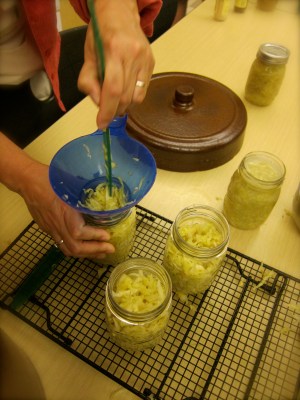
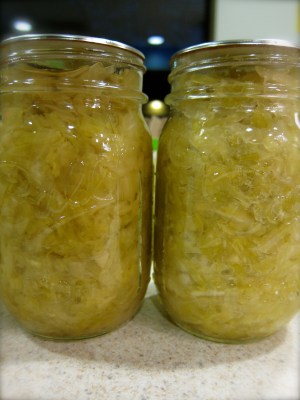
The fully fermented sauerkraut may be kept tightly covered in the refrigerator for several months, or processed in a boiling water canner for longer term storage. We divided the sauerkraut and, to compare the two, processed a batch each of cold and hot packed jars. In the photo above, the hot packed jar is to the left, and the cold packed one to the right. The somewhat brighter color of the cold packed sauerkraut on the right reflects that it was under heat for less total time than the hot packed one.
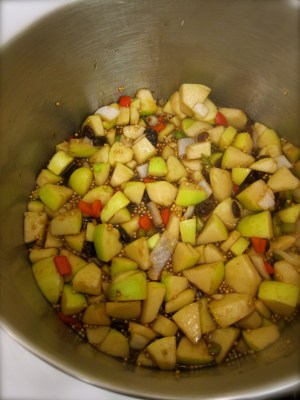
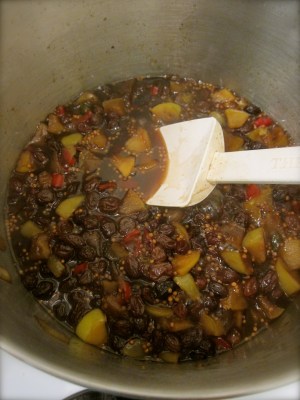
A chutney is a spicy pickled condiment made of fruit and/or vegetables, and vinegar and sugar. Of the evening’s labs, this one for Apple Chutney took the longest time to cook, requiring over an hour to simmer until thick, and necessitating constant stirring to keep from scorching. The two photographs above show how drastically the color changes as it cooks down.
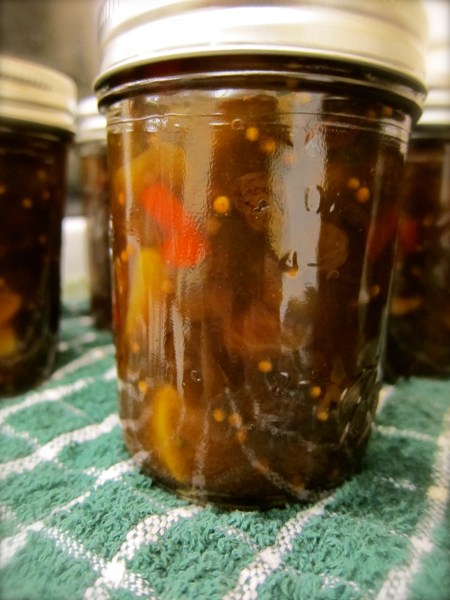
Though the Apple Chutney includes low-acid ingredients such as onion, and sweet bell and hot peppers, the recipe contains enough vinegar to allow it to be canned safely by boiling water bath. I’m imagining this served up with Thanksgiving turkey, then slathered on the leftover turkey sandwiches that are sure to follow.
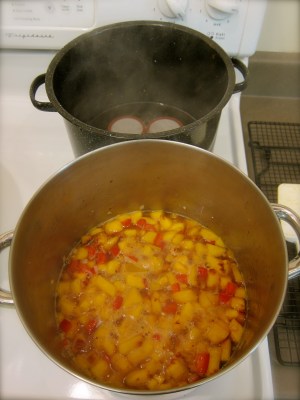

Though we’ve already had a unit on making tomato-based salsas, I was glad to be introduced to this recipe for one based on peaches. Without tomatoes, the sweet peaches balance nicely with the fruity heat of the peppers.
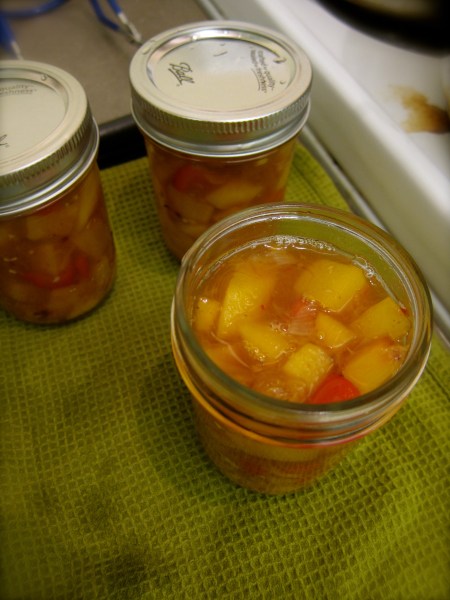
Just follow directions for Mango Salsa, using diced hard, underripe but yellow peaches in place of the mango. This was one recipe I made sure to make as soon as I could and catch what remained of the local peach season.
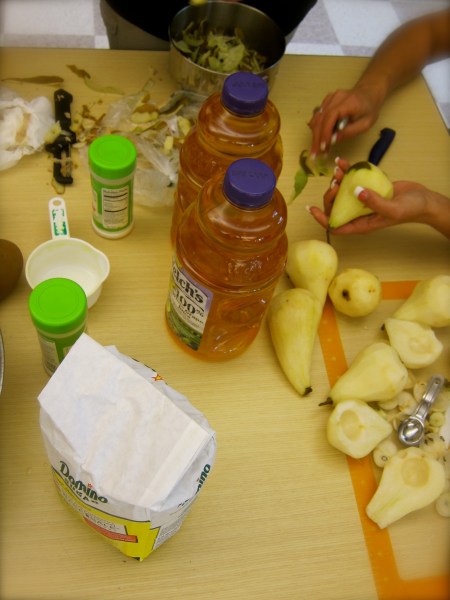
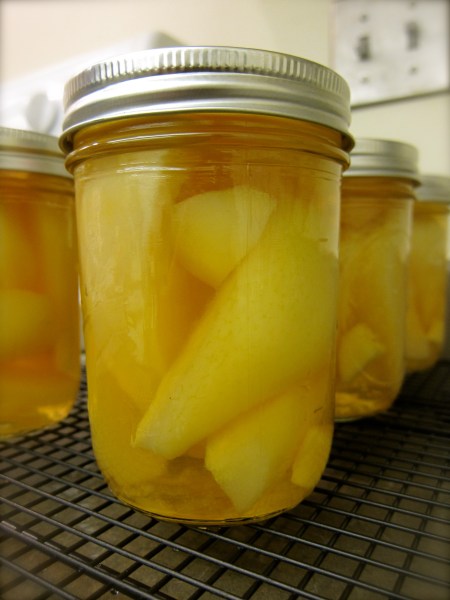
The last lab was on making Gingered Pears. Following the basic directions for canning pears, we used unsweetened apple juice in place of syrup, and a small nugget of peeled ginger added for extra flavor. The apple juice lends a golden hue to the finished jars, and will be wonderful to give for the upcoming holidays. That is, if you can bear to part with any of these beauties.
Recipes & Resources
– Sauerkraut
– Apple Chutney
– Mango or Peach Salsa
– Gingered Pears
– Canning Fruits and Fruit Products
– Selecting, Preparing, and Canning Fruits and Fruit Products
This series of posts follows the Master Food Preserver Program being offered through the University of Maine Cooperative Extension.
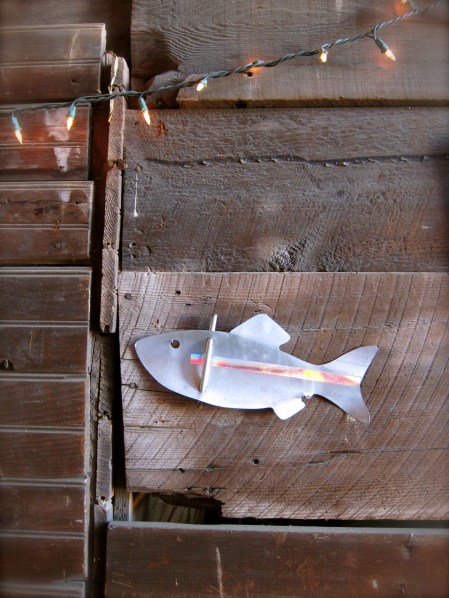
Many people come together to make the Heirloom Harvest Barn Dinner happen. Now in its fourth year, this annual event magically appears for one night, made possible through a collaboration between farmers, fisherfolk, chefs, and numerous volunteers from the our local food community.
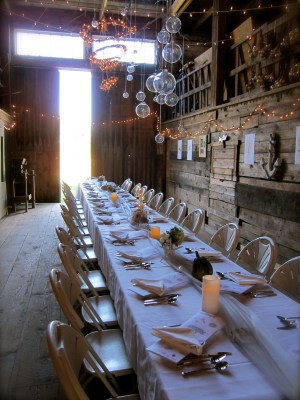

Taking place at Meadow’s Mirth & Berry Hill Farm in Stratham, NH, the working barn is swept clean and transformed. This year’s dinner focused on local seafood, a reflection of our Seacoast setting.
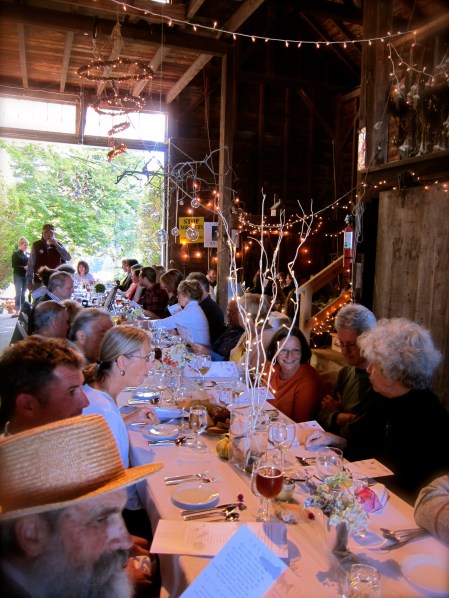
Once the stage is set, everything comes alive with the arrival of new friends and old.
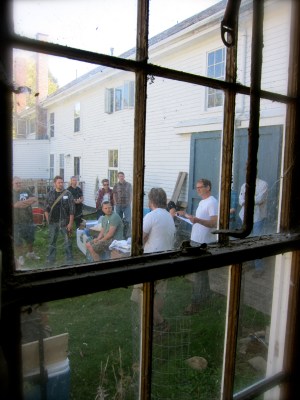
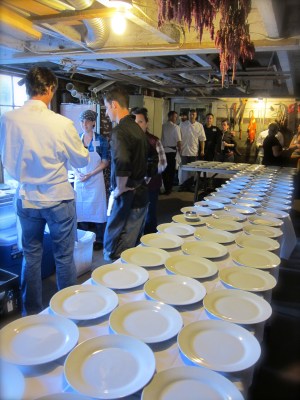
Meanwhile, backstage, a team of chefs gathered from at least 14 different restaurants are being prepped by Chef Evan Mallett for the evening ahead.
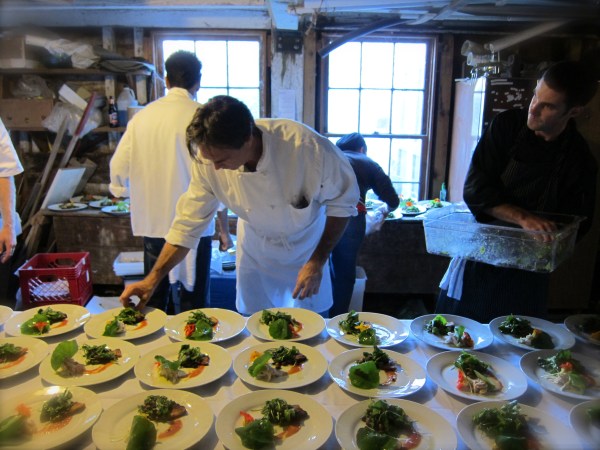
The first course being prepared by Chefs Mark Segal and Greg Sessler.
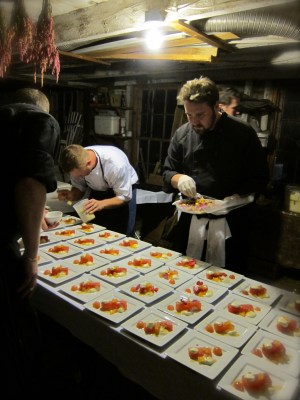
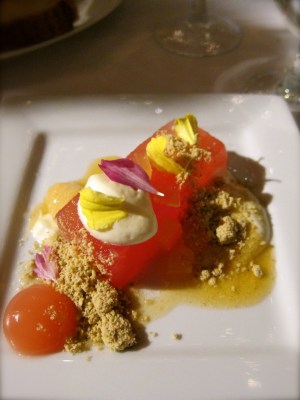
Once service has begun, the entire kitchen crew is on hand to help, chef alongside chef, on through the last course.
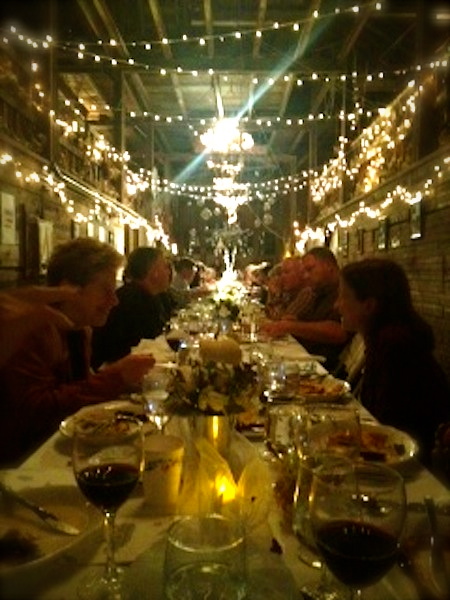
Thanks, David, for sharing the view from your end of the table.
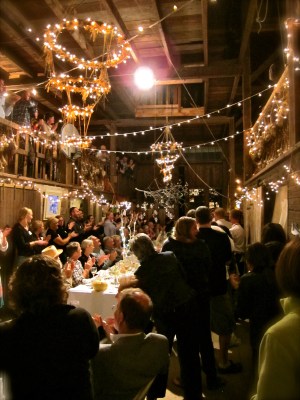

Our favorite part of the evening is when all of the volunteers come out to take a bow. This year, we were witness to an impromptu proposal — congratulations to Ameen and Briana, without whom this event would be possible.
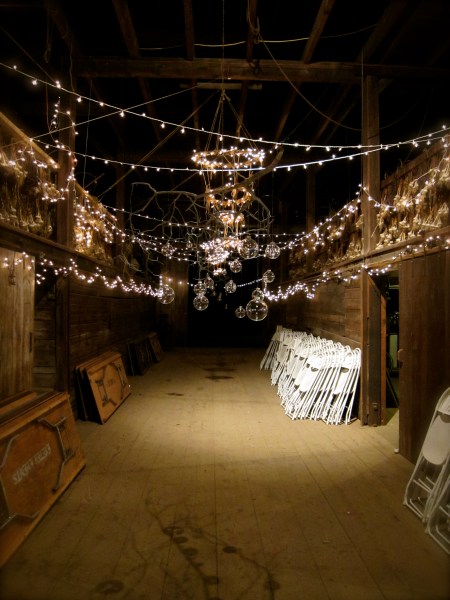
See more from this year’s Heirloom Harvest Barn Dinner >

Back in mid-season, we bought a sampling of seeds from Kitazawa Seed. The Shunkyo (above, left) and Long Scarlet (above, right) radishes were timed to grow into the cool weather of fall. Both are meant to be spicy, but the extra spell of high temperatures increased their heat quotient.
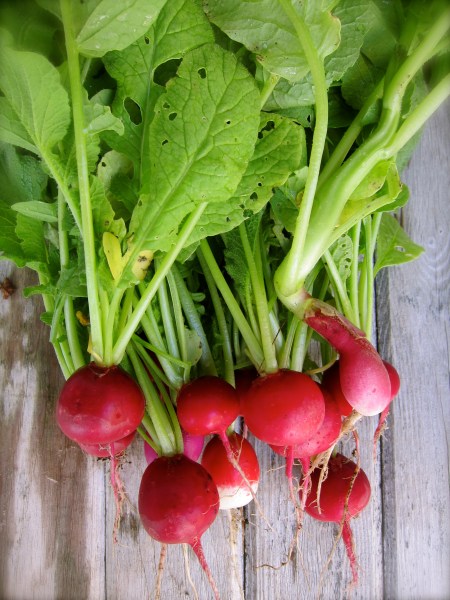
The ever-reliable Cherry Belles were mixed in with some French Breakfast radishes.
Still harvesting: Potatoes, Pomodorini tomatoes, eggplant, summer squash, cucumbers, fennel, radishes, chard, kale, winter and salad greens.
All in: Delicata squash, Dragon Langerie dried beans.
Soon to come: Celeriac, leeks.

Do the contents of a gardener’s refrigerator differ from anyone else’s? This is for Michelle over at From Seed to Table, who was willing to bare her fridge and extended an open invitation to others to do the same. At the moment, our kitchen fridge is stuffed with jars of pickles and preserves that have accumulated while I’ve been attending the Master Food Preservers Program, and leftovers from a dinner party the night before.
Along with my giant pet zucchini that has taken up residence on the top shelf, there’s: a bin of carrots, parsnips and radishes; pickled cherry tomatoes; leftover sautéed summer squash, with fennel and corn; leftover tomato paella; Boothby blonde cucumbers and quick pickles; leftover sautéed red peppers with breadcrumbs; carrot hummus with too much garlic; scape pesto; green onion oil; a couple of dozen eggs from the farmers’ market; heavy cream; early season apples; and the lava beans I neglected to add to the paella last night. Most of the leftovers will be recombined for dinners in the coming week. I use glass storage containers, the better to see what’s going on in them; they also seem to keep the food fresher for longer.

The basement fridge: Lots of pickles, both quick and fermented; carrots, summer squash, broccoli and salad greens in the storage bins; beets, onions and peppers in the drawers; a jar of chicken stock that I need to can up; a drawer full of cheese, some milk, a jar of yogurt and more eggs complete the scene.
Visit From Seed to Table to find more glimpses of the interior life of other gardeners’ refrigerators. I’m glad to see I’m not the only one that hordes eggs, and has an inordinate amount of pickles, way more than two people could possibly eat.

 Diary of a Tomato