Daily Bread: Cider Molasses Quick Bread

Cider Molasses Brown Bread

Essentially a quick version of brown bread, this hearty loaf is a beautiful expression of local ingredients, and has become one of our favorite ways to use the grainy whole wheat flour and nutty cornmeal being produced around us. We’ve gotten in the habit of substituting boiled cider for when molasses is called for, particularly in baking, which adds its own fruity fragrance and mineral notes. This traditional New England syrup is made by evaporating fresh apple cider, and we either make our own or pick up a ready-made supply when our travels take us to Vermont; both Wood’s Cider Mill and Champlain Orchards will ship. We like thick planks of this bread toasted for breakfast, either on it’s own or paired with cheddar. As of late, we’re indulgently slathering it with the rich, buttery crema from a recent visit to Wolf Meadow Farm.

Cider Molasses Quick Bread

Butter for greasing the pan
2½ cups whole wheat flour
½ cup cornmeal
1 teaspoon sea salt
1 teaspoon baking soda
1⅔ cups buttermilk or yogurt
½ cup boiled cider or molasses

– Heat oven to 325°F. Grease an 8×4-inch or 9×5-inch loaf pan. Sift together the whole wheat flour, cornmeal, sea salt and baking soda; this will remove any coarse bits from local flour, and ensure the baking soda is evenly distributed. Mix the buttermilk and boiled cider together, then stir it into the dry ingredients, just enough to combine. Immediately pour the thick batter into the greased loaf pan, and quickly smooth out the top as best you can. Place in the oven and bake until firm, about an hour. A toothpick inserted into the center should come out clean. Cool on a rack for 15 minutes before removing from the pan.

— Adapted from “How to Cook Everything” by Mark Bittman, via Food52.

Local ingredients: Whole wheat flour from Maine Grains; flint cornmeal from Songbird Farm; boiled cider from Wood’s Cider Mill; sea salt from Maine Sea Salt; butter from Casco Bay Butter; and homemade buttermilk from Harris Farm milk.

Posted in cooking | Tagged , , , , , | 5 Comments

Slurry Noodles

Following our first attempts at making noodles, we came across this video of a street vendor in China preparing sweet potato starch noodles while at the same time demonstrating some lesser understood laws governing non-Newtonian fluids. If you’ve ever mixed cornstarch with water into a slurry to thicken a sauce, a combination scientists call by the Seussian name Oobleck, you’re probably familiar with how the cornstarch can settle into a hard mass at the bottom of the bowl. Something similar to that is happening here. From Modernist Cuisine, which offers a fuller scientific explanation, and Cooking Issues, who figured out that these are the same noodles used in the Korean dish Japchae, and also known as glass noodles.

Posted in cooking, interlude | Tagged , , | 5 Comments

3.31.14 French Marigold Seedlings

3.31.14 French Marigolds

O Such a commotion under the ground,
When March called, “Ho there! ho!”
Such spreading of rootlets far and wide,
Such whispering to and fro!
“Are you ready?” the Snowdrop asked,
“Tis time to start, you know.”
— Ralph Waldo Emerson, “Flower Chorus”

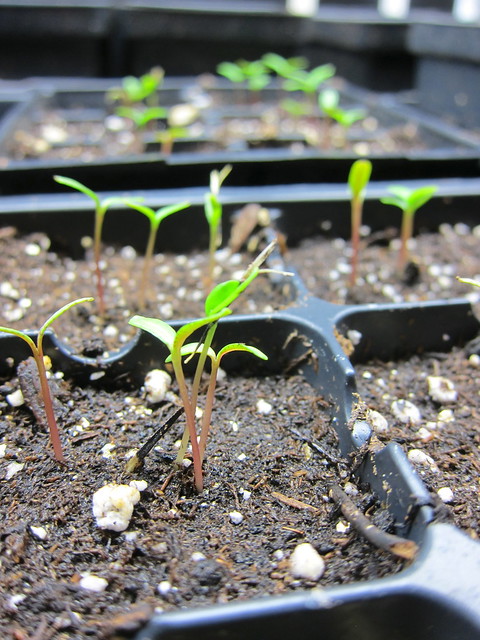
As always, it is with faith, optimism, and hope that we plant the first seeds of the season. The French marigolds have emerged, beating their companion alliums only barely. It’s still a complete mystery to us how their feathery seeds transform themselves into these tender seedlings.

Posted in garden | Tagged , , | Leave a comment

Winter Squash Carbonara with Bacon and Sage

Winter Squash Carbonara

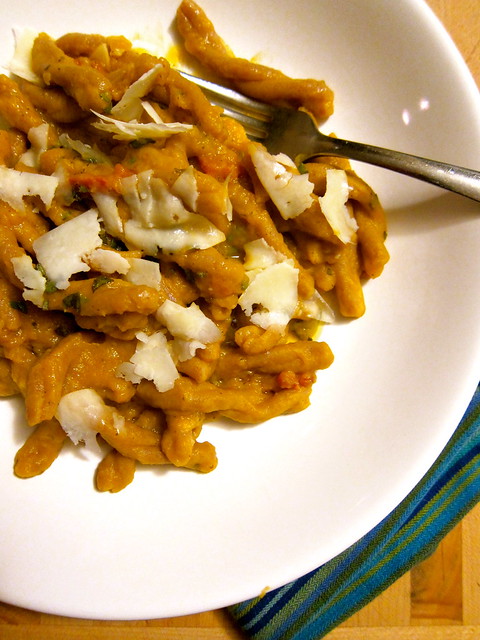
After it appeared in Bon Appetit last February, this recipe for Winter Squash Carbonara was quick to gain popularity, and deservedly so. It reminded us of when its sister publication Gourmet ran a column of tempting weeknight recipes that were known for their ease of preparation and with readily found ingredients, yet with some tantalizing combination or technique slipped in that also allowed the cook to expand their kitchen knowledge. We found this silky preparation of braised winter squash, with its balance of salty, smoky and sweet notes, all that and made even more appealing by its adaptability. For our localized version, we swapped bacon from Top of the Hill Farm for the pancetta, some fresh Farro Casarecci pasta from Valicenti Organico, and an aged cheese called Primo Sale from Wolf Meadow Farm for the Pecorino. Exchange a red onion in place of the pancetta and vegetable broth for the chicken, and this readily converts into a vegetarian dish, and because there aren’t any eggs, it may even be suitable for vegans. And for our nightshade-intolerant friends, this provides a satisfying alternative to tomato sauce.
Winter Squash Carbonara

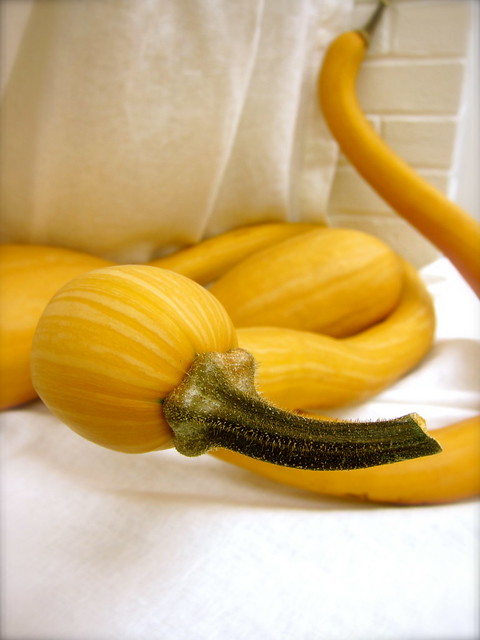
The most obvious advantage of Winter Squash Carbonara is that it gives us a new way to deploy the slumbering squash we have remaining in storage. These
Tromboncino squash (above) have a quality unusual among Cucurbita moschata in that they’re dual purpose, and can be eaten as both a summer and winter squash. Also known descriptively as Serpentine Squash or Zucchetta Rampicante, we grew this Italian heirloom for the first time last season, and found it responded well to our microclimate. More importantly, it’s also resistant to pests and disease, and to squash vine borer and powdery mildew in particular, two of our biggest challenges in growing winter squash successfully.
Winter Squash Carbonara

Tromboncino resides in the same family as butternut squash, and we’re pleased to see how well it’s lasted through the winter. Though we haven’t taken it through all its kitchen paces, its dense flesh lends itself to steaming, grilling, baking, and even pickling. In its mature state, the flavor is mild and said to be reminiscent of artichokes. Since preparing this dish, we’ve learned that it should be peeled even further, reaching down to where the flesh turns orange. With another yard of Tromboncino still leftover, we’re left with plenty of opportunity to make this again.

Winter Squash Carbonara with Bacon and Sage

2 tablespoons olive oil
4 ounces bacon (or pancetta), chopped
1 tablespoon finely chopped fresh sage
2 pounds winter squash (such as butternut or kabocha), peeled, seeded, cut into ½” pieces (about 3 cups)
1 small onion, chopped
2 cloves garlic chopped
Sea salt and freshly ground black pepper
2 cups chicken or vegetable broth
1 pound dried pasta, such as fettucine or linguine
¼ cup finely grated Pecorino, plus shaved for serving

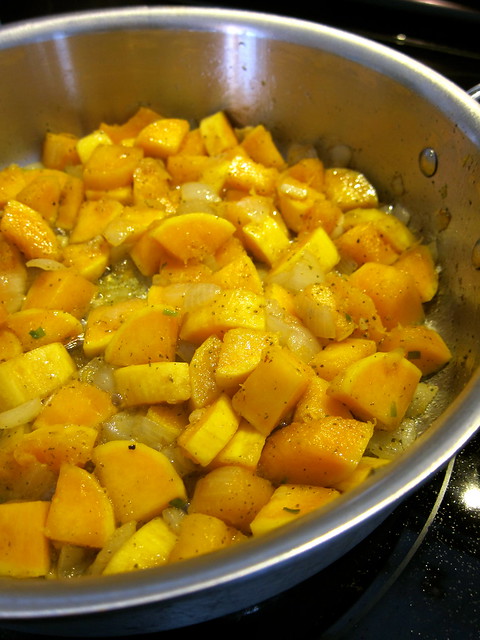
– Heat oil in a large skillet over medium-high heat. Add bacon, reduce heat to medium, and cook, stirring occasionally, until crisp, 8–10 minutes. Add sage and toss to coat. Using a slotted spoon, transfer bacon and sage to a small bowl; set aside. Add squash, onion, and garlic to skillet; season with salt and pepper and cook, stirring occasionally, until onion is translucent, 8–10 minutes. Add broth. Bring to a boil, reduce heat, and simmer until squash is soft and liquid is reduced by at least half, 15–20 minutes. Let cool slightly, then purée in a blender until smooth; season with salt and pepper. Reserve skillet.
– Cook pasta in a large pot of boiling salted water, stirring occasionally, until al dente. Drain, reserving 1 cup pasta cooking liquid. Combine pasta, squash purée, and ¼ cup pasta cooking liquid in reserved skillet and cook over medium heat, tossing and adding more pasta cooking liquid as needed, until sauce coats pasta, about 2 minutes. Mix in ¼ cup Pecorino; season with salt and pepper. Top pasta with reserved pancetta and sage, shaved Pecorino, and more pepper. Makes 4 servings.

Adapted from Bon Appetit.

Local ingredients: Bacon from Top of the Hill Farm; onions from Black Kettle Farm; Farro Casarecci pasta from Valicenti Organico; Primo Sale cheese from Wolf Meadow Farm; homemade chicken stock; tromboncino winter squash, sage, and garlic from the garden.

Posted in cooking | Tagged , , , , , , | 8 Comments

Daily Bread: Hot Bagels

“Gimme a dozen, my life’s blood — without bagels, what is a day?”

If you’re a frequent visitor here, you’re already familiar with our infatuation with baking bagels at home. Filmed in Brooklyn during the 70’s, Hot Bagels shows the age-old process of making bagels by hand, and with a two-handed technique we hadn’t seen before. From the Brooklyn Public Library, via The Bread Bakers Guild of America.

Posted in cooking, interlude | Tagged , , , | 3 Comments

3.24.14 When the Garden Started

IMG_9963

When the Garden Started

For me, I think it started with the free seeds
end of school
fourth grade,
and a few weeks later
radishes
then lettuce
then peas.

Or maybe it was the smell
of the sweet peas Gramp planted
outside Gram’s bedroom window
when I was six.

Or something good to eat.

— Russell Libby

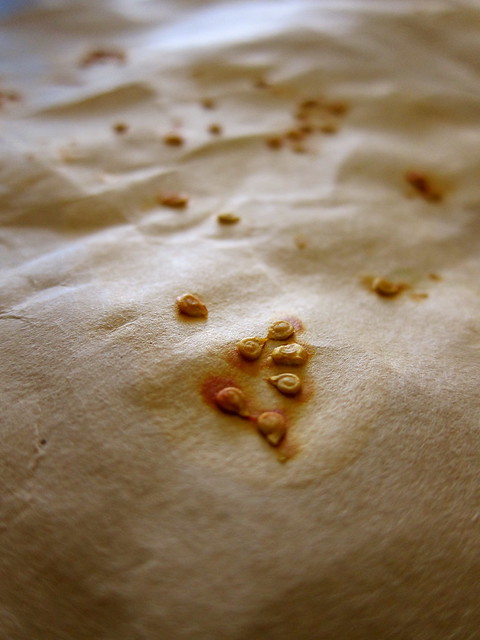
Spring Equinox has arrived, yet the ground has barely begun to yield to the sun’s lengthening warmth. It remains inhospitable to planting directly, and those vegetables that need the extra time are given a head start indoors. There’s a kind of intimacy in starting something from seed, and it’s hard to believe how these tiny bundles of energy will transform themselves into their more mature and recognizable state, and turning into something good to eat. Above: Seed from John’s Pomodorini Piennolo saved from last season, as when we started, simply dried on paper.

3.24.14 When the Garden Started

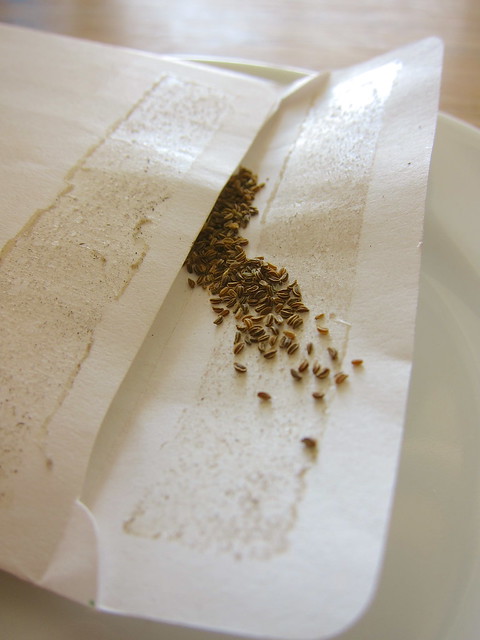
Above: Brilliant Celeriac seeds from Fedco.

3.24.14 When the Garden Started

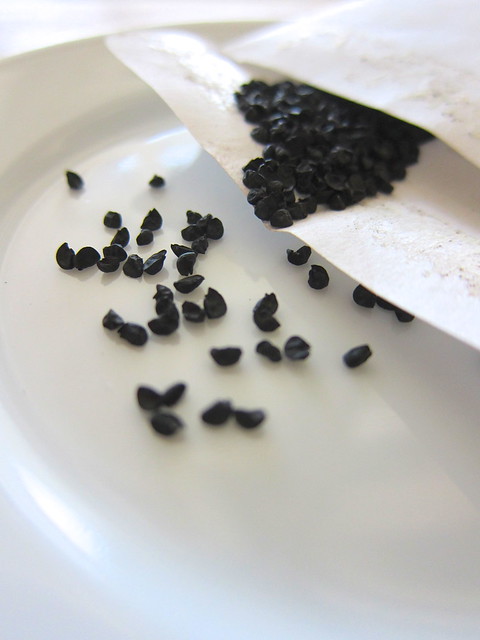
Above: Rossa Lunga di Tropea Onion seeds from Fedco.

3.24.14 When the Garden Started

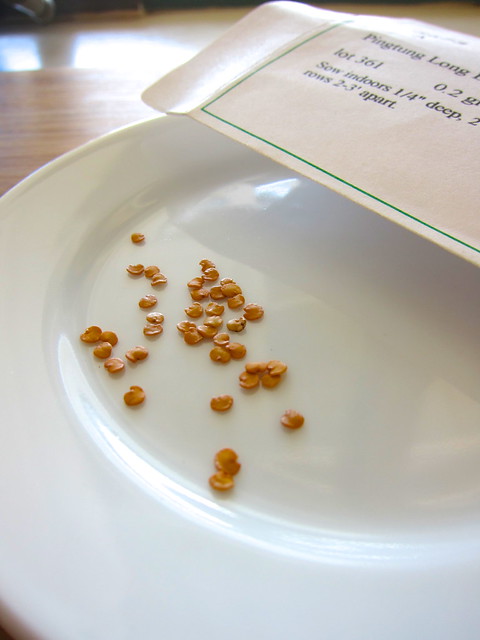
Above: Pingtung Long Eggplant seeds from Fedco.

3.24.14 When the Garden Started

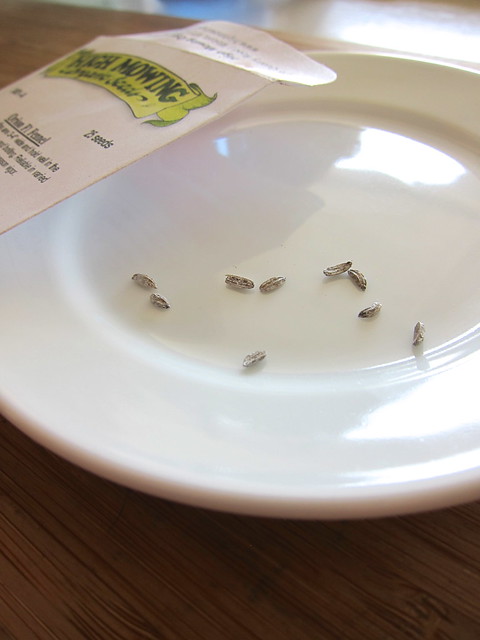
Above: Orion Fennel seeds from High Mowing.

3.24.14 When the Garden Started

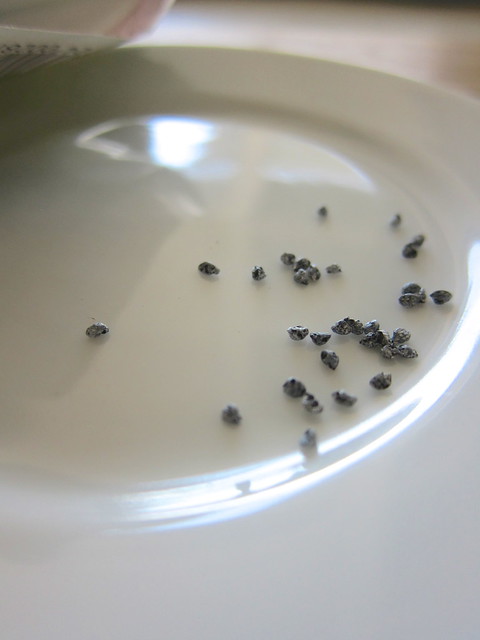
Above: Bandit Leek seeds from High Mowing.

3.24.14 When the Garden Started

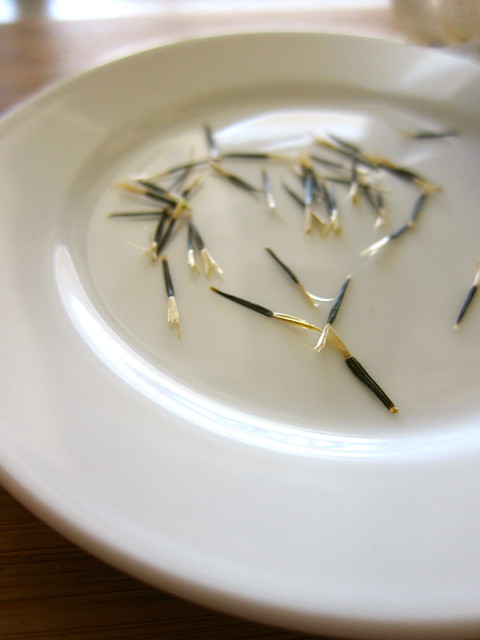
Above: French Marigold seeds from Botanical Interests.

Posted in garden, tomatoes / pomodorini | Tagged , , , , , , | 5 Comments

Homemade Udon Noodles with Asian Greens

IMG_9879

While some keep life lists for birding, ours is based on making pasta. With inspiration from Rose’s Vietnamese version, we now can add Japanese udon to our life list as well. Where her noodles utilized a mix of tapioca and rice flours, this one calls for wheat flour, a deceptively simple switch that changes the color, texture and workability of the dough.

IMG_9881

A characteristic of good udon is its chewy bite, a texture obtained only through aggressive kneading. Most sources give the baffling instruction to knead the dough by placing it in a plastic bag and repeatedly stepping on it. It felt slightly embarrassing, but faced with a mass of unyielding dough, this is what we did. Based on a traditional method, gravity does the work, though it’s still unclear what the Japanese used before the invention of plastic bags.

Homemade Udon Noodles with Asian Greens

After half a dozen turns or so, the dough eventually became silky smooth, a sign that it was ready to rest, as were we. We left it to relax overnight, however, when we went to roll it out, the dough was stubbornly resistant. It was as if it could sense our anxiety and caused near defeat. With some reconsideration, we remembered our pasta machine and felt silly that we’d been so intimidated. With one pass of the dough through it’s rollers, we immediately knew we would never fear making udon again.

Homemade Udon Noodles with Asian Greens

An extra tip: Unlike Italian pasta, Asian noodles are often rinsed with cool water after cooking. This helps to set the toothy texture, and rids them of excess starch to make them slippery, and the better for slurping with. They can then be served either cold, or rewarmed by placing them in a bowl of water.

Homemade Udon Noodles with Asian Greens

The success of these noodles was so unexpected, we just ended up dressing them with something improvised from the fridge. The thick noodles readily soaked up the leftover Mapo Tofu that we’d gussied up with some sautéed leeks from this weeks harvest, and  thickened with a dollop of peanut butter. To offset the spicy richness of the sauce, we chopped up a hefty bunch of mixed Asian greens for garnish, tossed the pieces with sesame oil, then lightly sautéed them with some tiny dried shrimp to offset the mineraliness of the greens.

We’re looking forward to further exploring making udon, but were so excited by this first batch that we couldn’t wait to share it with you. If you’d like to try it for yourself, visit La Fuji Mama’s post, “How to make udon noodles — it’s easier than you think!” using Harumi Kurihara’s recipe from Harumi’s Japanese Home Cooking. We presume the easy part will come with a little practice, and definitely agree with her assessment, “Handmade noodles are like handmade bread — they are so much better than the store bought version!”

Local ingredients: Asian greens from Two Farmers Farm; ground pork from Meadow’s Mirth; tofu from Heiwa Tofu; ginger from Wake Robin Farm; leeks and garlic from the garden.

Posted in cooking | Tagged , | 12 Comments