7.8.12 Baby beets, fennel and drying herbs

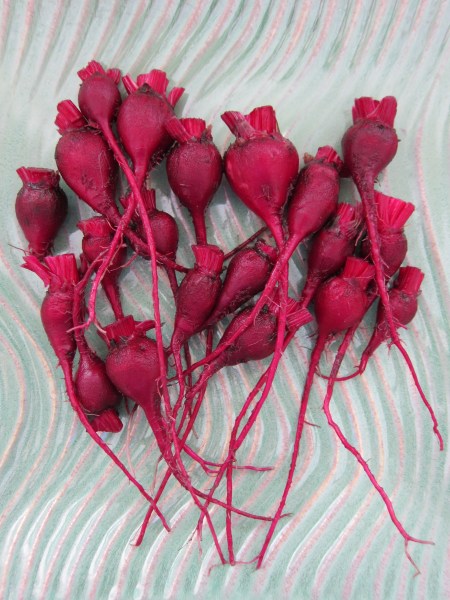
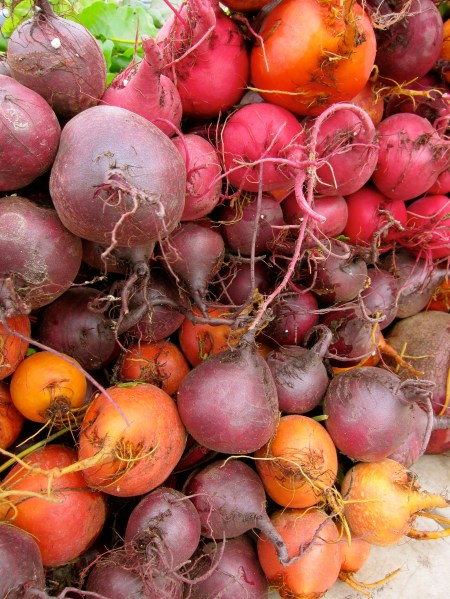
The row of Bull’s Blood beets needed thinning, and yielded a handful of baby beets clinging to a harvest of edible greens. While the leaves will go into an erbazzone, we plan to roast or saute the baby beets with some equally minuscule new potatoes.

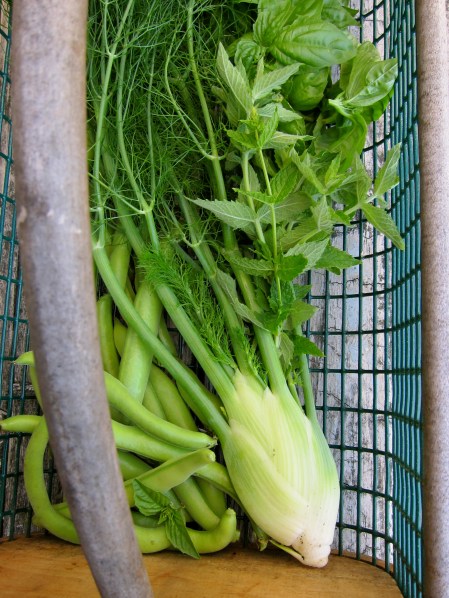
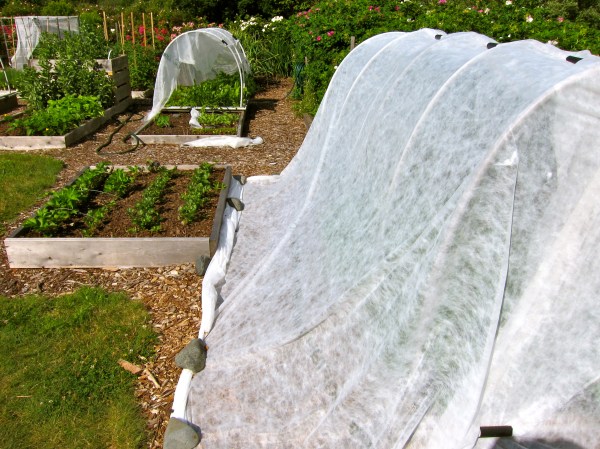
Pickings for dinner — the first fennel, to be shaved into a salad;  favas that we’ll grill, then top with chopped mint; and basil toppings to be shredded and tossed in with some sauteed summer squash bought from the farmers’ market.

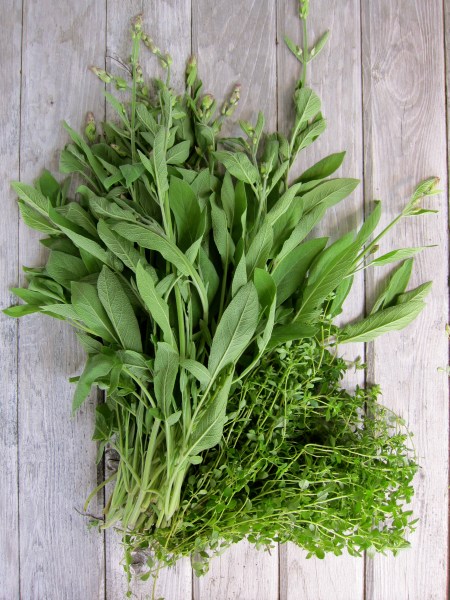
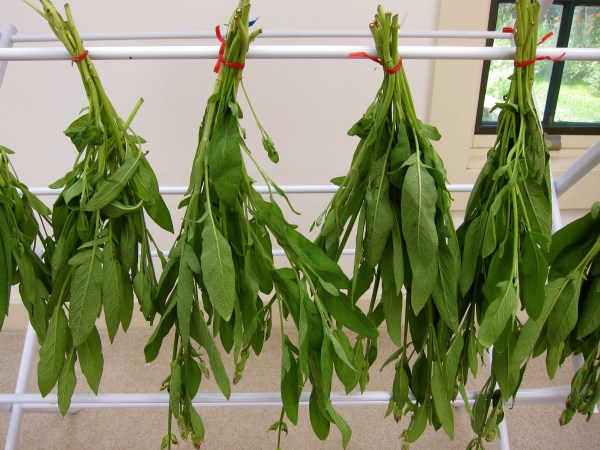
Rather than waiting/forgetting until fall, we’re trying to remember to harvest and dry herbs while they’re still at their peak, starting with the sage and thyme.

Still plentiful: salad greens, kale, chard, peas, favas, radishes
Newly harvested: fennel, beet greens, new garlic
To come: tomatoes, summer squash, cucumbers, green beans, carrots

Posted in garden | Tagged | 14 Comments

Local Food Report: Barker’s Farm, Stratham

As part of our local food system, farm stands play an important role, especially for those times when we’re between farmers’ markets. Located on Route 33 in Stratham, NH, Barker’s Farm, now in its fourth generation, has long been a source for locally grown food in the Seacoast. In addition to an array of freshly picked seasonal produce and buckets of flowers from their farm, the stand now conveniently carries local meat from neighboring farms, Kellie Brook Farm in Greenland, and Stuart Farm in Stratham.

A version of this post also appears at Seacoast Eat Local.

Posted in local food | 1 Comment

Quick Summer Pickles

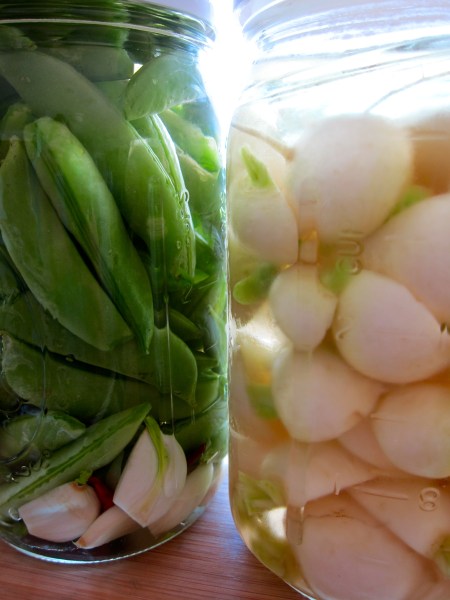
Preserving a bit of summer really doesn’t get any easier than this. I’ve been pickling for some years now, but usually the canned or lacto-fermented versions. I’d shied away from making refrigerator pickles with the fear that they wouldn’t store long enough to make it worth the effort. I was ready to reconsider though when I read about Daphne’s version, and an unexpected gift of a sack of sugar snap peas from a farmer friend came my way.

As I soon discovered, the clear flavors and still fresh crunch of pickling this way goes perfectly with summer meals. It’s also a terrific way to deal with garden produce, which comes in fits and starts, as well as CSA shares, which may come all at once. Just wash and cut up your vegetables or fruit, stuff them in a jar, and pour in some pickling juice mixed up from cupboard ingredients. Eat immediately, or let sit in the fridge for the flavors to develop. Store in the fridge for as long as they’ll hold — I’m expecting that those made in late summer into fall might last well into winter.

This master recipe is adapted from the Momofuku cookbook, and only differs in that I tend to use less sugar. It’s easily tinkered with to suit your taste, not just in terms of the proportions of the 4 basic ingredients — water, vinegar, sugar, and salt — but also in any number of combinations of vegetable or fruit, spices and herbs you may choose to use. I left the batch of Tokyo turnips plain, and added a couple of garlic cloves and chili peppers to the jar of sugar snap peas for added punch. I used cider vinegar with the garlic scapes — as tightly coiled as they may seem, I needed to double the amount of pickling juice to compensate for how loosely packed the inside of the jar turned out to be.

Quick Summer Pickles

1 cup water, piping hot from the tap
½ cup rice wine vinegar
6 tablespoons sugar
2¼ teaspoons kosher salt

– Combine the water, vinegar, sugar, and salt in a mixing bowl and stir until the sugar dissolves.

– Pack the prepared vegetables into a quart container. Pour the brine over the vegetables, cover, and refrigerate. Pickles may be eaten immediately, but will taste better after they’ve had time to sit and cure — 3 to 4 days at a minimum, a week for best flavor. Most pickles will keep for at least a month, depending on the fruit or vegetable, some for several months.

Adapted from “Momofuku” by David Chang and Peter Meehan.

Local ingredients: Sugar snap peas from Touching Earth Farm; Tokyo turnips from Winnicut River Farm; cider vinegar from Sewall Organic Orchard; garlic and scapes from the garden.

Posted in cooking, preserving | Tagged , , , | 1 Comment

Shelling Peas, Independence Day, and Lobster Salad

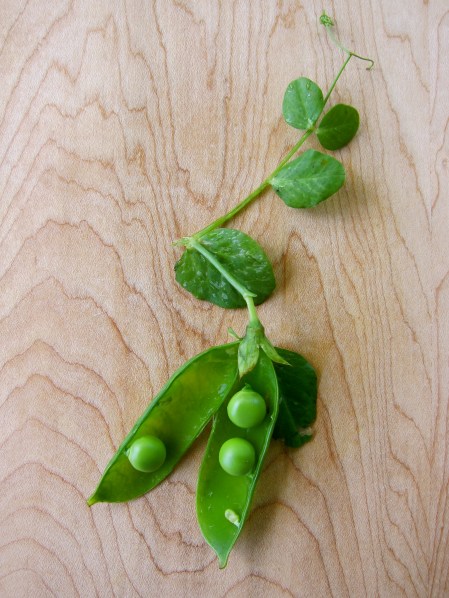
Few farmers bother to grow shelling peas any longer. The ones that still do, grow them for an older relative or for customers like me that don’t consider them too much work. Sugar snaps and snow peas have their own delightful qualities but, for me, they’ll never replace the singular deliciousness of English shell peas.

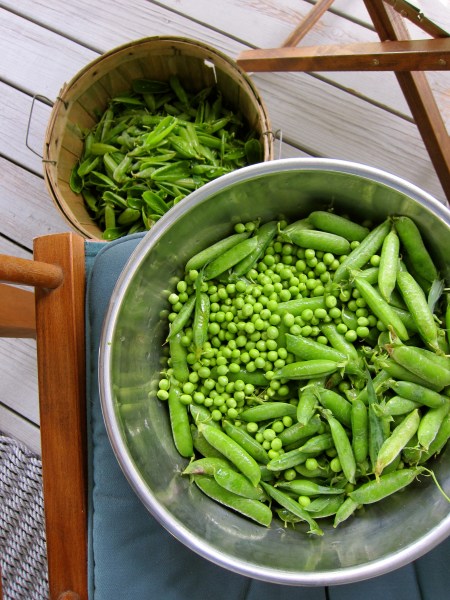
When it comes to peas, our garden’s too small to grow much more than what we eat in season. Lucky for me, Susan, of White Gate Farm, still grows these for her mother. For the brief period when they finally appear at the farmers’ market, I buy as much as I can carry. These look to be an heirloom variety, and are shorter than the hybrids, with just 5 to 6 peas in a pod. To keep them as fresh as possible, they’re quickly whisked home, no stops in between. I then dump the whole lot in something large enough to contain them, and cover with water to help them hold onto their inherent sweetness.

This is not a task for those in a hurry or in a frantic mood. I clear my schedule and settle down in the shade for a session of shelling, the bowl slowly filling with peas, as the basket does with their cast-off pods. Most of these will be frozen for later, with enough for dinner held aside. As I reach the last batch, I start a pot of water to boil.

To prepare peas for freezing: Blanch by slipping the lot, or by batches depending on amount, in a pot of boiling water. In very little time, they’ll float to the top, letting you know that they’re ready. Once they start bobbing to the surface, scoop them out immediately, and shock them in a bowl of icy water you have waiting nearby. This will stop them from cooking further and will help them keep their bright color, but don’t let them soak too long. Drain and let dry before freezing in shallow layers on a tray. Once they’re hard enough, package them up as you like for freezer storage.

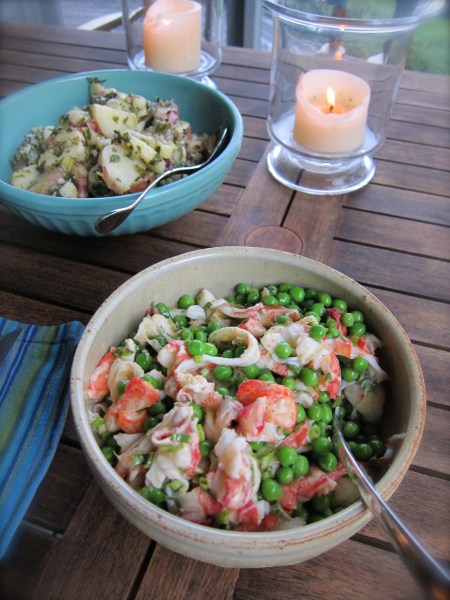
The ones put aside were tossed into a lobster salad made with a dressing of lemon, olive oil and basil, accompanied by a minty potato salad and another salad of greens — welcome to summer in Maine. Have a safe and happy Food Independence Day everyone!

Posted in cooking, preserving | Tagged , , | 3 Comments

7.2.12 Pests and other garden afflictions

The garden is beginning to resemble a nursing ward. It’s almost fully planted, and with that comes a host of garden afflictions. These include pests, disease, vagaries of weather, and the gardener inflicted, such as over- or under-watering, and lack of  nutrients. We’ve been using row cover to shade a couple of the beds as protection against this season’s heatwaves. The bed in front has been completely enclosed as a barrier against squash vine borers, their arrival imminent as forewarned in MOFGA’s latest pest report.
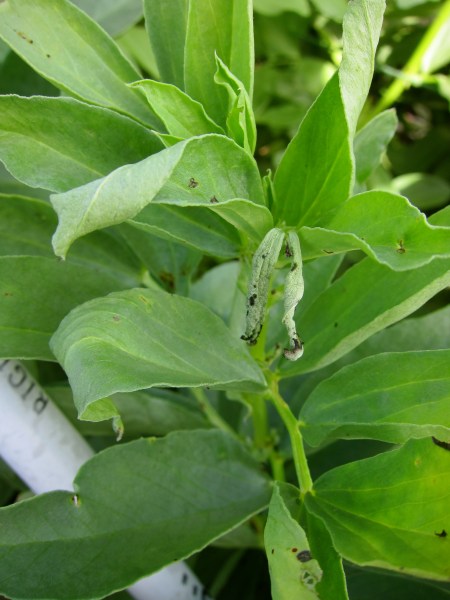
The pest report also includes cautionary tales about potato leaf hoppers. They’ve attacked our bean and potato plants, and we’ve resorted to spraying with pyrethrum. This seems to have tamped them down, but not without some damage already caused. Above, one of the fava plants exhibiting the results. 
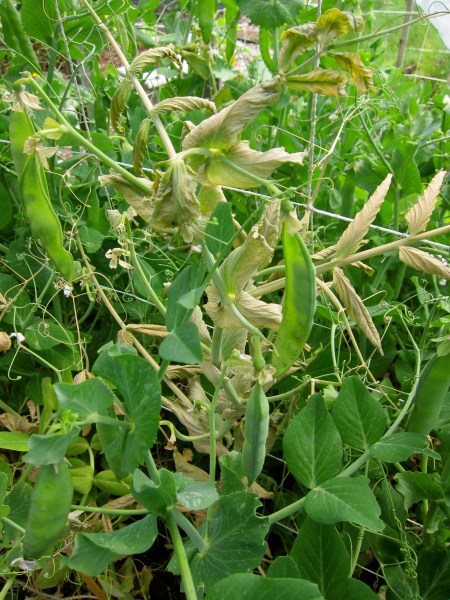
Growing peas is always a race against time. At first, they’re hampered by the cold soil, then it’s a sprint to produce before it becomes too hot. The pea plants were also shaded by row cover, but some are starting to die back, having succumbed to the heat.
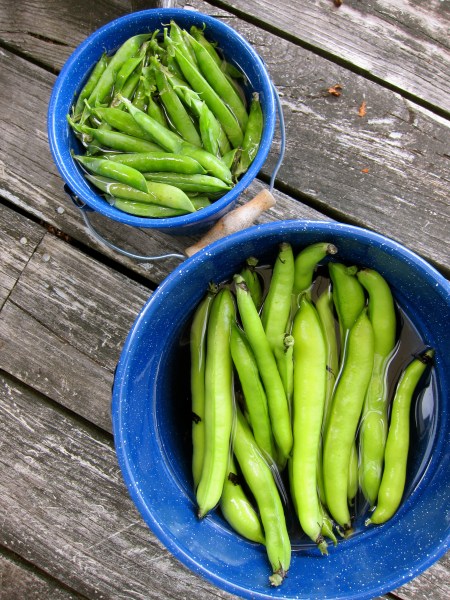
Still, all is not woe. We were able to get a nice harvest of both the favas and peas. Of the three varieties of favas we planted, the superaquadulce flowered and set sooner, and is producing more than the other two so far.
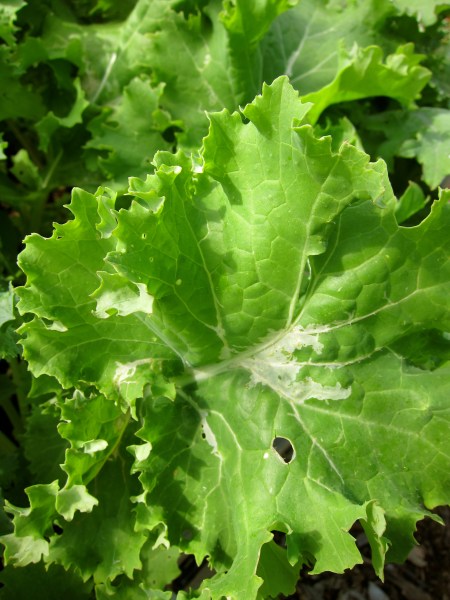
Here’s evidence of something attacking the kales in the greens bed — is this from leaf miners, or something else?

On the plus side — in the same bed as the kales, the salad greens are thriving, having greatly benefitted from being kept shaded. This mix was planted in spring and continues to produce well. Normally, slugs would be a problem with intensive planting like this. However, seaweed mulch seems to be proving successful as a retardant.

Usually, we watch for the garlic to die back from the bottom leaves up. The swings in temperature and conditions have left the tips looking parched.
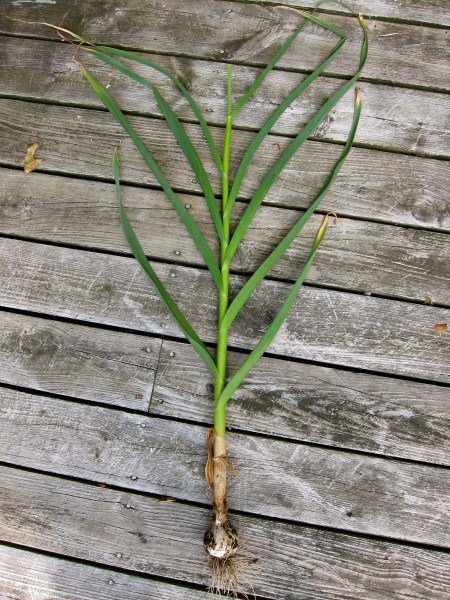
Each leaf on the garlic stalk represents a layer of protective skin around the bulb. We usually harvest during a dry period, when at least 5 or 6 green leaves remain. Even though it’s a little early, we pulled a sample of the German extra-hardy to check on how they’re faring.
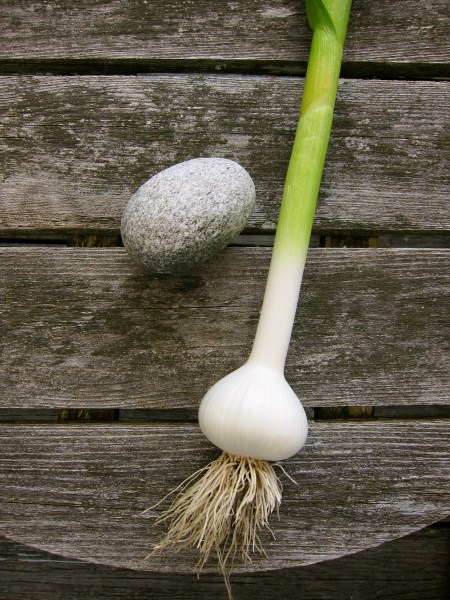
 Once cleaned up, we can see that the bulb is large but not quite fully formed, and may need a couple more weeks in the ground.

Out of 12 rice seedlings, 9 were transplanted and only 2 are left standing now, and barely so. We’ve place protective cups around them, and remain at least curious if less than optimistic about their future.

This Turkish Rocket is one of a group of perennial vegetables from Food Forest Farm we bought last spring. It’s struggled since then and had died back to a nub, but finally began to thrive after it was cupped.

We’re growing borage for the first time and in a container, probably not an optimum choice. Like the favas, it suffered an infestation of aphids, which called for an application of insecticidal soap. 
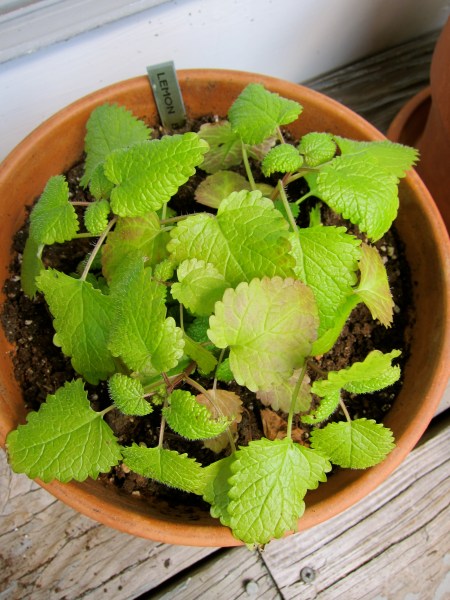
For something from the mint family, the lemon balm isn’t thriving as much as expected  — is this a watering or nutrient problem?

 The basil have yet to really recover and are too pathetic to photograph. As for the tomatoes, the bouts of heat have done them well. From experience, though, rest assured affliction awaits.

Posted in garden | Tagged , , , , , , | 5 Comments

Local Food: Dover Farmers’ Market

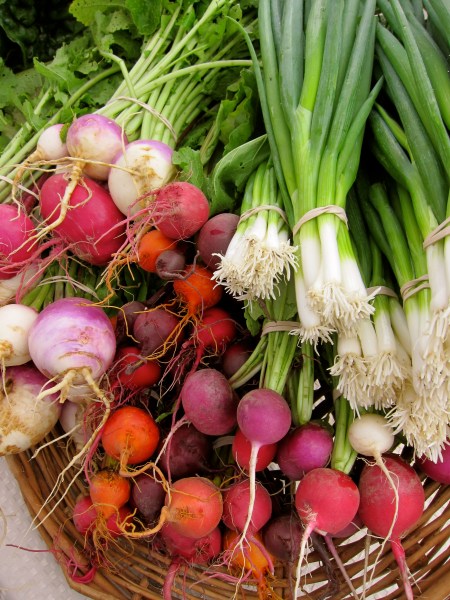
Seacoast farmers’ markets are filling up with summer’s colorful bounty — here’s just a sampling from this week’s Dover Farmers’ Market. Above: turnips, beets, radishes and scallions from Connolly’s Gardens.

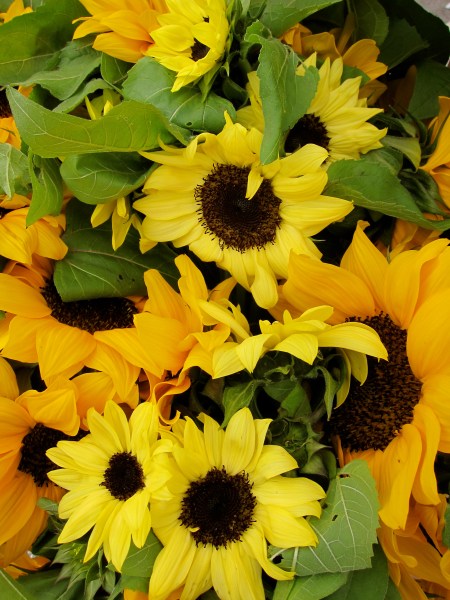
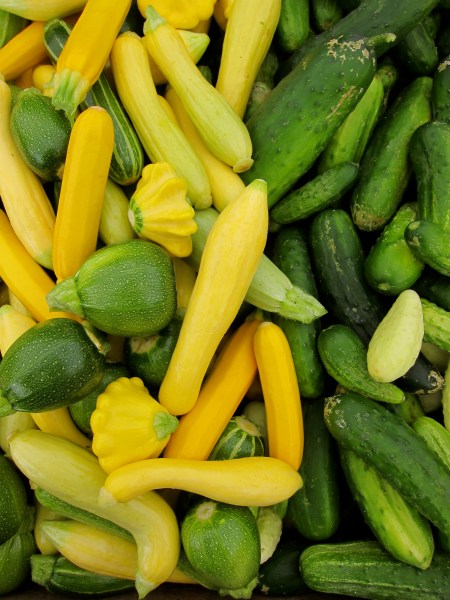
Sunflowers, summer squash and cucumbers from Wake Robin Farm.

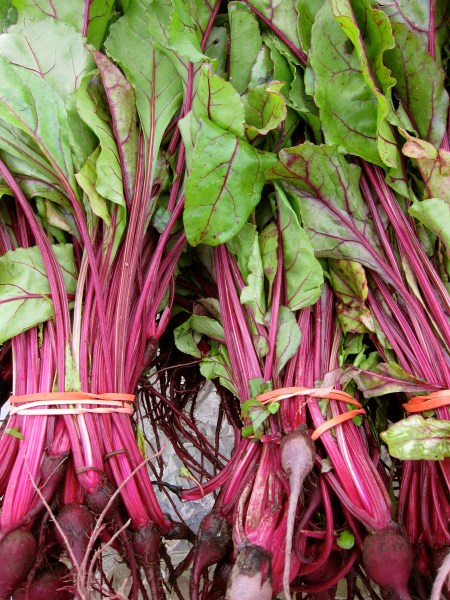
Beet greens from Riverside Farm, and beets from Wake Robin Farm.
See more…

A version of this post also appears at Seacoast Eat Local.

Posted in local food | Tagged | 5 Comments

Murmuration

Murmuration: A flock of starlings; the manifestion of swarm intelligence.

Murmuration from Islands & Rivers on Vimeo.

Posted in interlude | 4 Comments