Buttermilk Pretzel Rolls

Buttermilk Pretzel Knots

Buttermilk Pretzel Rolls, those three words combined says it all. They fit snugly in the palm of a hand, as a roll should, and, like a pretzel, beg to be torn apart to be fully enjoyed, with the buttermilk lending a homey tang. They’re perfect for a mid-afternoon snack, especially fresh from the oven. Mostly, though, we’ve been having them for breakfast, and, if it’s a leisurely morning, slathered with cream cheese, and topped with slivers of red onion and smoked salmon.

Buttermilk Pretzel Knots

These rolls were one of several ways we’re trying out “Baker’s Blend,” an organic flour made with Maine whole wheat and available through Crown O’Maine Organic Cooperative: “Although Maine currently has three fine stone mills in operation, we do not have a white flour mill. Fiddler’s Green Farm, a custom mill and baking mix blender we all know and love, was willing to craft a ‘Baker’s Blend’ for Crown O’Maine. Alan mills Aurora Mill’s cleaned wheat berries, and blends in a high quality white flour from Natural Way Mills. The result is a flour that is wholesome, 50% Maine grown, and very versatile.” As we soon found, the freshly milled whole wheat in the Baker’s Blend gave the rolls a nutty sweetness, with the hefty bran balanced by the lofty white flour.

Buttermilk Pretzel Knots

Like bagels, pretzels need a quick dunk in a boiling bath of water and some kind of sweetener  — sugar, honey or maple syrup. Often, a recipe will call for the addition of baking soda to the poaching liquid. 6 tablespoons of seemed an alarming amount, it certainly did to me. As it turns out, a chewy bagel or pretzel crust depends on the alkalinity baking soda brings. Naturally occurring alkaline water may account for the particular quality of  bagels and pretzels from certain places.

Buttermilk Pretzel Knots

Like last week’s Lemon Lentil Soup, the recipe for Buttermilk Pretzel Rolls is from Little Flower: Recipes from the Cafe by Christine Moore, and can be found here. For 16 rolls, I divided the dough into 75 gram portions. A last note on the poaching liquid: For 3 cups of water, the recipe calls for 6 tablespoons baking soda and 1 cup of brown sugar. This volume was barely enough to poach one roll at a time in my smallest saucepan. Instead, I used the proportions based on Sherry Yard’s pretzel recipe: 2 quarts water, 1/4 cup baking soda, and 1/4 cup packed light brown sugar. I’m reserving adding the 1/4 cup of beer for next time; hopefully that small amount won’t cause a “beer-cano.”

Submitted to YeastSpotting.

Posted in cooking | Tagged , , | 11 Comments

3.6.13 March greens

3.6.13

We took advantage of the spring-like day to wash the windows of many storms worth of saltspray, and take a peek under the row covers. It’s been a month since when we last checked, and there’s a noticeable difference in revived growth. 

3.6.13

This is the time of year we crave these greens the most. Though the kales are beginning to flower, the leaves are at their sweetest.

3.6.13

Along with the kale, several rows of arugula have survived the winter, as has the Fordhook chard, and a scattering of salad greens.

3.6.13

The outside leaves of this lone Pan di Zucchero, an Italian chicory, have lain themselves flat to the earth, seeking warmth from the soil, while the very center remains upright in expectation of Spring.

Posted in garden | Tagged , , , | 2 Comments

2013 Seed notes

IMG_2464

“As I write, snow is falling outside my Maine window, and indoors all around me half a hundred garden catalogues are in bloom.”
— Katharine S. White

This is the fourth weekend in a row that it has snowed, not that we’re complaining. Unlike most, we haven’t quite tired of winter yet. With March right around the corner though, it’s time to direct our attention to a new season of planting. We got our seed orders by the end of December. As early as that seemed, some seeds were already sold out by then, like Andover parsnips, Par-Cel cutting celery, and Rat-tail radishes.

New for this year is the opportunity to join Fedco’s cooperative as a consumer member-owner. It may not increase our chances for next year’s order, nevertheless, we’re more than happy to support their efforts in providing safe, non-GMO seed and preserving biological diversity. The hand-written note from another of Maine’s local heroes, founder CR Lawn was an added bonus!

Looking back through our journals, we started out in 2008 with only two raised beds. Hard to believe this will be our sixth season of growing vegetables. Though we’re still learning, we continue to be amazed at how much of our own food we’re able to grow.

New for 2013
Tromboncino Squash (F)
Rat-Tail Radish
Rossa Lunga di Tropea Onion (F)
Italiko Rosso Chicory (F)
Good King Henry (F)
Beedy’s Camden Kale (F)
Afina Cutting Celery (F)
Shishito Pepper (HM)
Spaghetti Squash (HM)
– Misticanza di Lattughe (SI)
– Misticanza di Lattughe Autunno-Inverno (SI)
Agretti, Barba di Frate (SI)
Senape Bianca, White Mustard (SI)
Scuplit (SI)
Erba Stella, Buck’s horn (SI)

Key
BI – Botanical Interests
F – Fedco Seeds
J – Johnny’s Selected Seeds
JF – John Forti, The Heirloom Gardener
HM – High Mowing Organic Seeds
K – Kitazawa Seed Company
PG – Pinetree Garden
SI – Seeds from Italy
SS – Seed Savers Exchange
WP – Wood Prairie Farm

Alliums
– 2012: Perennial plantings of chivesgarlic chives, and Egyptian Walking Onions did well, providing the first of spring’s tonic greens. We planted a Welsh Onion as part of an order from Food Forest Farm, and must remember to check in spring to see if it survived. We’re still attempting to establish ramps (wild leeks), and planted some stock and scattered seed; success continues to elude us.
– 2013: We’ve never grown bulb onions, and will try Rossa Lunga di Tropea Onion (F), an Italian red variety that’s elongated in shape.
– See also Leeks.

Arugula
– 2012: Planted a variety, some new, some old — Rocket (F) and Ice-Bred (F) were good for season extension. Sylvetta (SI) was let to go to seed, with the flowers providing late season pollen. Found that the Surrey (HM) lacked flavor. Wild Olive Leaf Rucola (SI) resembled regular arugula, not as depicted on the seed packet.
– 2013: Arugula OG (F), Ice-bred OG (F), Sylvetta (SI), Wild Olive Leaf Rucola (SI)

Asparagus
– 2012: Fifth season for the asparagus bed. Purple Passion (PG) more vigorous than the Jersey Supreme (PG). Need to continue working on soil fertility.
– 2013: Possibly replace some of the females, especially the green asparagus.

Beans & Peas
– 2012: Dragon Langerie Wax (F + saved seed) as a fresh wax bean, and as a shell and dried bean, Masai Haricot Verts (saved seed). Compared Cascine Fava (SI) against Italian varieties, Aguadulce (SI) and Super Aguadulce (SI) — preferred Superaguadulce and Cascine; germination problem w/Aguadulce; Cascine produced the longest. Green Arrow Shell Pea (HM).
– 2013: Masai, Cascine, Super Aguadulce, and Green Arrow. Drop the Dragon Langerie in favor of planting more favas and peas; plant more peas earlier in the season.

Beets
– 2012: Early Wonder (F), Bull’s Blood (HM), and Detroit Dark Red (HM). Fall planting failed to thrive, didn’t work with timing of garden rotation.
– 2013: Early Wonder (F); grow in spring only, and skip fall planting.

Brassicas & Chicories
– 2012: Spring planting of Spring Raab (HM), Tatsoi (HM), Fun Jen (F),  Cima di Rapa Quarantina (SI), Catalogna Endive (?), and Misticanza di Radicchi (SI). Repeat plantings of the Tatsoi and Fun Jen in Fall; added Hon Tsai Tai (HM), Pan di Zucchero (F), Catalogna Puntarelle Brindisina (SI), and Cicoria Galatina (SI).
– 2013: Add Italiko Rosso Chicory (F).

Carrots
– 2012: Spring planting of Napoli (HM), Scarlet Nantes (HM), Red Cored Chanteney (HM). All Napoli for fall planting and winter extension.
– 2013: Napoli, Red Cored Chantenay.

Celeriac
– 2012: Brilliant (F); smaller, more conforming sized heads than previous years.
– 2013: Continue with Brilliant.

Chard
– 2012: Rainbow (HM), Fordhook Giant (HM) for season extension. Planted only 1 row of rainbow  early spring that lasted entire season; planted Fordhook for season extension, not a big producer but may have been planted late; hardiness remains to be seen, check in spring.
– 2013: Rainbow, Fordhook Giant.

Cucumber
– 2012: Boothby’s Blonde (F); first planting got eaten by bugs, second planting did fine; heat caused slow start; National Pickling (seedling from Meadow’s Mirth); big producer, provided early cukes; green color of fruit blends in with leaves making it hard to see for harvesting.
– 2013: Boothby’s Blonde OG (F), and National Pickling or other seedling.

Eggplant
– 2012: Fairy Tale (J), Orient Express (J), with seedlings from Wake Robin Farm. Decreased planting to 2 plants each; heat caused blossom drop, produced fine once recovered.
– 2013: Fairy Tale and Orient Express. Need to find alternative to Fairy Tale, now owned by Seminis.

Fennel
– 2012: Perfection (HM), Finale (HM). Cut and come again all season; let some flower — provided late season pollen for bees, culinary uses for flowers and green seeds.
– 2013: Add Orion (HM). Remember to collect fennel pollen.

Garlic
– 2012: Phillips (F), Music (F), German Extra Hardy, Rossa di Sulmona (SI). First three garlic are now adapted to our microclimate; continue using saved seed. Add Rossa di Sulmona (SI); planted it separate from the other garlic to avoid contamination. Remember to let the leaves of next year’s garlic die back more before harvesting; clean garlic directly after harvesting by peeling outer layer; don’t cure in garage (too moist, cures too slowly). Problems with mites with this season’s stored garlic; need to avoid successive allium and garlic crops. Increased bulb size for Phillips; selected for fewer cloves for Music; dropped German Extra Hardy; second year for Rossa di Sulmona.
– 2013: Phillips, Music, Rossa di Sulmona.

Kale
– 2012: Siberian (HM), Red Russian (HM), Lacinato (HM). 1 row each Siberian and Red Russian lasted all summer; season extension planting of Siberian, Red Russian and Lacinato.
– 2013: Siberian out-of-stock, replace with Beedy’s Camden Kale (F).

Leeks
– 2012: King Sieg (F) for fall, King Richard (F) for early season; started from seed. Harvest before ground freezes, stores well in fridge.
– 2013: King Sieg and Siegfried (F-special for shareholders). Plant for late fall harvest.

Parsnips
– 2012: Andover (F); large roots, harvest by end of February.
– 2013: Andover; may need to let overwintered parsnips flower for seed.

Peppers
– 2013: Shishito Pepper (HM). If all goes well with our first attempts to grow peppers, Friggitello (SI) is a future possibility.

Potatoes
– 2012: Red Cloud (WP), Yukon Gold (WP). Container grown in wood planters and trialed Smart Bag. Promising yields.
– 2013: Yukon Gold (HM); reduce to one variety and switched to seed from High Mowing. Continue with growing in containers.

Radishes
– 2012: Valentine’s Day Mix (HM), French Breakfast (HM), Cherry Belle (HM), Cincinnati Market (SS) for spring/summer; Daikon (HM), Watermelon (HM) and Green Meat (F) in fall. Problems with germinating fall planting of watermelon and green meat.
– 2013: Add Rat-Tail (Fedco out of stock).

Rhubarb
– 2012: Chipman’s Canada RedMacDonald (F). Needed to divide but season was curtailed by heat.
– 2012: Will have to see what has survived the winter, and divide.

Rice
– 2012: Duborskian Rice (F), a dry-land variety. Problems with transplanting, failed to thrive.
– 2013: To quote the movie Apollo 13 — “Failure is not an option.” Maybe by the time we figure out how to grow it, someone will have figured out how to husk it.

Salad Greens
– 2012: Spring – Gourmet Lettuce (HM),  Gourmet Baby (BI), added Farmer’s Market Blend (BI); Red Planet (HM); Fall – Gourmet Baby, Farmer’s Market Blend, Red Planet, and Q’s Special Medley (BI). Late fall – Winter Lettuce Mix (F), HMS Gourmet.
– 2013: Add Misticanza di Lattughe and Misticanza di Lattughe Autunno-Inverno (SI).

Sunflowers
– 2012: Italian White and Sunrise Lemon (HM), shorter and paler varieties. Establish Eva’s sunchokes. Same sunflowers for 2013.

Squash
– 2012: Costata Romanesco (F), Zephyr (J), Zeppelin Delicata (F), Sibley (F); Sibley failed to thrive. Reduced plantings to only two each of summer squash.
– 2013: Costata Romanesco Zucchini OG (F) and Zephyr for summer; Delicata and Spaghetti Squash (HM) for winter; Tromboncino Summer Squash (F) as dual purpose. Still working on SVB prevention.

Tomatoes
– 2012: Peacevine, Chadwick and Sun Gold (seedlings, Stout Oak Farm); Aprile and Ponderosa sel. Oro (SI) for season extension.
– 2013: Peacevine, Sun Gold, Aprile, Ponderosa.

Turnips
– 2012: Trialed Tokyo Market (K), Tokyo Cross (K), Hakurei (K); problems with aphids, left under row cover too long.
– 2013: Retrial Tokyo turnips.

Note: 2012 Seed Notes

Posted in garden | 8 Comments

Lemon Lentil Soup

Lemon Lentil Soup

Like a bowl of sunshine, this lemony lentil soup is just the antidote for a gray, rainy day. We’ve been on the road for the past week, and a warming bowlful proved easy to toss together from pantry staples — a handful each of red lentils and yellow split peas simmered gently with a savory mix of carrots, onions and garlic, until the lentils just begin to give up their shape. Curry and ginger add some spice, and a generous amount of lemon juice at the last moment finishes it with a bright note.

Consider improvising within this cheerful end of the spectrum with other carotene-rich vegetables. We imagine adding some golden winter tomatoes the next time around, or perhaps some little cubes of yellow pepper. The stew-like texture of this soup depends on how the vegetables are cut, the aim is for a consistent size — called a brunoise for those of you sharpening your knife skills. If you have an extra moment, sautéing the vegetables and curry powder before adding the stock and lentils will tease out an extra punch of flavor. Lastly, a fresh snipping of cilantro or green onion adds a bit of painterly sparkle, to delight the eye as well as the palate.

Lemon Lentil Soup

2 cups yellow lentils (or mix of red and yellow), picked over, rinsed and drained
2 quarts vegetable or light chicken stock
1 onion, finely chopped
1 stalk celery, finely chopped
1 – 2 carrots, finely chopped
1 clove garlic, finely minced
1 tablespoon finely minced ginger
1 teaspoon curry powder (or 1/2 teaspoon ground cumin + 1/2 teaspoon turmeric)
1/2 cup lemon juice, or to taste
Salt and pepper

– In a large pot, combine lentils, stock, onion, celery, carrot, garlic, ginger, and curry powder. Bring to a boil, then lower the heat to a simmer and cook uncovered, until the lentils are cooked through but still intact, about 20 minutes or more, depending on type of lentils. Add more stock or water to keep the lentils and vegetables covered while cooking, and to desired thickness. Stir in the lemon juice, and season with salt and pepper to taste before serving.

Adapted from “Little Flower: Recipes from the Cafe” by Christine Moore.

Local ingredients: Onion from Black Kettle Farm; ginger from Wild Miller Gardens; carrots, garlic and cutting celery from the garden.

Posted in cooking | Tagged , , | 14 Comments

Local Food: Scenes from a Winter Farmers’ Market

2.23.13 Winter Farmers' Market, Rollinsford

It was clear from a visit to our Winter Farmers’ Market in Rollinsford this past week-end that we’ve turned that corner in February when greenhouse greens begin to wake up — and what a joy they were to see, buy and cook with again! To see how we New Englanders eat locally during winter, here’s a glimpse of the market > 

Posted in field trip, local food | 14 Comments

Baking with Locally Grown Grains

IMG_9294

It used to be the challenge was in sourcing locally grown grains. As their availability increases, so is the knowledge about baking with them.

IMG_9191

At the forefront of passing on this knowledge is Jeffrey Hamelman of King Arthur Flour, who offered a 2-day class on baking with locally grown grains this past year. Located in Norwich, Vermont, the class was held at their Baking Education Center.

IMG_9209

Clockwise from top: Nitty Gritty Grain Store white, and Gleason Grains and Butterworks Farm whole wheat flours.

IMG_9264IMG_9288

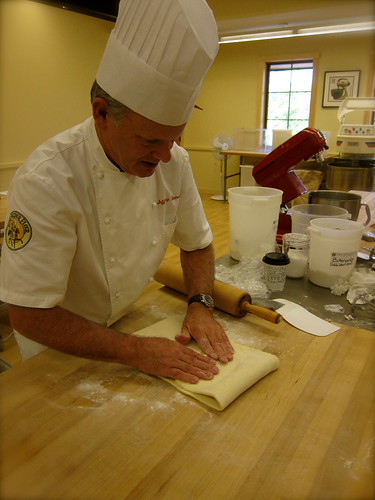
We started off with Blitz Puff Pastry, made with a combination of whole wheat pastry and white flours. Above: Butter mixed into the flour until broken into chunky shards; demonstration on giving the dough a book fold.

IMG_9219

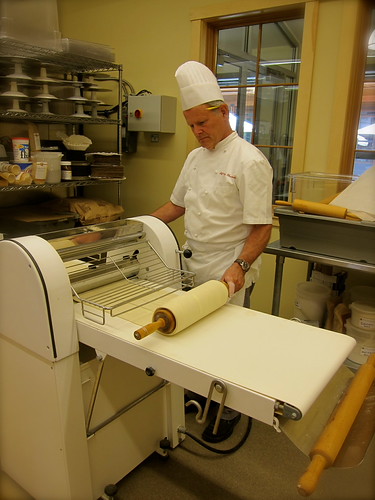
Jeffrey rolling out the puff pastry on a dough sheeter, in preparation for baking into vegetable pies and cheese straws. We also made a batch of scones using sifted whole wheat pastry flour.

IMG_9243IMG_9247

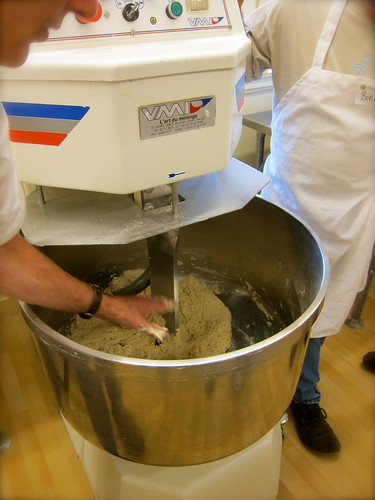
We also tested out the flours with two breads, one with yeast and the other without. 

IMG_9277

IMG_9280IMG_9282

IMG_9283IMG_9293

IMG_9295

IMG_9299IMG_9306

IMG_9308

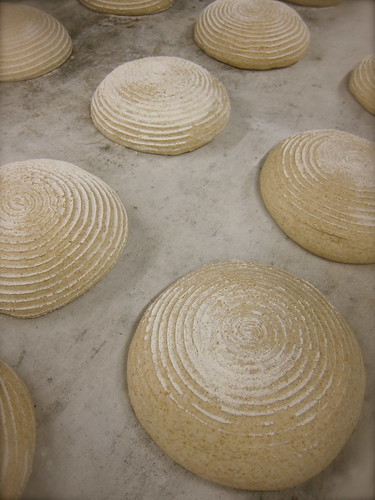
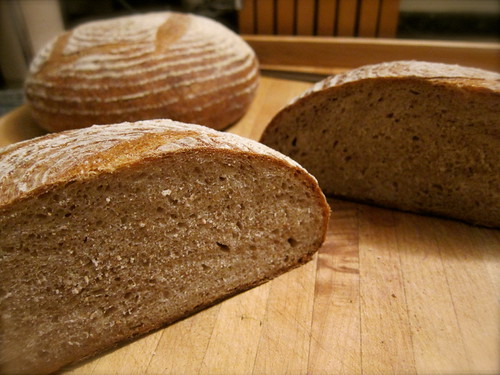
In the end, the yeasted loaf had tremendous loft and structure. The one made with a culture was slightly denser, with the sourdough flavor more then compensating.
To see more >

Resources:
King Arthur Flour Baking Education Center, Norwich, Vermont
Bread: A Baker’s Book of Techniques and Recipes by Jeffrey Hamelman
Butterworks Farm
Gleason Grains
Nitty Gritty Grain Co.

Submitted to YeastSpotting.

Posted in cooking, field trip | Tagged , , | 6 Comments

Mastering Food Preservation: Hands-On Workshops

Mastering Food Preservation: Hands-On Classes
A series of hands-on food preservation workshops are being offered through the UMaine Cooperative Extension, with several of them hosted by the Kittery and Marshwood (South Berwick) Adult Education programs. The upcoming 3-class series on Preserving Homemade Condiments begins on Monday, February 25th. We’ll be making an herbed mustard, cranberry ketchup, and beet relish — if interested, there are still some spots!

Preserving Homemade Condiments
Kittery Adult Education
Traip Academy, 12 Williams Ave, Kittery, ME
Mondays (3 classes), February 25, March 4, and March 11, 2013
5:30–8:30 pm
Fee: $5 + $45 materials

Making your own ketchup, mustard, and relish is fun and affordable, plus you control the ingredients and flavor. Use local and seasonal ingredients to make cranberry ketchup, beet relish, and herbed mustards. Learn how to prepare and safely preserve condiments using the hot water bath canning method. Participants will receive recipes and a jar of each product. Please bring a potholder with you to class.

Instructor: Kate McCarty, Community Educator, and Master Food Preserver Volunteers.

To register: http://kittery.maineadulted.org

Additional preserving classes:

 Savory Herb, Pepper, and Garlic Jellies, Tuesday, April 2, 5:30–8:30pm, Kittery Adult Education
• Preserving the Harvest: Rhubarb Orange Chutney, Thursday, April 25, 5:30 – 8:30 pm, Kittery Adult Education
• Drying Fruits, Vegetables, and Herbs, Thursday, May 9, 6–8pm, Kittery Adult Education
• Preserving the Harvest: Blueberry Jam & Jelly, Thursday, May 16, 6–9pm, Marshwood Adult Education, South Berwick

For more information: http://umaine.edu/food-health/food-preservation/hands-on-workshops/

Posted in cooking, preserving | Tagged , | Leave a comment