11.30.11 Kale

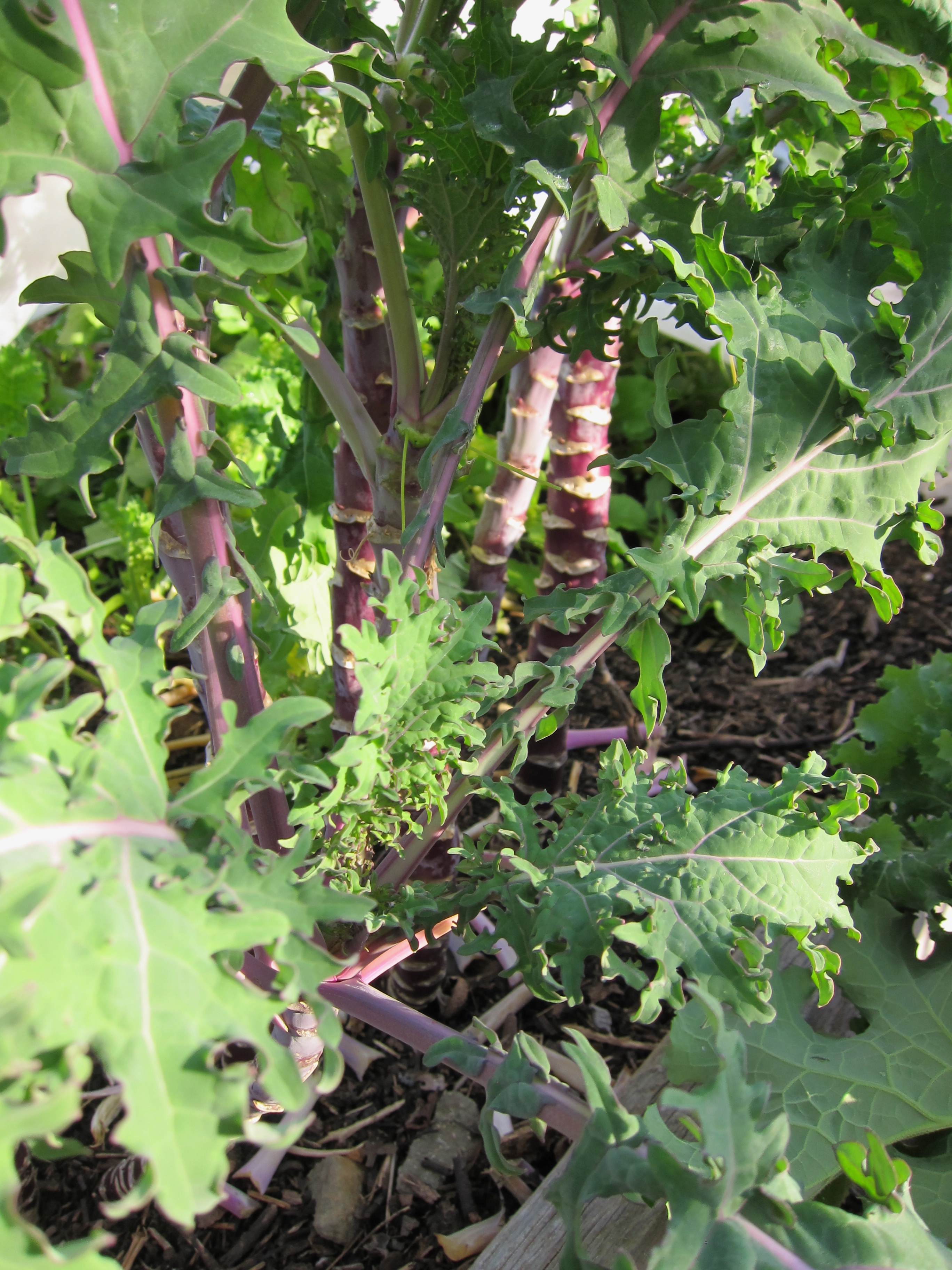
I’d see it on a t-shirt or on a bumper sticker, the command “Eat more kale.” It wasn’t something I grew up eating, and I’d think to myself, I’m going to have to try it, this kale. My first encounter with it was at the farmers’ market where it was easy to find, and later sturdy bunches of it were often included in our CSA share. Its scarcity during the early years of the Winter Farmers’ Market, when kale is at its sweetest, made me appreciate it even more.
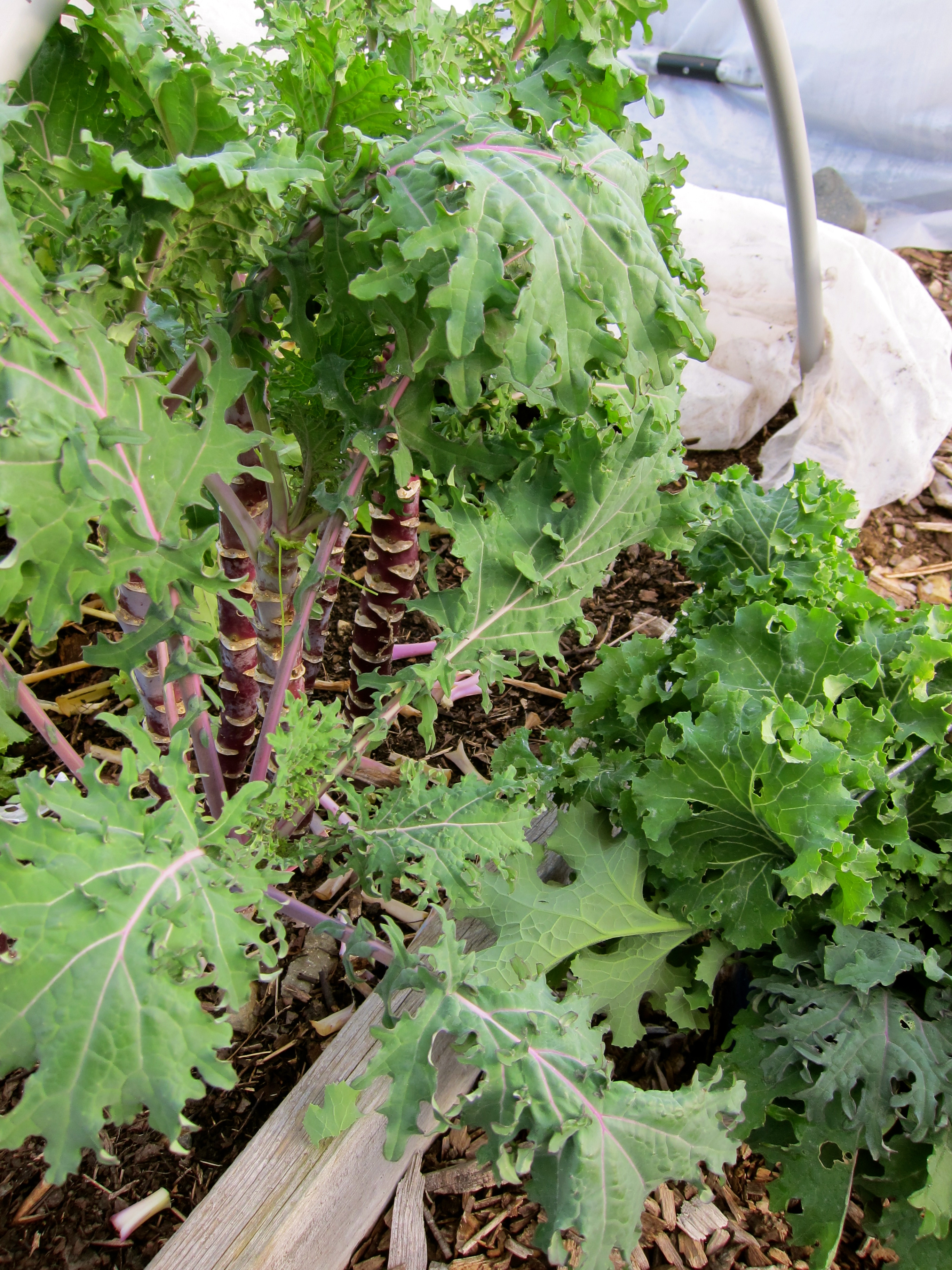
We’d planted two short 20 inch rows, one of Red Russian and the other of Siberian, back in early April under a cold frame, maybe a dozen plants in all. It may be due to this season’s favorable conditions but they’ve been faithful producers ever since. We had one last harvest before clearing the bed, yielding a hefty two buckets full. Fortunately, it’s not the last of our kale, there’s still more under cover. However, the awaiting crop doesn’t mark the passage of time the way these do, with their notched stems ticking off the days between now and then.
Posted in garden | Tagged | 10 Comments

Erbazzone

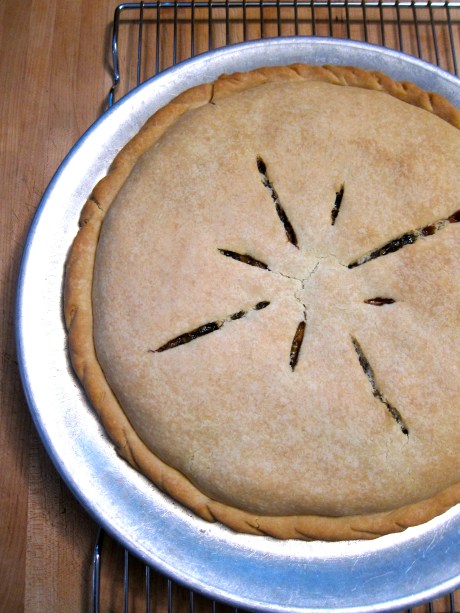
A favorite way of preserving garden vegetables is to freeze it in a ready-to-eat form, and when we have an abundance of cooking greens, I like to make Erbazzone. Freezing cooking greens may be quicker but, once it’s baked, this Italian savory tart seems to preserve the flavor of the greens even more. We reheat thin wedges of it to go with soup, as a light meal in itself, or as an impromptu snack or appetizer. It’s also great for picnics and potlucks — the inclusion of pancetta, garlic and parmesan results in a burst of umami flavors, insuring you’ll be leaving the party with an empty plate. If this recipe from “Molto Italiano” by Mario Batali seems daunting, many of the steps can be broken down and done ahead of time. It calls for 2½ pounds of spinach, chard or beet greens; here I’ve used a blend of chard and beet greens.

Posted in cooking | Tagged , | 1 Comment

Thanksgiving interlude

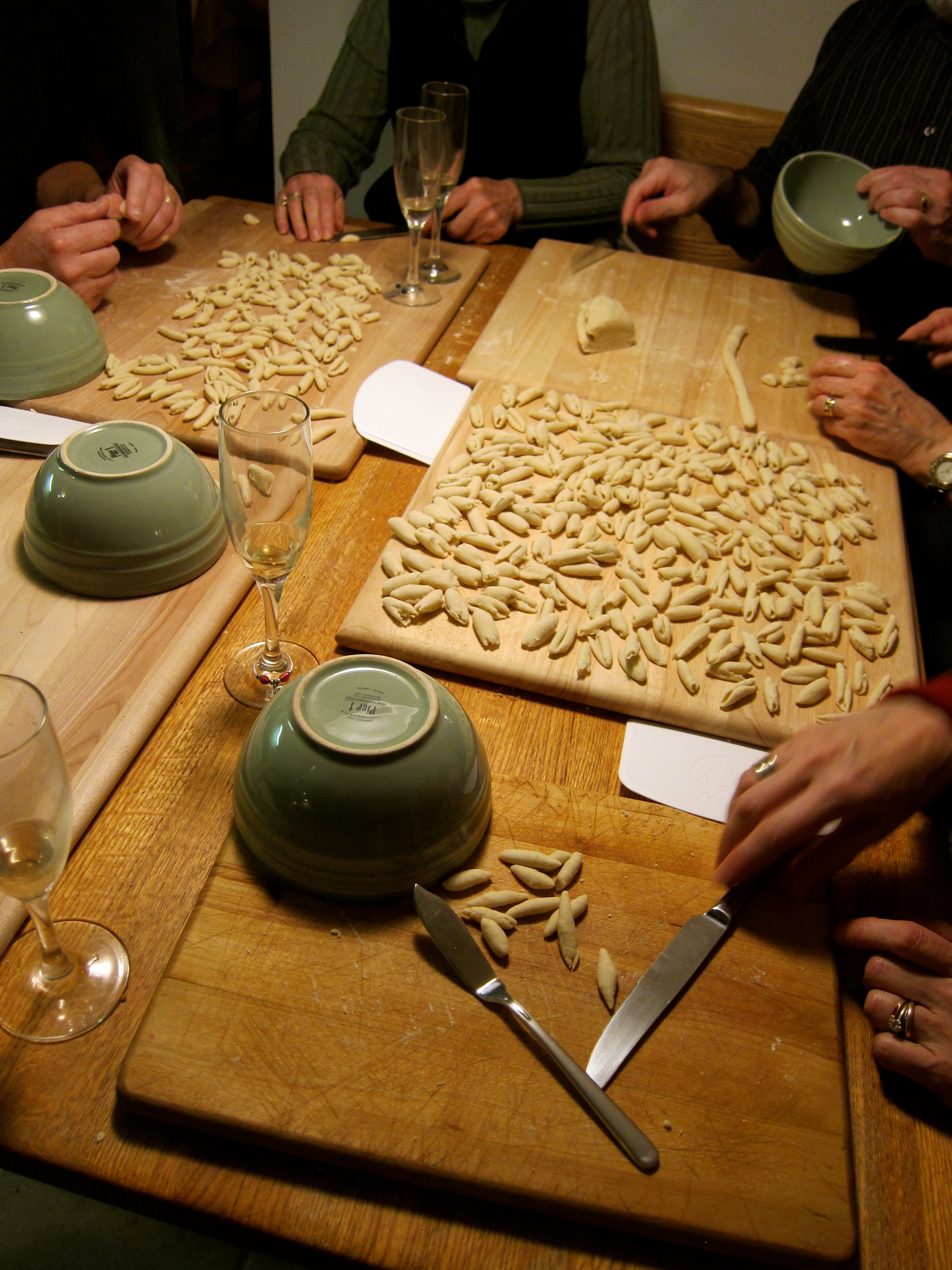
We argue about it every Thanksgiving, how many years does this one make it? At last count, this is the 28th one we’ve spent with the same group of friends. We don’t see one another as frequently as we once did, and the tradition has undergone metamorphosis over the years to accommodate how life changes. But somehow we always come together this one weekend to catch up with one another, eat and drink far too much, stay up late, and laugh until our sides hurt. We can’t think of a better way to spend Thanksgiving holiday than with you all — xxoo.

Posted in interlude | Tagged | 5 Comments

11.22.11 Beets, greens and fennel

We were hoping to bring salad greens to share for Thanksgiving weekend and, with the continuing of unseasonably warm weather, our goal was easily met. Mesclun at top, and at bottom (left to right): puntarelle, fennel, cime di rapa, and beets. The beets could have stayed longer in the ground, however, with lower temperatures predicted over the holiday, we decided to harvest while the greens were still usable.

We’d harvested fennel last month, and left this final one to see how it would fare. We never expected it to bulb up and were even more surprised to find it resprouting off the same root for a third time. With the Pugliese dish Fave e Cicoria as inspiration, dinner that night was made up of a silky puree of fennel, potato, and celeriac, topped with a saute of puntarelle and cime de rapa, and a generous pour of good olive oil — a simple feast before the week’s festivities.

Join the weekly harvest at Daphne’s Dandelions…

Posted in garden | Tagged , , , , , | 7 Comments

Autumnal interlude

With Tropical Storm Irene leaving much of the garden wind- and salt-burned, we’d thought we wouldn’t get much fall color this year. As it turns out, there was still plenty just waiting to turn. For slideshow >

Posted in garden, interlude | Leave a comment

11.18.11 Tatsoi

I’d put bok choy on our list of vegetables for next season before realizing that it was already growing in the garden. Tatsoi, a Japanese variant also known as rosette bok choy, shares the same spoon-shaped leaves and edible stalks as other types of bok choy. The plant will will form characteristic flat rosettes when grown in cool conditions, but  will grow more upright and go to seed in warmer weather. If you are planning to let it grow to maturity, allow enough space for the full rosette to spread in. Ours is growing under cover, but it can survive severe frosts and heavy snow without protection — something to remember when planning our season extension planting for next year!

When picked young, the leaves can be eaten raw and are often found mixed with other salad greens. As it matures, tatsoi becomes tougher and stronger-tasting than other bok choys, and is tamed through cooking, becoming tender and mild. We had these sauteed with leeks, garlic, ginger, and Maine shrimp; deglazed with white wine, and finished with some toasted sesame oil.

Join the weekly harvest from around the world hosted by Daphne’s Dandelions

Posted in garden | Tagged | 10 Comments

Winter Farmers’ Markets — Not just a summer thing

When people hear about a Winter Farmers’ Market in New Hampshire, the first thing they ask is what could there possibly be to buy, other than potatoes? Held in a light-filled greenhouse on the Seacoast, here’s just a glimpse of the amazing variety, quality and abundance 50+ local farmers and food producers brought this last weekend. Not only are all of the meat and produce grown locally, the prepared foods also include local ingredients. More than 1,800 people poured through the door seeking local food for their Thanksgiving table — click here for slideshow

Posted in field trip | Tagged | 2 Comments