

The monarch butterflies are migrating southward, and have passed up the milkweeds in favor of joining the bumblebees that have taken up temporary residence in our flowering Seven Sons tree (heptacodium miconioides).
The monarch butterflies are migrating southward, and have passed up the milkweeds in favor of joining the bumblebees that have taken up temporary residence in our flowering Seven Sons tree (heptacodium miconioides).
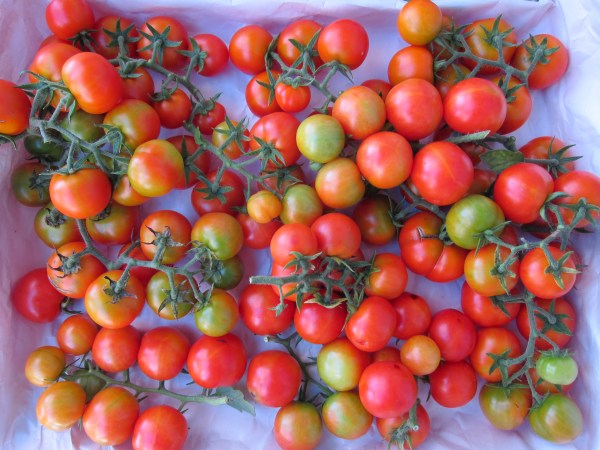
The overnight temperatures are hovering around 50°F and we’re concerned about leaving the pomodorini appesi, or hanging tomatoes, out for much longer.

The Aprile pomodorini are beginning to take on color, enough so that we were able to harvest a few of the lower, mostly ripe bunches.

There’s still lots of fruit left on the vine with a ways to go.
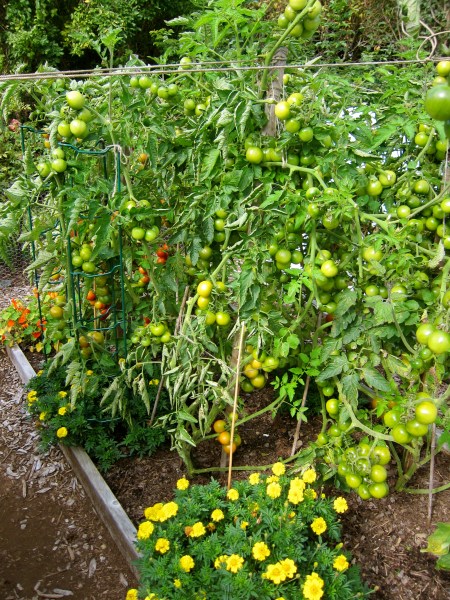
The Ponderosa sel Oro are also beginning to ripen, but lag significantly behind the Aprile. We’re hoping to get more color on them before being forced to harvest.

Depending on how they do the rest of the season, we may simply not have enough growing time to continue with this variety.
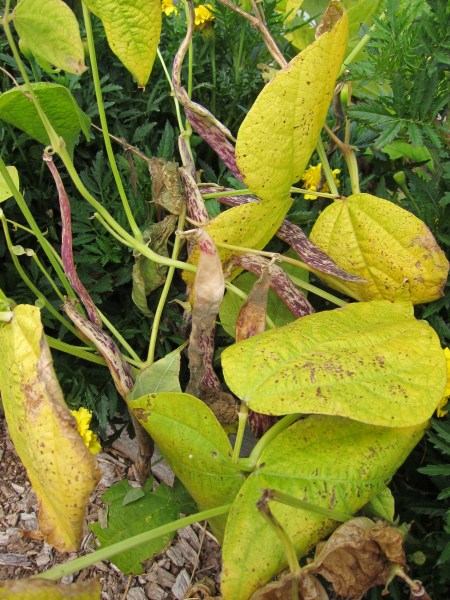
The cold is also affecting the other less tolerant plants like this second planting of Dragon Langerie beans, which are dying before the pods can mature.
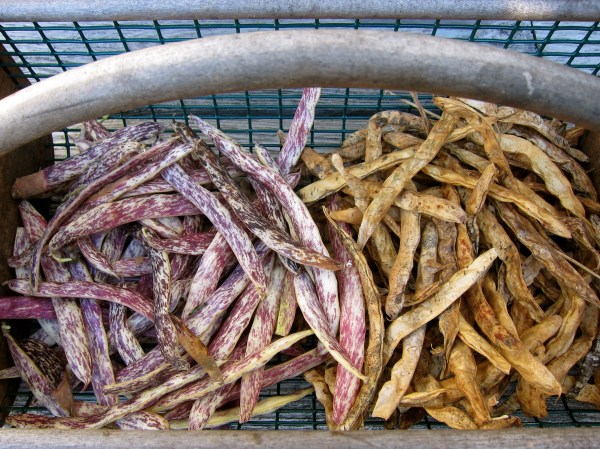
A harvest of both planting of beans, semi-mature and dried.

Three different stages of shelled beans (clockwise, starting from left): immature beans, beans from fully dried pods, and true shelling beans from mature, partially dried pods. We’d thought the green immature beans would be similar to edamame, and boiled them as a test sample, but turned out tasting bland and starchy rather than sweet and creamy.

The Boothby Blonde cucumber plants had dropped most of their flowers during the heat of summer. They’ve now recovered and making up for lost time by producing steadily. Trimming the vines of damaged leaves seems to help slow down disease.
Harvesting: Cucumbers, fennel (second growth), kale, chard, chicories, fall greens, radishes, Tokyo turnips, potatoes (first tub), green onions.
Slowing down: Cherry tomatoes, eggplant, summer squash.

It took me more than several years to get around to trying out Tomato Paella. I would run across the recipe when tomatoes were out of season, make a mental note, but never remember when the time came. This year’s early arrival of just about everything gave me the extra time I needed to cook up a batch as the tomatoes were coming in. After having tomatoes in their plainest, freshest form all summer long, we’ve returned to this dish now that the kitchen’s cool enough to cook in again.
The flavor of fall tomatoes, like their early summer counterpart, are more muted than at the sun-filled height of summer. Tomatoes are cold-sensitive and, as temperatures drop, the membranes inside the fruit walls become damaged, causing the tomato to lose flavor and become mealy in texture. Cooking them in big, chunky wedges, as in this paella, is one way to revive their bright taste and enjoy them before they’re gone.
This basic paella is easily altered to the season and what’s on hand. Instead of fava beans, early season choices include spring peas or asparagus, progressing through green beans or summer squash, and ending up with shell beans, edamame or corn. At its most pared down, using 2 teaspoons of smoked paprika instead of the chorizo, the dish becomes effortlessly vegan. Whatever the combination, this simple paella is warming and comforting while remaining light and fresh, perfect for this transitional time as we move into the cooler evenings of fall.
Tomato Paella
3½ cups stock or water
Large pinch saffron threads (optional)
1½ pounds ripe tomatoes, cored and cut into thick wedges
Salt and freshly ground black pepper
¼ cup extra virgin olive oil
4 ounces Spanish chorizo (spicy or sweet), chopped
1 medium onion, minced
1 tablespoon minced garlic
1 tablespoon tomato paste
2 cups Spanish or other short-grain rice
1 cup fava beans, blanched and peeled
Minced parsley for garnish
– Preheat oven to 450°F. Warm stock or water in a saucepan. If using, stir in saffron, and set aside. Put cut tomatoes in a medium bowl, sprinkle with salt and pepper, and drizzle them with 1 tablespoon olive oil. Toss to coat.
– Put remaining oil in a 10- or 12-inch paella pan or ovenproof skillet over medium-high heat. Add chorizo and cook, as the oil takes on color. Then add the onion and garlic, sprinkle with salt and pepper, and continue cooking, stirring occasionally, until vegetables soften, 3 to 5 minutes. Stir in tomato paste and cook for a minute more. Add rice and cook, stirring occasionally, until it is shiny, another minute or two. Add fava beans and liquid, and stir until just combined.
– Put tomato wedges on top of rice and drizzle with juices that accumulated in bottom of bowl. Put pan in oven and roast, undisturbed, for 15 minutes. Check to see if rice is dry and just tender. If not, return pan to oven for another 5 minutes. If rice looks too dry but still is not quite done, add a small amount of stock or water (or wine). When rice is ready, turn off oven and let pan sit for 5 to 15 minutes.
– Remove pan from oven and sprinkle with parsley. If you like, put pan over high heat for a few minutes to develop a bit of a bottom crust before serving. Makes 4 to 6 servings.
Adapted from a recipe by Mark Bittman, The New York Times.
Local ingredients: Tomatoes from Riverside Farm; onion from Black Kettle Farm; home-made stock and tomato paste; fava beans, garlic and parsley from the garden.
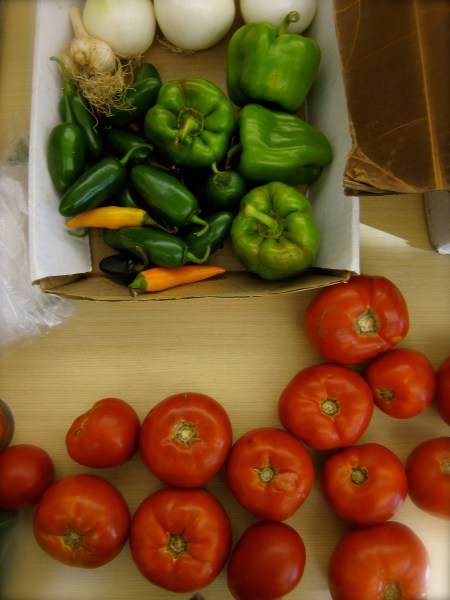
Tomatoes are often the first thing that comes to mind when people think of canning. They preserve well and, whether put up as sauce, crushed or left whole, are versatile to cook with in canned form. I’ve been canning tomatoes for more than several years now, but felt my technique could use some improvement and was looking forward to this next session in the Master Food Preserver Program.
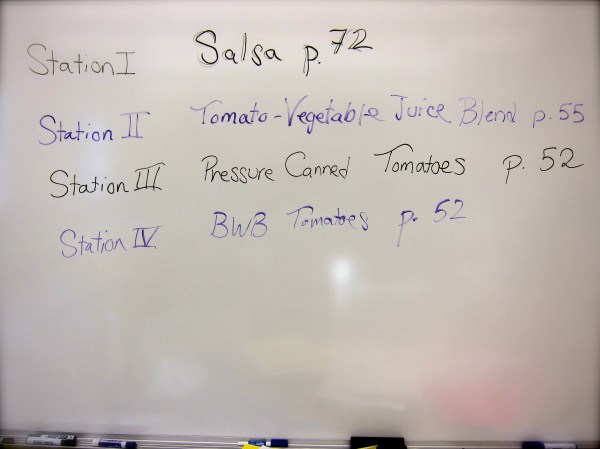
The evening’s hands-on lab, our seventh in the training, included putting up batches of salsa, tomato-vegetable juice, and comparing pressure canned tomatoes against processing by boiling water bath processing. Page numbers above refer to one of our class texts, So Easy to Preserve.

Unlike fresh salsa, the canned version calls for peeling the tomatoes. Skip this step and the peels will separate from the tomatoes during processing, leaving the salsa full of tough, unpalatable curls of peel. We also took the precaution of wearing rubber gloves while cutting the hot peppers, and made sure to wash the cutting board thoroughly afterwards. Even so, my hands were tingling for the rest of the evening from contact with the capsicum residue left behind.

The recipe assigned, Tomato/Tomato Paste Salsa, requires two cans of tomato paste. Canned salsas tend to be watery, and the paste in this recipe helps to give it body as well as a rich, deep flavor. With other recipes, an alternative would be to drain off some of the liquid before serving. Another salsa recipe that was highly recommended is the one for Tomatillo Green Salsa; if tomatillos are in short supply, green tomatoes may be used in their place.
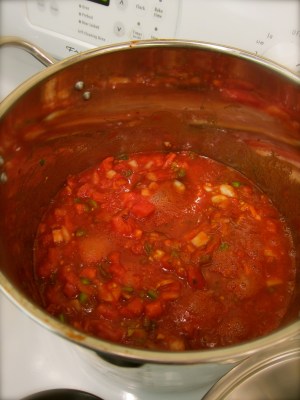
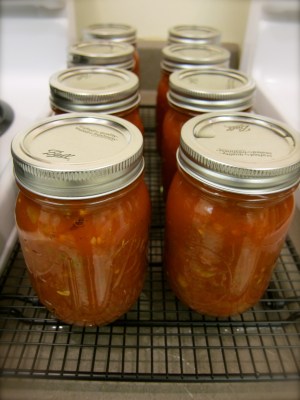
Canning salsa is a relatively recent phenomenon, and the National Center for Home Food Preservation has developed current recipes for combining this low and high acid mix, and for processing in a boiling-water bath. In regards to canning salsa, there is some leeway in altering approved recipes:
• Lemon juice is higher in acid than vinegar — may substitute lemon juice for vinegar, but do not substitute vinegar for lemon juice.
• Do not reduce amount of tomatoes or lemon juice.
• May reduce amount of peppers, onion or garlic, but do not add extra.
• Canned chiles may be used for fresh.
• May substitute different types of pepper for another, but keep total volume the same.
• May alter amounts of herbs and spices.
In general, keep in mind that the amount of low-acid ingredients should not be increased in proportion to the high acid ones.

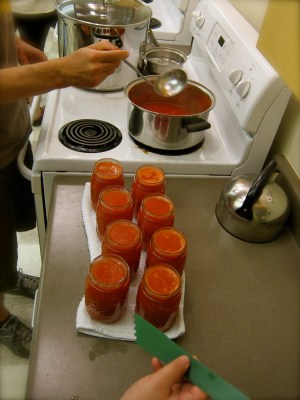
The group making tomato juice added onions and garlic for a blend of vegetables. After the tomato mix was simmered for 20 minutes, the vegetables were pressed through a food mill to remove the skins and seeds. The juice was processed in a boiling-water bath, though processing in a pressure canner is also an option. In either case, lemon juice was added to each jar to ensure a safe level of acid. The green tool shown above (right) came with our class kits; the rounded end is for removing bubbles, while the notched end is for measuring headspace.
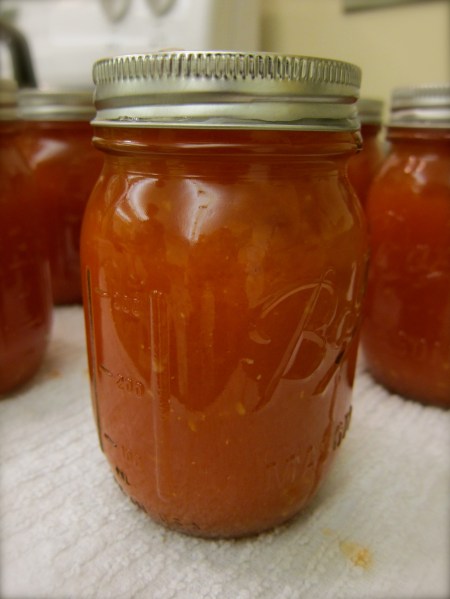
With a choice of vodkas made in either Maine and New Hampshire, I’m imagining this heirloom tomato juice as a base for a completely local Bloody Mary.
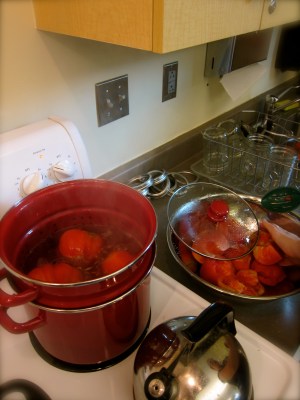

Boiling-water canner versus pressure canning, is there a difference? Directions for canning tomatoes often give processing times for both, and we were given the opportunity to test it side-by-side and decide for ourselves. Pint jars were raw-packed with peeled and cut tomatoes, and topped with hot water. Then half the jars were processed in a boiling-water canner for 40 minutes, while the other half were processed in a pressure canner for 15 minutes.

Though boiling-water canning required a longer amount of processing time (above, left), the pressure-canned tomatoes (above, right) needed additional time for the canner to exhaust, come up to pressure, and to decompress. This adds a considerable amount of time, especially when canning more than one batch. Of note, several of the pressure-canned jars failed to seal, and many of the jars lost liquid — a problem of fluctuating temperatures during processing and/or lids not having been tightened enough.
Recipes & Resources
– Recipe: Tomato/Tomato Paste Salsa
– Recipe: Tomato and Vegetable Juice Blend
– Recipe: Whole or Halved Tomatoes (Packed in Water)
– Let’s Preserve: Tomatoes
– Canning Fruits & Tomatoes in a Boiling-Water-Bath Canner
– Tomatoes: Safe Methods to Store, Preserve, and Enjoy
– Canning Salsa Safely
– Freezing Raw Tomatoes, With and Without Their Skins
This series of posts follows the Master Food Preserver Program being offered through the University of Maine Cooperative Extension.
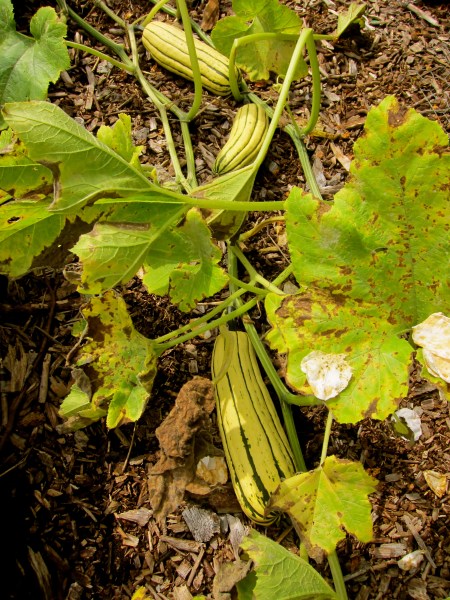
On seeing the winter squash vines starting to die back, one senses the inevitable change in season. Of the two types of winter squash we planted this year, we’d had high hopes for the Sibley but it failed to thrive. The cause is hard to say, conditions this past season have been all over the place. The Delicatas, on the other hand, soldiered on and did their best to produce, despite repeated attacks from squash vine borer and the arrival of powdery mildew.

We’re still a little confused about when to harvest these, conflicting advice abounds online. Reasoning that too long a wait prolongs the risk of disease, we’ve begun bringing them in. Delicatas aren’t meant as a long storing squash and, though we’ve been able to store them over winter, their sweetness declines with time, and are best eaten before the year’s out. These relatively tender-skinned squash can be eaten skin-on, and we have them either baked with stuffing, or as roasted slices.
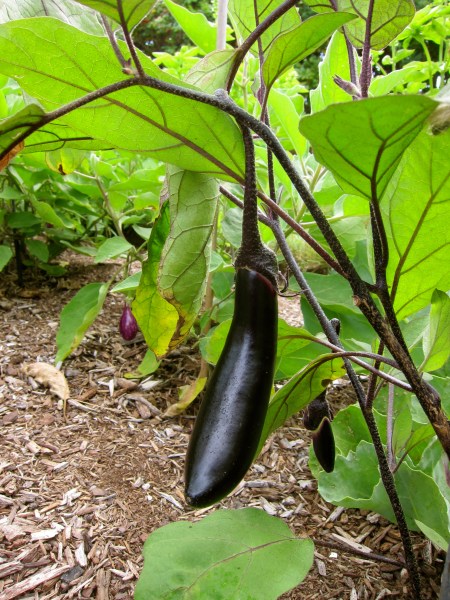
Overnight temperatures are beginning to drop and the end may be near for cold-sensitive plants like these eggplant. We’re still hoping there’ll be enough for a batch of Pasta all a Norma and maybe even some pesto before they and the basil are gone for the season.
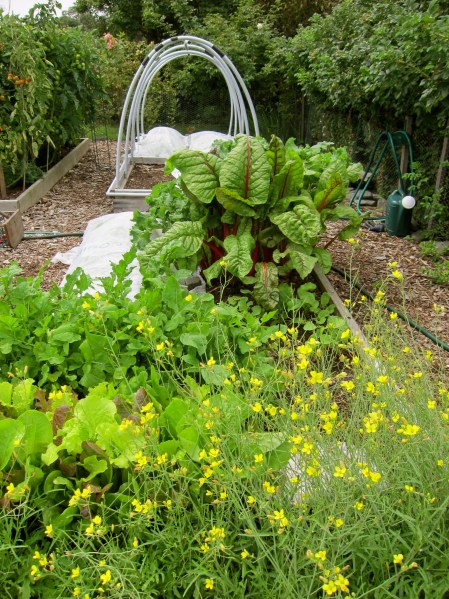
The greens bed is looking overgrown and straggly, but continues to produce chard, kale and salad greens while the fall planting comes in. We’ve been letting the arugula bolt and flower, providing nourishment for the very busy pollinators.

Fall greens: More chard, kale, and salad greens, along with Fun Jen, a couple of Italian chicories (Pan di Zucchero, Galatina, and Brindisi), and a variety of radishes.
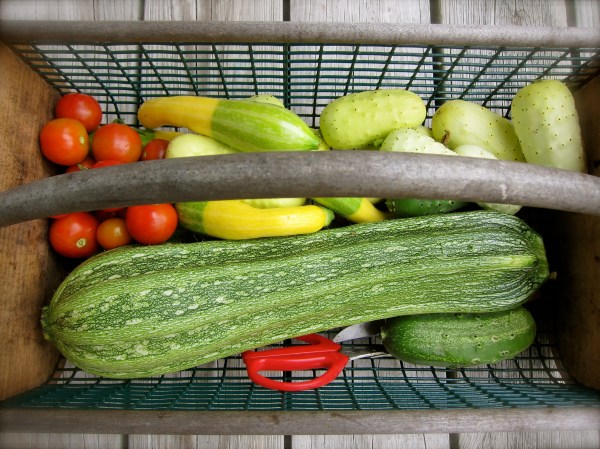
Elsewhere in the garden, things continue to produce though at a slower rate. We’re still checking the cucumber and summer squash plants every day, but the Costada Romanesco zucchini are especially sly. Blending in with their vines, they can be elusive and take advantage of their camouflage to grow at will. This specimen weighs in at almost 4 pounds and, though over-sized, is rather grand.

Today marks the one-year anniversary of Diary of a Tomato. Sometime last week we passed 200 posts, an accomplishment we never would have foreseen or thought possible when we began. Many thanks to you, dear reader, for accompanying us along the way. Writing here has helped us keep our sanity, find balance, and reminded us to pay attention as we go about our daily lives. We are grateful for all of your thoughts, advice and warm camaraderie that’s added so much to this experience. We hope you join us in the coming year, and look forward to your continued good company.
— The Cook & The Gardener

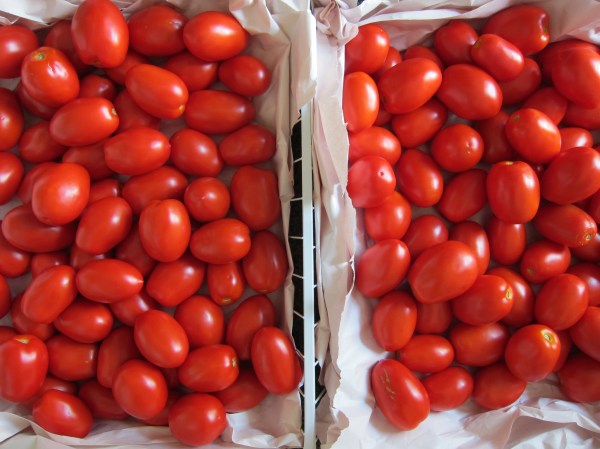
For the last several years, I’ve set aside Labor Day weekend for canning tomatoes. We don’t have enough space nor the conditions in which to grow tomatoes in quantity, and rely on local farmers for additional supplies. It’s been an unpredictable season, and paste tomatoes have been late in ripening. When New Roots Farm brought 25 pounds of Roma tomatoes — a type of plum or paste tomato that’s ideal for canning — to the Exeter Farmers’ Market, I was ready to take the whole lot.

It was while watching a video on freezing tomatoes when I discovered that a strawberry huller can be used for coring tomatoes. I don’t have much storage space and try to keep my cooking equipment winnowed down to multi-purpose ones. However, coring tomatoes with a paring knife can be tedious, as well as dangerous. After dispatching the lot of tomatoes quickly and neatly, and without the risk of having a knife aimed at my hand, this handy tool more than earned a place in my kitchen.

The meatiness of these Blush and Juliet and tomatoes (above left and right), also from New Roots Farm, makes them suited for roasting and drying, which concentrates their sweetness, and for turning into a flavorful sauce. They’re smaller than than the usual paste tomatoes, but similar enough that I was curious how they would can up.
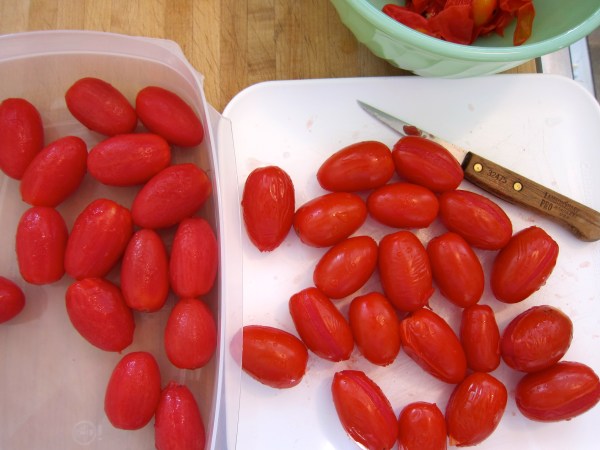
The size of these mini-plum tomatoes can make it seem a daunting chore to peel and process them, but it went surprisingly fast. After blanching, their skins slipped off easily and all in one piece, turning it into a fun and satisfying task.

Raw-packing the Blush and Juliet tomatoes enabled me to can them separately from the Romas. I left them whole, and found their petite size just the right fit for packing into pint jars. I noticed some water loss in the jars of yellow Blush tomatoes, and brought it into my next Master Food Preserver class to find out what the problem was.
On loss of liquid in canning: If boiling-water processed, the loss is due to the cap not having been tightened enough before processing; if pressure canned, the loss is due to fluctuating temperatures during processing. In this case, the caps weren’t tightened enough before boiling-water processed. As long as the jars seal correctly, the tomatoes are fine to eat. Note to self: Make sure that the rings are on good and “fingertip” tight!
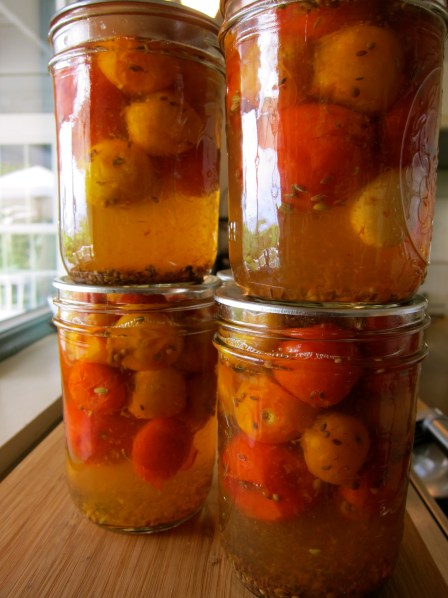
Since I already had all of my canning equipment out and a pile of cherry tomatoes from the garden, I finished up the weekend with a batch of Sweet Pickled Cherry Tomatoes, taken from The Preservation Kitchen by Paul Virant. As with most pickles, they need time for their flavor to develop before they’ll be ready for sampling.
 Weekend canning count: 12 quarts whole and 7 pints crushed Roma tomatoes; 8 pints whole Juliet tomatoes; 3 pints Blush tomatoes; 5 pints pickled cherry tomatoes; and a pint of dehydrated Juliet tomatoes made from the extras I discovered lurking in the cooler after canning was done.

 Diary of a Tomato