Collecting winter squash

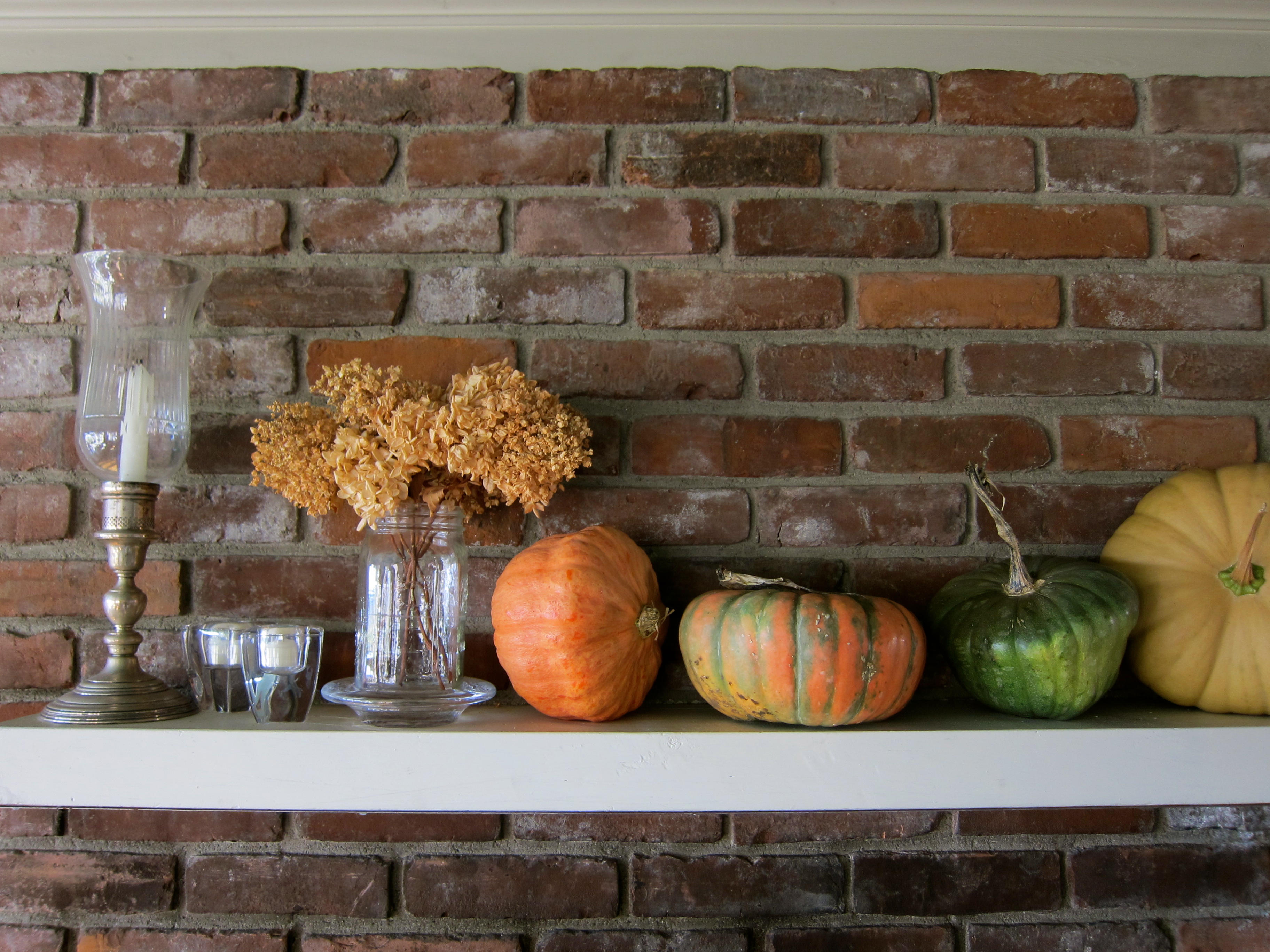
My addiction to dried beans is matched only by my addiction to winter squash — their color, shape and patterning attracts my painter’s eye, and I find myself wanting to have one of everything. The small size of our garden limits us in what we can grow, however, the last Portsmouth Farmers’ Market for this season provided a wealth of choices. At White Gate Farm, Susan and RJ gave us an enthusiast’s tour of the over 20 varieties of squash they grew this year, giving names, a little of their history, and cooking suggestions. Here are just a few of the ones we couldn’t resist bringing home (left to right):

Australian Butter (C. maxima): Australian heirloom pumpkin; firm, dense flesh; excellent for baking, especially pies; great keeper.

Speckled Hound (C. maxima): Distinctive boxy shape and coloring; thick, dense, yellow-orange flesh with concentrated sweet, nutty flavor; often grown as an ornamental but excellent for eating.

Queensland Blue (C. maxima): An Australian heirloom, also known as Australian Blue, Beaudesert Blue; meaty, fiberless, sugary, brilliant orange flesh; long shelf life.

Long Island Cheese (C. moschata): East Coast heirloom; deep orange, moderately sweet flesh; known as a pie squash; good keeper.

Musquée de Provence (C. moschata): French heirloom cheese pumpkin, also known as Fairytale, Potiron Bronze de Montlhéry; dense, fiberless, deep orange flesh; superb cooked, also traditionally eaten fresh — cut like wedge of cheese and sliced very thinly; very long shelf life.

• Fordhook (C. pepo): From the same family as the Delicata, thought to be extinct; also known as Fordhook Marrow or Oblong; thought to be extinct; grainy but not coarse, mildly sweet flesh; good shelf life.
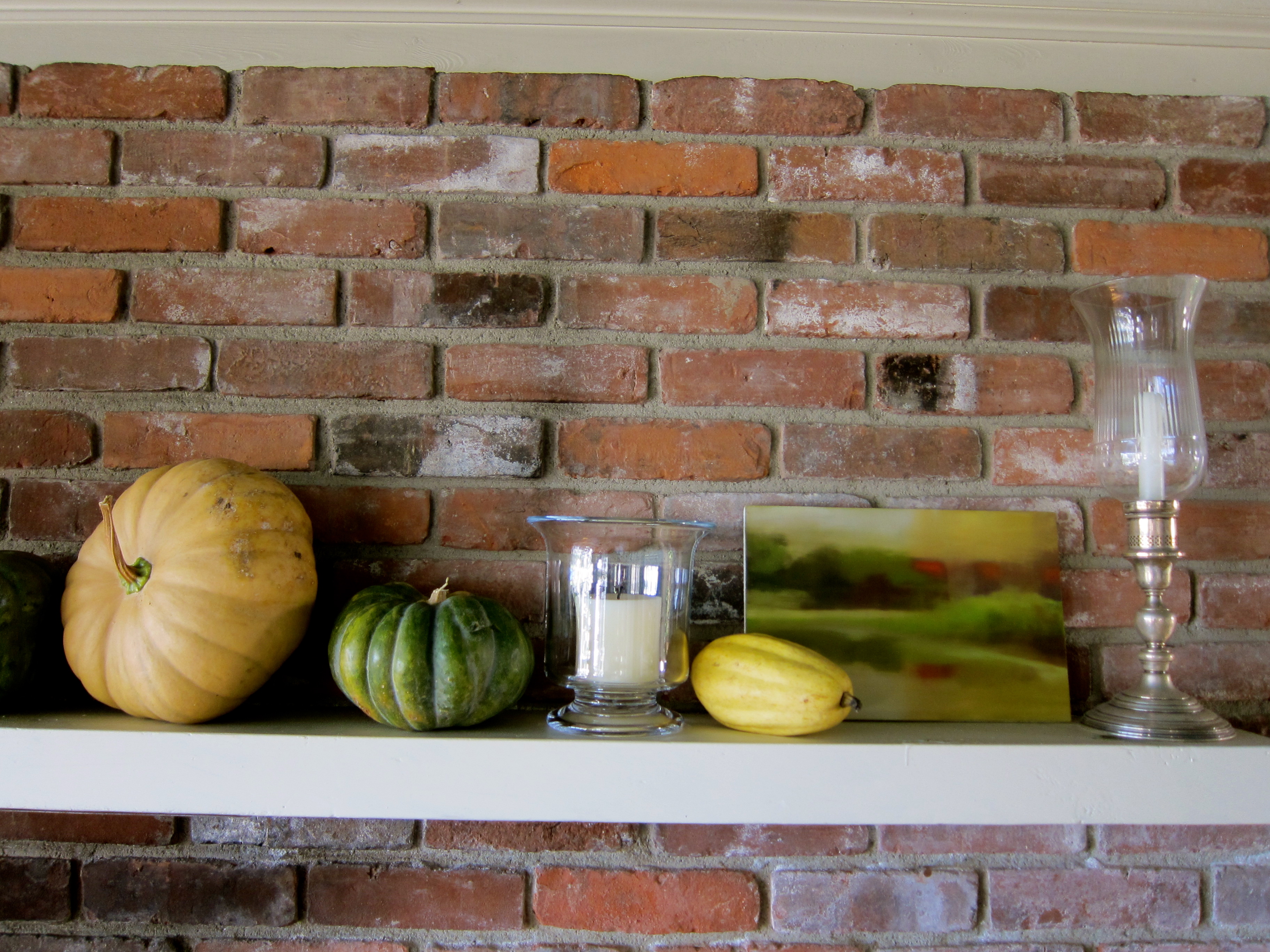
Also (left to right): Marina di Chioggia from White Gate Farm, and Long Pie Pumpkin from Heron Pond Farm.

Marina di Chioggia (C. maxima): Italian heirloom, also known as Chioggia Sea Pumpkin, Zucca Baruca, Zucca Santa; fiberless, sweet, dry flesh; excellent in soups and pastas (especially gnocchi, also ravioli, risotto); good keeper, flavor improves with storage. It seems difficult to grow true, but one of my favorites.

Long Pie (C. pepo): New England heirloom, also known as Nantucket Pie; stringless, smooth, brilliant orange flesh; like its name, known as best for baking pie; ripens further in storage, increasing flavor; great keeper.

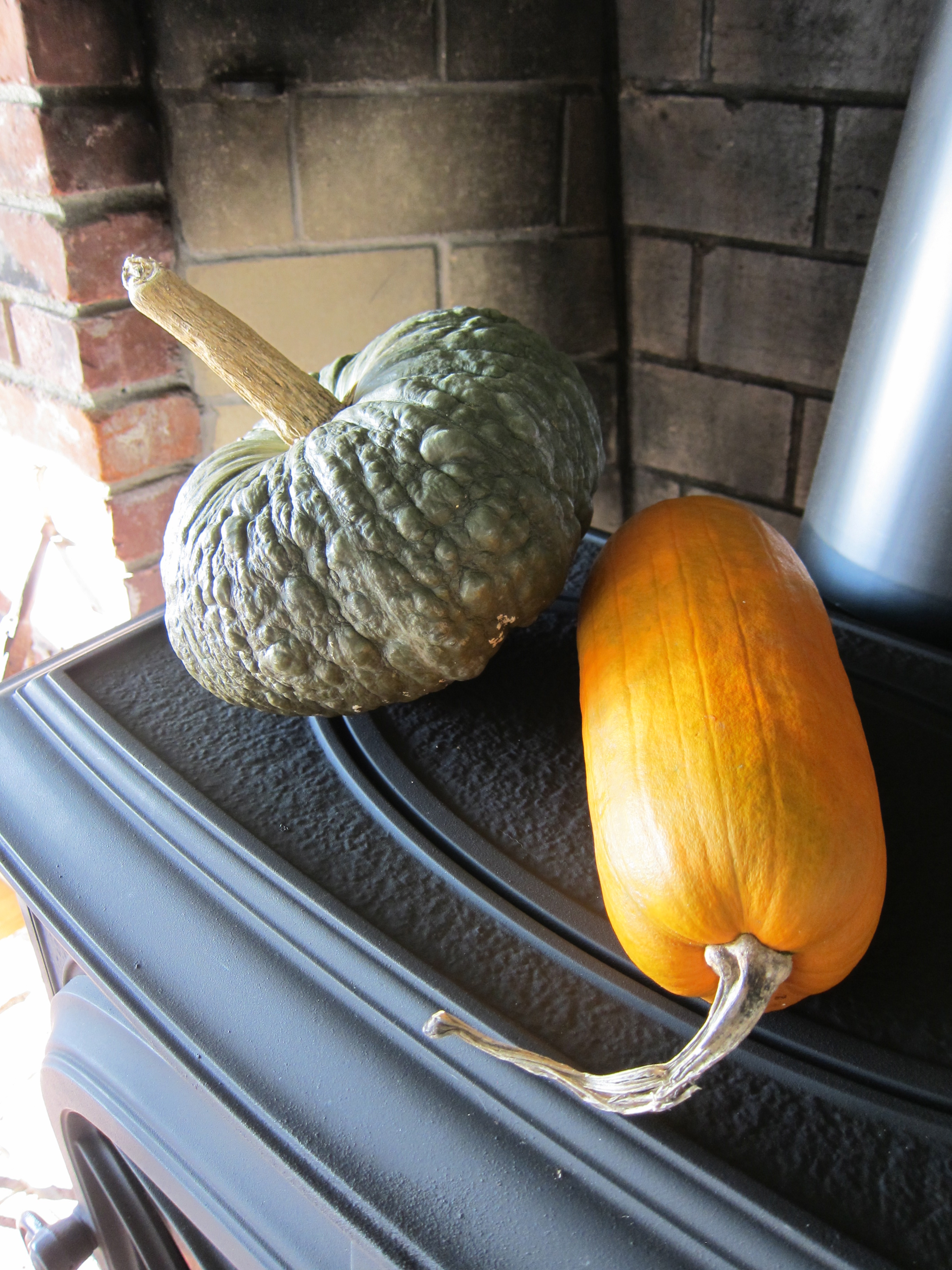
From Brookford Farm (left to right): Thelma Sanders, Red Kuri, and Native American Hidatsa.

• Thelma Sanders (C. pepo): Family heirloom from Thelma Sanders in Adair County, Missouri; also known as Thelma Sanders Sweet Potato; cream-colored acorn squash with thick, orange-gold flesh; tender, sweet, chestnut flavor; enormously productive; long shelf live.

Red Kuri (C. maxima): Mini hubbard from Japan, also known as Baby Red Hubbard, Orange Hokkaido; very smooth, dry flesh with deep orange color; rich, sweet flavor; great baked for pies, skin is less tough than most squashes, so no need to peel when making pureed squash soup; — High Mowing

Hidatsa (C. maxima): Native American heirloom from the Fort Berthold Reservation in North Dakota; Hubbard-type or French pumpkin type fruit with reddish pink skin; thick orange flesh, very flavorful, outstanding for pies but also delicious by itself; excellent keeper.

Resources

The Compleat Squash by Amy Goldman
High Mowing Seeds
Seed Savers
Territorial Seed
Turtle Tree Seed

Posted in cooking | Tagged | 8 Comments

11.4.11 Tatsoi & watermelon radishes

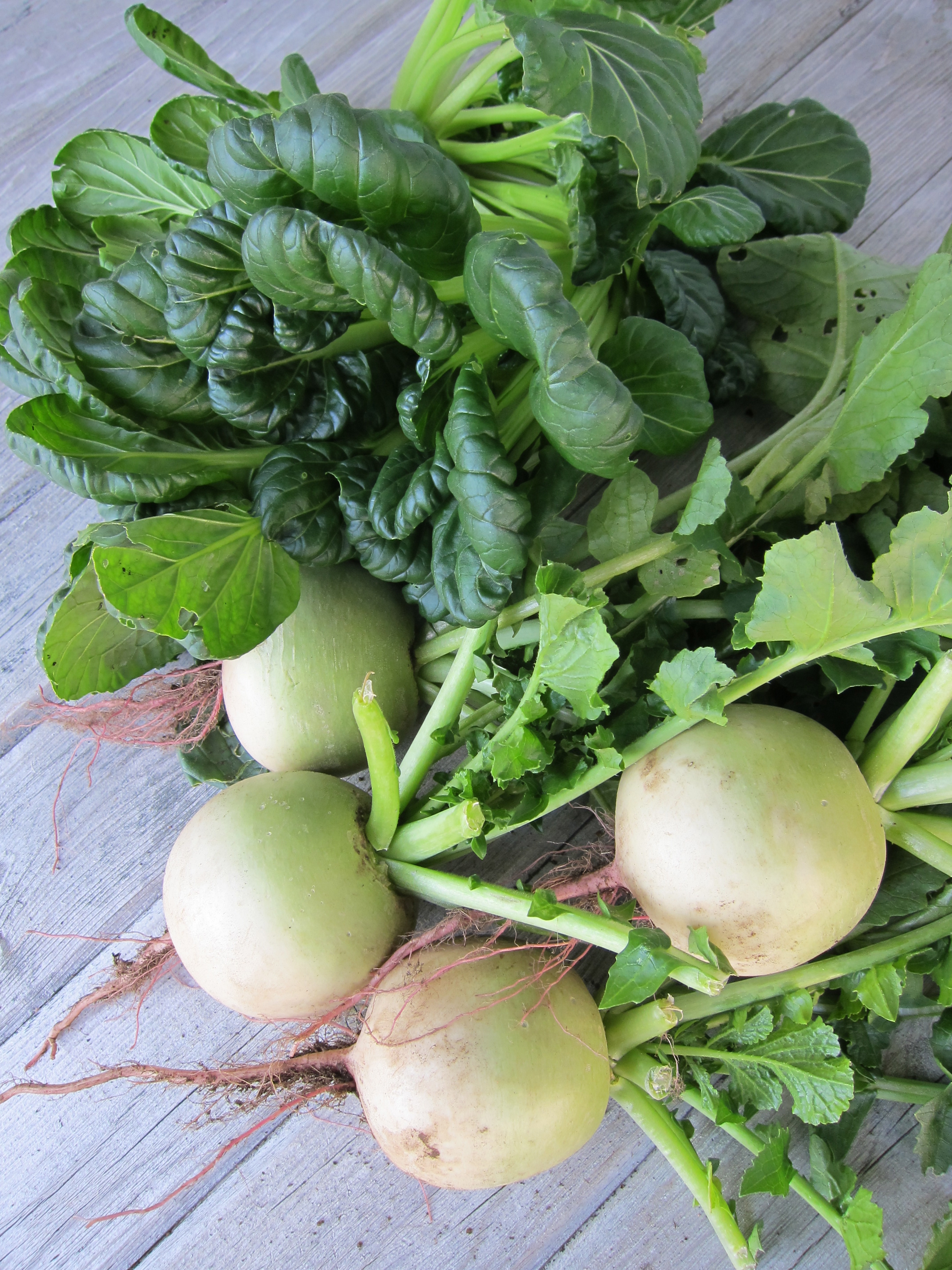
The tatsoi we’ve been growing is part of a salad mix, but it’s always bullied the other greens, quickly overtaking them. This time, inspired by Daphne, I thinned everything else out and gave the tatsoi room to grow into the lush, wide rosettes they’re known for. I hadn’t realized these cold hardy gems are a kind of bok choy, and Daphne kindly offered a few suggestions for cooking them:

 “…my favorite way is to put it in chicken soup. All you need is stock flavored with a bit of soy sauce. Get it boiling. Put the leaves at the bottom of your soup bowl and pour the boiling liquid over them. They cook just about perfectly that way. I’ll put them in stirfries. And I also put them in scrambled eggs along with some onions and mushrooms.”

As for the watermelon radishes, we grow them as a storage crop. Originally from China, these can go by many names, including Roseheart, Beauty Heart, Red Meat, and Shinrimei radish. They’re part of the winter radish family and last forever (well, at least until spring). If nothing else, the color itself is pure happiness, especially come mid-winter. Here, I’ve shaved them thinly like a carpaccio, to pair up with some of Brookford Farm’s bread made from their own wheat.

Make sure to visit the weekly party featuring kitchen gardens around the world, hosted by Daphne’s Dandelions

Posted in garden | Tagged | 7 Comments

11.2.11 After the storm

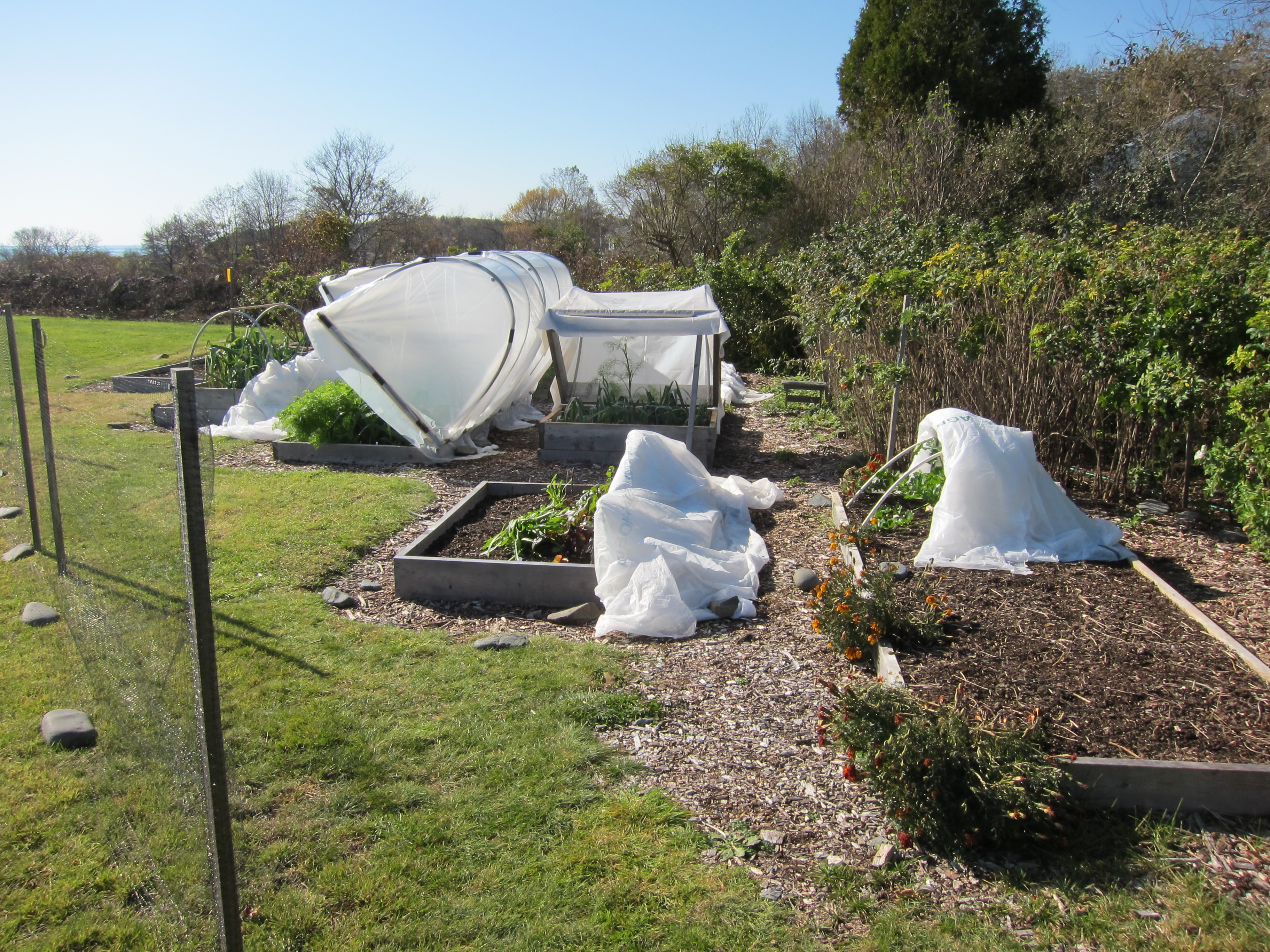
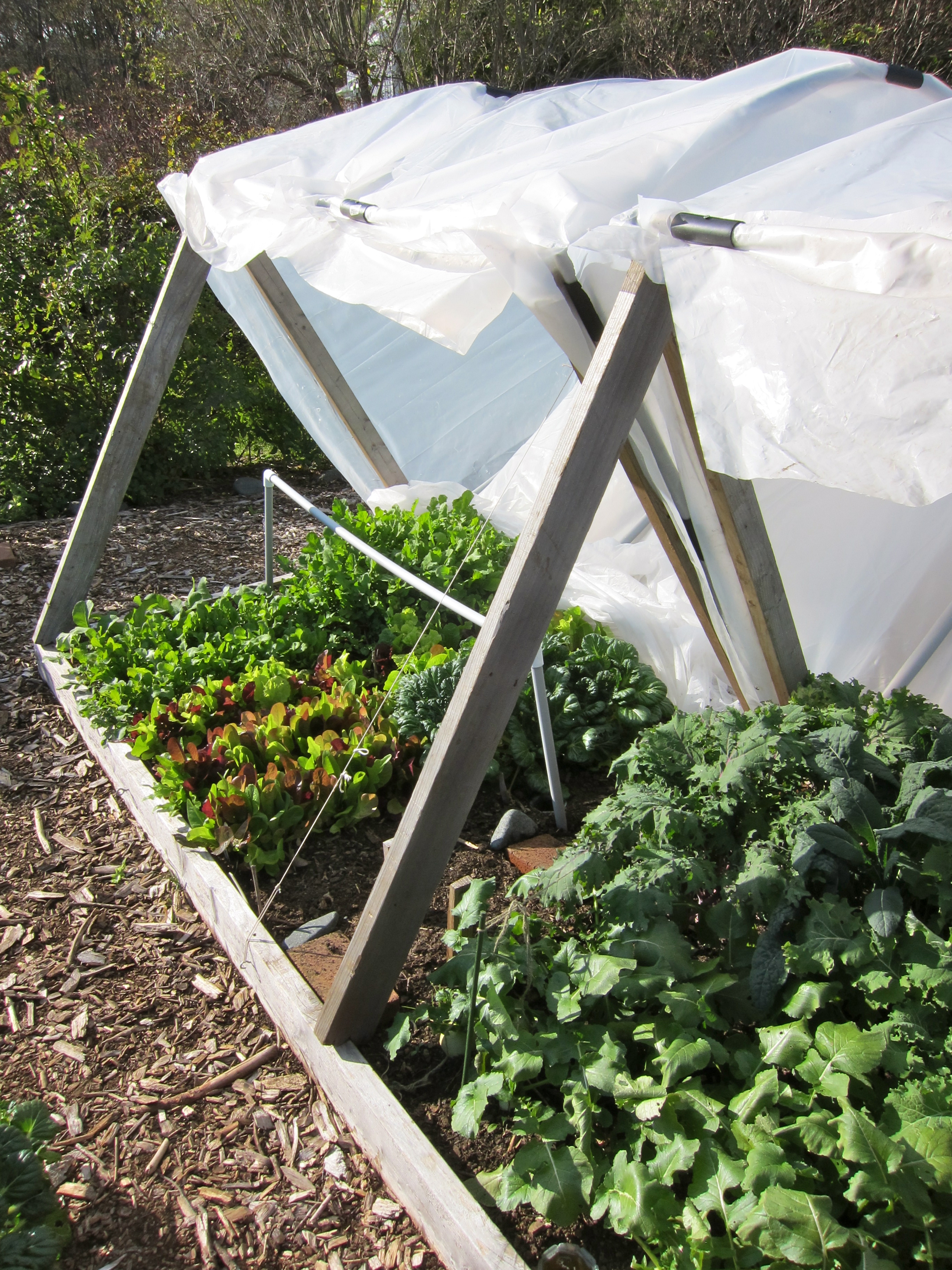
The covers are raised to let the beds breathe during the sunny days following the snowstorm. Daytime temperatures have been averaging in the 50’s, and falling into the 30’s at night. Though the snow has mostly vanished, we’re still finding small piles of it still lurking in the cooler parts of the garden. As we begin the task of raking leaves, these reminders make us take note of the peculiarity of having a snowstorm in October.

Radishes, kales and salad greens thriving under cover — we hope to keep our supply going until the end of the year. Much as we resent having to buy them a beer, little cups of it nestled into the beds help keep the slugs at bay. 

Posted in garden | Tagged | Leave a comment

Dutch Oven Fish Chowder with Haddock & Fennel

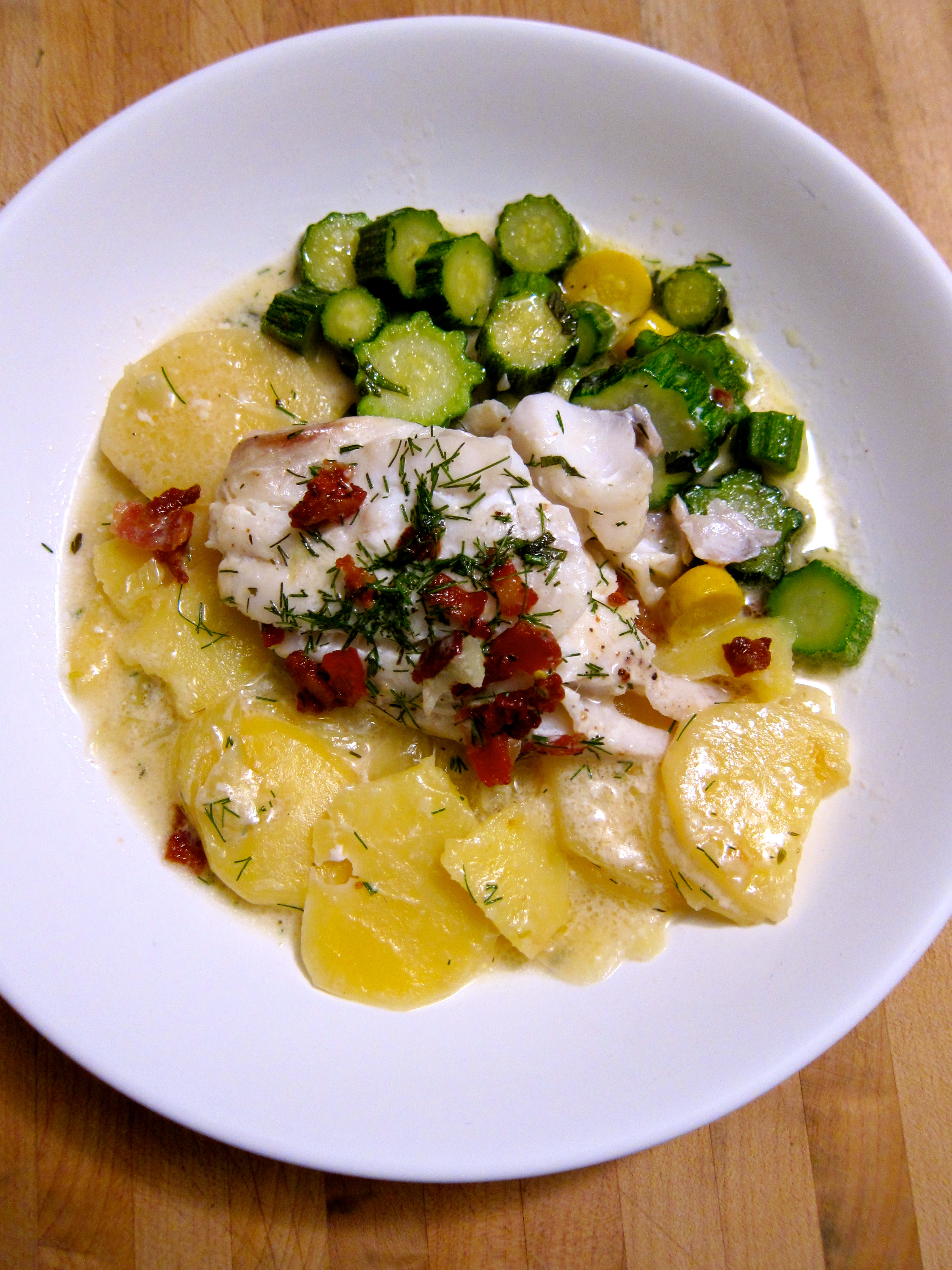
It’s still a surprise how easy it’s become to eat locally. A quick glance at my bowl and I realize that, aside from the wine and black pepper, everything’s from either the garden or one of our local food producers — fresh haddock from the North Berwick Farmers’ Market, jowl bacon from New Roots Farm, milk from Harris Farm, and the rest from our own garden.

What first attracted me to this recipe for fish chowder is the unusual way it’s put together. It harkens back to how chowders were originally cooked, with ingredients piled on top of one another in separate layers, and baked slowly over a fire. It’s perfect for now, when the evenings turn cold, and is easily adapted to what’s in season. Here, I’ve swapped fennel for the onion and, as a counterpoint, the last of the summer squash, simply sauteed, is served alongside. In keeping with the subtle flavor of the fennel, I used the less smoky jowl bacon, or guanciale. As we move deeper into the season, leeks and Brussels sprouts are sure to make an appearance the next time we have this.

Dutch Oven Fish Chowder with Haddock and Fennel

1/4 pound jowl bacon (or salt pork) cut in 1/4″ strips
2 bulbs fennel, trimmed and thinly sliced
1 1/2 pounds potatoes, peeled and thinly sliced
Salt and black pepper, to taste
2 tablespoons fresh thyme, or 2 teaspoons dried
3 cups fish stock or bottled clam juice
3 cups whole milk or light cream
1/2 cup of dry white wine
1 large bay leaf
2 pounds haddock or other lean white fish, cut in large serving pieces
2 tablespoons unsalted butter (optional)

– Preheat oven to 400 degrees.
– Cook the bacon in a large (6 quart) Dutch oven or heavy flameproof casserole over medium heat until crisp and the fat is rendered, about 10 minutes. Remove the bacon bits, and drain on paper towels. Add the fennel to the pan drippings and cook until the vegetables begin to soften, about 4 minutes.
– Layer the potatoes over the fennel mixture and sprinkle with the salt, pepper, and thyme. Pour in the fish stock, milk, and wine and add the bay leaf.
– Cover and bake for 35 to 40 minutes, until potatoes are tender. Arrange the fish over the potatoes, gently pushing down into the cooking liquid. Bake, uncovered, until the fish is just cooked through and the potatoes are very tender, 10 to 20 minutes. Discard bay leaf. Adjust seasoning if necessary. Finish by topping with a couple of pats of butter, letting it melt into a broken slick on top.

Adapted from “The New England Cookbook” by Brooke Dojny.

Posted in cooking | Tagged , , , , | 4 Comments

Kitty interlude

The other household deity, getting ready for winter.

Posted in interlude, le due sorelle | Leave a comment

10.30.11 October snowstorm

On the way to checking the beds after the main part of the storm has passed — a strange mix of fall leaves, green grass, and snow.

The beds shed most of the snow, and remain snug under cover.

As do we, even with the electricity still out.

Posted in garden | Tagged | 2 Comments

10.28.11 Cime di Rapa, fennel and radishes

Last call for the beds that weren’t going under cover, a quick harvest before the snowstorm arrives. The Cime di Rapa (upper left) will be combined with the radish tops to go along with orecchiette, and the radishes themselves will be tossed into salads. With these ingredients on hand, it was tempting to make an autumnal salad, but I was saving the last of the fennel and their blossoms for another, more wintry dish.

Posted in garden | Tagged , | Leave a comment