Tassajara Egg Bagels

“We’ve lost a lot of culture with marketing and manufacturing where we don’t do things anymore because supposedly machines can do them better, and supposedly it’s all labor saving. And we give away our capacity to do things with our hands, and with our bodies, that actually give us health and vitality — to use our hands, to knead the bread, to make things, to touch things, to smell things — we give it away, and then how are we going to feel alive?”
— Edward Espe Brown

For this month’s foray into bagels, I had in mind an egg version. I’d just seen a documentary, How to Cook Your Life, that centers on Edward Espe Brown, an American Zen teacher and author. He’s popularly known for his cookbooks and workshops, both of which focus on cooking as a meditative practice. Baking particularly lends itself to this and, as synchronicity would have it, there’s a recipe for egg bagels in his influential book, The Tassajara Bread Book.
“Make a sincere, honest effort and see how it comes out.” 

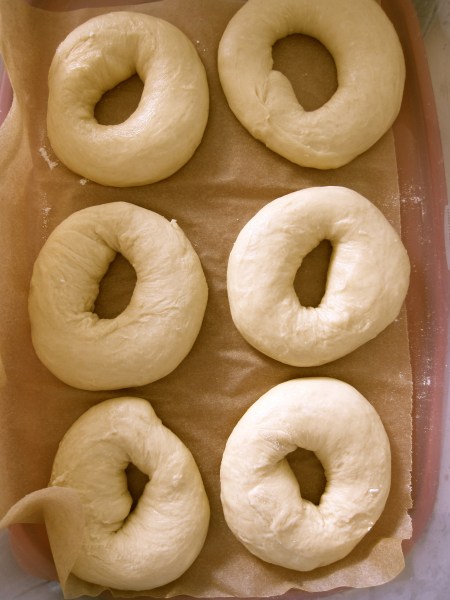
I noticed the part of the recipe that said “Makes 12 bagels,” and proceeded to portion the dough out by weight, and ended up with a baker’s dozen of 13. Somehow, though, I missed the instruction to “Cut the dough into thirds and shape each piece into a ball…. Cut the first ball into twelve pieces.” Which would, as written, actually make this a recipe for 36 bagels. These did seem a little larger than usual but, in any case, by the time I discovered my mistake, it was too late to redo them. I left them to proof overnight in the fridge, and hoped for the best.

“Sincerity is the quality where your imperfections show. It’s tempting with food and ourselves to be perfect.”

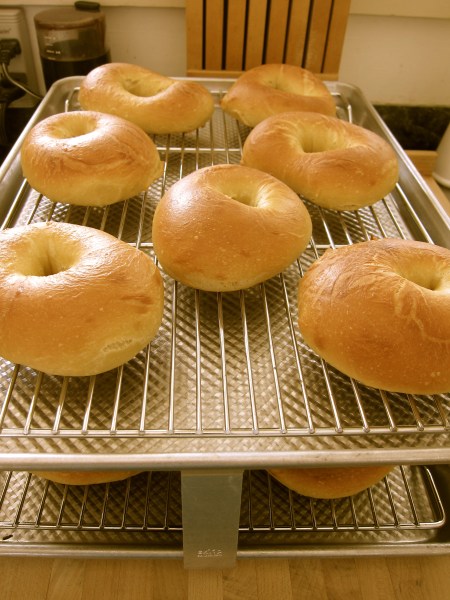
It’s disconcerting to work with cold dough. The next morning the bagels felt clammy and listless, and had less structure than I’m accustomed to with bagels. Even after blanching, they still looked unpromising. I was relieved then, once they were out of the oven, to see they’d puffed up and taken on some color, becoming something edible after all.
“We’re cooking the food but in terms of practice the food is cooking us.”

The documentary portrays Brown as gentle, wise, funny and kind, but doesn’t shy away from showing him in surprising moments of impatience and crankiness. They’re unsettling scenes, but he would probably be the first to admit that he’s imperfect — not so different than the rest of us. As I contemplated the results of the morning’s baking, I glanced down  and noticed there was something familiar about the calligraphic marks the bagels had left behind. Of course, I thought, how fitting for this lesson in mindfulness. They were bagel ens, the Japanese word for circle, the Zen symbol of enlightenment.

Baking notes:

    • The recipe for Egg Bagels from The Tassajara Bread Book can be found online. I failed to divide the dough as instructed, and ended up with 13 bagels; they were on the large size, but not monstrously so. The next time around, I will try halving the recipe, and making the bagels smaller.
    • I substituted honey for the sugar, and used bread and all-purpose flour in equal proportions. The bread flour gave the bagels tooth, while the all-purpose ensured a lighter texture more characteristic of egg bagels. The dough was slacker and stickier to work with compared to that for water bagels.
    • After the first rise, the dough was divided into 120 gram portions, and formed into bagels. They were placed on parchment in a large lidded container, and left in the fridge overnight. The next morning, they were blanched briefly in boiling water with some malt added. I omitted the egg wash, and baked at 425°F for 20 minutes, turning the sheet pans halfway through.
    • As for the results, these were a nice change from water bagels. They kept well, improving in texture and flavor over time.

Local ingredients: Eggs from Burnt Swamp Farm; honey from Victory Bees.

Submitted to YeastSpotting.
Posted in cooking | Tagged | 13 Comments

3.28.12 Hailstorm

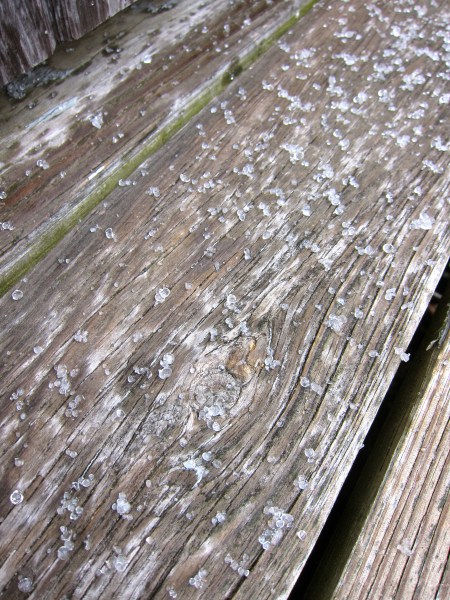
As I was checking the weather report, it started hailing. A burst of sunshine immediately followed, evaporating the fallen hail in an instant. Snow showers possible tomorrow.

Posted in garden | 10 Comments

3.26.12 Phenology, or the Art of Observation

Phenology is new to me, and my knowledge of it is only superficial. However, I like the idea of having a larger context for understanding plant life cycles and the seasonal changes that occur with climatic variations. With the dramatic shifts in temperatures we’ve experienced these past few months, this seems an especially important year to pay attention to what is coming up when, and with what.

New growth on the sage.

Garlic chives have reemerged.

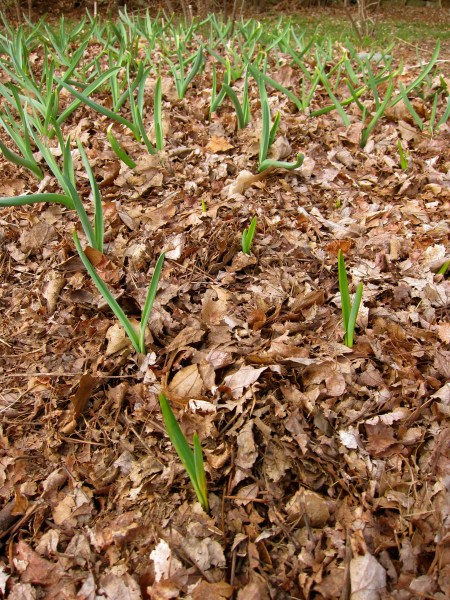
The garlic bed, with the later Phillips in the foreground.

Forsythia in full bloom.

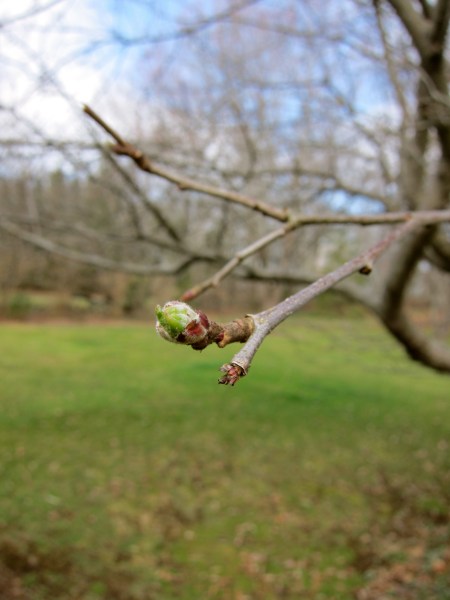
Apple tree beginning to bud out.

Daffodils are up and beginning to blossom.

We’ve been listening to the Canadian geese flying north for some weeks now, and the sound of birds chattering increases daily. When I was out late last Monday, the nighttime presence of peepers could be heard as I returned home. Overnight temperatures are to dip below freezing the next couple of evenings, and I’ve covered the garlic bed with a layer of floating row cover in hopes it will afford some protection from the expected hard freeze. I’m most concerned with potential damage to the apple tree, which could mean the loss of this year’s crop for us, as well as others in our area.

Posted in garden | 12 Comments

Kakai Pumpkin Seeds

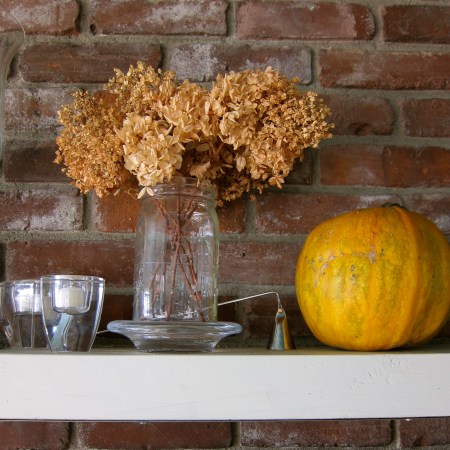
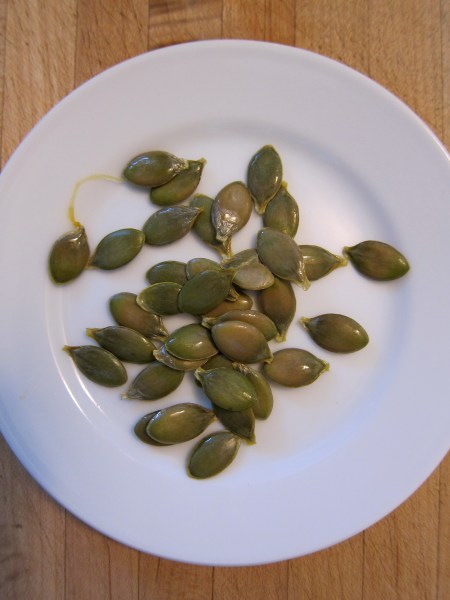
Last fall was the first time we’d heard about Kakai pumpkins, a unique variety desirable for its hulless seeds. It’s of Austrian origin, grown solely for its seeds, and is especially known for the valuable green pumpkin seed oil it produces. We picked this one up from Two Toad Farm last December, and it has resided on the mantle in the months since.

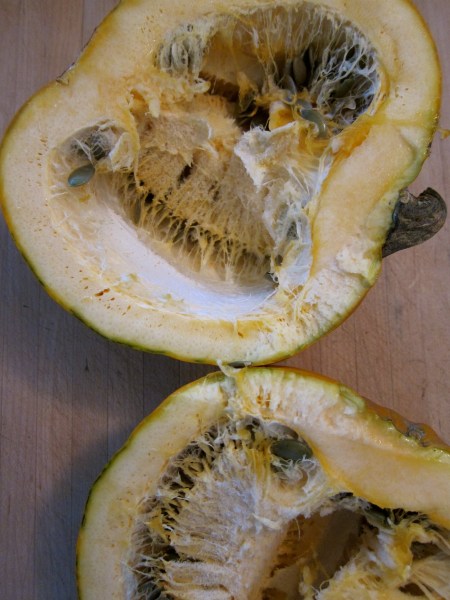
It was mid-March by the time I got around to opening the Kakai up. Its storage place above the wood-burning stove was less than ideal, but it kept its integrity, with no signs of rot. I scooped out the seeds, separated them from the flesh, and gave them a quick rinse. They were spread out on a kitchen towel, and then left to dry. I dry roasted them at 175° for 20 to 25 minutes, stirring once or twice.

If available at the farmers’ market, select the larger ones, with an eye to the amount of seeds it might contain rather than flesh. They’ll feel light for their size, and should average in the five to eight pound range.  At less than five pounds, this specimen was on the small side, and yielded less than a cup of seeds. The seeds are equally delicious raw or roasted, and can be used in any place you would something nutty or want a bit of crunch, say as a garnish for soup or salad, or in a pesto. I especially like the possibility of using these to make your own pumpkin seed oil.

Posted in cooking | Tagged | 15 Comments

3.21.12 Seedlings

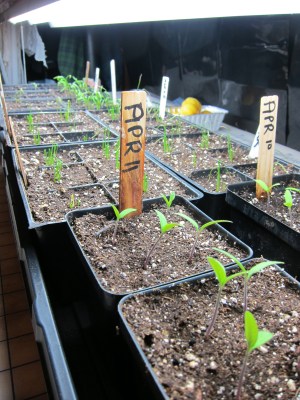
It’s always a gratifying surprise to watch seedlings come up, each shoot the embodiment of optimism. These Aprile pomodorini seedlings are from seeds saved last fall.

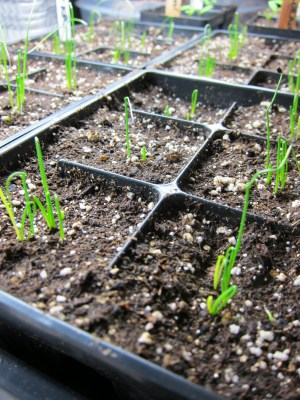
Differing germination rates for fennel and leeks: the Finale fennel (top left) germinated before the Perfection (bottom left); the King Richard leeks (top right) before the King Sieg (bottom right).


Fennel, leeks and tomatos seedlings (left), the celeriac not yet showing; Finale fennel seedlings (right).


King Richard seedlings (left); King Sieg seedlings (right).

Posted in garden | 6 Comments

3.20.12 Spring Equinox

The weather in Maine is well known for its capriciousness and changeability, but things seem to have taken a turn for the extreme lately. The events of the past ten days include snow, a microburst, an electrical storm, and record-breaking high temperatures in the 70’s. With 80 degrees in this week’s forecast, it’s difficult to resist the urge to dismantle the row covers.

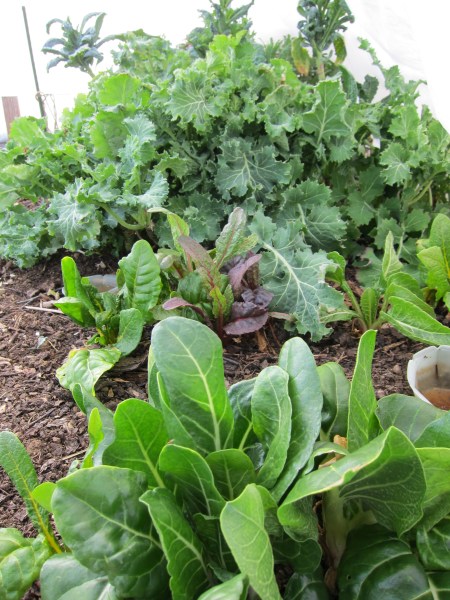
The overwintered kales and chard are thriving, and help satisfy our cravings for vitamin green.

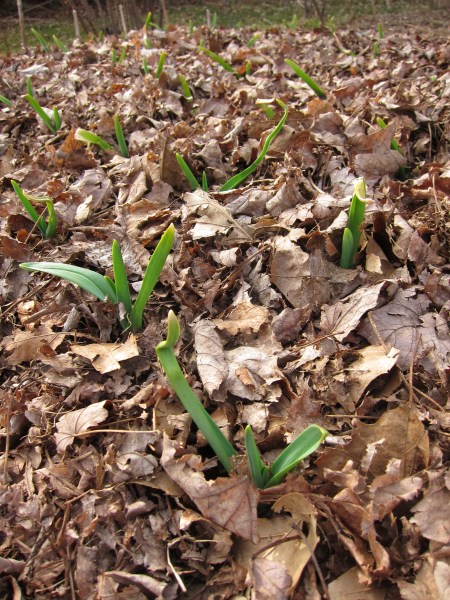
The Music and German Extra Hardy garlic have pushed up through the leaf mulch, with the Philips lagging behind as usual. It remains to be seen if this is an advantageous adaption or not.

A tender perennial, this is the first time the cutting celery has survived the winter and come back. This one is an Asian cultivar known as Kin Tsai.

Posted in garden | Tagged , , , | 6 Comments

Pappardelle with Braised Guinea Hen Ragu

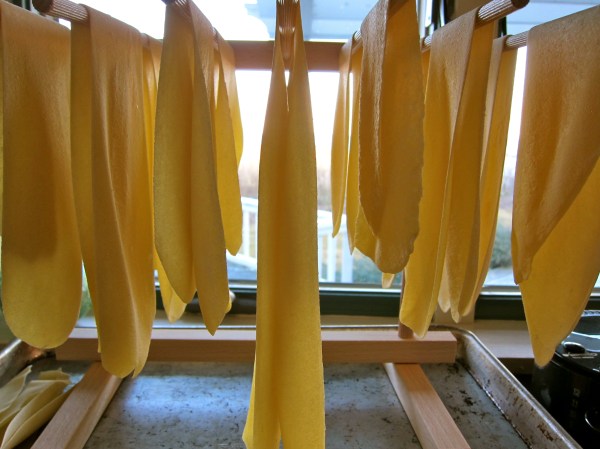
Homemade pasta with a slowly braised ragu is perfectly suited for making as a Sunday supper. The process fits in well with the pace of the day, and results in a lusciously rustic meal that leaves us fortified for the week to come. After the paper is read and breakfast cleared away, I start the braise around mid-day, with the remaining steps tucked in while puttering about at other chores. Making the pasta is easily slipped in as we move towards late afternoon, sometime between having a cup of tea and the first glass of wine.

Italians select their pasta with care, considering texture and shape to compliment the sauce. Pappardelle, pasta cut in long, wide ribbons, is most commonly found in Tuscany, where in the local dialect it means “to gobble up” or “stuff oneself.” This shape can be found ready-made and dried, but it’s at its best when made fresh. Eggs enrich the dough, lending a silky texture with a delicate tensile strength that enables it to stand up to the chunky, flavorsome braises of game it’s usually paired with.

I often make this ragu with guinea hen, which is on offer at the farmers’ market from time to time. This skittery bird has a sweet, dark meat with hints of spice. It seems to spend its life running away in constant alarm, and braising helps render it tender. At a average weight of 2 to 2½ pounds, the birds aren’t very large and I leave the bird whole. You can call it the lazy approach — it takes a little longer to braise, but omits having to break it down and brown the pieces separately. I like to think it’s actually a thriftier one — it makes every last scrap of meat accessible for the ragu.

This can be made with other poultry, such as duck or goose (with the fatty skin removed), or even rabbit; simply adjust the cooking times. I like to use white wine with the guinea fowl; the hearty flavor of duck and goose favors using red. If in season, the original recipe suggests adding a handful of sauteed wild mushrooms to the sauce.

Pappardelle with Braised Guinea Hen Ragu

1 guinea hen
Sea salt and coarsely ground black pepper
¼ cup extra-virgin olive oil
2 carrots, cut into ½-inch pieces
1 celery stalk, cut into ½-inch pieces
1 medium onion
3 garlic cloves, smashed and peeled
3 sprigs thyme, rosemary or sage; leaves stripped from stems and chopped
1 bay leaf
1 cup dry red or white wine
1 tablespoon tomato paste
1½ cups water
2 tablespoons chopped flat-leaf parsley
8 – 12 ounces pappardelle

– Heat oven to 300°F. Pat guinea fowl dry, and season generously with salt and pepper. Heat oil in a large Dutch oven over medium-high heat, and brown guinea fowl on each side, about 6 minutes per side. Remove guinea fowl and set aside.

– Add carrots, celery, onion, garlic, herbs and 1 teaspoon salt to pot. Cook, stirring occasionally, until vegetables start to brown. Return hen to pot, then add wine and tomato paste, stirring to dissolve the paste. Bring to a simmer, then add 1 cup of water and return to a simmer. Cover place in oven to braise until meat is tender, about 60 minutes or longer, turning the bird several timse during cooking. It is ready when the meat can be pulled off the bone easily.

– Remove pot from oven and let cool. Pull meat from bones in large chunks; discard skin and bones. Remove bay leaf; puree vegetables with braising liquid in a food processor or blender. Return to pot, along with the meat, add remaining 1/2 cup water, and bring to a simmer over low heat. Cover and cook for 30 to 45 minutes more to allow flavors to meld. Remove from heat, adjust seasonings, and stir in the parsley. Serve tossed with cooked pasta, some grated Parmesan and finished with a drizzle of good olive oil. Alternatively, let cool and refrigerate for up to 5 days, or freeze for up to 6 months.

Adapted from “Olives & Oranges” by Sara Jenkins and Mindy Fox.

Local ingredients: Guinea hen from Harrison’s Poultry; onion from Pickpocket Farm; eggs from Burnt Swamp Farm; carrots, cutting celery, garlic and herbs from the garden.

Posted in cooking | Tagged , | 3 Comments