

Last week, our cat’s attempt to eat an entire spool of thread required extensive surgical intervention. After many an anxious moment on our part, she’s well on her way to recovery while sporting an exotic haircut.

Last week, our cat’s attempt to eat an entire spool of thread required extensive surgical intervention. After many an anxious moment on our part, she’s well on her way to recovery while sporting an exotic haircut.
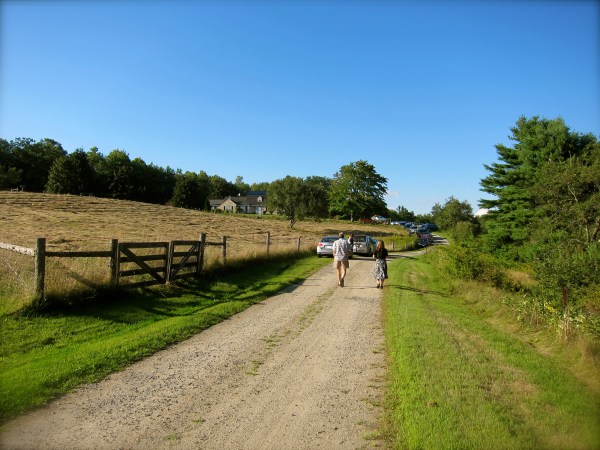
“There is a lot to celebrate about farming in Maine, including the fact that more and more farmland owners see the value of permanently protecting their land and their legacy.” —John Piotti, Maine Farmland Trust
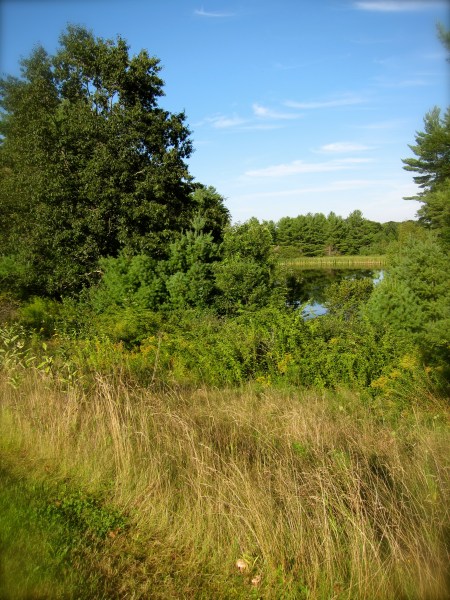
At the current rate of turnover, all farmland here in Southern Maine could be developed within 30 years. To stem this tide, many land trusts have expanded their missions to include agricultural easements. With a specific focus on preserving farmland, Maine Farmland Trust helps to keep agricultural lands working, and strives to ensure farmland is affordable for the next generation.

Across the state, over a hundred Maine farms have been permanently protected with agricultural easements. To celebrate the growing success of these combined efforts of local land trusts, Forever Farms, a MFT program, held an open house at Ramblers Way Farm in Kennebunk.

We’d frequently pass this place during weekly CSA pick-ups at a neighboring farm, and had always wondered what was up the hill dotted with sheep. Owned by the founders of Tom’s of Maine, Tom and Kate Chappell graciously hosted an open house on what turned out to be a quintessential late summer’s eve. There was a picnic of local food, live music, a little speechifying, visiting with friends and neighbors, and we were free to wander the grounds.
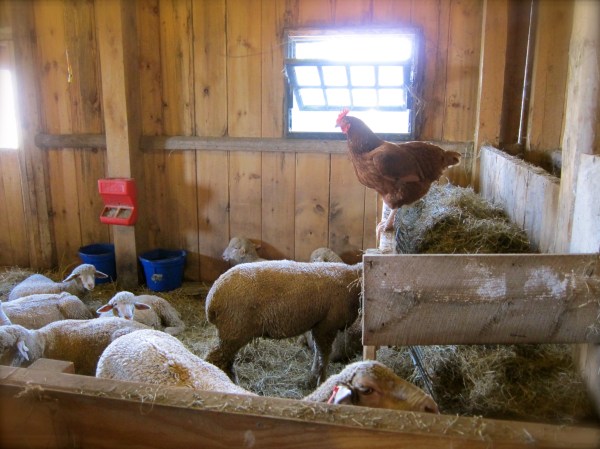
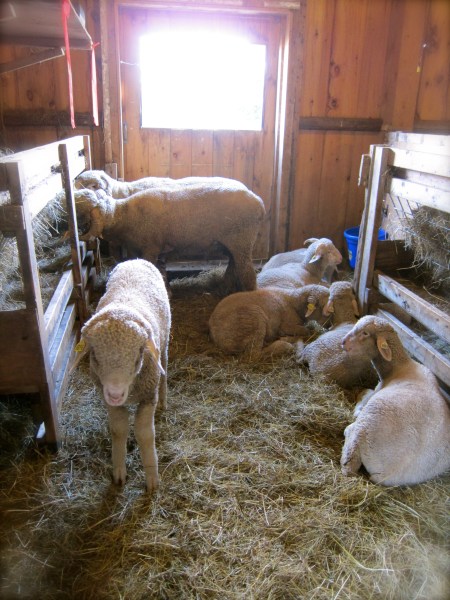

Of course, a tour of Ramblers Way Farm isn’t complete without a visit to the barn, home to a herd of American Rambouillet sheep. This breed is known for the superfine quality of their merino-type fleece, and their soft, cuddly wool goes into the Ramblers Way line of comfortwear.
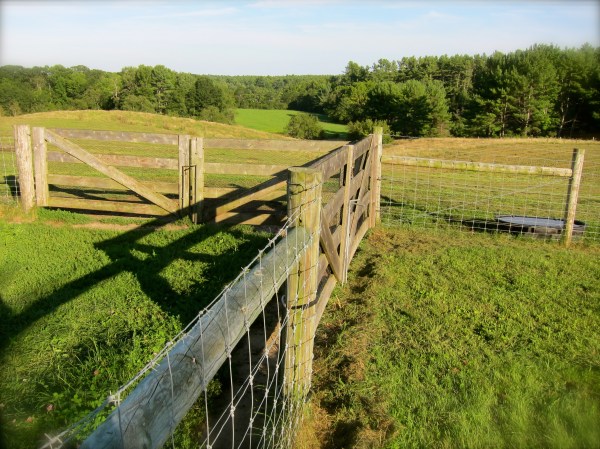
Ramblers Way is actually two farms, the second added for a total of 154 acres of open fields, 100 of which are now permanently protected. With its rolling landscape, the land seems particularly suited to its current use as pastures for grazing and haying.
If you find yourself in the Midcoast Maine area, Maine Farmland Trust is throwing another fine all-day shindig, the MaineFare, a celebration of Maine food and farming, at their home base in Belfast on Friday, September 7th. And if you happen to pass any farms displaying the “Forever Farms” sign along the way, you can be assured that it means what it says, and will be there for future generations.

The rosa rugosa hedges are now laden with rose hips, their detritus scattered throughout the garden, left behind by those putting away seeds for the winter.
Still harvesting: Tomatoes, cucumbers, summer squash, eggplant, filet beans, kale, chard, lettuces, arugula, radishes.
Last of: Fava beans.
To come: Fennel, shell beans, Delicata squash, leeks, potatoes, celeriac, fall planting.

As we go into the holiday weekend, Peach Dumpling Pie is a fine way of celebrating this last bit of summer. Based on the Apple Dumpling Pie I usually make all fall and winter, these just-ripe peaches are laid out in a thin layer rather than piled high as for apples. This allows the extra juices to cook off, and the fruit soften without losing their shape.
I’ve gotten into the habit of mixing in a teaspoon of apple cider vinegar when making pie dough. This is a traditional addition in New England, which is used to help “shorten” the crust and improve the texture. The acid breaks down long the protein molecules of the flour into shorter pieces and relaxes gluten formation, resulting in a flaky, tender dough that is easier to work with. Other suitable acids include lemon juice, buttermilk, sour cream, or even orange juice.
Peach Dumpling Pie
Crust
1½ cups flour (1¼ all purpose + ¼ whole wheat pastry)
1 teaspoon sugar
½ teaspoon salt
4 ounces or 1 stick butter
¼ cup cold water + 1 teaspoon apple cider vinegar, stirred together
Filling
A pinch of cinnamon
¼ cup sugar + 1 tablespoon
1 tablespoon flour
3 to 4 peaches
1 teaspoon lemon juice
1 egg, beaten
– To make crust: Combine the flour, sugar and salt in a bowl. Cut in the butter until it resembles coarse meal. Sprinkle in the cold water and vinegar mixture a tablespoon at a time, and toss with a fork to mix, using only enough liquid for the dough to form. Gather up the dough into a ball, and flatten into a disk. Place in a covered container, and let rest in the fridge for 30 minutes.
– To make filling: Toss the cinnamon, ¼ cup sugar, and flour together to mix, and set aside. Peel, pit and slice the peaches. In a separate bowl, toss the peach slices with the lemon juice. When ready to assemble the pie, toss the peaches gently with the cinnamon sugar to coat.
– To assemble the pie: Roll out dough until it is a rough circle, about 14 inches in diameter. Place the crust onto a round pizza pan lined with parchment, and spread the peaches in the center, leaving about 3 inches of crust around the filling uncovered. Working your way around the pie, pull the crust over the filling, leaving a gap of about 4 inches in the center. Chill the pie in the fridge for 30 minutes.
– To bake the pie: Heat the oven to 425°F. Remove the pie from the fridge and lightly brush the edges with the egg wash. Sprinkle the edges with the remaining tablespoon of sugar. Bake at 425°F for 20 to 30 minutes, or until the peaches are tender and crust has begun to brown. Remove and let cool and the juices set before serving.
Local Ingredients: Peaches from McKenzie’s Farm; whole wheat pastry flour and butter from Brookford Farm; egg from Brandmoore Farm; apple cider vinegar from Sewall’s Organic Orchard.
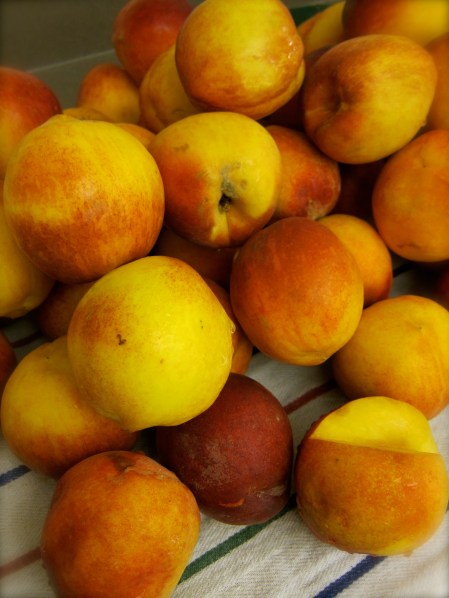
The fifth session of the Master Food Preserver Program was timed to coincide with raspberry season. Unfortunately, an infestation of Spotted Wing Drosophila decimated the local farmers’ crop. Fruit growers are keeping a watch on this new pest as it spreads throughout the region, the damage it can inflict posing a serious threat. This insect attacks a wide range of fruit as they ripen, with late summer and fall fruit of ever-bearing strawberry, late season brambles (raspberry and blackberry), late blueberries, and colored grapes the most vulnerable. Peaches seem to be less so, at least for the moment, and they served as a substitute in this evening’s recipes for freezing fruit.
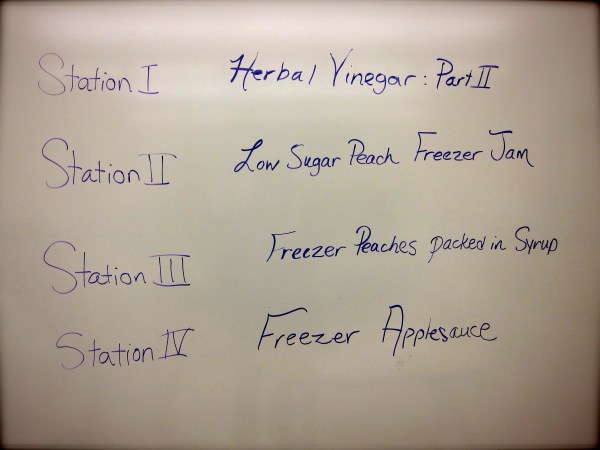
The evening’s slate of activities: Herbal Vinegar (Part II), Low Sugar Peach Freezer Jam, Freezer Peaches Packed in Syrup, and Freezer Applesauce.

The herbal vinegar we made several sessions ago had been left to sit for several weeks. It takes at least 10 days for most flavors to develop, and about 3 to 4 weeks for the greatest flavor to be extracted. We strained out the sage and rosemary from the now infused vinegar, and reprocessed it in a boiling water bath for longer-term storage.


The peaches were preserved two ways — as a freezer jam and frozen packed in syrup. First, the peaches needed to be peeled, and were scored and blanched to make the process easier. Peach slices were packed in a 20% sugar syrup; 40% is recommended but we were short on sugar that night and made do with a lighter syrup. Some headspace was left between the packed peaches and the top of the freezer containers, with a crumpled piece of wax paper added on top to keep the fruit submerged.

The other half of the peaches were made into a low-sugar freezer jam, another way of preserving peaches when time is short or the weather’s too hot to process by canning. Freezer jams tend to be less firm than ones that are cooked and canned, but retain more of the fruit’s texture and fresh taste.
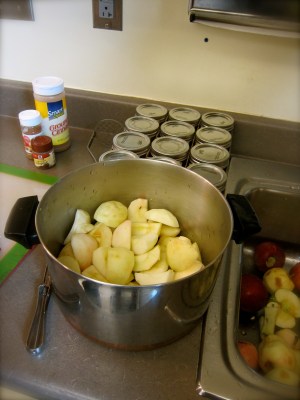

Like freezer jam, freezing applesauce is an alternative to canning it. Simply wash, peel, core and slice the apples, and cook down until the desired consistency is reached. To keep fruit like apples and peaches from browning, place the slices in a holding solution made of 1 teaspoon ascorbic acid (Vitamin C) mixed into 1 gallon water, until ready to prepare. Citric acid or lemon juice solutions, and sugar syrup may also help to control browning, but not as effectively as ascorbic acid.

I now keep a thermometer in all of my freezers to make sure they’re at 0°F or lower, the temperature that frozen fruits and vegetables should be stored at for best quality and length of time. It’s recommended that 2 to 3 pounds of food per cubic foot of freezer space can be added to a freezer within a 24 hour period. More than that, and the food may not freeze quickly enough.
We often lose power here in Northern New England due to winter storms, and the most common question is whether thawed food can be refrozen. Foods can be refrozen only if at least one of these two conditions are met: 1) Foods have only partially thawed and still have ice crystals in the package; 2) The freezer temperature has remained at 40°F or below. Before using, check to see that color and odor of the food are good; quality of the food will be lower. One last freezer tip — keep an ice cube in a sealed container placed in the freezer; if the electricity goes off for any length of time, the melted ice cube will serve as an alert that there’s been a loss of power.
Recipes & Resources
– Preserving Food: Flavored Vinegars
– Low-Sugar Freezer Jam
– Freezing Fruits (Frozen Peaches Packed in Syrup)
– Let’s Preserve: Apples (Freezer Applesauce)
– Preserving Food: Freezing Prepared Foods
– Video: Defending Against Spotted Wing Drosophila
This series of posts follows the Master Food Preserver Program being offered through the University of Maine Cooperative Extension.
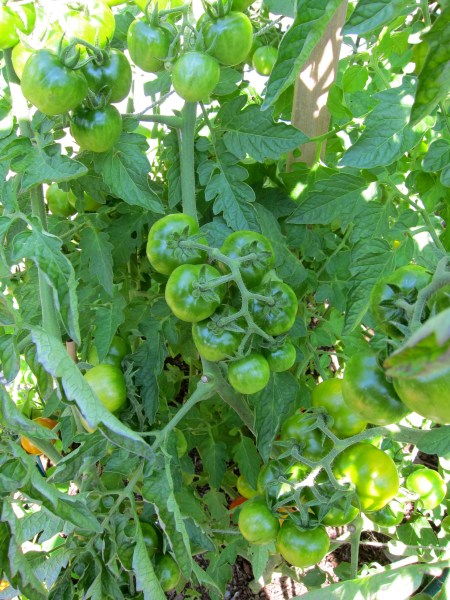
The Italian hanging tomato plants are loaded with fruit, but still need to ripen before we can harvest and store them for winter. It’s again the time of tropical storms and Late Blight, and we’re now in a race against time. The season’s short and fraught with peril — there’s a nice crop, however, it doesn’t count if it doesn’t make it in and all’s for naught.
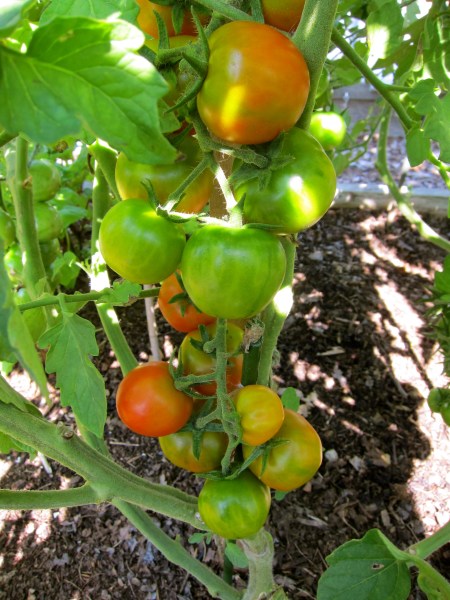
Only a handful of clusters at the bottom of the plants have begun to turn color. With moist conditions following this summer’s heat spell and Late Blight quickly closing in, the rest are still perilously green.
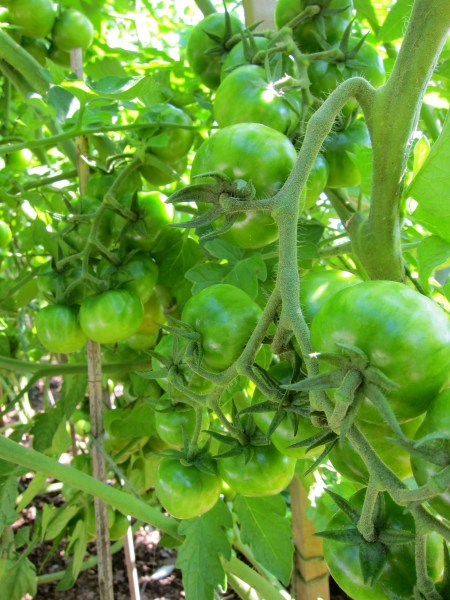
For this year, we narrowed it down to growing only two varieties of hanging tomatoes. They’re both from Puglia, and similar in size (about a golfball) and shape.
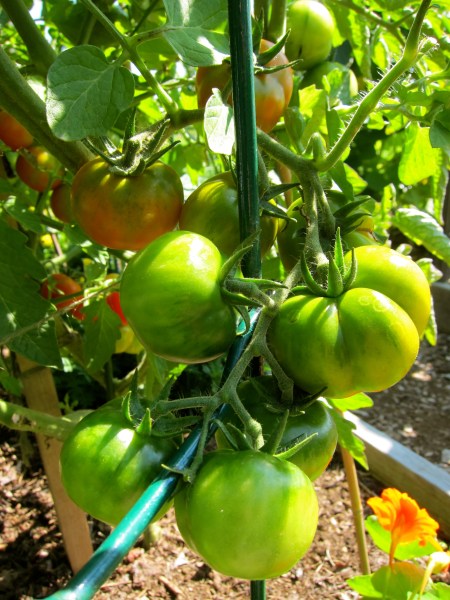
The ones pictured above are Aprile, named for the agriturismo where we discovered these tomatoes and saved seed from two years ago.
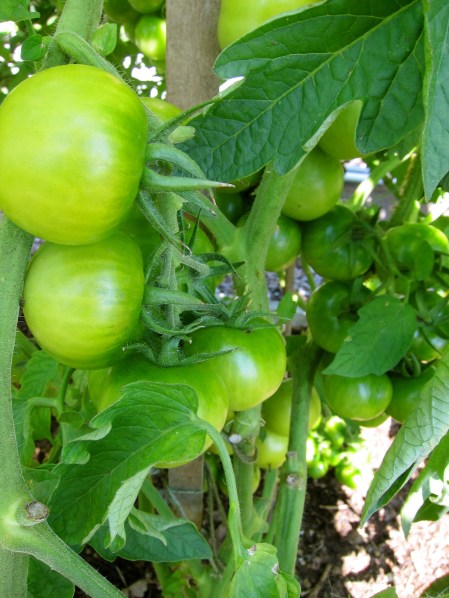
We planted two of the Aprile, and two of the Ponderosa sel Oro (above), another variety from Puglia. Last year’s initial grow-out was waylaid by Tropical Storm Irene, forcing us to harvest too early. With a little luck, we’ll have a more fair comparison this year.
Canning pickles helps to free up precious refrigerator space, and preserves them for longer term storage. With some of my previous attempts resulting in less than satisfactory pickles, I was looking forward to picking up some tips for crispier pickles at this evening’s Master Food Preserver lab.
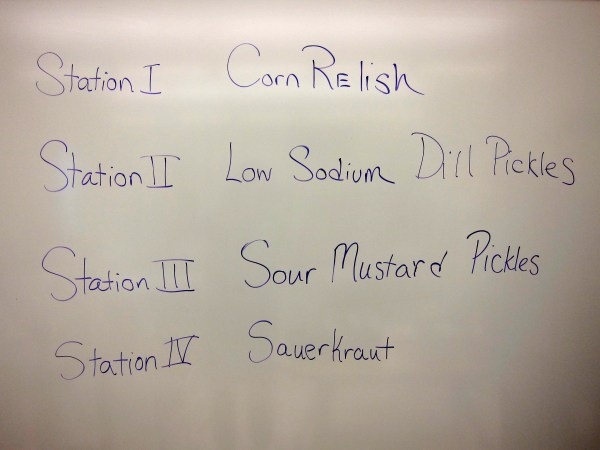
With a focus on pickles and relish, four kitchen stations were set up for making Pickled Corn Relish, Low-Sodium Dill Pickles, Sour Mustard Pickles, and Sauerkraut. Each recipe was chosen to introduce us to a different aspect of pickling, the preserving of low-acid vegetables, such as this evening’s corn, cucumbers and cabbage, through adding acid in the form of vinegar or, in the case of the cabbage, through fermentation.

Often canning recipes mention using canning salt. Unlike table salt, the one for pickling and preserving is free of iodine and anti-caking additives. Iodine can darken the pickles, while the anti-caking additives may cloud the pickling liquid or brine. Some recipes also call for the use of firming agents such as alum, picking lime, or the addition of grape leaves, none of which are necessary with current processing methods, and are generally not recommended.
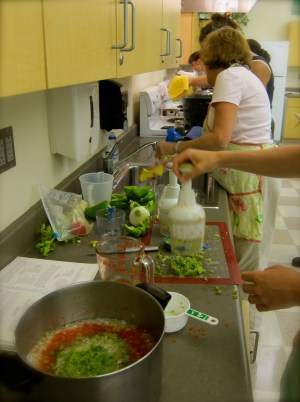

Along with freezing, Pickled Corn Relish is a way of preserving corn without a pressure canner. With this recipe, there’s no need to brine or soak the corn overnight. It’s simply boiled on the cob for 5 minutes, then dipped in cold water to stop the corn from cooking further. There are many gadgets available to help strip corn from the cob; I find using a knife quick enough, and cut the kernels off with the cobs placed on their sides.


The photo above left shows the mustard and turmeric being stirred in, giving the finished relish some added color and spice. The jars are filled with the hot mixture, and processed for 15 minutes in a boiling-water canner.

The corn relish was put up in 1.5 pint-sized jars, the elongated shape showing off this festive mix of corn and diced red and green bell peppers to their best advantage.
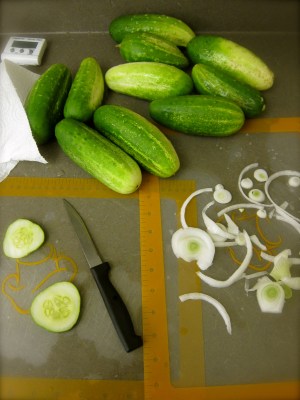

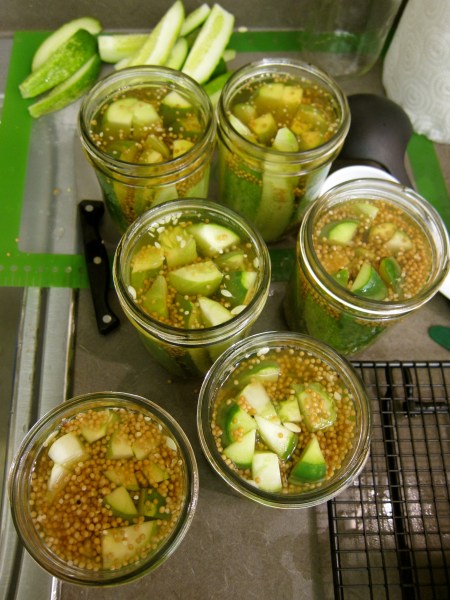
We used pickling cucumbers for the Reduced-Sodium Sliced Dill Pickles. While pickling cucumbers can be used for both preserving and eating fresh, slicing cucumbers result in a much less crispy pickle. To further ensure crispiness, the cucumbers were kept as cold as possible in the refrigerator before being used, and the blossom end sliced off and discarded. Once they were cut up — a ruffled cutter would be nice to use here — the jars were raw-packed tightly.
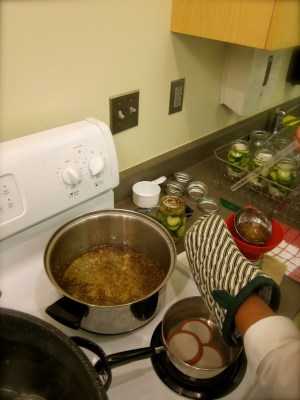
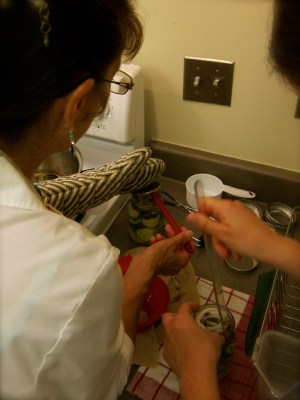
Above, the low-sodium brine is heated up, and the bubbles released from the jars before capping. Here, we’re using a plastic wand made for this task; never use a metal knife to free the bubbles with, this risks nicking or chipping the inside of the glass jar. Low-sodium brines compensate by increasing the amount of sugar — in this case, 6 cups of sugar per 8 pints of pickles.

After 15 minutes of processing, the jars are removed from the boiling-water canner. This is an example of floating, a common occurrence when canning cold-packed vegetables or fruit. They’re still safe to eat and, once the jars have had some time in storage, this will lessen and the cucumbers become more evenly distributed in the liquid. In any case, pickles should sit for a couple of weeks before opening to let the flavors develop.

The third station made Quick Sour Pickles. Jars of these that Kathy Savoie, our teacher, brought in for us to sample quickly convinced us that a processed pickle could be crisp. She recommends refrigerating canned pickles before opening and serving them cold, both of which contributes to a crispy texture.

The brine for these pickles calls for cider vinegar. We made sure to use one that was at least 5% acid to ensure the right level of acidity for safe canning. As with the low-sodium dill slices, the jars were raw-packed and a hot brine poured over before canning.
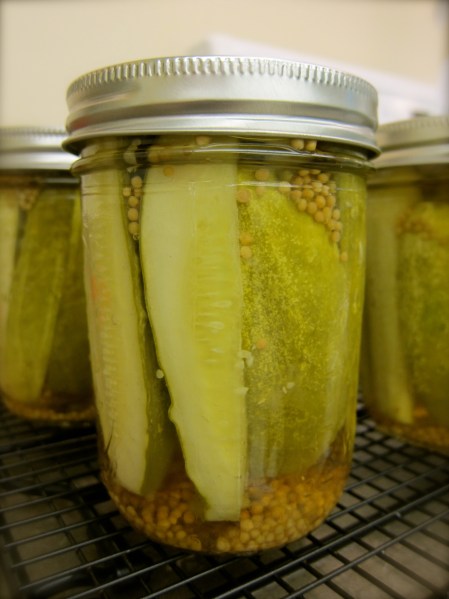
Another tip for a crispy pickle is to not let your pickles linger any longer than necessary in the hot water bath. The Quick Sour Pickles were processed for only 10 minutes, and removed from the boiling-water canner immediately after the time is up, and placed on a rack to cool. There’s some float, but not as noticeable as with the low-sodium dills.

A pile of 25 pounds of cabbage awaited the last station, which was assigned to make Sauerkraut. The fermented pickles combines shredded cabbage with salt and time to create an environment that’s inhospitable to bacteria that could spoil the sauerkraut.

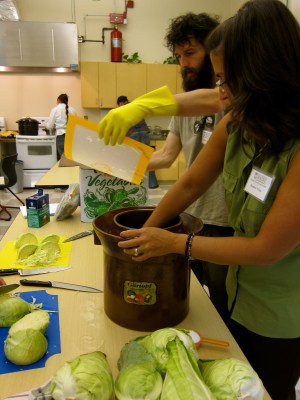
This behemoth of a pickling crock is sized to fit this 25 pound batch. Knives at the ready, we finely shredded the cabbages, adding it to the crock as we went along.

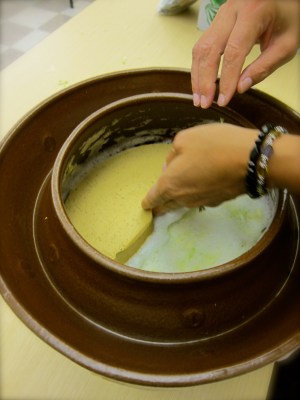
Salt was added to each layer of cabbage, and mixed in by hand to start the fermentation process. After repeatedly shredding, salting and packing until all the cabbage was in the container, the mixture eventually became covered by it’s own frothy juices. A weighted 2-piece insert was set on top to keep the cabbage submerged in the liquid.
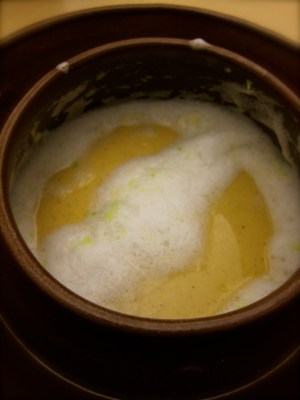

Once the weights were in place, the crock was then covered with its lid. The top is designed with a shallow well around the rim, and is then filled with water to create a seal. The crock was moved to a quite place at 70° to 75°F, where it could sit undisturbed while it ferments for 3 to 4 weeks. At 60° to 65° F, fermentation may take 5 to 6 weeks; below 60°F and the kraut may not ferment, above 75° and the kraut may become soft.

The next generation of Master Food Preservers.
Recipes:
– Pickled Corn Relish
– Reduced-Sodium Sliced Dill Pickles
– Quick Sour Pickles (scroll down)
– Sauerkraut
Resources:
– Preparing and Canning Fermented and Pickled Foods
– Causes and Possible Solutions for Problems with Pickled Foods
– Causes and Possible Solutions for Fermented Pickles
This is one in a series of posts following the Master Food Preserver Program offered through the University of Maine Cooperative Extension.

 Diary of a Tomato