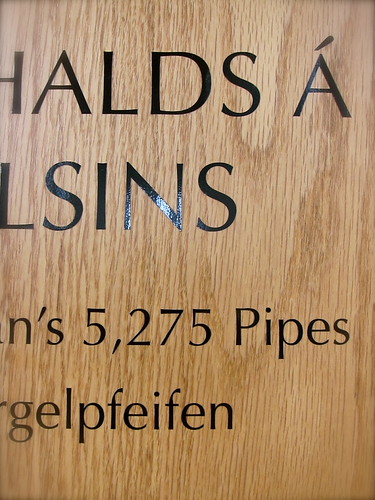
Rekjavik, Part 3: Settlement Life

IMG_5120

After the whirlwind of touring Iceland’s Golden Circle, we settled in for a more leisurely pace. We breakfasted near our hotel at the comfy C is for Cookie, and sampled pönnukökur, Icelandic pancakes similar to crepes. One choice is to eat them folded up with jam and whipped cream; another is rolled (above), with a sprinkling of sugar inside.

IMG_5121 IMG_5151

Though is was drizzly, central Reykjavik is walkable enough that it wasn’t a hinderance getting around by foot. We headed for the National Museum of Iceland to fill in our utter lack of knowledge of Icelandic history.

IMG_5135

The National Museum houses a handsome collection of objects, such as this prize artifact, the Valþjófsstaður door (above), depicting a knight slaying a dragon. The well-designed exhibits trace the settlement of Iceland, beginning with the arrival of the Norse Vikings in the 800’s, and continuing up to the present.

Rekjavik Part 3: Settlement Life

 As we entered the first hall, we encountered the outline of a boat sketched into the floor by a string of lights. Standing within its boundary, we’re struck by its smallness, and try to imagine what the settlers carried with them to survive the first winter in such a rugged place. Above: Agricultural tools, including a sickle, scythe, and a whetstone made of lava rock.

IMG_5122

Written materials attest to early literacy, document Icelandic history, and preserve their cultural heritage. Landnámabók, or The Book of Settlements, describes the settlement of Iceland by the Norse in the 9th and 10th centuries.

IMG_5130 Rekjavik Part 3: Settlement Life

A slice of earth showing the frequency of volcanic eruptions (above, left), and volcanic rocks used as counterweights in a weaving loom (right).

IMG_5147

These two carved boards depict a mermaid that has seized a man, and, below that, a man fighting a monster in the form of a dragon gripping a human head in its jaws.

IMG_5145 IMG_5144

A drawing of branches, also known as Aaron’s Rod (above, left), protects against evil spirits. The purpose of the carved mask (right) is unknown.
Rekjavik Part 3: Settlement Life

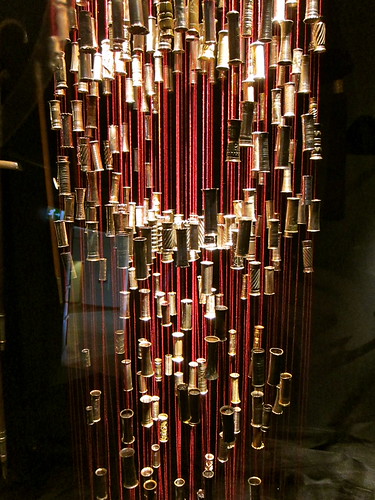
A special exhibition on Icelandic silver work commemorates the National Museum’s 150th birthday. This hanging (above) displays a collection of silver cane tips.

Rekjavik Part 3: Settlement Life

Our brains stuffed with as much Icelandic history as they could hold, we were ready for a lunch break at Sægreifinn, or The Sea Baron, down by the old harbor. As the name implies, this casual stand features seafood, with the day’s choices displayed in  open refrigerated cases, including the ubiquitous pitchers of Icelandic water.

Rekjavik Part 3: Settlement Life

Harðfiskur (above), dried fish, is ready to eat, direct from the package. We were advised it’s best enjoyed spread with a little butter. Note the array of condiments on the lower shelf, including squeeze bottles of sweet mustard.

Rekjavik Part 3: Settlement Life Rekjavik Part 3: Settlement Life

The Sea Baron’s specialties: Lobster soup (above, left), another name for langoustines; and a grilled kabob of fresh plaice, a local flatfish. Afterwards, we had just enough room to take in Reykjavik 871+/-2 The Settlement Exhibition. The name of this archaeological site refers to the dating of wall fragments found there, the oldest relics of human habitation in Reykjavik. 

Rekjavik Part 3: Settlement Life

We ended the day at Micro Bar, billed as the only micro brewery bar in Iceland and a more recent cultural phenomenon. As part of prohibition in Iceland, beer was banned from 1915 to 1989. Though we’re several months too late, we raised a glass to Beer Day, Iceland’s annual celebration in March of the ban’s lifting.

Rekjavik Part 3: Settlement Life

Resources
C is for Cookie
Þjóðminjasafn Íslands – The National Museum of Iceland
• Sægreifinn – The Sea Baron
Reykjavik 871+/-2 The Settlement Exhibition
Micro Bar
Reykjavik, Part 1: Icelandic Daze
Reykjavik, Part 2: The Golden Circle
• Reykjavik, Part 4: Cod Wars and Hot Dogs

Posted in field trip | Tagged , | 7 Comments

Reykjavik, Part 2: The Golden Circle

Reykjavik, Part 2: The Golden Circle

Sometimes you just have to give in, be a tourist, do touristy things, and go sightseeing.

Reykjavik, Part 2: The Golden Circle

With continued brilliant weather ahead, we hopped on the popular excursion known as the Golden Circle. From coastal Reykjavik, the day-long bus tour travels inland to visit such historical and natural sites as Þingvellir National Park, the Gullfoss (“golden falls”) waterfall, the geothermal area of Geysir, with its more active neighbor, Strokkur.

Reykjavik, Part 2: The Golden Circle

The route passes through a part of Iceland where the North American and Eurasian tectonic plates meet. It’s the shifting of  these plates, as tectonic things tend to do, that accounts for much of the country’s rugged terrain, built up through years of volcanic activity. As unusual as the landscape is, there’s also something familiar about it, reminiscent of Hawaii’s volcanic lava fields, Yes album covers, and Tolkien’s The Hobbit.

Reykjavik, Part 2: The Golden Circle

In the midst of Þingvellir National Park, sits Alþingi (above), the original home of Icelandic parliament. Established in 930 AD, this seemingly isolated site played a prominent role in Icelandic history, serving as a cultural as well as political center, and is now recognized as a UNESCO World Heritage site.

Reykjavik, Part 2: The Golden Circle

Reykjavik, Part 2: The Golden Circle Reykjavik, Part 2: The Golden Circle

This water-filled rift (above, left) is called Nikulásargjá, but is better known as Peningagjá, or coin fissure, for the coins thrown from the bridge built for the King of Denmark in 1907. 

Reykjavik, Part 2: The Golden Circle

Next on the tour is Gullfoss (above); the trail to the left of the waterfall gives a sense of the enormous scale of this spectacular series of cascading drops.

Reykjavik, Part 2: The Golden Circle Reykjavik, Part 2: The Golden Circle

After a chilly hike around the falls, we’re fortified by an obligatory bowl of kjötsúpa for lunch. This traditional Icelandic soup is made from a hearty combination of simple ingredients brimming of place — cabbage, carrots, potatoes and rutabaga, simmered with an inexpensive cut of lamb. Even more of a discovery was the deliciously creamy, bright yellow Icelandic butter that accompanied our rolls.

Reykjavik, Part 2: The Golden Circle

Feeling sleepy after lunch, we almost sat out this part of the trip to Geysir. Joining the crowds to watch steam come out of the ground seemed, well, silly. 

Reykjavik, Part 2: The Golden Circle

True to its name, the geyser Strokkur churned away, then rewarded our patience by erupting not once, but several times. It was hard not to take childish delight in this impressive gush of energy.

Reykjavik, Part 2: The Golden Circle

The human scale of Skálholt was a welcome change from the overwhelming beauty of the land around us. It served as the ancient seat of Icelandic Bishops, and, as with Alþingi, is of cultural and historical significance. The cathedral’s has been rebuilt in modern times, and a plainer chapel sits in its shadow, allowing a closer view of vernacular construction using layers of insulating sod and volcanic rock.

Reykjavik, Part 2: The Golden Circle Reykjavik, Part 2: The Golden Circle

Reykjavik, Part 2: The Golden Circle

Conversation turned towards Hekla, a nearby volcano and one of Iceland’s most active, and Eyjafjallajökull, a little further south and which erupted in 2010 — both constant reminders of the land’s origins and the power of nature.

Reykjavik, Part 2: The Golden Circle

The tour found itself ahead of schedule, and we found we had time for some extra sights. First, Kerið (above), a volcanic crater lake in Grimsnes, and part of Iceland’s Western Volcanic Zone.

Reykjavik, Part 2: The Golden Circle

Then the waterfall, Faxi (below), which means “mane.” At the far left, a salmon ladder is built into the very edge of the falls. Since sea fishing for Atlantic salmon is not permitted, it’s highly sought-after as a fresh-water fish.

Reykjavik, Part 2: The Golden Circle Reykjavik, Part 2: The Golden Circle

The geothermal power plant, Hellisheiði, is our final stop. Iceland is proud of leading the world in harnessing this abundant source of renewable energy, and rightly so. As the largest plant in the country, this highly efficient station is run by a crew of 18 during the week, and only 2 employees on the week-ends. 

Reykjavik, Part 2: The Golden Circle Reykjavik, Part 2: The Golden Circle

Heading back to Reykjavik, we’re mesmerized by the passing grey-green landscape of lichen-covered lava fields. Also known as Icelandic moss, this native lichen can be found in teas, used as a seasoning, and to amend flour for baking during hard times.

Reykjavik, Part 2: The Golden Circle Reykjavik, Part 2: The Golden Circle

Dinner that night was at Þrír Frakkar, or “3 Overcoats,” a cozy restaurant that’s the favorite of many, including the Icelandic president. The menu features traditional ingredients, and we sampled such Icelandic specialties as “Hreindýrapaté með cumberland sósu,” reindeer pate complemented with a fruity Cumberland sauce (above, left), and “Gratineraður Plokkfiskur með rúgbrauði,” or fish hash spiked with a beguiling hint of curry, draped over a bed of sliced potatoes, napped in béchamel, and served with black bread, a near cousin of New England Brown Bread.

Upon finding out that it was my first time in-country, the table next to ours insisted on sharing their order of Hákarl, or fermented shark, and bought us shots of Brennivín to wash it down with. The shark was as expected, chewy, and with a distinctive after-taste of ammonia. The Brennivín, notoriously nicknamed “Black Death,” is similar to Aquavit or vodka. This Icelandic version of schnapps is steeped with botanicals such as caraway, cumin and angelica, giving it  a haunting and somewhat addicting flavor — Skál!

Reykjavik, Part 2: The Golden Circle Reykjavik, Part 2: The Golden Circle

As we walked back to our hotel sometime after 10, the sun was beginning to set and cast a glow on the city. The day ended with a delightful find — a matching red car parked serendipitously in front of the little red house across the street from us. 

Reykjavik, Part 2: The Golden Circle

Resources
Iceland Excursions: The Golden Circle
• Þingvellir National Park
Gullfoss
• Hellisheiði Geothermal Plant
• Þrír Frakkar
Reykyavik, Part 1: Icelandic Daze
• Reykjavik, Part 3: Settlement Life
• Reykjavik, Part 4: Cod Wars and Hot Dogs

Posted in field trip | Tagged , | 11 Comments

Mastering Food Preservation: Ball’s BPA-Free Canning Lids

Mastering Food Preservation: Ball's BPA-Free Canning Lids

We’ve long been concerned about BPA in canning lids, and just received a tip from an alert reader that Ball is now offering BPA-free lids:

They began production/release of their BPA-free lids in January 2013. To identify a BPA-free box (they are not marking it on their boxes, according to the company spokesman), look for a production code printed/stamped on each box that is One Letter Followed by 10-11 Numbers. On Ball boxes, you’ll find the code next to the flag on the bottom of the box. On Kerr boxes, you’ll find the code on the back of the box, above the text. It won’t be a particular code, but only BPA-free boxes will have these (or any) codes like this stamped on them.

I quickly checked my stash of canning lids, and was able to compare an older box (above, left) with one purchased in March 2013 (above, right).

Mastering Food Preservation: Ball's BPA-Free Canning Lids

A glance at the top panel of these two similar-looking boxes (above) shows that only the newer one has a code. After making an inquiry, Ball confirmed the news:

BPA free lids began to roll out last Fall. Those products will have production date codes stamped on the outside of the package. Starting this summer, you will find the “BPA Free” message start to appear on the front face of those packages.

Until these new labeled boxes come out, check for the numbered code next to the flag to ensure that the lids you’re buying are BPA-free.

Mastering Food Preservation: Ball's BPA-Free Canning Lids

Above: Older lids with a whiter lining to the left; new BPA-free lids with a darker lining and more prominent, slightly tweaked “button” to the right. When asked, the spokesperson for Ball was unable to tell me what the new lining is made of, only that the information is “proprietary.” Still, we’re glad to finally have a BPA-free choice.

Update 6.6.13: A response from Jarden Home Brands: “The coating does not contain BPS and is not enamel based.”

Update 7.19.13: See More on Identifying Ball’s BPA-Free Lids for additional tips.

Posted in cooking, preserving | Tagged , | 56 Comments

5.20.13 Kale Rabe

5.20.13 Kale Rabe

We’ve extolled the virtues of bolted kale here before. Whenever we chance to be in the garden, we pinch off a couple of sweet florets to nibble on. It was with delight, then, that we discovered that snapping further down the stalk make for a harvest of kale rabe. Like asparagus, the plant will tell you just the spot to pick, its tender limit where it gives most easily. As the overwintered kales made way for spring planting, we had one last bouquet of kale rate to enjoy. Like so many things straight from the garden, this seasonal treat was best devoured simply roasted and anointed with good olive oil and some crunchy sea salt. The delicious results has us casting a new eye on the rest of the bolting brassicas.

5.20.13 Kale Rabe

It’s been a wonderfully lush spring here in Maine, long and slow, with enough time to allow us to savor each new wave of emerging growth. This month’s Full Flower Moon falls on May 25th this year. Also known as Mother’s Moon, Milk Moon, and Corn Planting Moon, it marks the end of late frosts and, with the arrival of warmer temperatures, a safe period of fertility. We’ve held off most of our planting until then, and, now with the deer fence firmly in place, there’s much to do in the days ahead!

Posted in garden | Tagged | 17 Comments

Reykjavik, Part 1: Icelandic Daze

2013 Reykjavik

I awoke just in time to see Greenland outside my window. We were on a flight to Reykjavik, and the Mercator maps hadn’t prepared me for how close to the arctic circle we’d be traveling. From Boston to Iceland, I’d assumed our path would be completely over water, and listened for the instructions on evacuating at sea.

2013 Reykjavik

Most of it was in Icelandic, of course. The only word I learned before leaving was takk, or “thanks.” Spending a mostly sleepless flight staring at the back of the seat in front of me did nothing to increase my vocabulary. We’d left Boston at 9:30 the night before, to arrive five hours later at 6:30 in the morning. This would be my first trip to Iceland, the Gardener’s third, and I was thrilled at the chance to visit. 

2013 Reykjavik

I felt like Dorothy arriving in Oz, except in reverse. At home, things were greening. Here, barely so.

2013 Reykjavik 2013 Reykjavik

From the Keflavik airport, a shuttle bus brought us into town, where a modern day Viking oversees the station. The Hotel Holt is within walking distance and on a quiet residential street. Behind the International-style cinder block facade, we discover a trove of mid-century modern.

2013 Reykjavik 2013 Reykjavik

The hotel dates back to 1965 much of its retro glamour remains, despite several renovations. On display throughout the hotel is the Holt’s notable Icelandic art collection. Including prints, drawings, paintings and sculpture, it’s the largest privately owned collection in Iceland. 

2013 Reykjavik

After checking in, we breakfasted on skyr, the Icelandic yogurt, marinated herring and rúgbrauð, a dark rye bread, then set off to explore the neighborhood. 

2013 Reykjavik

Our first destination was the Lutheran church, Hallgrímskirkja, prominently situated on the highest point in Reykyavik. Except for the stained glass doors to the nave, there’s little embellishment. 

2013 Reykjavik 2013 Reykjavik

The light-filled interior is as austere as the exterior, and a sizable organ dominates the space. 

2013 Reykjavik

What we really came for was the view from the steeple. Unusual for Reykjavik, the day was sunny and clear, though extremely windy, a more common occurrence. We lingered as long as we could, taking in the city, surrounding sea, and snow-capped peaks, then retreated back down into the street.

2013 Reykjavik 2013 Reykjavik

2013 Reykjavik 2013 Reykjavik

2013 Reykjavik 2013 Reykjavik

2013 Reykjavik

By mid-afternoon we were ready for a snack, and ducked into the cafe Mokka Kaffi. We took a look around and ordered what everyone else seemed to be having: waffles and, instead of hot chocolate, a cup of cappuccino. We watched how the locals do it — tear off a piece of warm waffle, and slather it with a dab of jam and a dollop of whipped cream. I was already smitten with Iceland and that first bite sealed the deal.

2013 Reykjavik

Before heading back to the hotel, we stopped off at a grocery store to pick up some skyr. English is widely spoken, however, most of the food packaging was in Icelandic only. Without a translation, what was unidentifiable was made even more so.

2013 Reykjavik 2013 Reykjavik

After a much needed nap, we headed to Icelandic Fish & Chips down by the harbor for an easy, casual dinner. 

2013 Reykjavik

After our experience in the grocery store, it was a relief to find the menu in English. The specialty of this organic bistro is a rotating list of freshly caught fish, fried in a crunchy spelt batter. Today’s choices were ling, cod or pollock; prices shown are in krónur, the Icelandic currency. 

2013 Reykjavik

We ordered a couple of glasses of Egils Gull lager, and had the fried ling and crispy, oven roasted potatoes served with skyr tartar sauce, and an order of garlic roasted langoustine tails. After the long travel day, the salad was particularly welcome nourishment.

2013 Reykjavik

We finished dinner around 9:30, with plenty of daylight left to stroll around the harbor and take in the northern evening.

2013 Reykjavik

We came across this building made of two shipping containers, painted a bright red and housing a bike rental agency.

2013 Reykjavik

As a bookend to our walk — this little red house across from our hotel, a figurine of Charlie Chaplin sits in the window.

This slideshow requires JavaScript.

From the balcony of our hotel at 10:30 pm, shortly after sunset. It was as if night never came, the light just gradually deepened to a dark ultramarine, then returned around 4 am. We made sure to close the dark-out drapes the next night.

Resources
Gray Line Iceland – Airport Express
Hotel Holt
Hallgrímskirkja
Mokka Kaffi
Icelandic Fish & Chips
Reykjavik, Part 2: The Golden Circle
Reykjavik, Part 3: Settlement Life
• Reykjavik, Part 4: Cod Wars and Hot Dogs

Posted in field trip | Tagged , | 19 Comments

5.13.13 Lemon, Asparagus and Sunchokes

5.13.13 Lemon, Asparagus and Sunchokes

After our third tree in so many years, we’ve finally gotten an indoor lemon tree to bear fruit. From bloom to ripe citrus, this solitary harvest took seven months of patient tending. What to do when you only have one? We have it in mind to slice it up paper thin and make this.

5.13.13 Lemon, Asparagus and Sunchokes

Constant harvesting helps to keep the beetles out of the asparagus patch. With overnight temperatures hovering in the low 30’s, we’re picking especially hard this week. These were slathered with good olive oil and roasted up all in one batch, and, finished with a scattering of sea salt, made for the simplest of feasts.

5.13.13 Lemon, Asparagus and Sunchokes

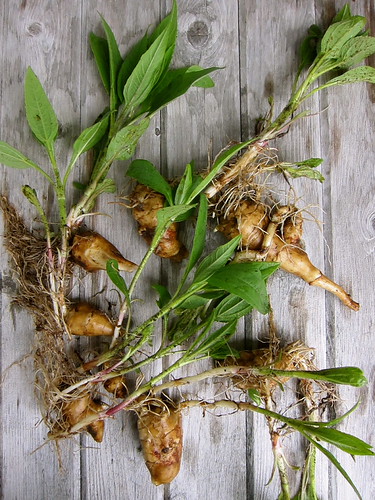
We can’t say we weren’t forewarned. Much as we like the ease of a perennial edible that  stores in-ground, it can’t be understated how quickly last season’s foray into sunchokes have spread beyond their original planting. We hadn’t the chance to dig up some up until now; as it turns out, overwintering helps to convert the inulin into fructose, making them more digestible. Peeled, cubed and panfried until caramelized, these were a delicious accompaniment to the platter of asparagus.

Resources
Growing Citrus Indoors: 5 Helpful Tips, Apartment Therapy
The Truth About Indoor Citrus Trees, Gardenista
How to Prune a Lemon Tree, wikiHow

Posted in garden | Tagged , , | 24 Comments

Pasta with Spring Greens and Fresh Cheese

Pasta with Spring Greens and Fresh Cheese

Though the season’s first harvest of asparagus yielded but a handful, it was enough to finally welcome spring to our table with a glorious green pasta primavera. We make some version of this as the selection of spring vegetables ebbs and flows. At the moment, peas and favas are weeks away, and are from freezer stores, a harbinger of what’s to come. Once they’re here, we’ll bask in their sweetness, adding them to the increasing number of spears of asparagus. Later, we’ll add snap peas and slivers of tender green beans, or thin coins of radishes for color and crunch. If you find them in time, a handful of fiddleheads wouldn’t be out of place.

For this occasion, we made a batch of tiny cavatelli, imagining how the curl of this shell-shaped pasta would catch the brothy sauce. A loose pesto, bright emerald green from a combination of leafy greens, brings it all together, and a finishing dollop of soft cheese, such as ricotta or a mild goat cheese, adds a silky note.
Pasta with Spring Greens and Fresh Cheese

For the pesto, we gathered some fresh chard and spring onions — chives, walking onions, and garlic chives — from the garden, added a few leaves of sorrel for tartness, and processed it all with enough olive oil to form a loose pesto or salsa verde. Once it comes in, we’ll reach for some mint, also ramps when available. The vegetables are cooked with the pasta, thrown in towards the end, then everything is drained and dressed with the pesto. If the consistency of the dish seems stiff, add some reserved pasta cooking water, just enough to relax things. Pick a small-sized pasta, something spoonable like this cavetelli, or ditalini, or also orzo. Alternatively, this is as delicious stirred in some risotto, a pot of simmered beans (dried or green), a bowl of couscous or new potatoes.

There are as many versions of this dish as there are kitchens. Ours is based on Lidia Bastianich’s recipe for The Pope’s Risotto. Some other favorites are:
Pasta with asparagus, morels, favas or peas… improvise!, The Improvised Life
Fave + spring pesto, Elizabeth Minchilli in Rome
Farfalle con piselli e ricotta (pasta with peas and ricotta cheese), Rachel Eats

Local ingredients: Homemade pasta, with whole grain durum flour from Fiddler’s Green Farm; homemade goat cheese, with goat milk from Jesta Farm; asparagus, peas, favas, chard, spring onions, and sorrel from the garden.

Posted in cooking | Tagged , , , , , , | 8 Comments