Pea Pod Broth

Pea Pod Broth

So much of cooking, especially preserving, is born of necessity. It’s always disturbed me that we didn’t use the pods left from shelling peas. Their skins dense with pea flavor, it seemed a wasted opportunity to just chuck them in the compost. I’d been meaning to experiment with vegetable stocks — both for flavor and as a way to make use of vegetable scraps — and it wasn’t too far a leap to consider making one based on pea pods.

Pea Pod Broth

The peas, after blanching, are packed up and frozen for later use. As for the pods, this simple recipe from Anna Thomas’ Love Soup came closest to what I was imagining — a clear infusion that’s versatile to cook with and could be stored through canning.

Pea Pod Broth

The base is a classic triumvirate of aromatics — onion, carrots and celery. As we soon found, stocks made solely from vegetables demand a light hand, the delicate balance easily altered by strong flavors. A sprig of thyme added a savoriness that will be welcome come winter, but could be left out for lighter summer dishes. Given what we had on had, we used tiny purple bulblets and stalks from our patch of walking onions, and added a couple of garlic scapes to the mix. We left the pea pods whole and, to extract more flavor, cut the remaining vegetables into small pieces. Another tip is to make sure to start with cold water — vegetables release flavor at differing temperatures — and add enough to barely cover the vegetables as they’ll reduce in bulk during cooking.

The pleasing results from this test batch was surprising, given the short cooking time. One doesn’t usually associate making stock as a summer activity, however, the impact on flavor by using vegetables while they’re fresh and in season makes it a worthwhile endeavor.

Pea Pod Broth
Pods from 3 pounds peas, rinsed
1 large yellow or white onion, chopped
1 large carrot, peeled and sliced
2 stalks celery, sliced
3 to 6 garlic scapes, chopped (optional)
A few sprigs flat-leaf parsley
A sprig of thyme (optional)
1 teaspoon salt, plus more to taste
A few peppercorns
3½ quarts cold water

– Place ingredients in an 8-quart stockpot. Bring the water to a boil, lower the heat to medium, and let the broth simmer, covered, for about 45 minutes.
– Strain the broth, and discard/compost the vegetables. Adjust salt to taste. Let cool before storing in the refrigerator for one week, or freeze.

Adapted from “Stone Soup” by Anna Thomas.

Pea Pod Broth

To process (from the Ball Blue Book Guide to Preserving): Ladle hot stock into hot jars, leaving 1-inch headspace. Process pints 30 minutes, quarts 35 minutes, at 10 pounds pressure in a steam-pressure canner.

Local ingredients: Peas from Riverside Farm; carrots from Touching Earth Farm; celery from Shagbark Farm; parsley from Meadow’s Mirth; garlic scapes, walking onions, and thyme from the garden.

Resources
Freezing Green Peas, National Center for Home Food Preservation
Pea Pod Broth, Farmer Dave’s
7 tips for full-flavoured vegetable stocks, Stone Soup

Posted in cooking, preserving | Tagged , , , | 16 Comments

7.8.13 Shell Peas and Greens

7.8.13

The peas we bring home from the farmers’ market are mostly for preserving, while the homegrown ones are solely reserved for eating right away. The first planting of them are finally ready, while the second batch has come to halt in this week’s heat. We’ve been picking them all week, plunging them directly from vine into a bucket of water to cool them down before shelling.

7.8.13

With a forecast of temperatures in the 90’s, we harvested to save much of what was already beginning to bolt, including the spring planting of salad greens.

7.8.13

Above: A mix of Red Russian, Siberian, and Beedy’s Camden kales, and rainbow chard. We were unable to obtain more seed for the Siberian, and are trying out the Beedy’s as a replacement. There was a striking difference in germination between the  two, most likely due to the difference in seed freshness. Though similar in appearance, the Beedy’s, an heirloom from Maine, is slighty frillier and milder tasting than the Siberian. 

7.8.13
Some rhubarb went into another galette with strawberries while we still had them. We harvested the remaining tatsoi, which was beginning to bolt. It’s tolerance for cold makes it a good spring crop for us, though it seems to prefer growing into cold.

7.8.13
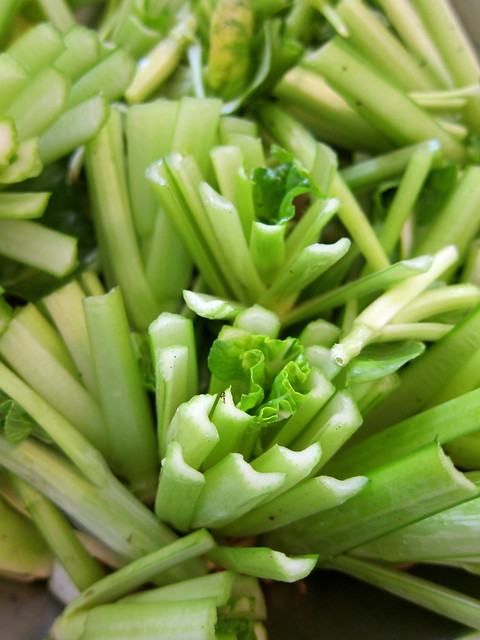
Confronted with a basketful of tatsoi, we thought of freezing it, much like bok choy. Above, their snipped-off  root ends.

7.8.13

A brief dunk in cool water serves to wash as well as plump up the tatsoi before their two to three minutes of blanching. After draining, the leaves are ready to be packed up for the freezer.

7.8.13
This week’s harvest: Peas, tatsoi, fun jen, kale, chard, salad greens, and rhubarb.

Putting-up: Frozen peas, tatsoi, and garlic scape pesto; quick-pickled Napa cabbage, Tokyo turnips, chard stems, celery, stem lettuce, rat-tail radish, and more snap peas.

Posted in garden, preserving | Tagged , , , , , , | 20 Comments

Red, White and Blue Potato Salad with Peas

Potato Salad with Peas

New potatoes are popping up at the farmers’ market, with these red, white and blue ones arriving just in time for an Independence Day picnic. Steam them in their jackets, let cool, and toss with a cupful of freshly shelled peas, some shaves of baby red onions, and a mustardy vinaigrette for a dish easy to port to any festivities you may have planned. Happy Fourth of July!

Mustard Vinaigrette

1/4 cup olive oil
1 teaspoon mustard
Squeeze of lemon juice
Salt and pepper to taste

– Whisk together ingredients to emulsify into a dressing.

Local ingredients: New potatoes from Wake Robin Farm; peas from Riverside Farm; red onion from Moondance Gardens; and Raye’s Mustard.

Posted in cooking | Tagged , , | 4 Comments

7.1.13 Days of Vegetables and Roses

7.1.13 Days of Vegetables and Roses

A thick hedge of rosa rugosas borders two sides of our vegetable garden. They were already here when we moved in, and, though they’re not thought of as companions, are excellent at attracting natural pollinators to the garden.

7.1.13 Days of Vegetables and Roses

Rhubarb leftover from making the first jam of the season, was cut into half-inch chunks and frozen. Come mid-winter, we’ll turn it into a tart compote or comforting stew

7.1.13 Days of Vegetables and Roses

Snap peas from Meadow’s Mirth being turned into quick vinegar pickles. A few days in the fridge, then they’ll be ready to eat, and keep for a month or longer.

7.1.13 Days of Vegetables and Roses

Also from the farmers’ market, peas from Riverside Farm. If anything, the damp weather we’re still experiencing has made for deliciously sweet peas. After shelling and blanching, a cup of them went directly into a risotto, the rest into the freezer. Frozen peas, along with the canned tomatoes, make up the the backbone of our winter stores.

7.1.13 Days of Vegetables and Roses

A break in the weather this past week-end finally allowed us to get the tomatoes in the ground. With no time to spare, since fruit’s already forming on the Peacevine.

7.1.13 Days of Vegetables and Roses
Checking in on the agretti, there are enough seedlings to start thinning. The green tops make a nice garden nibble, though the red stem is already too woody.

7.1.13 Days of Vegetables and Roses

Containers on the deck extend our growing space, especially for herbs, such as cilantro, dill and cutting celery. 

7.1.13 Days of Vegetables and Roses

This week’s harvest: Fun jen (above), rhubarb, salad greens, tatsoi, and Phillips and Rossa di Sulmona garlic scapes.

Putting-up: Rhubarb-ginger jam; frozen rhubarb and peas; quick-pickled sugar snaps.

Posted in garden, preserving | Tagged , , , , , , , , | 17 Comments

Local Food: Portsmouth Farmers’ Market

Local Food

‘Tis the season! From the Portsmouth Farmers’ Market, June 29th:
Napa cabbage from Black Kettle Farm; turnips, cilantro, snap peas and chard from Meadow’s Mirth; beets and summer squash from New Roots Farm; tomatoes and peas from Riverside Farm; celery from Shagbark Farm; pan di zucchero chicory from Touching Earth Farm; agretti, rattail radishes, stem lettuce, and new potatoes from Wake Robin Farm; and basil from Zach’s Farm.

We’re dipping our toes into Facebook — come visit us there, where we’re serving up some of the tasty extra bits:
https://www.facebook.com/pages/Diary-of-a-Tomato/223281327811224

Posted in interlude, local food | Tagged | 6 Comments

Barley Scones with Rhubarb-Ginger Jam

Stranger than fiction

I’m a terrible shopper when traveling. Fortunately, the Gardener is not. Other husbands may bring home gifts of meat. Much like the Will Ferrell character in the movie Stranger than Fiction, mine brings me flours. There was buckwheat flour from a trip to Switzerland, a bag of farro flour from Italy, and barley flour from Iceland. As I recall, each was put to use in making pasta — buckwheat pizzoccheri, farro cavatelli, and barley orecchiette. More recently, delving deeper into baking has expanded my way of thinking about these less common or, as Hank Shaw calls them, alternate flours.

Rhubarb-Ginger Barley Scones

While in Reykjavik this spring, we visited the natural food store that the barley flour had originally come from. We found that they no longer carried it, with the explanation that though the barley flour was locally grown and produced in Iceland, their customers preferred organic, even if it was imported. Still, barley, along with rye, is one of the few cultivated crops that can thrive in Iceland’s rugged climate. In New England, there are few small grower/producers of barley flour to be found, one such is Four Star Farms in Massachusetts. Mostly, I look to Fiddler’s Green Farm, based in Maine; most of the grains are sourced from away, however, they are ground fresh and by the order.

Rhubarb-Ginger Barley SconesRhubarb-Ginger Barley Scones

When confronted with a flour I’m unfamiliar with, I often turn to Kim Boyce’s  Good to the Grain as a start. I’m always searching for ways to use home preserves, and her recipe for Strawberry Barley Scones is easy to adapt to kind of jam. Rhubarb is a traditional ingredient in Icelandic cooking, particularly preserved as a jam, and seemed an apt pairing with the barley flour.

Rhubarb-Ginger Barley Scones

In terms of preserving, rhubarb presents an curious ingredient to make jam from. It’s a vegetable, but acidic enough to be safely processed in a boiling water bath. Though naturally low in pectin, rhubarb’s acidity also allows it to gel without adding more pectin. Macerating the rhubarb with sugar further strengthens the set by drawing water away from the pectin, making room for their molecules to unite.

Rhubarb-Ginger Barley Scones

For a more vibrant hue, choose a red variety of rhubarb, one that will cook up true to color. The ginger is an optional addition, and the next time I may grate it up for more of a flavor punch. Do watch the jam as it simmers; it can become volcanic, as the jam on my kitchen ceiling will attest. It’s not the first time I’ve had to scrape jam off it, and, alas, probably not the last.

As for the barley scones, Boyce’s lovely recipe can be found here, and are exactly as she describes — distinctly sweet and creamy, a contrasting foil to the tang of the rhubarb jam. In addition to the barley flour, some all-purpose flour adds structure. Don’t skimp on the jam; a half cup will seem like a lot, but evens out as the scones bake. I skipped the melted butter at the end and, instead, brushed the tops with buttermilk before baking. For an even more Icelandic touch, use skyr in place of the buttermilk, and serve with whipped cream on the side.

Rhubarb-Ginger Jam

2 pounds rhubarb stalks, chopped into ½ inch pieces
3 cups sugar, up to 4 cups for a sweeter jam
2-inch piece of ginger, cut into 4 to 5 pieces crosswise

– Mix all ingredients together in a non-aluminum bowl, and let sit overnight, 12 to 36 hours, until sugar has dissolved and juices form.
– Drain rhubarb juices into a sauce pan, set the rhubarb aside. Pick out the ginger pieces and add to the saucepan with the juices.
– Bring the juices to a boil, and simmer for 5 minutes. Add the rhubarb, and continue simmering for 15 minutes, until thickened. Remove ginger pieces before ladling in jars.
– Store in refrigerator or process in jars for 10 minutes, leaving ¼ inch headspace. Makes about 4 cups or half-pints.

Adapted from “The Breakfast Book” by Marion Cunningham.

Local ingredients: Organic barley flour from Fiddler’s Green Farm; organic cultured butter from Casco Bay Butter; homemade buttermilk from Harris Farm milk; egg from Meadow’s Mirth; rhubarb from the garden.

Posted in cooking, preserving | Tagged , , , , | 10 Comments

Reykjavik, Part 4: Cod Wars and Hot Dogs

2013 Reykjavik

Iceland’s history is inextricably bound with that of fishing, for sustenance as well as for export. As these two paintings hanging in our hotel depict, while the men fished, the women processed — dried cod in earlier days, salted herring later.

Reykjavik, Part 4

 On our last day in Reykjavik, we headed for Vikin, The Reykjavik Maritime Museum to learn more about Iceland’s fishing culture. Situated at the furthest edge of the harbor, it’s easy to overlook this gem of a museum. The museum traces Iceland’s relationship with the rich fishing grounds surrounding it through an engaging array of artifacts, dioramas, and videos. We allowed only part of the morning to spend there, and could have easily spent the rest of the day absorbing this living history.

Reykjavik, Part 4

The story of fishing in Iceland wouldn’t be complete without including that of Þorskastríðin, the Icelandic Cod Wars. As we toured the Coast Guard Vessel Óðinn, one of the museum’s main exhibitions, we heard of the Óðinn‘s illustrious history. It was the first ship built specifically for the Coast Guard, which was founded in 1926. With no standing army, Iceland relies on a defense agreement with the U.S., with the Icelandic Coast Guard responsible for coastal defense, and maritime search and rescue.

The Cod Wars were a series of confrontations primarily with Britain, as Iceland sought to extend it’s fishing limits. The first occurred in the 1958, when Iceland, out of concern for overfishing, increased their territorial waters from 4 to 12 miles. The limit was again expanded to 50 miles in 1972, then to 200 miles in 1974. Each time these restrictions were met by hostility; Britain continued to fish within these zones while the Icelandic Coast Guard actively enforced the boundary against them.

This history came even more alive when we encountered the last captain of the Óðinn, who happened to be onboard ship. He told us stories of boats deliberately ramming one another at sea, and showed us their secret weapon — the trawl cutter used to cut British fishing nets. He spoke also of the Coast Guard’s other duties, of icy rescues that gave us an appreciation for how much remote communities rely on their presence. 

Reykjavik, Part 4 Reykjavik, Part 4

Next, with the sun still high in the sky, we joined the throngs for lunch at Cafe Paris, which had the particular advantage of an outdoor patio. We continued on afterwards to the concert hall and conference center, Harpa. Noted for its architecture, the facade was designed by the Danish-Icelandic artist, Ólafur Elíasson. Though its design clearly bears the influence of Buckminster Fuller, it was serendipitous to find a photo of drying cod juxtaposed in-camera with that of the pattern pattern made by the building’s windows.

Reykjavik, Part 4 Reykjavik, Part 4

Located in an isolated position on the waters’ edge — the rest of the plan for the area remains undeveloped — Harpa stands as a symbol of Iceland’s recovery after economic collapse. This modern edifice is meant to be enjoyed from the inside, and it was a pleasure to see it alive with those populating the cafes within, taking a tour, or attending a conference. “I think what is highly unique in Iceland is that the light is not just a little bit different compared with the rest of the world: it is incredibly, extremely different, partly because people here developed a life in twilight.” — Ólafur Elíasson

Reykjavik, Part 4

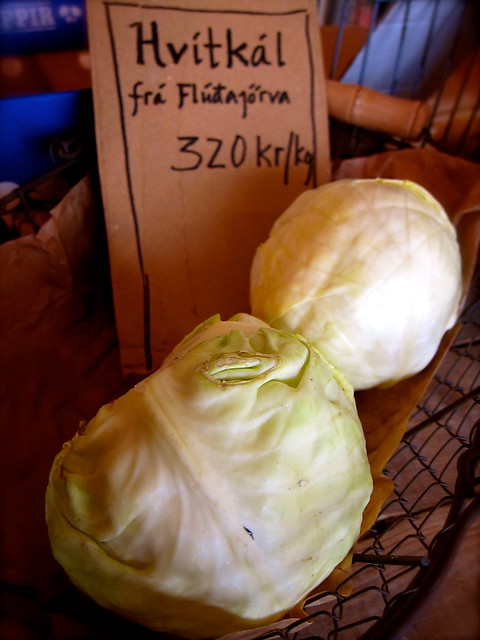
Just a few blocks from our hotel, we came across Frú Lauga, a shop specializing in locally-produced food. We were informed that use of agrochemicals in Iceland is still low, with the cool climate keeping it relatively free of plant and animal disease. As a protective measure, imports of live animals, raw meat, and plants are strictly limited or forbidden. There’s demand though, to a certain degree, the shortage of organic fertilizers hinders the growth of organic production.
Reykjavik, Part 4 Reykjavik, Part 4

What there’s plenty of is geothermal heat, which is employed in greenhouses to produce mostly cucumbers, tomatoes, and red and green peppers. These serve to supplement the potatoes, cabbage, carrots, turnips, and rhubarb more commonly grown.

Reykjavik, Part 4 Reykjavik, Part 4

Reykjavik, Part 4

With the exception of berries, fruit is mainly imported, as were these Cox apples from England — a little tired from the journey but as flavorful as their reputation makes them out to be.

Reykjavik, Part 4

Passing through the central city on our way to dinner, around 8 pm — it’s the night before a national holiday, and streets are beginning to fill with the revelers. Surprising how fast one adjusts to long days and to wearing sunglasses at night.

Reykjavik, Part 4

Down by the old harbor, the restaurant Höfnin featured summer dishes on their menu. Sumardagurinn fyrsti, or first day of summer, traditionally begins the first Thursday after April 18th, and is based on the old Norse calendar containing only two seasons, summer and winter. It was pointed out to us, in a display of sly Icelandic humor, that it often snows that day.

Reykjavik, Part 4 Reykjavik, Part 4

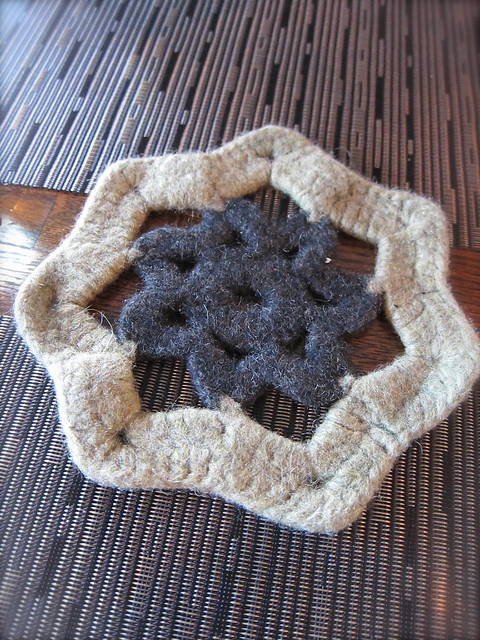
For starters, we had the bowl of lamb soup (above, right), which was a more dressed up version of what we had in Gullfloss. The roasted langoustines with pickled celery root and oranges (below, left), was served on a homey crocheted doily.

Reykjavik, Part 4 Reykjavik, Part 4

Reykjavik, Part 4

Reykjavik, Part 4 Reykjavik, Part 4

A bowl of beer-steamed mussels (above, left) was accompanied by home fries and a herb sauce packed with dill, while a summery platter (right) featured cured salmon, smoked mackerel, apple-curry herring, smoked lamb and the Icelandic flatbread, flatkökur.

Reykjavik, Part 4

The Blue Lagoon overshadows the fact that Reykjavik is home to seven public thermal pools. Our 48-hour city pass, Reykjavik Welcome Card, included free entry to them all, a rather different way to experience daily life there. Remember to bring your bathing suit, it’s a quite wonderful way to start off the day.

Reykjavik, Part 4 Reykjavik, Part 4

By our third visit to Mokka Kaffi, we were beginning to feel at home. Opened in 1958 as Iceland’s first coffeehouse, the lack of wi-fi is more than compensated by our berry muffin. We were more than delighted to be offered the option of whipped cream with it.

Reykjavik, Part 4

Any conversation about eating in Reykjavik eventually touches on Bæjarins Beztu Pylsur, a roadside stand with a name that translates to “The Best Hotdogs,” and is more popularly known as “the place that Bill Clinton ate.”

Reykjavik, Part 4 Rekjavik Part 4

Definitely worth seeking out, this all-Icelandic hotdog is made partially of lamb, and is piled high with condiments — a creation of textures and flavors deserving of its own postage stamp.

Reykjavik, Part 4 Reykjavik, Part 4

True to their Nordic roots, Icelanders know how to make a great sandwich. We were able to squeeze in one more meal by picking up a couple of them from the bakery Sandholt to take with us on flight.

Reykjavik, Part 4

While heading out, we met up at the airport with the Gardener’s ski touring chums, Matt and Helen. They pass through often on their way to Greenland, and it was a treat to spend some time with them, however brief. In answer to your lovely question, Matt, the most special thing about Iceland was all of the personal encounters we had there. As much as Iceland is about nature, from the captain of the Óðinn, to the twinkly smiles of recognition that greeted us at Mokka Kaffi, what we remember most were the people and a culture very much shaped by place.

IMG_5237

On the flight out, we binged on Icelandic movies, and thought about the many things to see, do and taste the next time around. As they say in Iceland, bless bless!

Resources
Vikin, The Reykjavik Maritime Museum
Cafe Paris
Harpa
Höfnin
Mokka-Kaffi
Bæjarins Beztu Pylsur
Bakari Sandholt
• Reykjavik, Part 1: Icelandic Daze
• Reykjavik, Part 2: The Golden Circle
• Reykjavik, Part 3: Settlement Life

Posted in field trip | Tagged , | 4 Comments