9.9.13 Winter Tomatoes: Pomodorino del Piennolo, Aprile & Ponderosa

9.9.13 Winter Tomatoes — Pomodorini

It seems fitting on the two-year anniversary of Diary of a Tomato that we return to how it all started, growing winter tomatoes. There are many reasons not to grow tomatoes in Maine. The temperatures tend to be too cold, the climate too wet, and the season too short. There does exist, however, a window of opportunity, and we’ve had some success by focusing on the smaller-sized varieties. We usually grow a couple of cherry tomatoes, this year it’s been Sungold and Peacevine. Mostly, though, we grow tomatoes for winter storage. 

9.9.13 Winter Tomatoes — Pomodorini

Winter tomatoes, also known as keeping tomatoes, are harvested before frost and stored in a cool, dark place, where they’ll keep until spring. Of the three Italian varieties we grew this year, the Pomodorino del Piennolo (above, top, and below), was a new addition. It started out as a seedling from friend John Forti, who knew of our interest in these tomatoes, and gave us one grown out from tomatoes brought back from last year’s Terra Madre. The fruit developed with a lobed belly and prominent point, or “pizzo,” which are characteristics of Pomodorino del Piennolo del Vesuvio.

9.9.13 Winter Tomatoes — Pomodorini

This southern Italian cultivar struggled, but bore enough fruit for us to sample and save seed from — just squeezed out onto a paper bag, labeled, and left to dry until next season.

9.9.13 Winter Tomatoes — Pomodorini

It’s been a challenging year for growing tomatoes. A long, cool spring slowed the developing plants considerably, only to give way to a period of intense heat, an equally unfavorable condition. We were concerned for the other two winter tomatoes, especially the Pomodorini Appesi Aprile. We named it after the masseria in Puglia where we first learned about pomodorini, and where the seeds came from.

9.9.13 Winter Tomatoes — Pomodorini

These Pugliese pomodorini are rounder than the Piennoli del Vesuvio, and without the pointed tip. Fortunately, because they tend to develop later, the plant began to produce vigorously once we moved into the more settled weather of late summer and early fall. It’s still a race, though, for the fruit to ripen before first frost. 

9.9.13 Winter Tomatoes — Pomodorini

The third variety of pomodorini is the Ponderosa del Oro (above and below). Like the Aprile, this year’s crop is from saved seed, and is hopefully now adapted to northern conditions. While the deeper-colored Aprile has better flavor, the golden yellow Ponderosa produces sturdy, long-lasting fruit, and can keep up to May.

9.9.13 Winter Tomatoes — Pomodorini

Harvesting:
Summer squash, filet beans, Shishito peppers, cucumbers, cherry tomatoes, radishes, kale, chard, and salad greens

Putting up:
Canned crushed tomatoes, tomato sauce (red and yellow), roasted tomatoes (paste and Juliets), chicken stock, vegetable stock, and corn (whole kernel and creamed). Frozen summer squash flatbread and ratatouille.

Posted in garden, tomatoes / pomodorini | Tagged , , | 3 Comments

Putting Up: Pressure Canning Workshop in Kittery

Putting Up: Pressure Canning Workshop

Take your canning beyond pickles and preserves at this upcoming hands-on workshop on Pressure Canning Tomatoes on Tuesday, September 24th from 5:30 to 8:30 pm, at Traip Academy in Kittery, ME. We will guide you through the basic steps of canning and processing tomatoes, while using a pressure canner. Become familiar with pressure canning, and expand your homemade pantry with vegetables, meats, and stocks!

Putting Up: Pressure Canning Tomatoes
Kittery Adult Education, Traip Academy, Kittery, ME
Tuesday, September 24, 2013
5:30 – 8:30 pm
$20, open to non-residents

Ever wonder how to preserve all those fresh summer tomatoes? This hands-on food preservation workshop will teach you the basic steps for pressure canning. In addition to receiving a “Preserving the Harvest” food preservation packet, participants will learn recommended methods for preserving foods, the latest and safest recipes, about equipment to insure safety, and how to check for properly sealed jars. Please bring a potholder.

The University of Maine Cooperative Extension’s Debra Kam and Jeffrey Benton will present from Preserving the Harvest, a series of hands-on food preservation workshops. Both have completed the Master Food Preserver Program.

Online registration (open to non-residents):
http://kittery.maineadulted.org/courses/course/pressure_canning_tomatoes

Workshop: Pressure Canning Tomatoes

Posted in cooking, preserving | Tagged , , , | 2 Comments

Putting Up: Tomatoes — Crushed & Sauced

Putting Up: Tomatoes

For some, security is having enough jars of strawberry jam, for others it’s having a root cellar full of potatoes. For us, it’s having enough canned tomatoes to fill an entire shelf in the pantry. Tomato season is the one we watch the most closely, for it can be cruelly brief. This year’s harvest is late, and what hasn’t succumbed to disease will be curtailed by rapidly cooling weather. The time is now, and we’ve rearranged our schedules, pulled out the canning gear, and obligingly buy tomatoes in bulk.

Putting Up: Tomatoes

Crushed tomatoes are a quick way to get them canned without too much fuss — slip the skins off, cut in quarters, cook briefly, then jar up and process in a boiling water bath, 35 minutes for pints or 45 minutes for quarts. Processing time is even shorter with a pressure canner, a mere 10 minutes at 15 PSI.

Putting Up: Tomatoes

Paste tomatoes are ideal — 10 pounds gave us 9 pints crushed — though slicing and heirloom varieties may also be processed this way. Packed in their own juices, crushed tomatoes prove their versatility in all manner of soups, stews, casseroles and other cooked dishes as we make our way through the year.

Putting Up: Tomatoes

Canned tomato sauce is another pantry staple. Again, paste tomatoes will yield the most jars, however, we include heirlooms for a more complex and deeper-flavored sauce. To keep things flexible, we keep seasoning  on the simple side — just onions, garlic and basil.

Putting Up: Tomatoes

As for the yellow tomatoes showing up at market, these can also be preserved as you would any of the red ones. Here, we’ve made another batch of sauce, this time unseasoned, and imagine how much it’ll brighten a mid-winter meal served over pasta or in a lemon lentil soup.

Learn more at our upcoming class, Pressure Canning Tomatoes on Tuesday, September 24th, from 5:30 to 8:30 pm. This hands-on workshop will take you through the basic steps of canning and processing tomatoes, while using a pressure canner — become familiar with pressure canning, and add vegetables, meats, and stocks to your canning pantry! Hosted by Kittery Adult Education through the University of Maine Cooperative Extension. Online registration (open to non-residents):
http://kittery.maineadulted.org/courses/course/pressure_canning_tomatoes

Local ingredients: Paste tomatoes (crushed) from Hollister Family Farm; paste and slicing tomatoes (red sauce) from Pickpocket Farm; and Orange Blossom tomatoes (yellow sauce) from Brandmoore Farm.

Resources
• Let’s Preserve: Tomatoes, UMaine Cooperative Extension
Crushed Tomatoes (with no added liquid), National Center for Food Preservation
• Seasoned Tomato Sauce — Seasoned/Unseasoned, Clemson Cooperative Extension
• Video: How to Freeze TomatoesUMaine Cooperative Extension

Posted in local food, preserving | Tagged , , | 7 Comments

Blueberry Buttermilk Tart

Blueberry Buttermilk Tart

Maine wild blueberries are one of the special joys of late summer. Pea-size or smaller, these differ from the cultivated varieties, with a concentrated flavor packed into their tiny size. Save for a few other places in Canada and New England, wild blueberries are particularly suited to Maine’s rocky landscape, acidic soils and harsh winters. Though they freeze well, we enjoy them while in season and added to all manner of baked goods, such as pancakes, scones, pies, and especially tarts.

Blueberry Buttermilk Tart

This recipe for Blueberry Buttermilk Tart first appeared in the July 1990 issue of Gourmet magazine, and coincides with our early years in Maine. We’ve been making this tart ever since and, as they’ve become available, with an increasing amount of local ingredients. Juicy sweet blueberries float in a lemony filling, offset by the tang of buttermilk, and balanced off by a buttery crust. The recipe calls for cultivated blueberries, we use the Maine wild ones in the same measure. For the crust, we substitute 1/3 cup whole wheat pastry flour plus 1 cup all purpose flour to make up the difference. Other than that, we’ve changed the recipe little, and only add 1/4 teaspoon of ground ginger to the buttermilk filling and suggest omitting the melted butter. We highly recommend ginger ice cream to acccompany, especially if the tart was baked that day and still holds the warmth of the oven.

Recipe: Blueberry Buttermilk Tart, Gourmet

Local ingredients: Maine wild blueberries from Riverside Farm; whole wheat pastry flour from Brookford Farm; organic unsalted cultured butter (thank-you, Alicia!) from Casco Bay Butter Co.; eggs from Meadow’s Mirth; and homemade buttermilk cultured from Harris Farm milk.

Posted in cooking | Tagged , , | 4 Comments

Tiella — Tomato, Potato and Summer Squash Casserole

Tiella

Tiella from Puglia — Tomatoes, summer squash, sweet onion and potatoes layered with breadcrumbs, pecorino and herbs, then baked until everything’s tender and melds. There are as many ways to make this as there are households, this is based on one from the Salento, and replaces mussels with juicy, ripe tomatoes for an all-vegetable version.

Tiella — Tomato, Potato and Summer Squash Casserole

2 pounds yellow potatoes, sliced thinly
1 pound summer squash, sliced thinly
1 pound onions, sliced thinly
4 large tomatoes, about 2 pounds, sliced thinly, reserve juices
Good olive oil
3/4 cup breadcrumbs
3/4 cup grated pecorino or parmesan
1/2 cup chopped parsley
Salt and pepper

– Heat oven at 400°F. Slick the bottom and sides of a large baking dish or roasting pan, about 11 by 13 inches, and sprinkle 1/4 cup of breadcrumbs to coat the bottom.
– Layer half of the potatoes, onions, then summer squash in the pan. Sprinkle with 1/4 cup cheese, 1/4 cup breadcrumbs, and 1/4 cup parsley. Arrange half of the tomato slices on top, season with salt and pepper, then sprinkle another layer of 1/4 cup cheese. Continue layering with the remaining potatoes, onions,  summer squash, and the rest of the tomatoes. For the top layer, sprinkle remaining cheese, breadcrumbs, and parsley, and season with salt and pepper to taste. Drizzle with any remaining tomato juices and olive oil, cover with aluminum foil and bake for 30 minutes. Remove the foil and continue baking an additional 30 minutes, or until the potatoes are cooked through. Remove from oven and let rest before serving.

Adapted from “Flavors of Puglia” by Nancy Harmon Jenkins.

Local ingredients: Mix of heirloom tomatoes from Meadow’s Mirth and New Roots Farm; Ailsa Craig sweet onions from Touching Earth Farm; Satina potatoes from Nelson Farm; homemade breadcrumbs; summer squash and parsley from the garden.

Tiella

Note: You might notice that this tiella has a top layer of summer squash, and only one tomato layer in the middle. The next time we’ll remember to include two layers of tomatoes. Sometimes life is like that.

Posted in cooking | Tagged , , , | 5 Comments

8.26.13 A Summary of Squashes + Late August Harvest

8.26.13 Late August

Of all the squash we’ve grown, Costata Romanesco and Zephyr summer squash have been a part of our garden since the start. We first discovered them at the local farmers’ market, and appreciated how their dense, creamy flesh makes them suitable for all manner of preparation, including steaming, sautéing, and grilling. We pick them while they’re still small, around 6 inches, and before the blossoms have fallen. In Rome, where the Costata hail from, they’re picked even smaller, finger-length and with the flowers still attached.

8.26.13 Late August

The Costata is an heirloom variety, while the Zephyr is a hybrid of yellow crookneck, with a bit of yellow acorn and delicata squash mixed in. It produces prodigiously, and these are also picked small. This helps to keep the plant in check, and encourages it to continue producing further into fall. The amount of green will vary — don’t be alarmed if early fruit appear completely green, the plant will soon sort itself out and produce a two-toned squash.

8.26.13 Late August

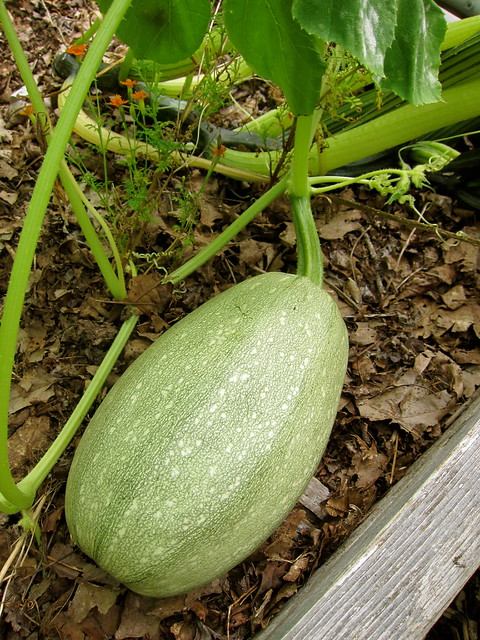
Growing winter varieties of squash can a challenge here, and the Tromboncino had certain qualities that made it an attractive choice: It’s resistant to powdery mildew and squash vine borer, serves as both a summer and winter squash, and produces well under a variety of conditions. Above: The end of the vine bursting with fruit, each coupled with its own leaf and tendril.

8.26.13 Late August

The Tromboncino didn’t take long before it lived up to its other name, “zucchini rampicante” — with spreading leaves and vines, it can creep up to 20 feet, only to be matched in growth by its rapidly elongating fruit. Classified as a moschata, the Tromboncino belongs to the same family as butternut squash, which it’s said to closely resemble in flavor and texture. So far, the only problem we’ve had is blossom end rot, though there’s more than enough fruit remaining to make up for the loss.

8.26.13 Late August

All of our squash plants reside in a single raised bed, and we’re experimenting with trellising to compensate for the lack of space. Above: Delicata squash hanging from its vine.

8.26.13 Late August

Above: A lone spaghetti squash. Like  summer squash and Delicata, it’s five-sided stem marks it as a member of the Cucurbita pepo family.

8.26.13 Late August

A last batch of Napoli carrots, left from spring planting. We’re glad to have remembered to harvest these before they became overgrown and woody.

8.26.13 Late August

Orion fennel, the best-looking of the bunch, showing off its conformity to the variety’s shape and size.

8.26.13 Late August

 In comparison, we preferred the flavor of the flatter-bulbed Finale, which will be  on next season’s planting list.

8.26.13 Late August

We’d thought it was too late to pick this Catalogna Emerald endive, which is usually eaten as a spring green. As it turns out, this variety isn’t as bitter as the other Italian varieties of chicory we’ve grown. Though it may be too far gone for a salad green, it’s perfect as a braising one. 

8.26.13 Late August

Harvesting:
Carrots, fennel, filet beans, Shishito peppers, cucumbers, summer squash, favas, cherry tomatoes, chicory, kale, chard, and salad greens.

Preserving: Freeze chard, and summer squash flatbread.

Posted in garden | Tagged , , , , , , | 5 Comments

Summer Squash, 10 Ways

8.19.13

The pleasures of August are many, including the onslaught of summer squash. Like so many things in the garden, it’s a fine balance between having too much or too little. We plant with the anticipation of the toll taken by powdery mildew and squash vine borer, however, with ten pounds collecting in the fridge, we finally relented and took out one of our seven vines. Where some see glut, we see delicious opportunity. Here are just some of the ways we enjoy their bounty during the season.

Summer Squash x 10

Early in the season, we have summer squash at their simplest — sautéed in good olive oil with garlic scapes, and the herbs that are just appearing, like chives. We’ve learned to cook them as the Italians do, long enough that they become meltingly tender and buttery.

Summer Squash x 10

Next, a summer succotash, an easy single-pan dish. First-of-the-season corn is cut off the cob, then sautéed with sweet onion, green bell pepper, chunks of summer squash, and a tomato for color. Garlic scapes rounds things out, and a garnish of basil from the garden adds a finishing touch.

Summer Squash, 10 Ways

We grow only two varieties of summer squash, Costata Romanesco and Zephyr, which serve most our needs. However, when Kousas appear at the farmers’ market, we grab a bagful just to make zucchini ripieni, or stuffed zucchini. Their voluptuous shape make a fitting receptacle for a savory filling of ground lamb and a copious shower of mint.

Summer Squash x 10

We pick the summer squash young enough that they often still have their blossoms attached. With the favas we forgot to add to the succotash, we used both the squash and their blossoms for a spur of the moment pasta. The summer squash are sliced paper-thin, then stewed gently with the favas and and a bit of bacon for a hint of smoke.

Summer Squash x 10

Sometimes you just want something crunchy, and these baked fries satisfy the craving without the guilt. At the same time, this version put a sizable dent in our supply of summer squash. No matter how many of these you make, they’ll all disappear. Pair these with a simple tomato marinara sauce, or the sweet onion dip included in the recipe.

Summer Squash x 10

One of the deciding factors in choosing which varieties of summer squash to grow depends on how well suited they are to grilling. Anytime the grill’s lit, we slice a couple of them lengthwise, massage in some good olive oil, and cook them over fire.

Summer Squash x 10

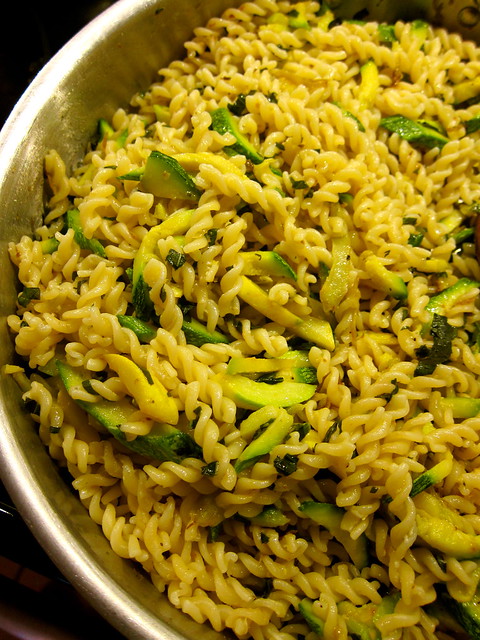
It may be cheating to include another pasta here, however, this one calls for 1½ pounds of summer squash, and we regularly rely on some version of this when we need to make a sizable dent in our supply. If you have them, this easily takes 2 pounds or more, and is delicious enough that we look forward to making this as many times in the season as we can manage.

Summer Squash x 10

Stashing summer squash in baked goods is an obvious choice. Cheddar and chives takes these biscuit-like scones in a savory direction. Made with sprouted wheat flour from a friend, we’ve been enjoying these toasted up for breakfast. The one small zucchini that the recipe requires may make this seem hardly worth the effort, but could be a perfect way to use the lone one left from your CSA share.

Summer Squash x 10

We gravitate towards recipes that use two or more pounds of summer squash, and this flatbread doesn’t disappoint. Double this favorite, and make 5 pounds of summer squash disappear in a flash. Using a no-knead dough, we vary the flavors by the choice of cheese and through the addition of herbs. The original version calls for Gruyere, we often use a mix of provolone and fontina with marjoram or summer savory. Feta and dill, or even zahtar, is another favorite. During high season, we make a couple of extra batches as a convenient way to freeze summer squash: The flatbread is cut into manageable pieces, then stacked and wrapped in foil. A sheet of wax paper between the layers will prevent the pieces from sticking to one another. When ready to serve, defrost and toast up until crisp.

Summer Squash x 10

This shorthand version of stuffed zucchini was too cute to pass up. The summer squash are scraped just shallow enough to hold slivers of mozzarella and a line of cherry tomato halves. Bake these little zucchini canoes until the cheese is bubbly and beginning to brown, and finish with a drizzle of good olive oil and some fresh basil.

Resources
Sauteed Zucchini, Real Simple
Summer Zucchini Succotash, Redbook
Stuffed Zucchini: Zucchini Ripieni, Molto Mario
Penne with Summer Squash and Blossoms, Diary of a Tomato
Baked Zucchini Sticks and Sweet Onion Dip, King Arthur
The Best Way to Grill Zucchini, Serious Eats
Pasta with Zucchini and Mint, The New York Times
Zucchini and Cheddar Scones, Taste
Zucchini Pizza, Suzy Homebaker
Zucchini Boats, Proud Italian
• Freezing: Summer SquashNational Center for Home Preservation
Summer Squash Recipes, Seacoast Eat Local
Watch Your Garden Grow: Summer Squash, University of Illinois Extension

Posted in cooking, garden | Tagged , , , , | 8 Comments