10.21.13 Pomodorini, Potatoes, and Priscilla Apples

10.21.13
As an Italian friend once remarked, it’s better to have green tomatoes than no tomatoes. With temperatures dipping into the 30’s ahead, it was time to bring in the pomodorini, or winter tomatoes, ready or not.

10.21.13

It was a challenging year to grow tomatoes, and our yield reflects that — only one tray’s worth of Aprile (above, left) and another of Ponderosa (above, right). This is compared to ten trays worth from last year. Though the Ponderosa size up nicely, there isn’t enough time in our season for them to ripen enough before storage. This may be the last time we grow them, and, instead, we’ll concentrate on continuing with the Aprile and the new Piennoli.

10.21.13

Similarly with the potatoes, the yield was far less than last year’s. We again used containers, and chose to grow only one variety, Yukon Gold.

10.21.13

The potatoes came out on the large side, unblemished and disease-free, but only 13 pounds compared to last year’s 24. There were far too many variables to pin down what caused this decline.

10.21.13

We usually like to wait until first frost before picking the apples, but decided to take what we could before the deer got to them.

10.21.13

We’d thought it was a problem of the gate left open, but noticed that deer were continuing to get into the vegetables. We covered the raised beds with extra netting, and strung fishing line across the garden paths to dissuade them. It was beginning to look like something out of the movie, “Mission Impossible”.

10.21.13

So far, we’ve been able to deter them, and the Gardener is convinced it’s the chunks of Irish Spring, looking like soap-on-a rope for elves, hung along the perimeter that finally worked. 

10.21.13

As for those green tomatoes: Spaghetti con Pomodori Verdi.

Harvesting:
Pomodorini, apples, winter radishes (daikon and green meat), shishito peppers (red and green), carrots, green onions, winter squash (tromboncino), costata zucchini, cherry tomatoes, chicories (puntarelle, cime di rapa, hon tsai tai), kale, chard, salad greens, and seaweed for compost.

Preserving:
Canned chicken and stock; fermented sauerkraut (salt brine and whey); dehydrated ground cherries; dehydrated apple brittle; canned roasted red peppers; and frozen ginger.

Posted in garden, tomatoes / pomodorini | Tagged , , , | 4 Comments

Putting Up: Fresh Ginger Root

Putting Up: Fresh Ginger Root

We went to the Portsmouth Farmers’ Market today in search of rutabaga and, instead, came home with a luscious bunch of fresh ginger root from Wake Robin Farm of Stratham, NH. It was hard not to be greedy with this locally-grown treat as it’s so easy to preserve — just pop the bulbs in an air-tight container and freeze. We first snip off the stalks, then break the bulks into manageable-sized pieces. After a quick dunk to rinse off any clinging debris, we let them air dry and they’re ready for packaging.

The bulbs are young enough that peeling isn’t necessary. Frozen ginger is best used within 6 months — when you’re ready to use it, simply grab a chunk and grate the amount you need. Alternatively, we like Norma’s way of steeping slices of ginger in sherry, sake or rice wine as another way of preserving it. Temperatures are falling, so save the stalks for a warming, gingery broth. Another source for locally-grown ginger is Wild Miller Gardens in Lee, NH, and is available freshly frozen at their Well House Store.

Posted in cooking, preserving | Tagged , , | 12 Comments

Carrot Cake Oaties

Carrot Oatmeal Cookies

We’re lucky to have a real bakery in town. With artisan baked goods their focus, Beach Pea Baking Co. fills their cozy shop with crusty, fresh bread and all manner of tempting treats. And when we stop by, we always come away with a bag of their applesauce oatmeal cookies. What we like best about these soft, chewy cookies is that all of the good things they’re stuffed with — oatmeal, walnuts, raisins, and applesauce — make them as suitable for breakfast as for an afternoon nibble. Baker-owners, Mariah and Tom Roberts, published a cookbook some years back and, though it contained recipes for their Lavender-Mint Shortbread, Quigy Bars, and Cowgirl Cookies, the one for Applesauce Oaties was not among them. It was during another attempt to duplicate it that we came up with Carrot Cake Oaties, and with results satisfying enough to more than make up for the times we can’t make it to the bakery.

Carrot Oatmeal Cookies

These simple drop cookies start off with creaming together butter and two kinds of sugar. If you prefer something less sweet, especially now when the carrots are cold-sweetened, reduce the brown sugar to ⅓ cup. We usually use some combination of whole wheat and white flour in place of all-purpose. Lately, though, we find ourselves reaching for the sifted whole wheat flour from Maine Grains, which still has the taste and texture of whole grains but with a little less bran to keep things light. As for flavorings, we like the way ginger spices up carrots; cinnamon or vanilla are also good choices. In keeping with the small size of the cookies, we use currants, though raisins would do just as well. If you remember to, toast the walnuts beforehand to bring out their natural oils. And if you happen to have a dough scoop on hand, this is the perfect time to use it.

Carrot Oatmeal Cookies

Carrot Cake Oaties

½ cup (1 stick) unsalted butter, softened
½ cup packed light-brown sugar
¼ cup granulated sugar
1 large egg
1 cup all-purpose flour
1 teaspoon ground ginger
½ teaspoon baking soda
½ teaspoon salt
1 cup rolled oats
¾ cup packed, grated carrots
⅓ cup dried currants
½ cup chopped walnuts

– Heat oven to 350°F. In a large bowl, cream the butter with the sugars until fluffy. Add the egg, and beat into the butter mixture. In another bowl, sift together the flour, ginger, baking soda, and salt. Add flour mixture to butter mixture, and stir until combined. Mix in oats, carrots, currants, and walnuts.
– Drop dough by tablespoon, 2 inches apart onto baking sheets. Bake 15 to 18 minutes, rotating baking sheets halfway through, until edges are crisp. Makes 36 to 40 cookies.

Local ingredients: Sifted whole wheat flour from Maine Grains; rolled oatmeal from Aurora Mills; butter from Kate’s; egg from Meadow’s Mirth; carrots from the garden.

Posted in cooking | Tagged , , , , | 10 Comments

Putting Up: Sweet Cherry Tomato Pickles

Putting Up: Sweet Cherry Tomatoes

We made Sweet Cherry Tomato Pickles for the first time last year, and they quickly became a favorite. Juicy, tangy and bite-sized, they’re easy to serve as is or blended together for a quick vinaigrette. With the tomato season holding on, we still had time to make up a batch before they disappeared.

Putting Up: Sweet Cherry Tomatoes

A wide variety was on offer at the Exeter Farmers’ Market, and we brought home some of each — tiny Matt’s Wild tomatoes from Meadow’s Mirth; and papery husk cherries, and a mix of cherry and grape tomatoes from New Roots Farm.

Putting Up: Sweet Cherry Tomatoes

Husk cherries are related to tomatillos and, similarly, need to be stripped of their paper covering before eating. Also known as ground cherries or cape gooseberries, they can be snacked on raw, made into jam, dried like raisins, or, as we’re doing here, preserved as pickles.

Putting Up: Sweet Cherry Tomatoes

Our original thought was to make separate jars of the different varieties, and soon realized the advantage of mixing them together. In this practical application of sphere packing, the smaller tomatoes fit in the spaces between the larger-sized ones, allowing each jar to be filled with more fruit. Plus it made for a festive little tomato party in a jar.

Putting Up: Sweet Cherry Tomato Pickles

To prevent floating, the tomatoes are pricked with a clean toothpick; the fruit should eventually settle once they’ve had time to cure. Like most pickles, give them a couple of weeks time for the flavor to develop before serving, traditionally at Thanksgiving.

Sweet Cherry Tomato Pickles
Makes 5 pints

5 teaspoons dill seeds
2½ teaspoons black peppercorns
10 dill sprigs (optional)
5 garlic cloves
8 cups (or 3 pounds) cherry tomatoes, hulled and pricked
4 cups cider vinegar
1¼ cups water
¾ cup sugar
1 tablespoon salt

– In a dry sauté pan over medium heat, toast the dill seeds and peppercorns. Divide the spices among 5 pint jars, using about 1½ teaspoons per jar, then add 2 sprigs dill and 1 garlic clove to each jar. Pack the tomatoes evenly among the jars.
– In a pot, bring the vinegar, water, sugar, and salt to a boil. Pour brine over the tomatoes, leaving a 1/2-inch headspace from the rim of the jar. Check the jars for air pockets, adding more brine if necessary to fill in gaps. Seal jars and process in a boiling water bath for 15 minutes.

Adapted from “The Preservation Kitchen” by Paul Virant.

Local ingredients: Matt’s Wild tomatoes from Meadow’s Mirth; husk cherries, cherry and grape tomatoes from New Roots Farm; cider vinegar from Ricker Hill Orchards; garlic from the garden.

Posted in cooking, preserving, tomatoes / pomodorini | Tagged , , , , | 24 Comments

10.7.13 Picky Eaters

10.7.13 Picky Eaters

There’s very little worse than coming into the garden and finding that deer have been foraging around. The garden gate was left open overnight and, by the looks of things, they took full advantage of the opportunity. After a quick inventory, the thing we were most disappointed to find eaten was the rattail radish (above). It was a late planting and hadn’t flowered yet, and there’s probably not enough time for it to recover.

10.7.13 Picky Eaters

Still, the browsing was light and what stuck us was how selective these midnight marauders were. The deer bypassed the tender lettuces and kale, preferring instead to dine on the rainbow chard.

10.7.13 Picky Eaters

They carefully nibbled on the pomodorini, leaving behind the unripe ones, and plucked a few blossoms off the costata vines, but spurned the nearby marigolds.

10.7.13 Picky Eaters

Of the chicories, the catalogna endive and cime di rapa were left alone, with the deer showing a liking for the brindisi puntarelle and italiko rosso instead.

10.7.13 Picky Eaters

The tatsoi was untouched, but the hon tsai tai was mowed down. We were lucky to have harvested a bunch (above) beforehand.

10.7.13 Picky Eaters

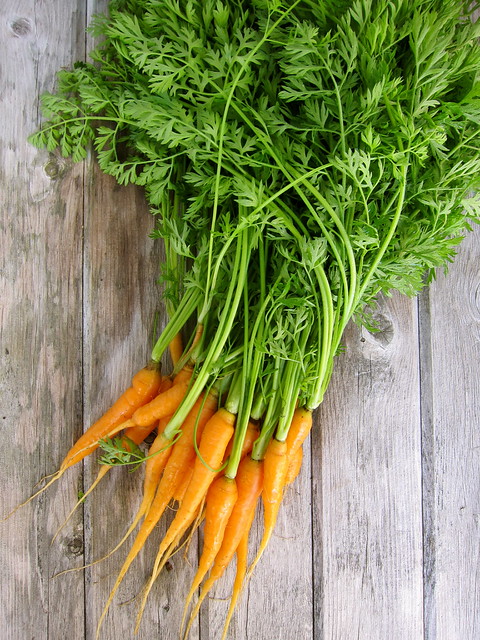
The carrot tops are usually considered a tasty treat, but they were left unmauled. Above: Napoli carrot thinnings.

10.7.13 Picky Eaters

Maybe the deer were deterred by the onions and leeks planted in the same bed. Above: Rossa Lunga di Tropea onion thinnings.

10.7.13 Picky Eaters

And the filet beans, left to go to seed for next season, were clearly of little interest. We couldn’t discern any reason why some things were eaten and others not. All we know is that we got off easy, and we’ll be compulsively double checking the gate from now on.

10.7.13 Picky Eaters

Harvesting:
Duborskian rice, winter squash (tromboncino), shishito peppers, costata, fennel, cherry tomatoes, pomodorini, radishes, chicories (puntarelle, cime di rapa, hon tsa tai), kale, chard, salad greens; last of radishes, cucumbers, and favas.

Preserving:
Lacto-fermented salsa; carrot pepper salsa (canned and lacto-fermented); pickled cherry tomatoes; canned applesauce; canned kale; frozen broccoli pesto and breaded eggplant.

Posted in garden, tomatoes / pomodorini | Tagged , , , , , , , , , , , , | 16 Comments

Putting Up: Carrot Pepper Salsa, Canned + Lacto-Fermented

Putting Up: Carrot Salsa

Like seed catalogs for home gardeners, fellow preserver Kate says the Ball Complete Book of Home Preserving is the canner’s equivalent — wonderful to browse mid-winter and dream of the colorful jars to come. It was while thumbing through the salsa section that we came upon this irresistible description for Carrot Pepper Salsa: “This delightfully different salsa is a mouthwatering addition to hot dogs and sausages. It also makes a delicious dip for fresh vegetables or tortilla chips. Stir it into potato or pasta salad to add color and flavor.” We also liked how the carrots add texture to this tangy cross between a salsa and relish.

Putting Up: Carrot Salsa

With ingredients leftover from making Carrot Pepper Salsa, it wasn’t too great a leap to creating a lacto-fermented version — simply substitute a cup of grated carrots for the tomatoes. In order to be able to sample the salsa at different points, we divided this first batch between two pint jars by placing 2 tablespoons of whey and 1 1/2 teaspoons of salt in each jar, and left 1 inch of headspace for the salsa to expand in. While the ingredient list is flexible, keep the salt, it’s what holds off the bad bacteria long enough for the good bacteria to take over during fermentation.

Putting Up: Carrot Salsa

In addition to the salt, whey is included to ensure that good bacteria, Lactobacillus, is present from the start. To obtain the whey, we leave yogurt to drain overnight, and a cup yields approximately 1/4 cup of whey. Clarifying the whey by running it through a coffee filter helps keep it longer, and the thickened yogurt leftover is an added bonus.

Note: Whey that is leftover from making cheese with an acid (vinegar, lemon juice or citric acid) lacks the same bacteria that cultured yogurt contains.

Local ingredients: Tomatoes from New Roots Farm; peppers and onions from Meadow’s Mirth; carrots and garlic from the garden.

Resources
Ball Complete Book of Home Preserving
Carrot Pepper Salsa, Bernardin
Lacto-Fermented Salsa
Lacto-Fermentation — How it Works, About.com

Posted in cooking, preserving | Tagged , , , , , | Leave a comment

9.30.13 Priscilla Apple

9.30.13 Priscilla Apple

Our apple tree is far from laden, and the few left hanging still need time to ripen. A few years back, we’d brought a few samples to MOFGA’s Great Maine Apple Day where, after close examination and tasting, apple identifier John Bunker pronounced them Priscillas. All we know is that they taste best harvested in late October, when temperatures have taken a decided dip, and store well into winter. Their best use is sauced or baked, that is if we can get to them before the deer do.

Harvesting:
Yukon Gold potatoes; winter squash (delicata, spaghetti, Tromboncino); favas; shishito peppers; summer squash (Zephyr, Costata); carrot thinnings; fennel; cherry tomatoes; winter pomodorini; radishes; chicories (puntarelle, cime di rapa, hon tsa tai); kale; chard; salad greens.

Putting-Up:
Lacto-fermented salsa; canned kale; canned carrot pepper salsa; broccoli pesto for freezing.

Posted in garden | Tagged | 15 Comments