“Rites of Red: Hanging Winter Tomatoes”

From The Italian Country Table by Lynne Rossetto Kasper (Scribner, 1999) — instructions for hanging in the last paragraph:

I practically reeled at my first taste of Puglia’s little oval tomatoes. Once I broke through the tough skin, the tomato tasted so lavish it could have been a sauce —brilliant flashes of sweet and tart with bursts of ripe fruit in each bite. I was at a farm stand in southern Puglia. The woman there explained that these tomatoes are cut in late summer and hung on their branches in pantries or outdoors under shady porches, where they shrivel slightly but do not dry. They are used just like fresh tomatoes all though Puglia’s mild winter, when garden tomatoes are not to be had. And there’s no work to them — no canning, no expensive jars and no tedious drying in fitful weather. This is the genius of country women who can’t afford to waste time, yet find ways of having the best from their gardens all through the year.

Even the tomato’s seed packets call them “Pomodori d’Inverno” (tomatoes of winter), and though it’s hard to imagine, their flavors become even more intense as they hang from late summer until the following spring.

Most of the tomatoes treated this way are shaped like small eggs with pointed blossom ends. Dora Ricci, who cooks in the restaurant she and her husband run outside the country town of Ceglie Messapico, gave me my first taste of a wintered-over red tomato — it was even punchier and more luscious than the fresh one I’d tasted the year before.

Across Puglia, in the pottery town of Grottaglia, Elizabetta Del Monoco introduced me to green tomatoes treated the same way — cut while still green on the branch and hung all winter. They don’t turn red, but instead go from tasting simply like green tomatoes to tasting of lemon and herbs and black pepper — more complex and interesting.

Puglia’s farmers don’t hold the patent on this method of holding tomatoes through winter. People all over Italy do it.

Cooking with these tomatoes is even easier than with fresh — the intense flavor is already in place. Dora Ricci cooks them quickly in a hot skillet to sauce pasta and meats. Elisabetta Del Monaco dices her green winter tomatoes and barely cooks them before dressing her Green Tomato Sauce for Midsummer’s Eve. Country women all over Italy season broths, stews and pot roasts with a few winter tomatoes. Best of all is squeezing out the flesh and juice of a winter tomato onto a slice of bread that’s been toasted over a wood fire, rubbed with garlic and drizzled with olive oil. This is pure heaven. I do it in my fireplace at home.

Hang your own fresh tomatoes through the winter. You need a dry, airy place that remains above freezing, ideally between 45 degrees and 60 degrees F. Delicious small tomatoes are the other requirement. Think about Red Currants, Sweet 100’s, Sun Golds, Early Cascades or Principessa Borgheses. Cut the vines, being sure the tomatoes are firmly attached to stems. One trick is hanging them so plenty of air circulates around the tomatoes. Space them out on several nails rather than having them hang in a single tight bunch. Turn the branches twice a week to expose all the fruit for maximum exposure to the air. Twist off tomatoes as you need them. Usually they keep well from September or October until April or May.

Posted in cooking, tomatoes / pomodorini | Tagged , | Leave a comment

Hanging winter tomatoes: “Il pomodorino del piennolo del vesuvio”

Odore di mare, di pane e origano, di carne alla pizzaiola… con i pomodorini del piennolo del Vesuvio. Piccoli e dalla caratteristica forma che sembra un cuore, con due solchi laterali che partono dal picciolo e una punta alle estremità detta “pizzo”. Il loro sapore è dolce e acidulo, inconfondibile per la particolare concentrazioni di zuccheri e sali minerali, il profumo diventa sempre più intenso con il trascorrere del tempo. Così definiti per l’abitudine di appenderli alle pareti o ai soffitti riuniti in grappoli e legati con cordicelle di canapa, sono un prodotto veramente unico della gastronomia partenopea e a renderli tali è la tradizione che immortalano: il piacere di cibi antichi e nuovi… i balconi colorati… l’estate.

Per il pomodorino del piennolo, come per altri prodotti di altissima qualità e lunga tradizione, lassociazione Slow Food ha creato un presidio di salvaguardia, mentre alcune aziende produttrici, tra le quali casa Barone, hanno avviato, di concerto con la Regione Campania e il Parco Nazionale del Vesuvio, la procedura per il riconoscimento della DOP (Denominazione di Origine Protetta) europea.

Posted in tomatoes / pomodorini | Tagged , | Leave a comment

2011 Grow-out varieties & seed descriptions

In addition to the seeds from Masseria Aprile, three other varieties were grown out. The seeds were sourced from Seeds from Italy:

Principe Borghese

Seeds from Italy:

Small indeterminate plants bear prolifically and must be staked or caged. Small plum (2 ounce) type. Tomatoes set on clusters of 7–10 fruit. They hold extremely well on the vine. 72 days. Eat fresh in salad or dry for sun-dried tomatoes. They also make outstanding oven roasted tomatoes; slice in half, drizzle with some olive oil, bake at 250 until mostly done, sprinkle with fresh basil, oregano, etc. Eat as a contorno or freeze. 1.5 gram packet @ 300 seeds.

Notes: The Principe Borghese tomatoes are grown around Naples and the southwestern region of Italy, where they’re called piennolo pomodori (hanging tomatoes). It seems piennolo is Neapolitano dialect for appeso, or “hung.” During the winter, the tomatoes are stored in home attics hanging from the ceiling.

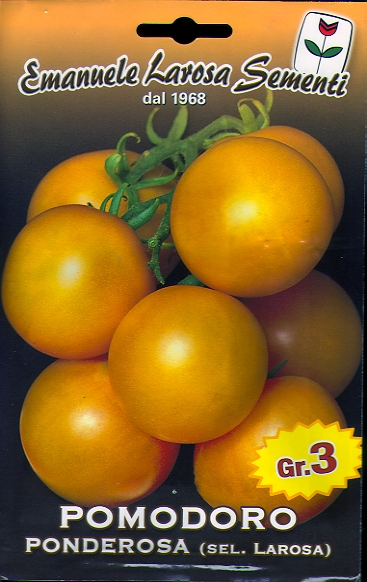
Ponderosa (sel. Larosa)

Seeds from Italy:

Indeterminate. Golf ball-sized tomato, yellow/red on the outside, red/yellow on the inside. Amazing production. Holds forever on the vine. Good taste; very nice salad tomato. Mid season. Fruit last an incredibly long time after harvest; sometimes the last tomatoes you’ll eat in the year. 3 gram packet.

Seeds from Italy Newsletter, December 2010:

Ponderosa was the trial tomato this year. This is a storage tomato. It is semi-determinate and produces a large quantity of golf ball sized fruit, yellow on the outside and red on the inside. It is late for such a small tomato and most of its fruit are ready at the same time. In Italy, what they do is pick the entire plant and bring it inside and hang it upside down in a dry storage area. The fruit will hold for months. I grew mine in cages and it was pretty much impossible to pull the entire plant so I picked them like a regular tomato. This year, the tomatoes were ready to pick in mid September although I did not pick them until the October 8th or so. They were stored in my seed packing room which is fairly cool. The photo of them is how they looked around Thanksgiving Day. I suspect they will hold at least another month and had I given them proper care, perhaps longer. While the taste is nowhere as good as a Red Pear tomato at perfection, they are pretty darn good in late November when you compare them to what is available in the store. Good tomato.

Note: These were the closest to the Aprile tomatoes. The tomatoes from the Seeds of Italy trial may not have lasted as long as they could have since they were stored off the vine. All the tomatoes we saw in Puglia were stored hanging with some of vine attached.

Da Inverno a grappoli (winter grape)

Seeds from Italy:

AKA pomodoro galantina from the town in Southern Puglia where it is from. Determinate red cherry, grape shaped. Heavy producer of very good tasting & sweet fruit that hold well for a long time on the vine. Dries extremely well. Fruit also last a long time when picked. This variety does well in a container.

Note: No longer available through Seeds from Italy.

Posted in tomatoes / pomodorini | Tagged , | Leave a comment

How it all started

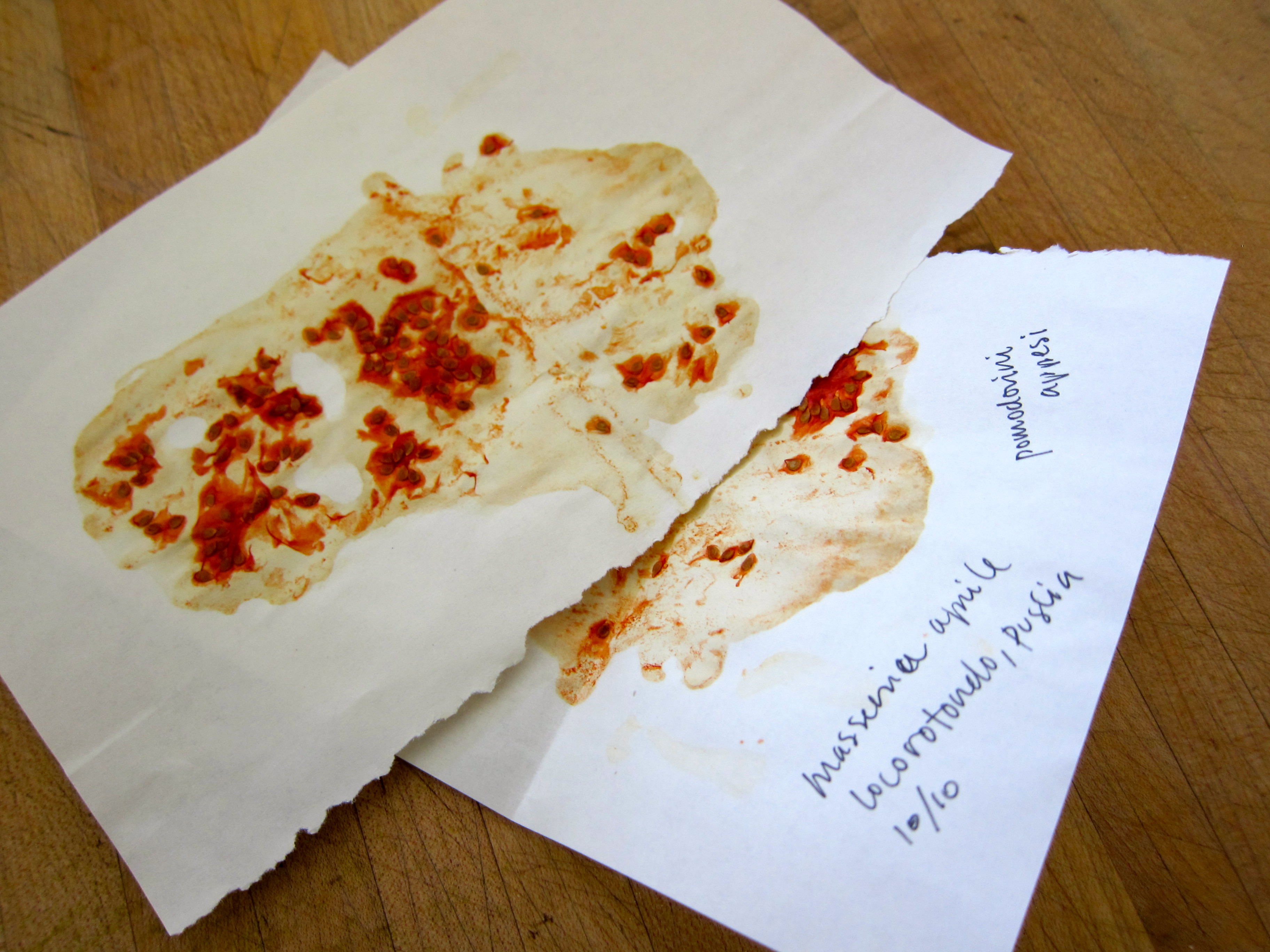
These are the seeds saved from tomatoes locally known in Puglia as pomodori or pomodorini appesi, or “hanging tomatoes.” We found these at Masseria Aprile, an agriturismo farm we visited in Locorotondo last year.  I’d just learned how to save tomato seeds from our friend, John Forti, the quick and easy way — I took several of the tomatoes, cut them open, and emptied the seeds onto some pages torn out of my travel journal. They were left to dry on the window sill of our room for the couple of days before we left, then folded up and stashed in a bag.

Posted in tomatoes / pomodorini | Tagged , | 6 Comments