Another option for storing pomodorini

If you don’t have enough pomodorini to hang, another option is to store them loosely. They will last longer if some of the stem is left attached. If the stem is missing, storing them with the stem side down will help to prolong storage life. As with other root cellar crops, check them frequently and consume as they ripen.

From Cook’s Illustrated, “How to prolong the shelf life of a tomato”:

We’ve heard that storing a tomato with its stem end facing down can prolong shelf life. To test this theory, we placed one batch of tomatoes stem-end up and another stem-end down and stored them at room temperature. A week later, nearly all the stem-down tomatoes remained in perfect condition, while the stem-up tomatoes had shriveled and started to mold. Why the difference? We surmised that the scar left on the tomato skin where the stem once grew provides both an escape for moisture and an entry point for mold and bacteria. Placing a tomato stem-end down blocks air from entering and moisture from exiting the scar. To confirm this theory, we ran another test, this time comparing tomatoes stored stem-end down with another batch stored stem-end up, but with a piece of tape sealing off their scars. The taped, stem-end-up tomatoes survived just as well as the stem-end-down batch.
Posted in tomatoes / pomodorini | Tagged , | Leave a comment

9.16.11 Hanging pomodorini

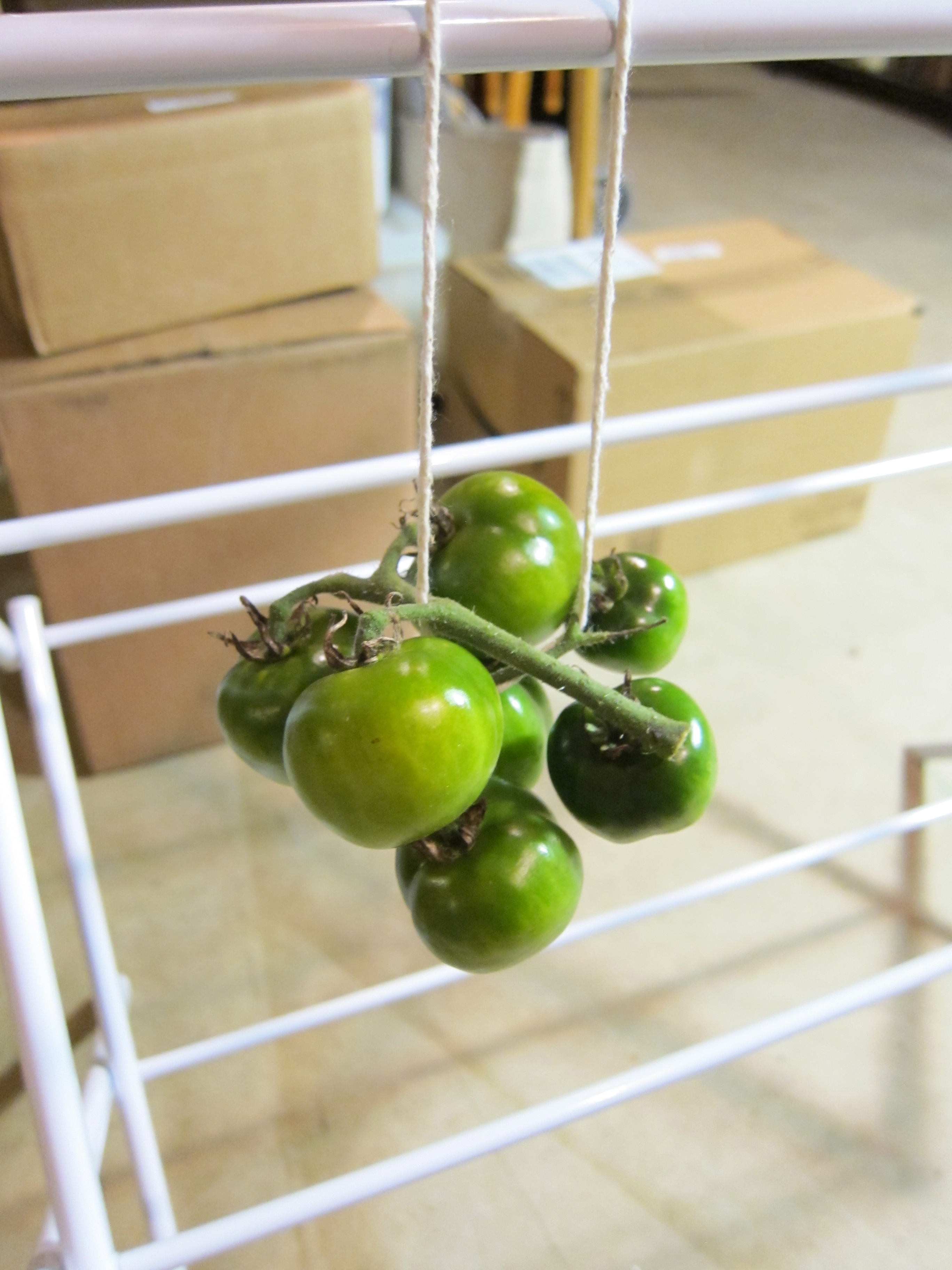
After harvesting the pomodorini, keeping them in large clusters, we studied the video and began to assemble our own piennoli. Synthetic twine was slippery, and using cotton gave the vines something to grip to. Here we’ve started hanging some Aprile.

We clipped apart the larger clusters, and worked with pieces holding 1 to 3 pomodorini. Once assembled, the piennoli were surprisingly heavy. We decided to make them smaller in order to lessen the stress on the tomatoes. This is another bunch of Aprile.

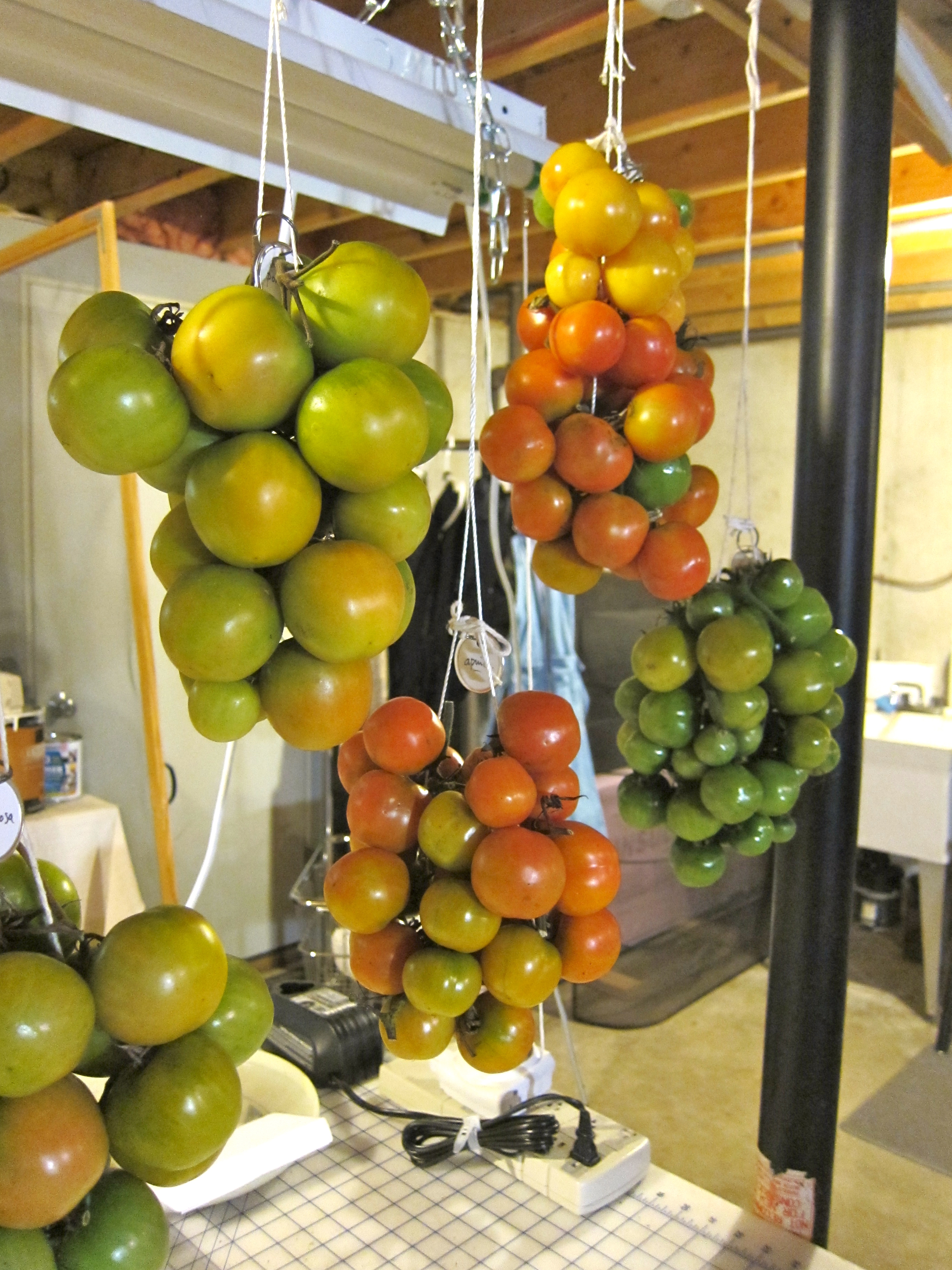
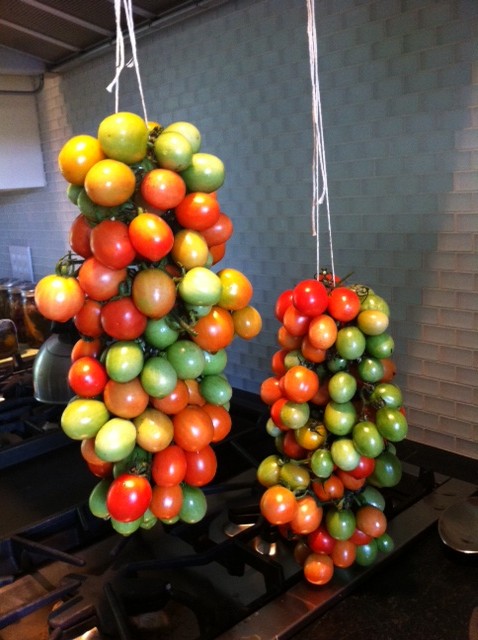
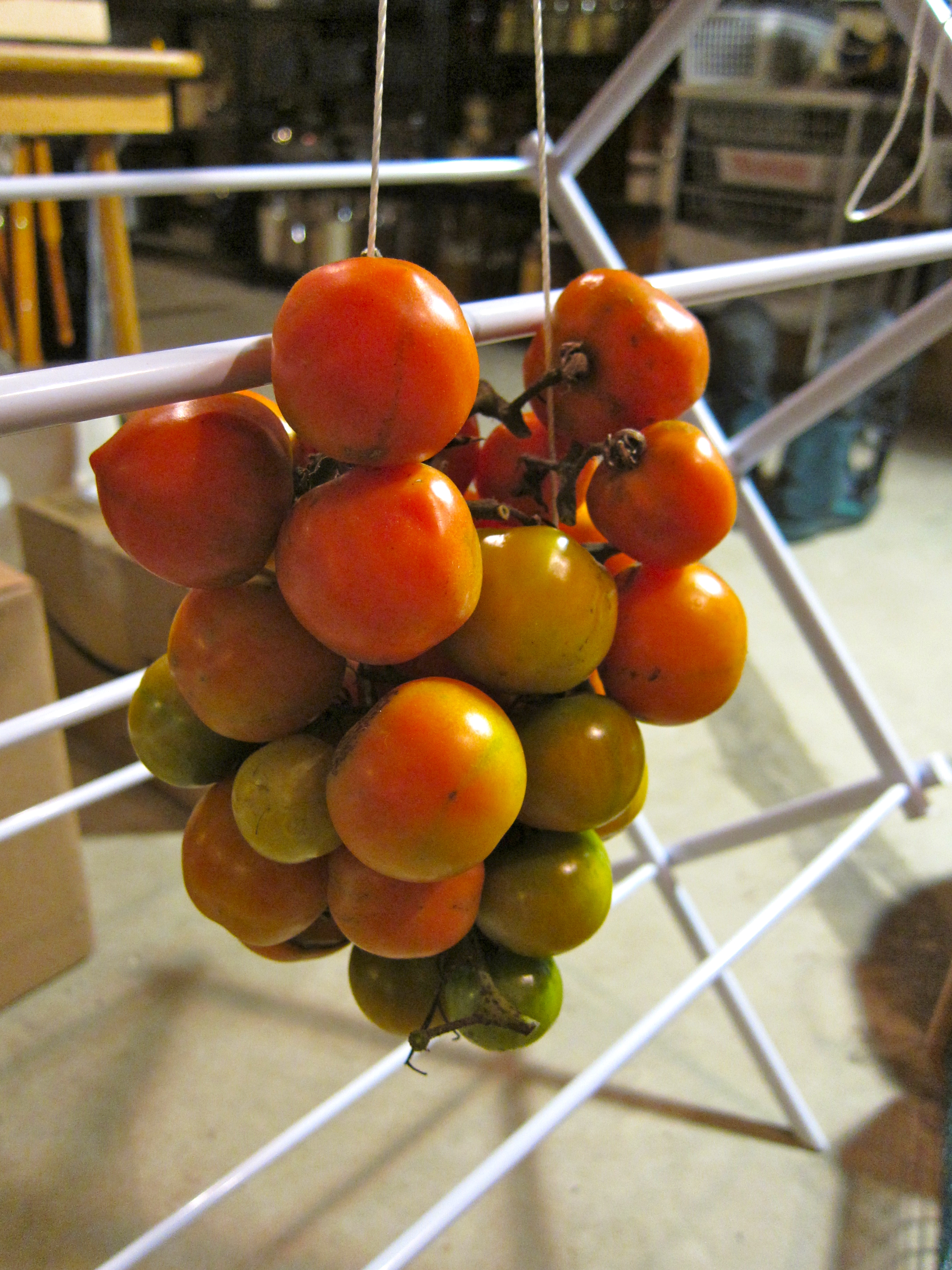
We set up a hanging area in our basement near a window for air circulation, and ended up with 8 piennoli (from left to right): 2 Principe Borghese, 3 Ponderosa, and 3 Aprile in varying stages of ripeness.

Close-up of the Ponderosa and the Aprile.

Posted in garden, tomatoes / pomodorini | Tagged , | Leave a comment

Filet beans braised with tomatoes

I was recently at a friend’s house and she served something called Turkish Green Beans, a soul-satisfying braise of late season green beans and tomatoes that was full of her memories of a youthful trip abroad. I had a pile of pomodorini, or hanging tomatoes, that were ready to eat and, in remembrance of that delicious meal and her tale of eating hazelnuts under the shooting stars, made up a version to use up some of our garden’s last filet beans.

Filet beans braised with tomatoes
Saute up some garlic slivers and a pinch of hot pepper in olive oil until fragrant, toss in the pomodorini (halved or quartered), and cook until the tomatoes begin to give up their juices. Slip in a couple handfuls of blanched filet or green beans, cover and gently simmer until the tomatoes have broken down and the beans become tender. Season with a bit of salt and pepper, and finish with your favorite olive oil.

Posted in cooking, tomatoes / pomodorini | Tagged , , | Leave a comment

9.13.11 Harvesting pomodorini

The tomato bed post-Tropical Storm Irene — most of the tomato leaves got wind and salt burned, and many of the vines were left broken. However, the Italian tomatoes hung on and generally weathered well. Though the rain caused many of  our cherry tomatoes to split and crack, the Italian ones remained fine.

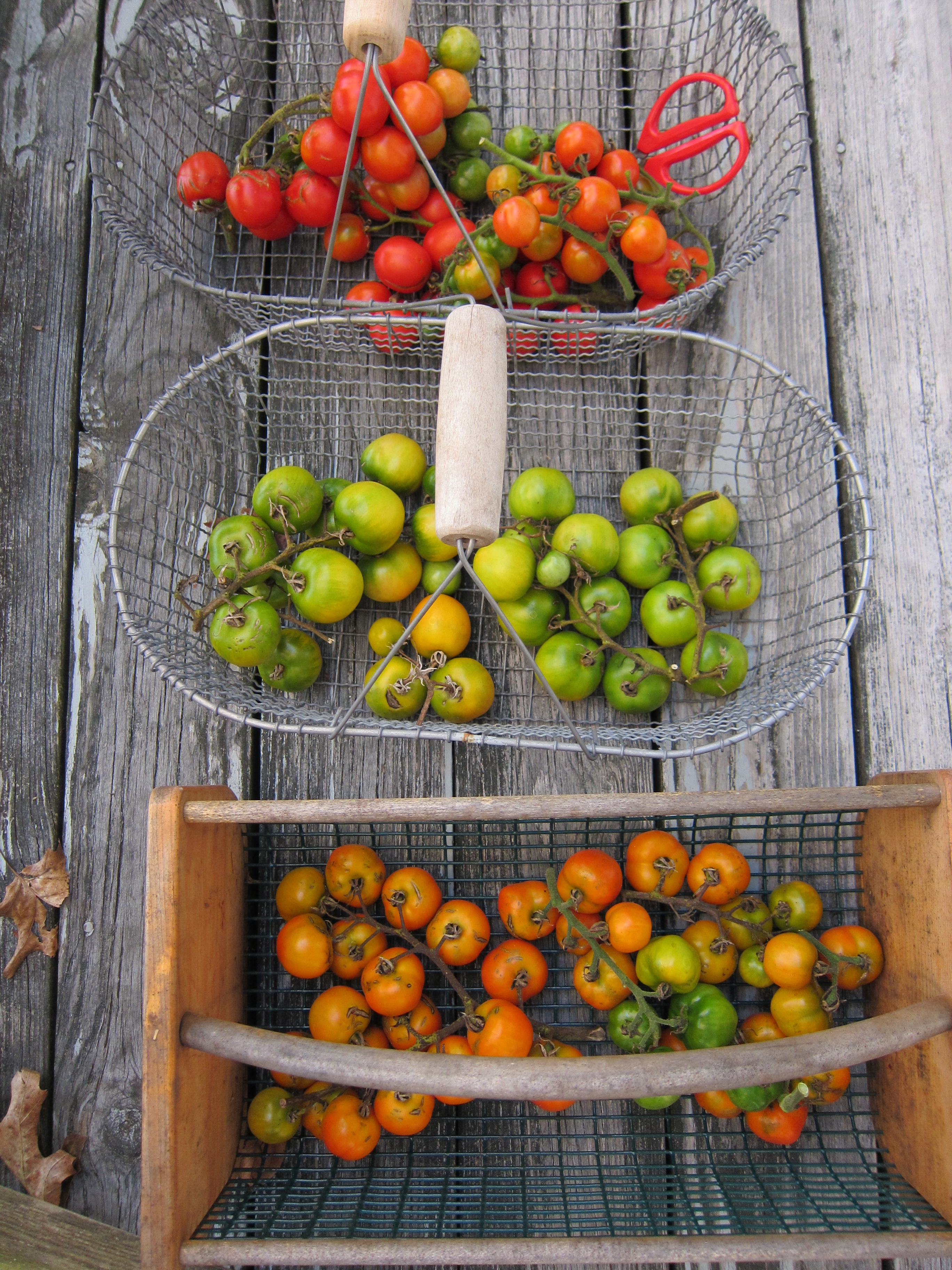
Harvest of Aprile.

Top to bottom: Principe Borghese, Ponderosa, and Aprile.

Posted in garden, tomatoes / pomodorini | Tagged , | Leave a comment

Il pizzo

Il pizzo

How to tell your tomatoes apart: The Principe Borghese tomato has a characteristic nipple or pointed end referred to as “il pizzo,” which means “the peak,” but can also be translated as “the goatee”…

Posted in garden, tomatoes / pomodorini | Tagged , | Leave a comment

8.25.11 Pomodorini

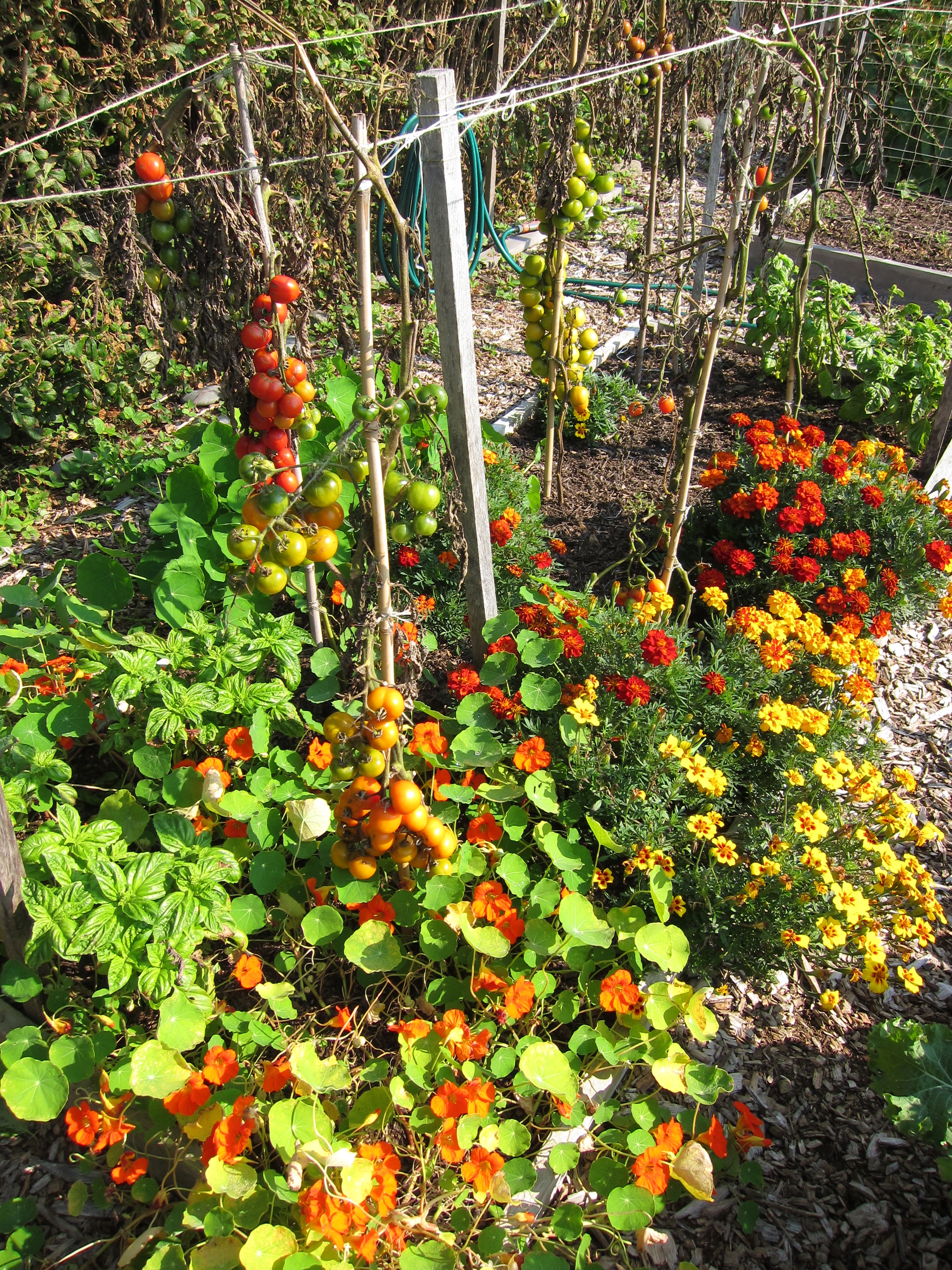
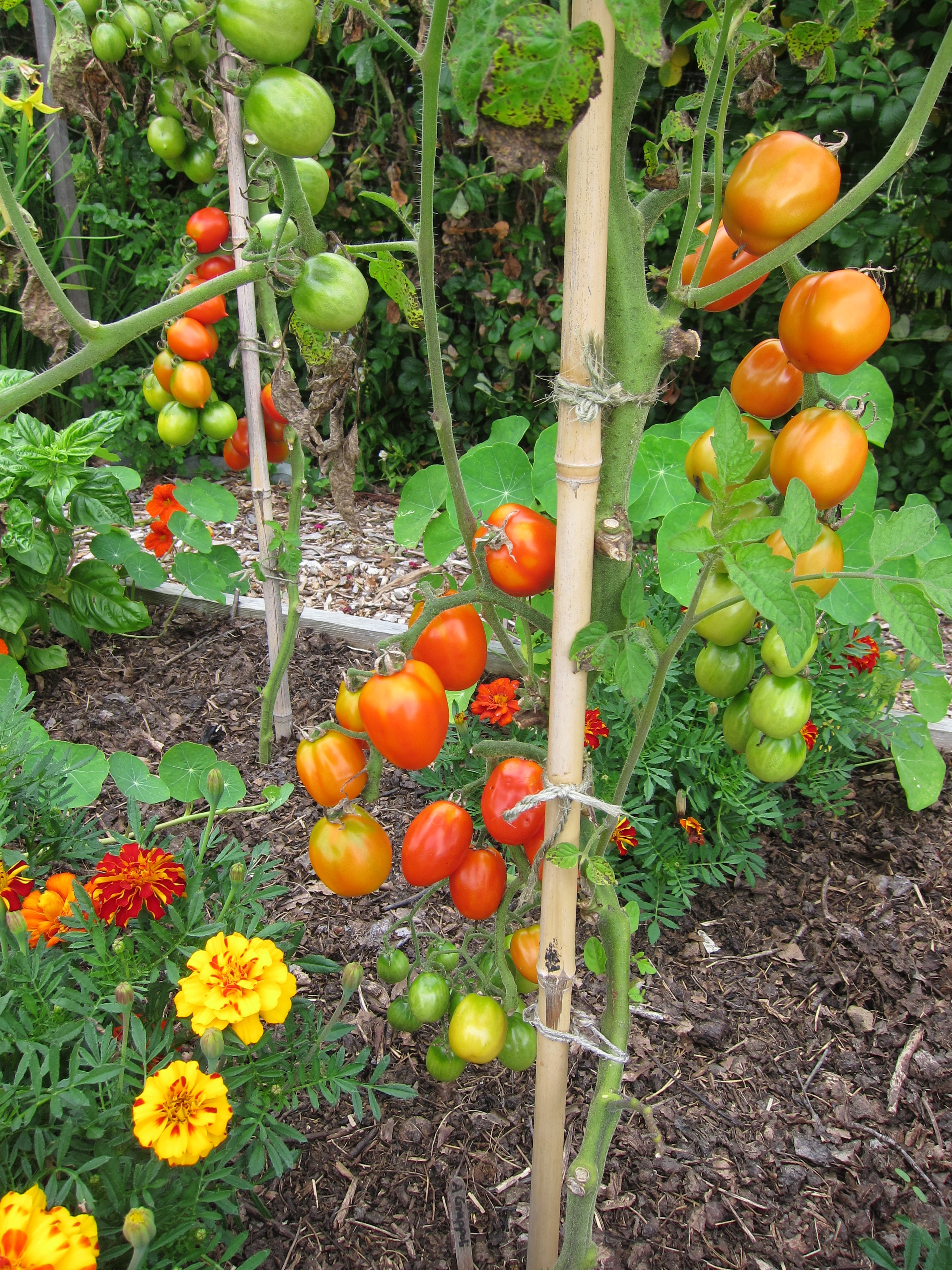
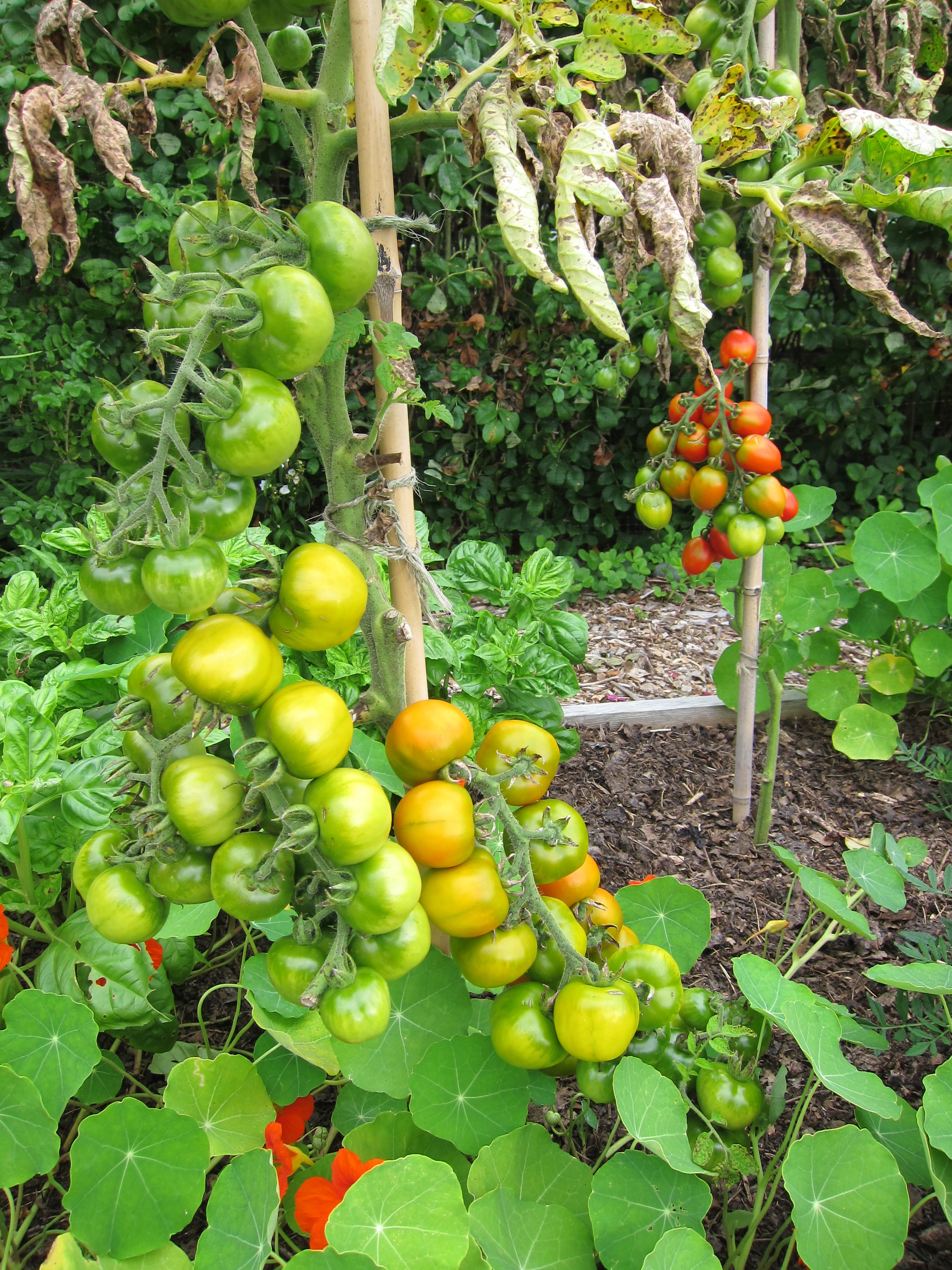
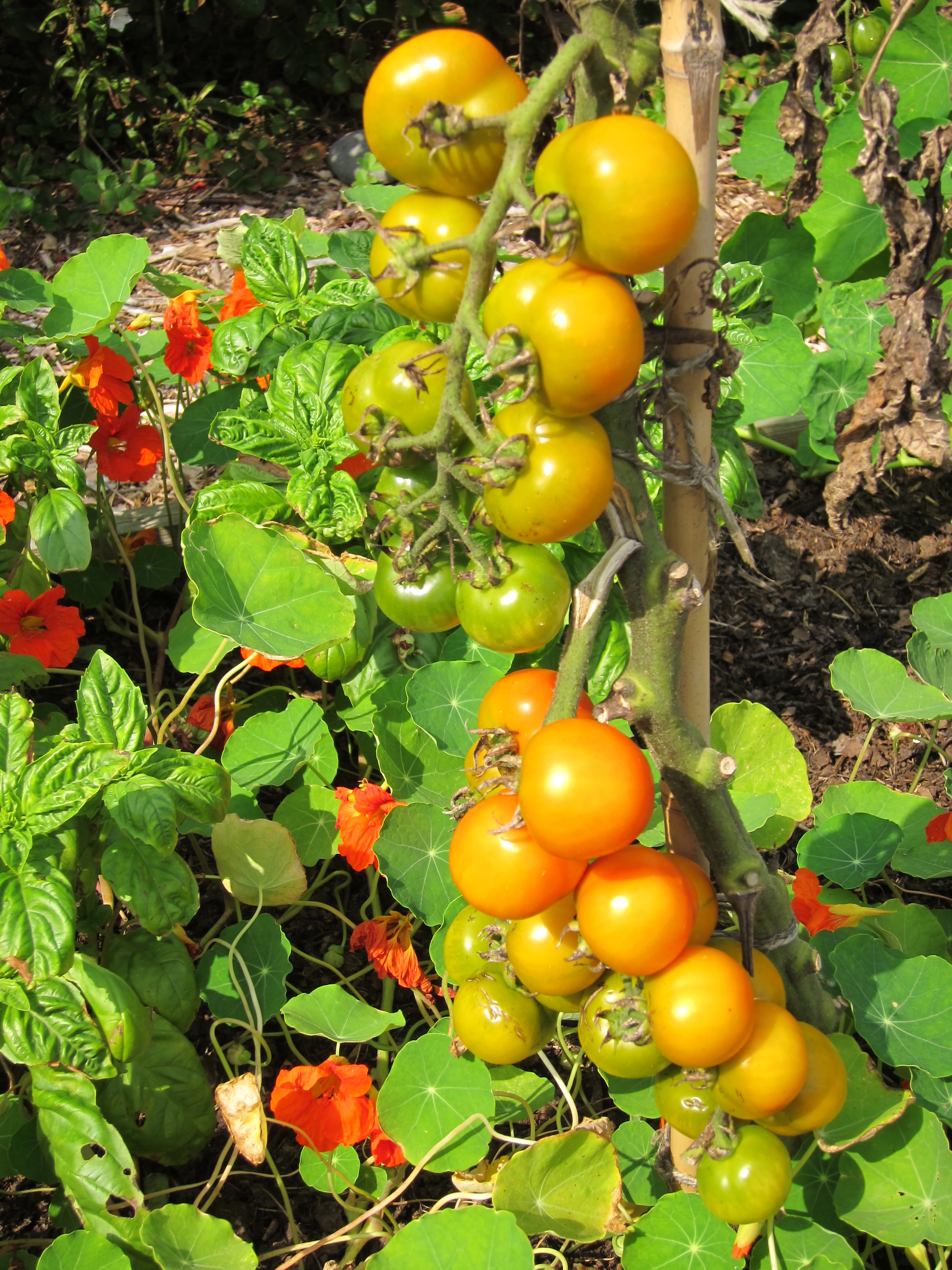
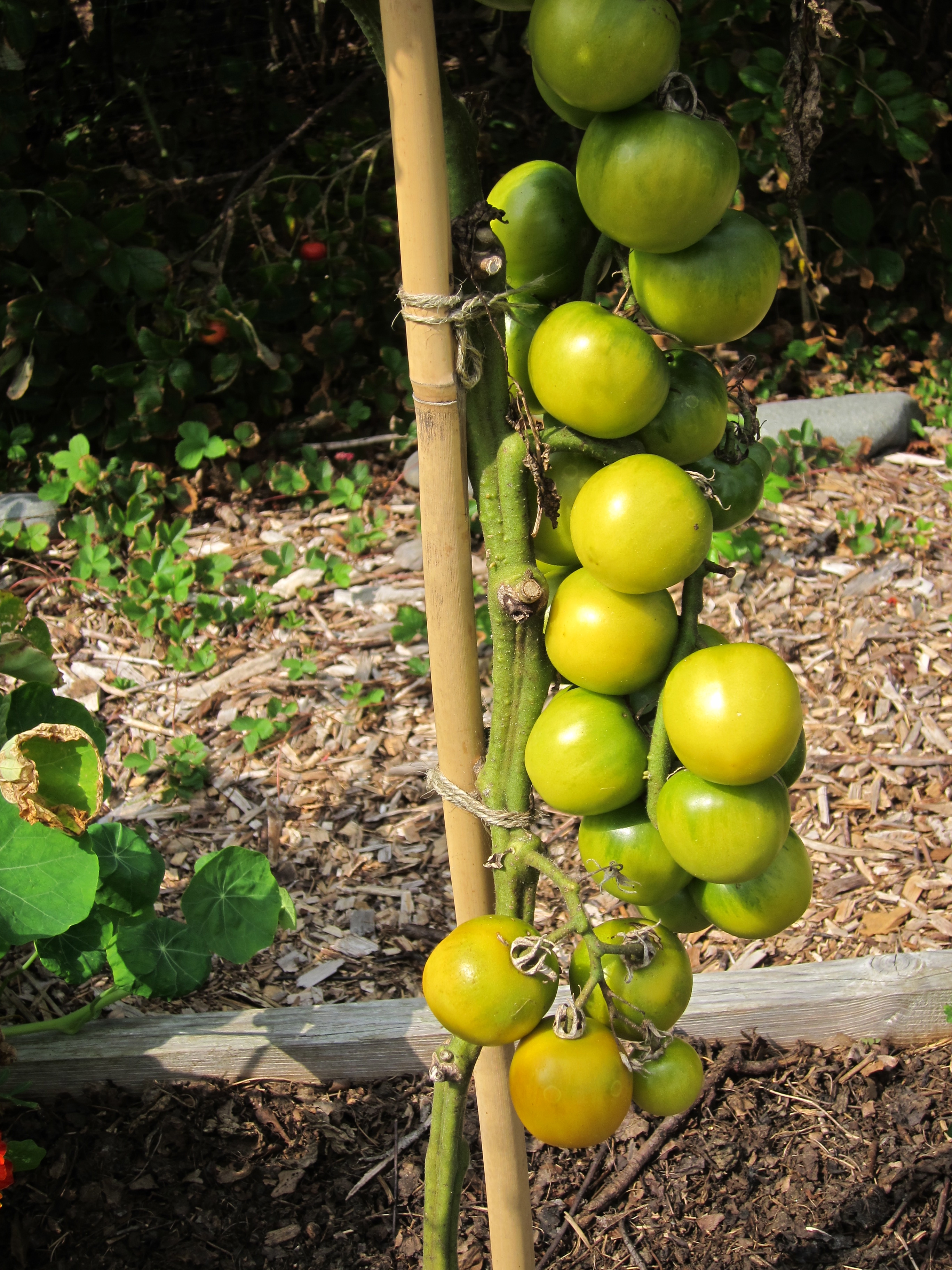
These photos from late August show the progress of the different tomatoes relative to one another. The plants were starting to lose their leaves to disease. The Grappoli starting ripening in early August, with the Principe slightly behind. The Aprile and Ponderosa were slower, as you can see below, which should make them excellent candidates for storing. These photos were taken a couple of days before Tropical Storm Irene, when we harvested a few of the ripest clusters from each plant. We’ve already consumed the Principe and Grappoli since they were ready to eat. We stored the Aprile and Ponderosa in our basement and, so far, they’ve held up well.

Left to right (above): Principe Borghese (pointed end) in back,
Grappoli (ribbed) in front.

Left to right: Aprile in front, Principe Borghese in back.

Two clusters of Aprile.

The Ponderosa, still relatively green.

Posted in garden, tomatoes / pomodorini | Tagged , | Leave a comment

Field Notes: Grappoli d’Inverno

MJ’s going to wait a little longer to harvest her Ponderosa and Aprile, but here’s her report on her Grappoli — aren’t these gorgeous? From MJ:

For most of the summer, I was looking forward to tasting one of the most prolific tomato vines in my garden: Grappoli d’Inverno. About a month ago the first ones turned red and the tasting began. I was a little disappointed with the results and only gave it a solid “meh,” and then they started ripening in droves — way too many to keep up with. As luck would have it, Deb Kam posted a timely article on the Seacoast Eat Local blog reminding me about roasted tomatoes … ah yes, roasting. And this, in my opinion, is where the Grappoli really began to shine; they are off the hook delicious.

And now that I’ve been clued into the idea of winter storage and how to hang them — I’m frankly a little over the moon for these little buggers. The very idea of plucking a sweet little tomato from the basement in January makes winter in southern Maine seem not so bad.

Note: The tomatoes in my post for Seacoast Eat Local on slow roasting them are a mix of Principe Borghese and Grappoli from Meadow’s Mirth. Though not part of the grow-out, the small yellow blush plum tomatoes are from New Roots Farm, and are also great for drying and slow roasting.

Posted in field notes, tomatoes / pomodorini | Tagged , | Leave a comment