2.19.12 Persephone rising

“As the story goes, the earth goddess Demeter had a daughter, Persephone, who was abducted by Hades to live with him as his wife in the netherworld. Demeter would have nothing to do with this and threatened to shut down all plant growth. Zeus intervened and brokered a deal whereby Persephone would spend only the winter months with her husband, Hades. Demeter, saddened by her daughter’s absence, made the earth barren during that time. On our farm we refer to the period when the days are less than ten hours long as the Persephone months.”

— Eliot Coleman, “The Winter Harvest Handbook”

It appears Persephone is returning early this year — we spotted chives coming up in the herb garden. We pulled up most of the winter carrots, Napoli at top and Red Core Chantenay at bottom, before they began resprouting, and a bunch of King Seig leeks. The lone parsnip was to see how they’re doing; it’s one of only five that germinated in fall, our first time trying to grow them.

Posted in garden | Tagged , , | 15 Comments

Sesame Braised Daikon with Mushrooms and Ginger

I finally gave into temptation. Does cooking in a clay pot really make a difference? I’m not certain, but this newly-acquired La Chamba is so beguiling, I find myself looking for excuses to cook with it. I’m just grateful I don’t live anywhere near here, or hoarding of all manner of clay cookery would definitely ensue.

Sesame Braised Daikon with Mushrooms and Ginger is just the kind of hearty dish meant to be slow cooked in a clay pot. Once it’s done and the cover lifted, one’s patience is rewarded with the release of a luscious mix of savory aromas. Like all radishes, daikon is high in vitamin C, and contains enzymes that aid digestion, particularly of starchy foods — attributes that explain my cravings for it at this time of year. I used oyster mushrooms, locally grown shiitake mushrooms are difficult to find but are quite suited to the daikon. The original recipe includes chicken, here some shredded leftovers were stirred in at the end, an entirely optional step if you prefer to keep it meatless.

Sesame Braised Daikon with Mushrooms and Ginger

3 bunches scallions, green part cut into 1 inch pieces, white part sliced thinly
2 tablespoons peanut oil
1 teaspoon sesame oil
2 pounds daikon radish, peeled and cut into 1 1/2 inch chunks
1/2 pound mushrooms, sliced or torn into bite-sized pieces
6 garlic cloves, minced
2 inches ginger, peeled and grated
2 cups stock
1/2 cup dry sherry
1 tablespoon soy sauce
2 whole star anise pods
1 to 2 teaspoons rice wine vinegar, more to taste

– Heat oven to 350°F. In a 3 to 4 quart Dutch or flame-proof clay oven, heat the peanut and sesame oil. Add the scallion bottoms, daikon, and mushrooms. Cook, stirring occasionally, until fragrant and beginning to take on color. Add the garlic and ginger, and cook for another minute.

– In a small bowl, whisk together the stock, sherry and soy sauce. Pour over the vegetables, add the star anise, and cover. Transfer to the oven and cook for 45 minutes, or until daikon is tender. Stir in the scallion greens, and season with the rice wine vinegar and more sesame oil to taste. Serve with steamed rice.

Note: If using a clay pot, place in the oven before turning the oven on, and increase cooking time if needed.

Recipe adapted from Melissa Clark for the New York Times.

Local ingredients: Scallions from Riverside Farm; daikon radish from Red Manse Farm; oyster mushrooms from Pawtuckaway Mushroom; ginger from Wild Miller Gardens; garlic from the garden.

Posted in cooking | Tagged , , | 6 Comments

Linguine con Zucca, or Pasta with Shredded Winter Squash and Sage

One of the first things I noticed in Italy was how the menus were written. Our limited vocabulary made them difficult to decipher, and there seemed a terse vagueness to the way food was described. Zucca, or squash, was particularly mystifying — what kind of squash was it, was it a winter or summer variety, and how was it prepared? The waiters would be equally mystified that we should even have to ask. Perche, signora, the type of squash depends on the place and season, and the preparation depends on the squash. Now, many years later, it seems so obvious. The ingredient leads the way.

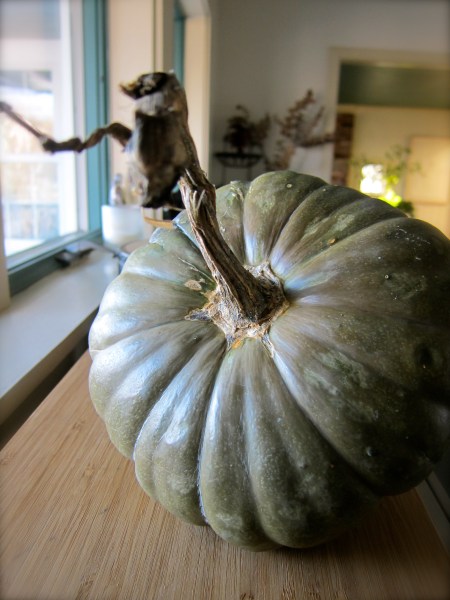
This Queensland Blue is part of the collection of winter squash we’ve been working through since last fall. Vividly colored inside and out, it has a cinched waist and sweet, smooth flesh; The Compleat Squash describes it as “spendiferous.” Reportedly, the Australian blues are legendary for their shelf life, up to two years for some. Most likely conditions here are less than ideal compared to their native land, and given our short growing season, this one may be on the small side for its type.

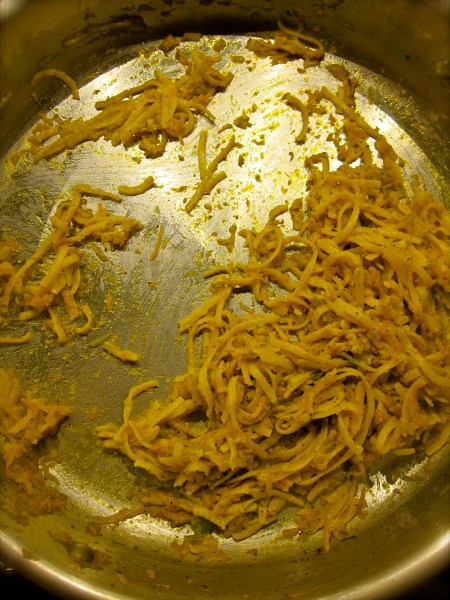
We like this preparation as a way of trying out different squashes, and grating gives it more texture than in the usual puree. The strands of squash retain a slight bite, echoing pasta cooked al dente. If you don’t have access to much variety, butternut squash is a good choice for this dish, about two pounds per pound of pasta. Once it is peeled, a food processor can make quick work of the grating. We used fresh linguine from Valicenti Organico, and, borrowing from their inspired combination of flavors, an extra squeeze of orange or zest, and some toasted fennel seed adds some wintertime zing.

Linguine con Zucca
Pasta with Shredded Winter Squash and Sage

Winter squash, seeded, peeled and shredded
Garlic, chopped
Pinch of red pepper flakes
Sage
Olive oil
Linguine
Parmesan
Sea salt and black pepper

– Bring a large pot of water to boil. Meanwhile, in a large saute pan, heat the olive oil and saute the garlic with a pinch of red pepper flakes until fragrant. Stir in the sage, then the shredded squash, and continue cooking until the squash is barely tender.

– Cook the pasta until al dente, drain and toss with the sauteed squash. If necessary, add pasta water to loosen the sauce. Season to taste, drizzle with some good olive oil, and serve with grated parmesan.

Local ingredients: Queensland Blue winter squash from White Gate Farm; Linguine with Orange and Toasted Fennel from Valicenti Organico; garlic and sage from the garden.

Posted in cooking | Tagged , , | 6 Comments

Valentine interlude

“It’s only with the heart one can see rightly; what is essential is invisible to the eye.”
— Antoine de Saint-Exupery, “The Little Prince”

Posted in interlude | 1 Comment

2.12.12 The winter pantry

With many months remaining before the next growing season, February is a good time to take stock of what we have in storage. When we bought our house we knew we wanted a full basement, but never anticipated using it to store food. Over the past few years we’ve created and modified different spaces, seeking an optimal combination of cold and humidity for cellaring vegetables. It’s still very much trial and error.

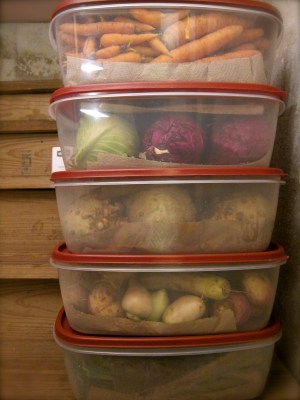
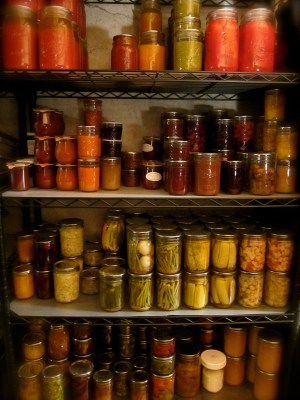
Bins of carrots, cabbages, celeriac, turnips, daikon radish, and leeks (above left) are stored in the bulkhead off the basement, about 38° to 42°F. The trend of warmer climate has made this less reliable for cold storage. In the main part of the basement, canned goods (above right) are stored at around 60°F year-round. 


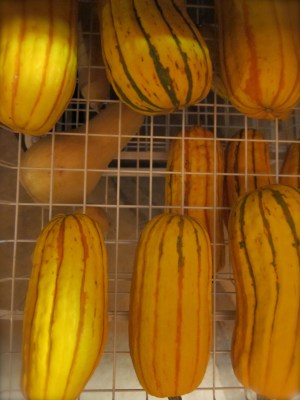
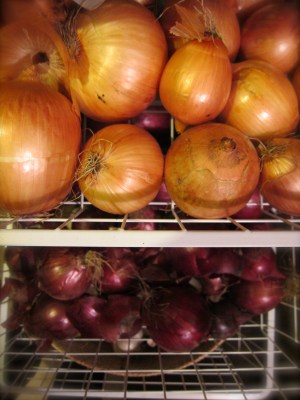
Winter squash are stored in ventilated bins next to the canned goods. Due to poor growing conditions, most of the butternut squash failed to store well; we’ve primarily Delicatas (above left) now remaining. Of the larger winter squash, four are still in storage in a cool room upstairs.  We purchased locally grown onions (above right) in bulk at the beginning of the season, and keep them in the wine cellar, a closed-off section of the basement with winter temperatures of around 50°F.


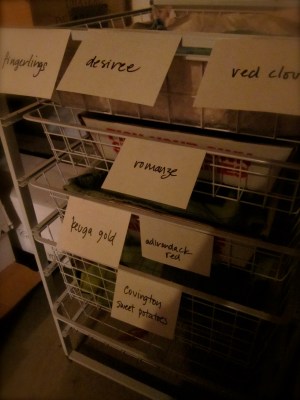
Garlic is stored along with the onions. The German Extra Hardy (above left) lives up to its name, and should take us through the rest of the season. Potatoes (above right) are also stored in the wine cellar, but in a separate corner from the garlic and onions.


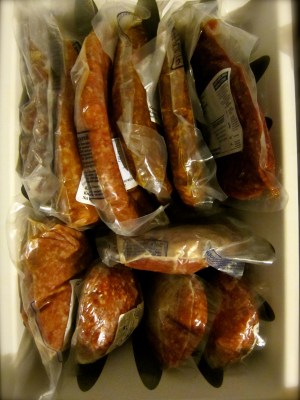
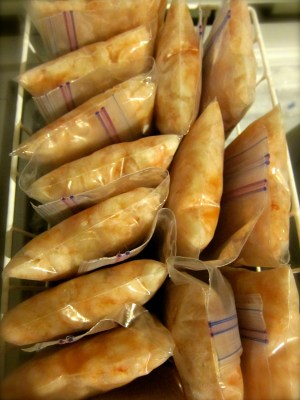
The chest freezer holds meat (above left) and vegetables. We’d bought the second smallest size and have found its capacity limited. With the recent addition of 20 bags of shrimp (above right), it’s once again full. 


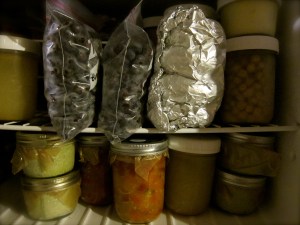
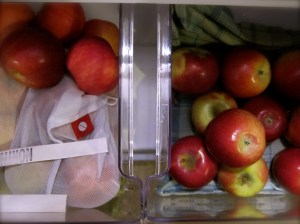
Frozen fruit and prepared foods are stored in the freezer compartment of the basement fridge (above left), and include cooked beans, stock, roasted tomatoes, pestos, and goat cheese. The rest of the fridge contains storage bins of beets, parsnips, a rotating supply of eggs and extra fresh greens. Bins of both cooking and eating apples (above right) are replenished through the season from the Winter Farmers’ Market.

Posted in garden | 17 Comments

Pot-Roasted Chicken with Bacon, Celery Root and Calvados

This wasn’t the first time I almost caught the kitchen cabinets on fire. When it comes to culinary technique, there are a couple of things I’m remarkably bad at, and burning off alcohol is one of them. It may be that I once caught my hair on fire in chemistry class, but I get spooked when it comes to putting match to flammable liquids. I’m grateful that the this recipe for pot-roasted chicken warned about “… keeping the lid of the pot nearby to extinguish the flames, if necessary.” As it turned out, it was indeed necessary.

Flaming alcohol aside, this is the kind of winter dish I love most. Once it’s put in the oven, time takes care of the rest. Use the finest chicken you can find — organic, pastured, local, maybe even a heritage breed, you know the drill — the dish is utterly dependent on its quality. The final result is a tender, juicy bird, anchored by bits of smoky bacon and the melting sweetness of celery root. Do take care when flaming the Calvados, though. Unlike burning off alcohol in an open saute pan, the fumes tend to collect within the Dutch oven and erupt in a mini conflagration. The next time I might avoid the issue altogether and substitute some local hard cider instead.

This recipe is adapted from Mindy Fox’s A Bird in the Oven and Then Some. Fox, along with chef Sara Jenkins, is co-author of Olives & Oranges, a cookbook that’s among my most frequently used. A Bird in the Oven promises “20 ways to roast the perfect chicken,” a likable subject. However, what drew me was the chance to continue cooking from someone whose taste I trust and admire. In addition to such variations as “Peruvian Roast Chicken” and “Tea-Brined Five-Spice Roast Chicken” are the 80 accompanying recipes. These make up the rest of the cookbook, and tempt one to roast up a chicken just to have enough leftovers to make such dishes as “Moroccan Carrot and Roast Chicken Tart” or “Roast Chicken with Poblano Chiles and Cream.” Many of these accompanying recipes, minus the chicken, can easily stand on their own in vegetarian form, making this almost a cookbook within a cookbook.

Pot-Roasted Chicken with Bacon, Celery Root and Calvados

1 whole chicken (about 4 pounds)
5 slices thick-cut bacon, cut into 1-inch pieces
1 celery root (about 1½ pounds), peeled and cut into 1½- to 2-inch chunks
Sea salt and freshly ground black pepper
½ cup Calvados
½ cup water
1 tablespoon fresh rosemary or 1 teaspoon dried
1 tablespoon creme fraiche (optional)
1 tablespoon grainy mustard (optional)
Sea salt and freshly ground black pepper

– Heat oven to 375°F. Rinse and pat chicken dry; tie or truss the legs together. Season the chicken generously with salt and pepper.

– Heat a 6-quart Dutch oven over medium heat, add the bacon, and cook until it releases its fat and begins to brown, 3 to 4 minutes. Add the celery root and cook, stirring, until starting to take on color, about 5 minutes more. Remove the bacon and celery root, and set aside, leaving the fat behind.

– Place the chicken breast side down into the pot and let brown, about 5 minutes. Turn the chicken breast side up, and let cook for about 1 minute. Add the Calvados and let it come to a boil. Carefully ignite with a long kitchen match, keeping the pot lid nearby to extinguish the flames, if necessary. When the flames die out, add the water to the pot. Return the bacon and celery root, along with the rosemary to the pot, remove from heat and cover. For a tighter seal, place a piece of parchment paper (larger than the opening of the pot) between the cover and pot.

– Place in oven and roast for 1 hour, undisturbed. Remove the pot, uncover, and let the bird rest in the pot for 15 minutes. Transfer to a cutting board, and let rest another 5 minutes. Meanwhile, if using, place the pot over heat and bring the pot juices to a simmer; swirl in the creme fraiche and mustard, and season to taste. Carve the chicken into serving pieces, and serve with the celery root, bacon and pan sauce. A side of chard or spinach sauteed with garlic provides a lovely foil and something to sop up the juices.

Recipe adapted from “A Bird in the Oven and Then Some” by Mindy Fox.

Local ingredients: Chicken from Chick Farm; bacon from New Roots Farm; chard from Hollister Family Farm; maple mustard from White Gate Farm; celeriac and rosemary from the garden.

Posted in cooking | Tagged , , | 9 Comments

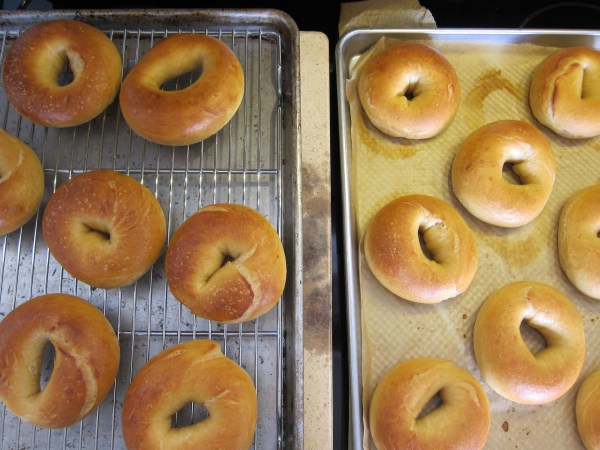
La Brea Sourdough Bagels

I can’t help but think of these as dinosaur bagels. This second batch is from the baking book, Nancy Silverton’s Breads from La Brea Bakery, and before Silverton made it famous for her bread, La Brea was known by every Los Angeleno for its tar pits. During the years I grew up there, it was popular as a field trip and a place to take visitors. I remember being loaded up into the school bus or family car, and driven to a particular part of Los Angeles just to see them. The tar pits were located in a park, and we’d try to avoid stepping in the globs of tar oozing through the grass on the walk over from the parking lot. At the time, the pit was surrounded by a spindly wrought iron fence, which we would lean over as far as we could. We would balance precariously, our bellies pressed into the top rail, to see if we could spot any dinosaur bones stuck in the still bubbling mass of tar down below. We never lingered for very long, though, inevitably driven away by the tar’s dark, stinging smell. Returning to the parking lot, the asphalt would have become softened by the day’s heat, and we would scurry across, now fearful of becoming entrapped. Really, this has nothing to do with bagels but I think of these as dinosaur bagels all the same.

Baking notes:

    • The recipe for Sourdough Bagels, adapted from Nancy Silverton’s Breads from La Brea Bakery, can be found at Wild Yeast — many thanks for including this in their weekly round-up, YeastSpotting!
    • Sourdough starter — I didn’t have any and replaced it with some biga, or pre-ferment, left over from baking ciabatta, and fed it twice a day for over a week before using.
    • High-gluten flour — This called for all high-gluten flour, while the whole wheat ones called for a mix with bread flour. The high-gluten flour contributes to a chewier texture, but was challenging for my mixer to work with.
    • Milk powder — Used to strengthen dough structure and stabilize fermentation; milk solids contribute to browning; also retains moisture.
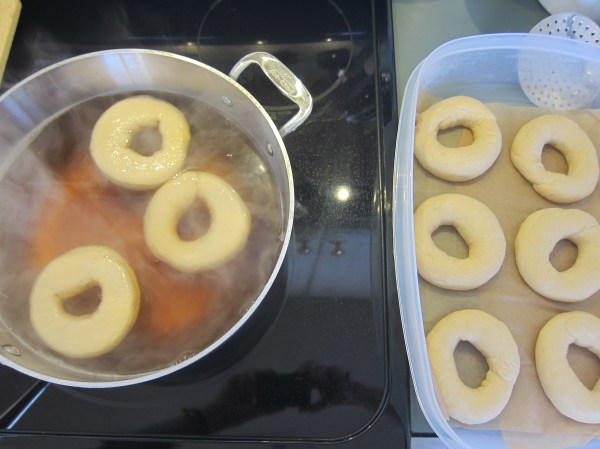
    • I omitted using semolina or cornmeal; the parchment paper alone keeps the bagels from sticking both during proofing and baking. As before, I let them proof overnight refrigerated in large, shallow plastic bins with covers.
    • Baking soda — Traditionally, bakeries add lye to the boiling water bath; baking soda has the same effect by rendering the bath basic (as opposed to acidic). I’ve still to try this out, and used a tablespoon of malt syrup instead.
Posted in cooking | Tagged | 12 Comments