

This one snuck up on us. We awoke to more snow than was predicted.

It was still snowing when we left the house but, by afternoon most of it had evaporated.
This one snuck up on us. We awoke to more snow than was predicted.
It was still snowing when we left the house but, by afternoon most of it had evaporated.

One of the benefits of overwintered kale are the sweet florets they produce.

The chard has revived and is sending out lots of healthy new growth.
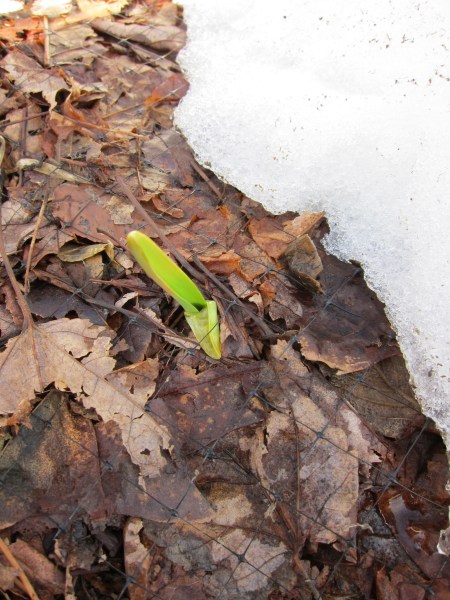
The garlic shoots are poking through at least two weeks earlier than usual.

Found the Snowdrops in bloom, also daffodil shoots during our walk around the garden.

An act of optimism — celeriac, leeks, fennel and tomatoes started.

I don’t know why I didn’t see it coming. I’d avoided getting sick this winter, but it crept up on me this week and hit with a vengeance. Some chicken soup was clearly in order. I’ve learned to keep my pantry stocked just for occasions like this — when I need something quick to eat but haven’t the time or the energy to cook.

We think of canning as a way to preserve the harvest, but it’s also about making your own convenience food. A quart of chicken stock, a pint of chicken meat, and a pint of spicy bok choy — each jar contains a story of replacing what used to be in my cupboard with something homemade. I included some dried alaria seaweed (similar to wakame), scissored into the broth, and topped my bowl with a tangle of cilantro microgreens.

The seaweed came from last weekend’s gathering, the NOFA-NH Winter Conference, where I attended Larch and Nina Hanson’s workshop, “Seaweed Uses as Food, Medicine, and Fertilizer.” Through their business, Maine Seaweed, they offer seaweed hand-harvested near their home on the coast of Maine, more familiarly known as Down East. The presentation was accompanied by a mesmerizing video of the process, with Larch and his apprentices looking more like sleek otters playing in the surf, than wet-suited harvesters.
After tasting samples of kelp, alaria, dulse and digitata, and a tonic bowl of Nina’s soup, I came away with a deeper understanding of their different textures, tastes and uses. Even more was my appreciation of Larch and Nina’s sense of place and the life they’ve created there. Heartfelt thanks to both of them for sharing their stories, and for showing what’s possible. If interested in seeing for yourself, Larch and Nina welcome visitors each summer during July and August, and offer apprenticeships as well.
Pantry Chicken Soup with Seaweed
1 quart of chicken stock
1 pint of canned chicken
1 pint of bok choy kimchi
Alaria, snipped into pieces
Handful of cooked rice
Dash of soy, sesame oil, white pepper, and cider vinegar
Cilantro microgreens
– Add chicken stock, chicken, kimchi, and seaweed together in a pot. Bring to a boil, then turn down the heat, and simmer for at least 10 minutes. Stir in a handful of cooked rice or other grain, and season to taste. Ladle into bowls and top with something fresh and green.
Local ingredients: Chicken from Chick Farm; alaria from Maine Seaweed; cilantro microgreens from The Herb Farmacy; cider vinegar from Sewall’s Orchard; homemade chicken stock and bok choy kimchi.
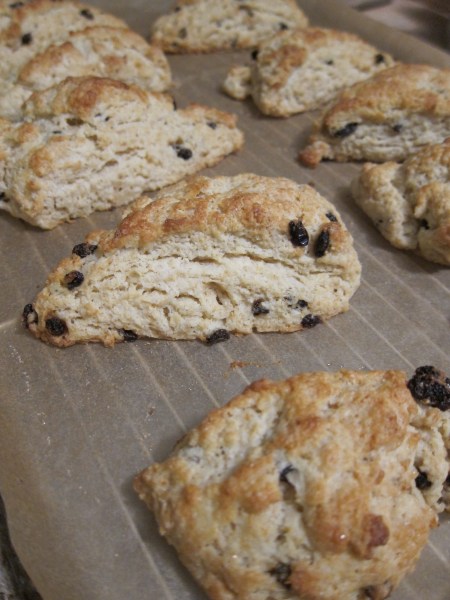
It seems every good bakery now offers scones but among the advantages of baking your own are the warm, buttery aromas that fill up the kitchen, something more difficult to package up and bring home.

This basic recipe is from one of the baking classes I’ve taken at Stone Turtle Baking & Cooking School, in Lyman, Maine. The recipe has been adapted many times over, but making them always reminds me of Michael and Sandy, their welcoming, spacious teaching kitchen, and the wood-fired oven sitting in its corner emanating heat. Their 2-Day Wood-Fired Oven Intensive is especially worth planning ahead for.
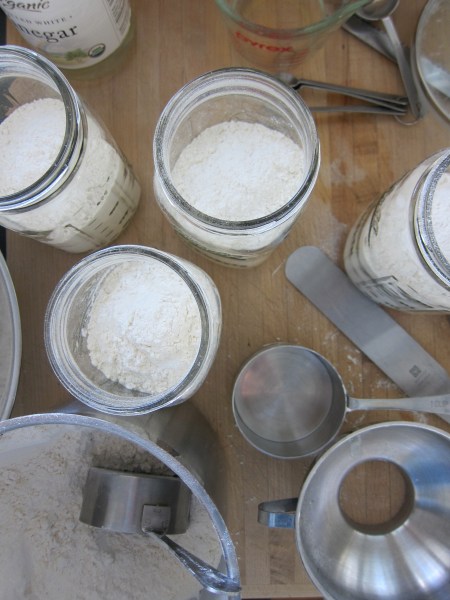
I make these scones often enough that I usually keep the pantry stocked with some jars filled with the dry ingredients already pre-measured. Each jar holds a batch’s worth, and comes in handy as the season gets busier and the house full of guests. The original recipe was written with wild Maine blueberries in mind. If you’re lucky enough to find them in season, replace the currants with a cup of them fresh. Baking with cultured butter lends an additional complexity and fullness of flavor, and I try to use it whenever I can.
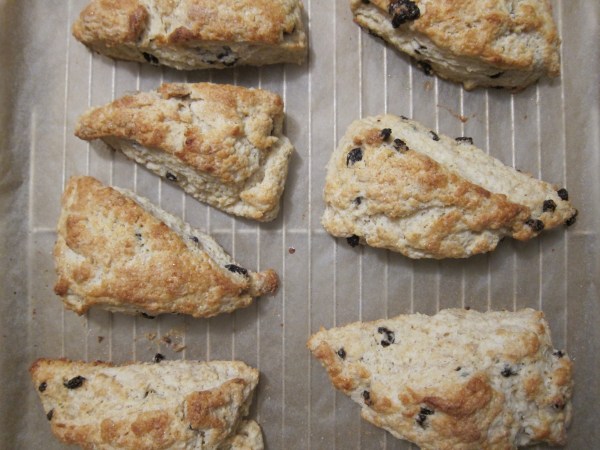
Buttermilk Scones with Currants
2 cups all-purpose flour
1/2 cup whole wheat pastry flour
1 tablespoon baking powder
1/4 teaspoon baking soda
1/2 teaspoon salt
1/2 cup butter, cut up
1/3 cup sugar, plus extra for sprinkling
1 scant cup buttermilk (or light cream)
1/3 cup Zante currants
– Heat oven to 425°F. In a large bowl, sift together flour, baking powder, baking soda, salt and sugar. Cut in the butter until the mixture resembles coarse corn meal. Add the buttermilk and currants. Mix until a soft dough forms, avoid overmixing. Lightly knead dough while still in the bowl for a few seconds, about 4 to 6 times.
– Place dough on a lightly floured board, and pat into a long rectangle, roughly 4 x 12 inches. Cut into 10 wedges, and place on an ungreased sheet pan. Brush tops with buttermilk, and sprinkle additional sugar on top. Bake for 10 minutes, turn pan and bake for another 5 minutes. Place on a rack to cool before serving.
Recipe adapted from Stone Turtle Baking & Cooking School.
Local ingredients: Whole wheat pastry flour and butter from Brookford Farm; homemade buttermilk with milk from Harris Farm.
Many thanks to YeastSpotting for including my Sourdough English Muffins in their weekly showcase!

I can never resist Marina di Chioggia, an Italian beauty. This heirloom, also known as Chioggia Sea Pumpkin, hails from an Adriatic port by the same name, thriving in the salt air and sandy soil found there.
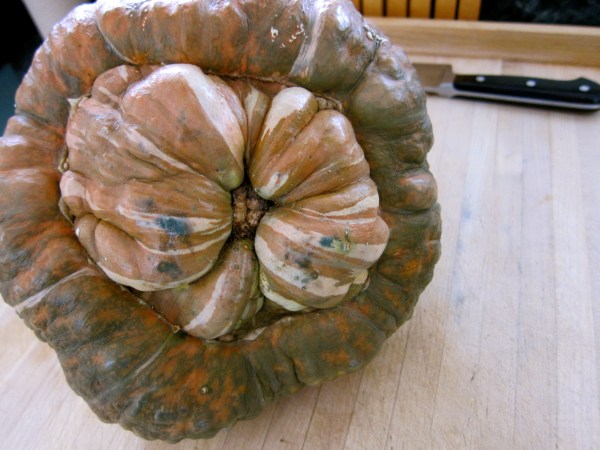
This maxima squash starts out verdigris green, and has a distinctive turban shape. The white striping and lack of bumps on the bottom leads me to believe this one might not be true.


Opening up any maxima can be a daunting, but armed with a cleaver and a mallet, we’re up for the challenge.

A good keeper, the flavor improves with storage. The sweet dry flesh is known to be excellent for soups and pastas. We’ve heard that it’s sold as a street snack in Venice, grilled up as wedges.

Baked at 375°F for an hour, it yielded up its tender, smooth flesh to be turned into pumpkin soup, gnocchi and ravioli.


 Diary of a Tomato