4.16.12 Spring emerges

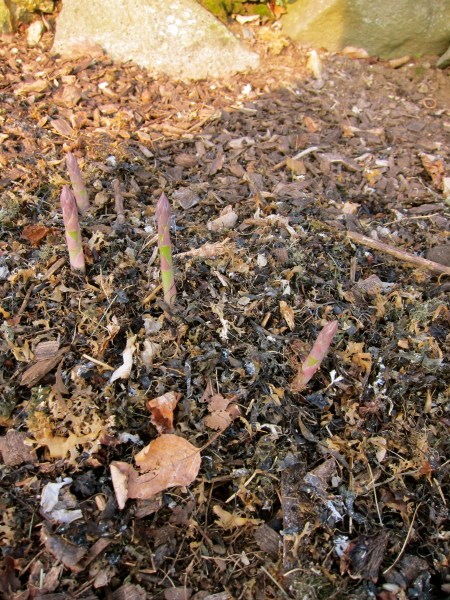
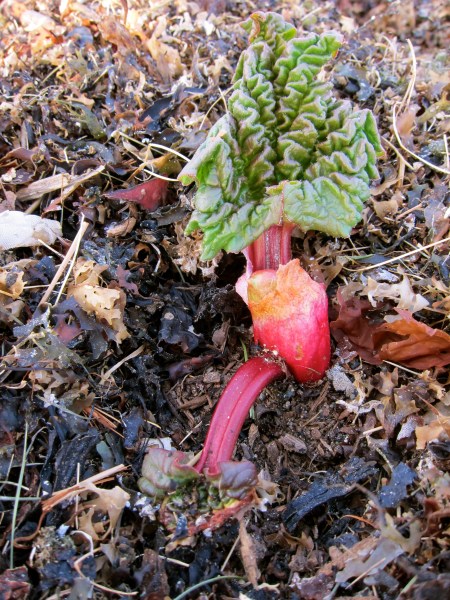
The rhubarb and asparagus have finally appeared — a sure sign that spring has finally arrived in our corner of Maine. As it leafs out, the rhubarb is like an unfurling piece of origami.

We’ve been working on increasing fertility in the asparagus bed, and await this year’s harvest with hungry anticipation.

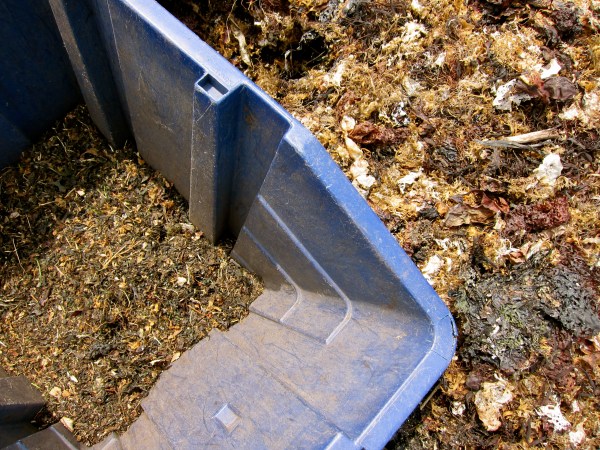
The seaweed mulch covering most of our beds formed a dense mat over winter, it looked as if it had been felted by the passing changes in weather. We broke it apart and chipped it into a finer mulch, and hope it will help keep the slugs away this coming season.

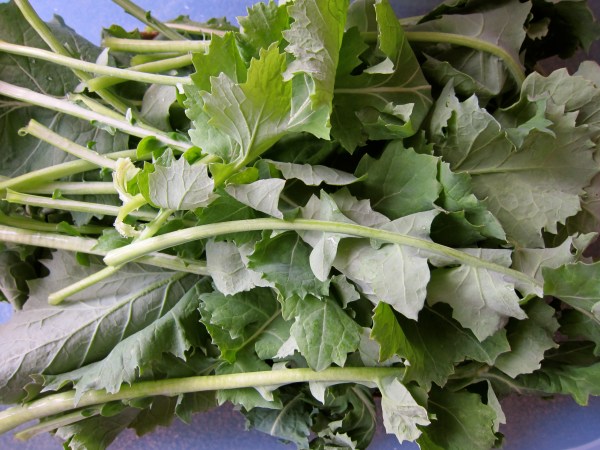
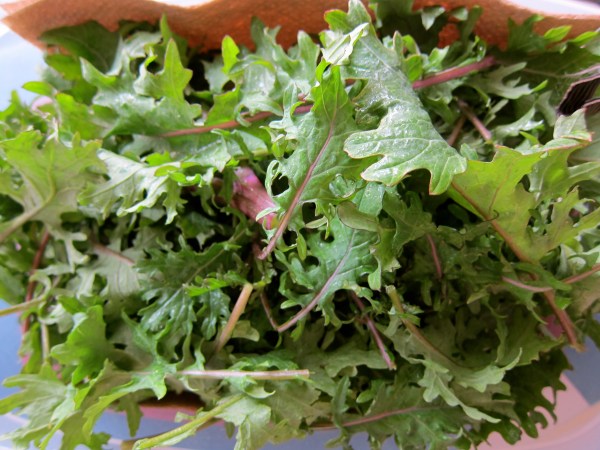
With temperatures in the 80’s predicted for today, we harvested a bin each of the overwintered Siberian and Russian Red kales to keep from losing them to heat-stress.

Posted in garden | Tagged , , | 34 Comments

Black Pepper Tofu

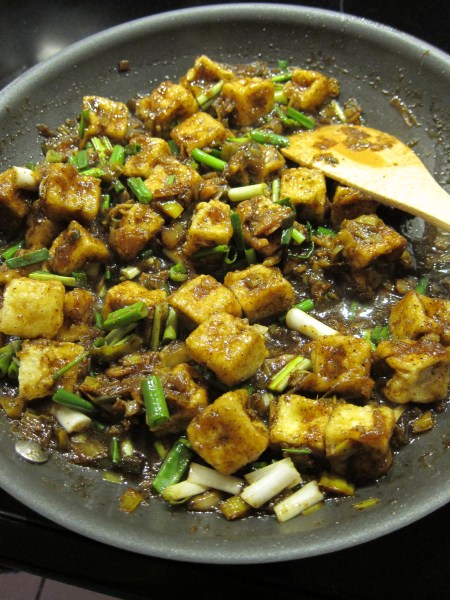
With its bold spicing, sparked with fresh green onions and creamy tofu, Ottolenghi’s Black Pepper Tofu, from his cookbook, Plenty, quickly made its way into our household rotation, and is an especially warming dish to have on these cool spring evenings. At first glance, the 150 grams of butter on the original list of ingredients (or 11 tablespoons in the US version) does give one pause. Ottolenghi is known for his way with combining flavors, however butter with tofu seemed, well, just strange. After mulling it over, the barbecued shrimp at Pascale’s Manale eventually came to mind. We’d had it once long ago in New Orleans — rather than barbecued, unshelled shrimp are cooked in a similar mix made up of copious amounts of black pepper, butter and garlic, the pleasure of it as much in the sauce as in the unpeeling of the butter drenched shrimp.

Still, the butter did seem extreme and many variations have appeared recently (here, here and here). Instead of butter, I use dry sherry or marsala, which lends a toasty, buttery note. Palm sugar instead of plain also helps to boost the flavor, and I simplify by using one soy sauce instead of three different ones. This really is one of those dishes that should be adjusted to your own tolerance of heat but, as Ottolenghi cautions, “…the whole point is spiciness so don’t go too far.” Though you may choose to pan-fry the tofu in its plain state, the bit of fuss of separately frying the cornstarch-coated tofu is worth the effort, contributing a more complex taste and texture to the final dish.

Black Pepper Tofu

1 3/4 pounds firm tofu
Vegetable oil for frying
Cornstarch to dust the tofu
2 tablespoons vegetable oil
12 small shallots (12 ounces in total), thinly sliced
8 fresh red chiles (fairly mild ones), thinly sliced
12 garlic cloves, crushed
3 tablespoons chopped fresh ginger
1 cup dry sherry or marsala wine
10 tablespoons soy sauce
2 tablespoons palm sugar
5 tablespoons coarsely crushed black peppercorns (use a mortar and pestle or a spice grinder)
16 small and thin green onions, cut into 1 1/4-inch segments

– For the tofu: Pour enough oil into a large frying pan or wok to come 1/4 inch up the sides and heat. Cut the tofu into large cubes, about 1 x 1 inch. Toss them in some cornstarch and shake off the excess, then add to the hot oil. (You’ll need to fry the tofu pieces in a few batches so they don’t stew in the pan.) Fry, turning them around as you go, until they are slightly golden all over and have a thin crust. As they are cooked, transfer them onto paper towels to drain.

– Remove the oil and any sediment from the pan, then put the 2 tablespoons of fresh oil inside and heat it. Add the shallots, chiles, garlic and ginger. Sauté on low to medium heat for about 15 minutes, stirring occasionally, until the ingredients have turned shiny and soft. Next, add the cooking wine to deglaze, and bring to a boil. Then add the soy sauce and palm sugar and stir, then add the crushed black pepper, and return to a simmer. Add the tofu to warm it up in the sauce for about a minute. Finally, stir in the green onions. Serve hot, with steamed rice.

Recipe adapted from “Plenty” by Yotam Ottolenghi.

Local ingredients: Tofu from Heiwa Tofu (available at Portsmouth Health Food); shallots from Meadow’s Mirth; ginger from Wild Miller Gardens; garlic and green onions from the garden.

Posted in cooking | Tagged , | 10 Comments

4.9.12 Ramps and seedlings

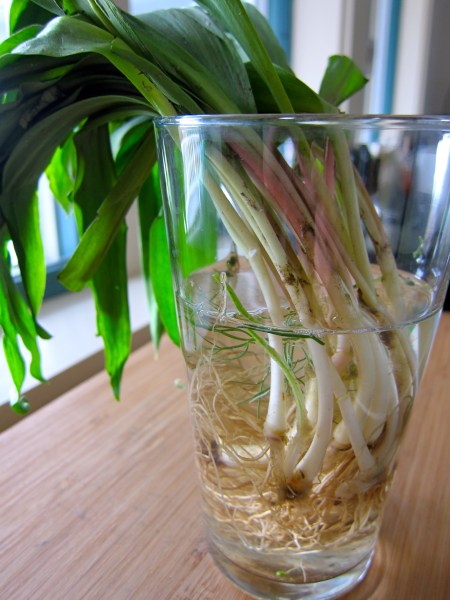
Several years ago we planted some ramp seedlings in a shady part of our garden in hopes that they would naturalize. Also known as wild leeks, they reproduce by seed which can take up to 18 months to germinate; we’ve been told to allow five years for them to get established. To give the straggly population a boost, we planted some more ramps bought at a local green grocer. Ramps are in danger of being overforaged, and we like the idea of these being returned to the ground — thanks to Abby for the tip!

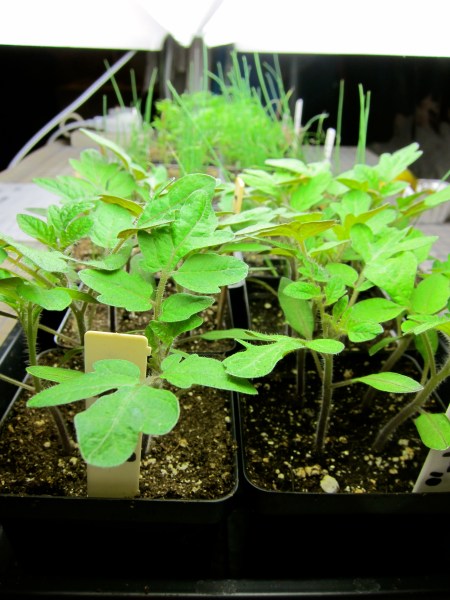
The seedlings are progressing nicely — Aprile pomodorini tomatoes in front, leeks and fennel behind. They’ve still a ways to go before it warms up enough for them to go outdoors.

Posted in garden | Tagged , | 6 Comments

4.8.12 First plantings

 
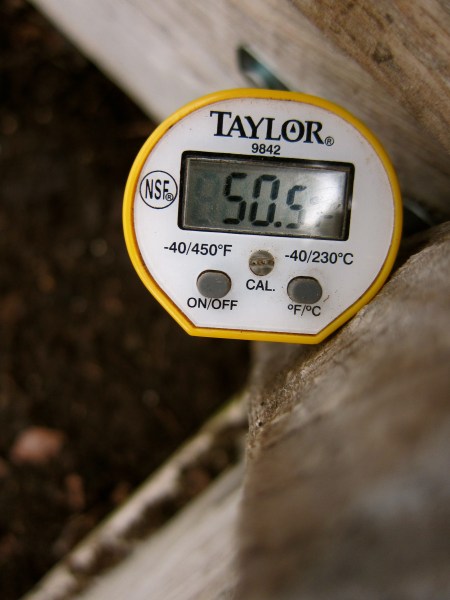
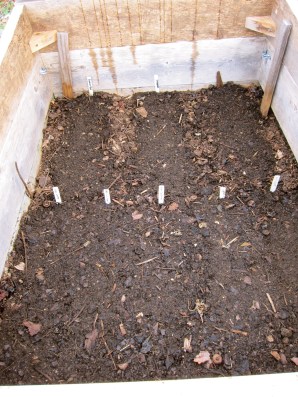
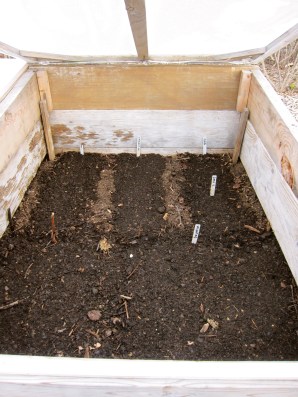
We’ve been waiting for the soil to warm up to 50°F — the minimum temperature at which we attempt to start seeds — before direct seeding the first Spring crop. Another  sign we watch for is when the dandelions show, a good indicator of soil rather than air temperature.


Peas and favas went into hoop-covered beds, the rest into these cold frames.

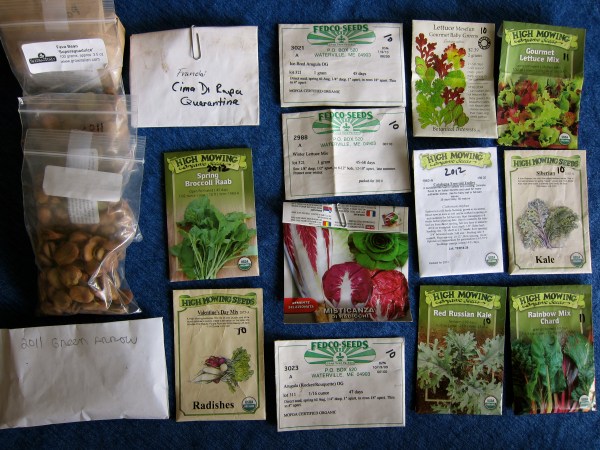
• Peas: Green Arrow (Fedco + saved seed)
• Favas: Cascine (SI), Aguadulce S. Simonia (SI), SuperAguadulce (Franchi)
• Kale: Siberian (HMS), Red Russian (HMS)
• Chard: Rainbow Mix (HMS)
• Lettuce: Winter Lettuce Mix (Fedco), Gourmet Lettuce Mix (HMS), Gourmet Baby Greens (BI)
• Arugula: Ice-Bred (Fedco), Rocket (Fedco)
• Radish: Valentine’s Day Mix (HMS)
• Raab: Spring Broccoli Raab (HMS), Cima di Rapa Quarantina (Franchi)
• Chicory: Catalogna Emerald Endive (HMS), Misticanza (Franchi)

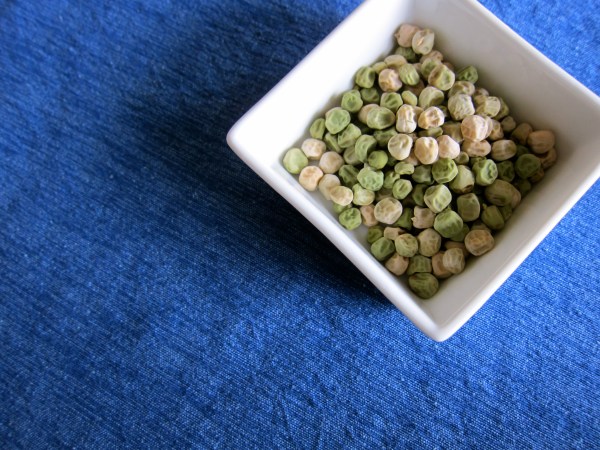
Green Arrow pea seeds saved from last season.

We start peas and favas when the crocuses come up. We’re trying three different favas this year, all from Seeds from ItalyLeft to right: Cascine, Aguadulce S. Somonia, and Superaguadulce. They promise to be more flavorful than the Windsor variety we’ve grown in the past.

Posted in garden | 14 Comments

Tagliatelle with Spring-Dug Parsnips and Bacon

While other parts of the country are enjoying such seasonal delights as asparagus, this unlikely pairing of sweet, caramelized parsnips with rich egg tagliatelle is a celebration of what early spring here in Northern New England has on offer. The name tagliatelle is from tagliare, or “to cut.” With the inclusion of eggs, this ribbon pasta from Bologna was traditionally reserved for feast days. Fettucine, the southern version of tagliatelle, is slightly wider (though some sources say less) and thicker, and can be used interchangeably. If using bacon instead of pancetta, look for something on the less smoky side to keep the bacon from overwhelming the flavor of the parsnips. As for the parsnips, thinner slices will result in a crispier texture.

Tagliatelle with Spring-Dug Parsnips and Bacon

9 ounces dried or 12 ounces fresh egg tagliatelle
4 ounces pancetta or bacon, cut into ¼-inch pieces
¼ cup olive oil
1 tablespoon butter
2 cloves garlic, thinly sliced
1 pound parsnips, peeled and thinly sliced
9 oz. egg tagliatelle (dried)
¼ cup thinly shredded or chopped flat-leaf parsley or chives, or a mix
Sea salt and freshly ground black pepper
Parmesan

– In a large saute pan, cook the pancetta or bacon over medium heat until the fat is rendered and begins to brown. Remove the browned pieces and set aside, leaving the fat behind. Turn the heat up to medium high, add the olive oil and butter, then the parsnips and saute until golden brown and slightly crispy. Move the parsnips to the side of the pan, add the garlic to the space left behind and cook until fragrant.

– Cook the tagliatelle in salted water until tender yet al dente. Drain, reserving some of the pasta water; add the pasta and reserved pancetta or bacon to the pan with the parsnips. Toss over heat to coat the pasta, adding cooking water if necessary to loosen the sauce. Add the parsley or chives, and season with salt and a generous amount of freshly ground black pepper. Finish with a slick of good olive oil and a shower of grated parmesan.

Recipe adapted from “The Babbo Cookbook” by Mario Batali.

Local ingredients: Nitrate-free bacon from New Roots Farm; butter from Brookford Farm; parsnips, garlic and chives from the garden.

Posted in cooking | Tagged , , | 10 Comments

Biscotti al Mais, or Cornmeal Cookies

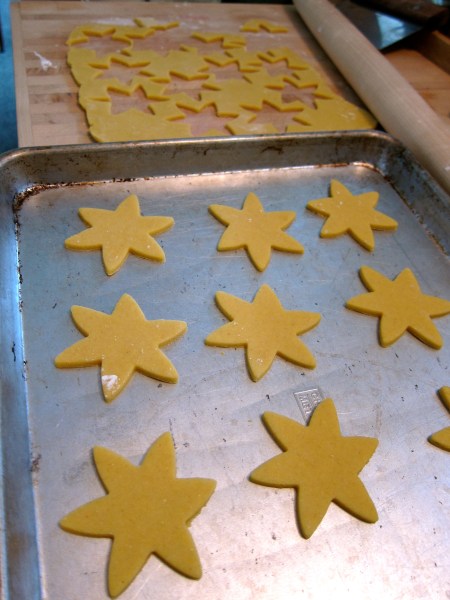
Cookie cutters are one of those single purpose kitchen tools that are cluttery and take up a lot of room, but more than make up for it when the occasion calls for them. Spring has brought with it the usual cloudy days, and cutting dough into cheerful shapes passed the time as we waited for the dampness to lift and the skies to clear, to get back into the garden and soak up some sunny rays.

Here and in the cookbook it’s from, biscotti refers to small cookies in general, rather than the twice-baked biscuits we’re more familiar with. This cornmeal version has qualities that I think of as particularly Italian — crunchy and on the dry side, a bit of tender sweetness, and as comfortable paired with a cup of coffee as with a glass of wine.

I came across this gem of a cookbook, Biscotti, after running into a colleague with whom I share a love of Rome. He’d just returned from a residency at the American Academy, and raved about the food being served there. Founded by Alice Waters as a model of “collaborative dining,” the Rome Sustainable Food Project provides the Academy community with meals based on seasonal and local ingredients, while also serving as a teaching kitchen for interns who work alongside the Italian and American staff. For a lovely account of the people behind the program and what it’s like to dine there, visit Rachel, who also offers a look at the next book in their series, Zuppe.

I’ve given the recipe much as it appeared originally. I found that leaving out the cinnamon and cloves, and skipping the sugar coating gave me a biscotti closer to what I was looking for — a friend tells me it tasted exactly like his nonna’s — but feel free to follow the recipe as is, and imagine yourself in Rome.

Biscotti al Mais
Cornmeal Cookies

1½ cup + 1 teaspoon (200g) finely ground cornmeal or corn flour
1⅓ cups + 2 tablespoons (200g) all-purpose flour
2 teaspoons (8g) baking powder
1½ teaspoons (3g) ground cinnamon (optional)
½ teaspoon (1g) ground cloves (optional)
Pinch of salt
⅔ cup + 1 teaspoon (150g) butter, softened at room temperature
⅔ cup + 1 teaspoon (140g) granulated sugar
2 large eggs, lightly beaten
2 tablespoons (13g) granulated sugar, for coating (optional)

– Sift together the cornmeal, flour, baking powder, spices (if using) and salt in a medium-size mixing bowl. In a mixer, cream together the butter, sugar and eggs at high speed. Reduce the speed to low, add the dry ingredients and mix until well combined. Place in a sealed container and refrigerate for 30 minutes.

– Lightly dust a work surface with flour and roll the dough out to an even ¼ inch (5mm) thickness. Cut out preferred shapes with cooke cutters, re-roll the scraps and repeat. At this point the cookies can be layered between parchment paper, placed in a container and stored in the freezer for up to 2 weeks. Allow the dough to come to room temperature before baking.

– To bake, heat the oven to 350°F (180°C). If desired, coat one side of each cookie in the reserved granulated sugar. Transfer the cookies to sheet pans, leaving 1 inch (2.5cm) between each cookie. Bake for 15 minutes, until the edges are golden, rotating the pans halfway through if necessary. These cookies will keep for up to 1 week in a sealed container.

Recipe adapted from “Biscotti” by Mona Talbott and Mirella Misenti.

Local ingredients: Corn flour from Fiddler’s Green Farm; eggs from Yellow House Farm; butter from Brookford Farm.

Posted in cooking | Tagged | 4 Comments

4.3.12 Spring-dug leeks, carrots and parsnips

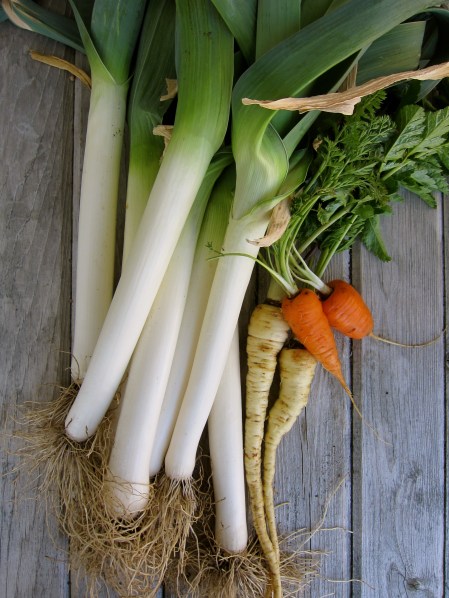
We’ve begun to clear the beds in preparation for new planting, and pulled the last of the over-wintered leeks. These are of the King Seig variety, which proved true their reputation for hardiness and good storing capability. The parsnips were originally planted late, and these more resembled their lengthier cousin, parsley root. We also pulled a few test carrots, with the pointy Napoli to the left of the stubbier Red Core Chantenay. These were still immature by the end of last season and left in the ground, and resumed growing sometime between now and then. They hadn’t yet acquired a full carrot flavor, but the heady smell of freshly turned earth mingled with their bracing scent more than made up for that.

There was plenty of new growth sprouting from the root vegetables and, this being the time of year we most crave leafy greens, I gave into temptation and nibbled on a bit of a parsnip leaf to see if it had any flavor. I decided to look it up before proceeding any further and, as it turns out, found that one should avoid ingesting either carrot or parsnip tops. No harm done, but note to self: google before sampling the unfamiliar.

Posted in garden | Tagged , , , | 10 Comments