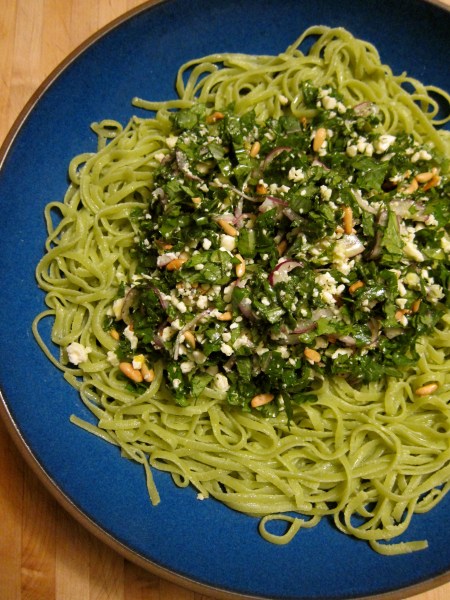
Linguine with Kale and Ricotta Salata

When too many meetings and commitments has us cobbling together something on the run or skipping dinner entirely — neither very satisfying nor nourishing choices — at week’s end, we look forward to sitting down to a restorative bowl of pasta with kale and ricotta salata. Nothing more than fresh pasta dressed simply with an easily-assembled salad of nutrient-rich kale, this dish manages to be both indulgent and healthy at the same time.

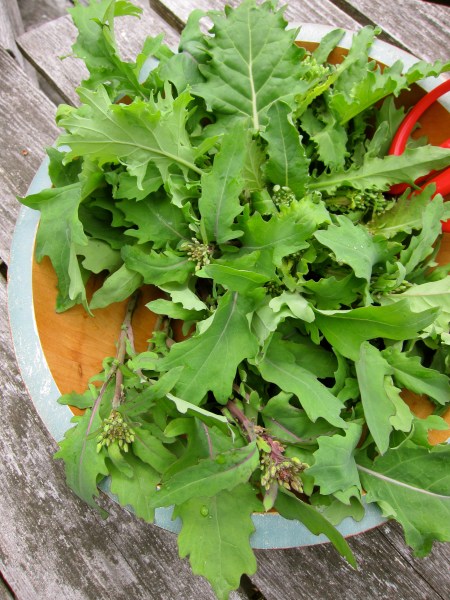
Using raw kale as a base, its hearty flavor is tempered with the addition of sweet red onion and toasted pine nuts, and rounded out by the saltiness of the ricotta. Using lemon juice along with the zest brings all of these components into balance with a touch of brightness. Depending on what’s growing in the garden, I’ve made this with Lacinato, Red Russian or Siberian kales, or some combination of the three. Try to select younger leaves; alternatively, soaking the kale in cold water for about 30 minutes helps to tame the strong brassica flavor it sometimes takes on, just make sure the leaves are dry before chopping.

To keep the lightness in this dish, it’s best to use a fresh pasta. We’re enjoying trying out different ones from Valicenti Organico, and have had great success combining the kale with such flavors as Sriracha, carrot and dill, and hemp; here, we chose a seasonally-inspired garlic chive linguine. Kale as a salad is pleasing enough to stand on its own, and can be made more substantial with some cooked whole grains, such as farro or wheat berries, tossed in. A further variation is to add some fresh herbs, and spring mint is a current favorite. If ricotta salata isn’t available, feta can be used instead, or try making it yourself.

Linguine with Kale & Ricotta Salata

1 bunch kale, washed and dried, stems and center ribs removed (3/4 to 1 pound)
1 small red onion, sliced thinly
1 cup ricotta salata or feta, coarsely shredded (about 2 ounces)
1/4 cup toasted pine nuts
Zest and juice from 1 organic lemon
1/4 cup toasted pine nuts
1/4 cup good olive oil
Sea salt & freshly ground black pepper
12 ounces garlic chive linguine, or other long pasta shape

– Chop the kale by first cutting it into thin slices, and then cutting the slices crosswise. Toss the chopped kale with the red onion, ricotta salata, and toasted pine nuts. Whisk the lemon zest and juice together with the olive oil and seasonings. Dress the kale salad, and season to taste, adding more lemon juice and olive oil if necessary.

– Cook the pasta; drain and slide it into a serving bowl. While the pasta is still warm, pile the kale salad on top and serve immediately.

Local ingredients: Garlic chive linguine from Valicenti Organico; red onion from Pickpocket Farm; kale from the garden.
Posted in cooking | Tagged , , , | 5 Comments

5.16.12 Fallen cherry blossoms

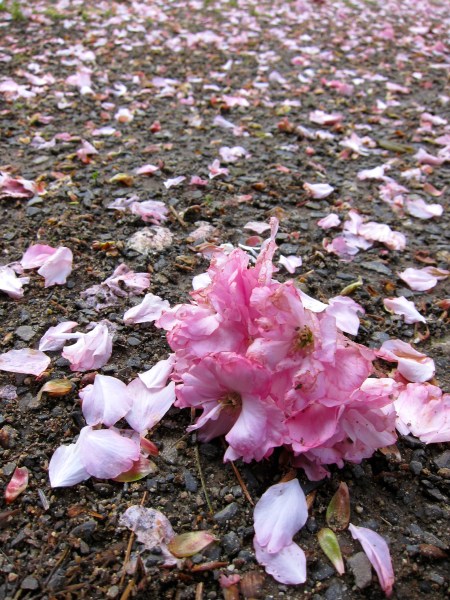
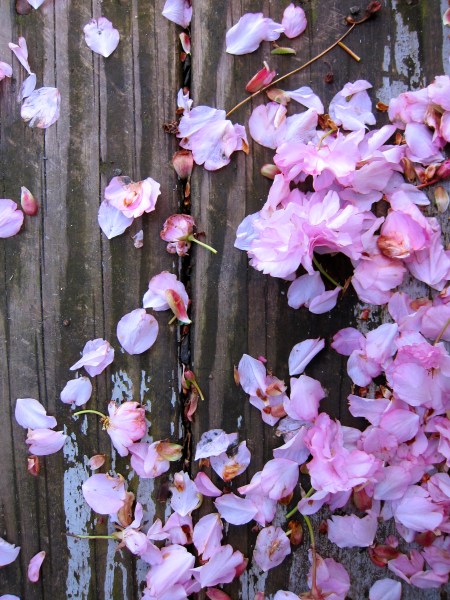
Cherry blossom season always seems to coincide with wet weather here. No sooner do the blooms arrive, when a big storm comes by to bring them down.

These fragile blossoms were a little more tenacious this year, and ephemeral showers of petals greeted us each time we stepped outside.

Learning more about foraging within our own garden has led to the discovery that cherry leaves and blossoms are edible — the possibilities include salted cherry blossoms, cherry blossom tea, pickled leaves, and sakura petal jelly (here and here).

Posted in garden | Tagged | 5 Comments

5.14.12 Garden greens

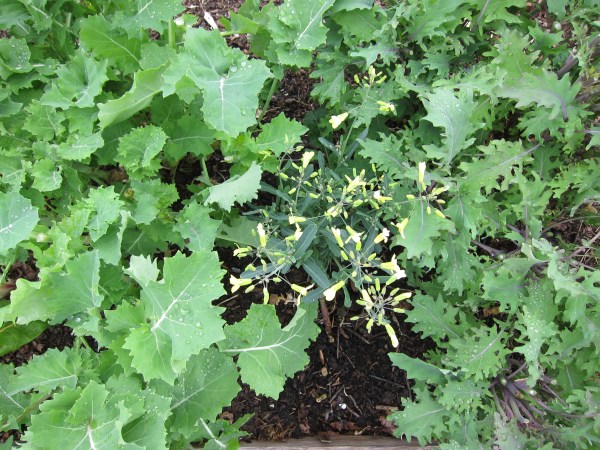
Overwintered kales — Lacinato flowering between the Siberian and Red Russian kales.

Favas — the Cascine are proving better at germinating than the Aguadulce. 

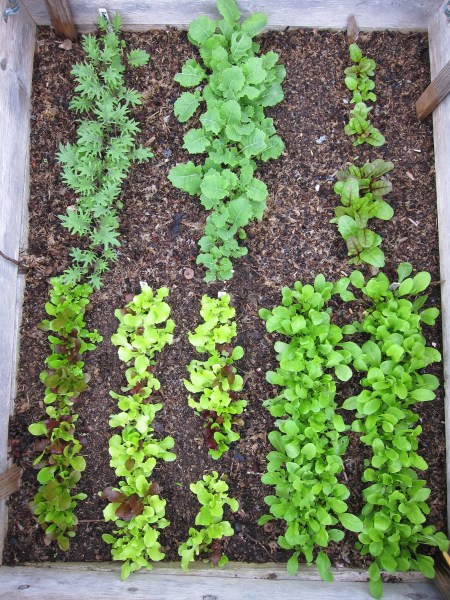
With overnight temperatures still dipping into the 40’s, tender greens remain in cold frames (clockwise from upper left): Red Russian kale, Siberian kale, rainbow chard, rocket, ice arugula, HMS gourmet lettuce mix (2 rows), and Fedco winter lettuce mix.

Also (clockwise from upper left): Franchi misticanza, Catalogna emerald endive, spring raab (cime di rapa), quarantina cime di rapa, Valentine’s Day radish mix.

Garden thinnings for the first salad of the season.

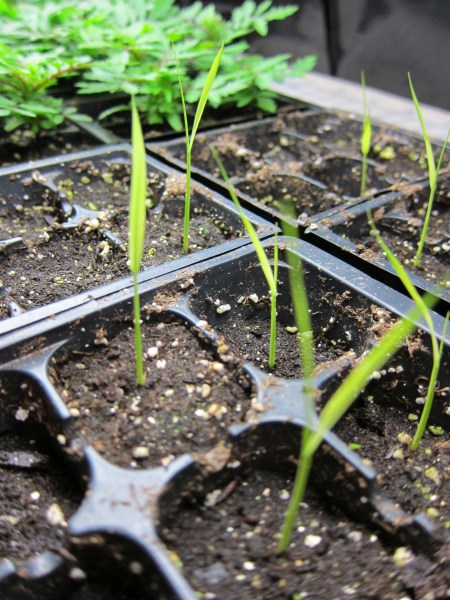
Watching grass grow — Duborskian rice seedlings, around 50% germination rate.

Posted in garden | 14 Comments

Rhubarb Galette

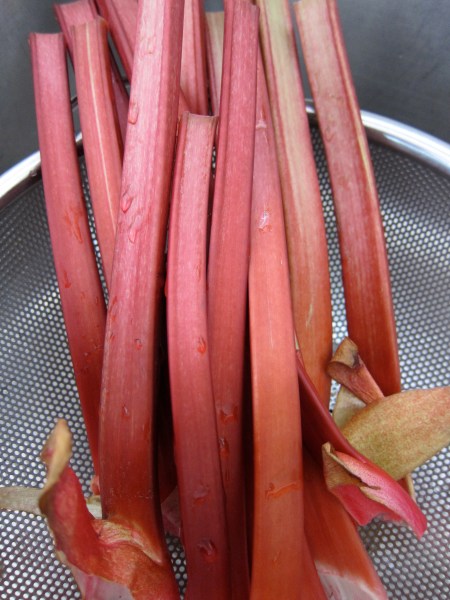
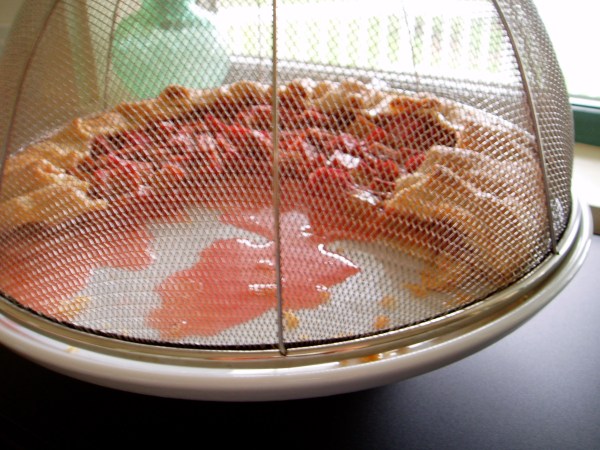
It seems everyone has a favorite way to prepare rhubarb. For us, it’s Rhubarb Galette. From one season to the next we wait for it to reappear, either in the garden or the local farmers’ market, just so we can make it. We reserve combining strawberries with rhubarb for later when the berries are in season. Until then, a galette lets this luscious vegetable shine on its own, its characteristic tartness warmed up with a pinch of cinnamon and nutmeg, and grounded by the earthiness of a cornmeal crust.

My own copy of this recipe contains a few scrawled notes in the margins — I let the galette set in the fridge for a bit longer than suggested, and omit the butter added before baking, but only out of personal preference — otherwise, I leave it largely untouched. Sometimes a recipe is perfect just as it is.

Rhubarb Galette

1/4 cup all-purpose flour, plus more for work surface
1/2 recipe Cornmeal Pate Brisee
1 pound rhubarb, sliced 1/2-inch thick
Juice of 1/2 lemon
3/4 cup granulated sugar
Pinch of salt
Pinch of ground cinnamon
Pinch of freshly grated nutmeg
1 large egg, beaten
Turbinado or sanding sugar
1 tablespoon unsalted butter, cut into small pieces (optional)

– Heat oven to 375 degrees. Line a baking sheet with parchment paper; set aside. On a lightly floured work surface, roll out dough to a 14-inch round, about 1/8-inch thick. Place rolled out crust on parchment-lined baking sheet.
– Place rhubarb and lemon juice in a large bowl; toss to combine. In a medium bowl, whisk together flour, sugar, salt, cinnamon, and nutmeg until well combined. Add sugar mixture to rhubarb and toss until well coated. Arrange rhubarb mixture on top of dough, leaving a 2-inch border all the way around. Fold border over the fruit mixture, overlapping where necessary and pressing gently to adhere the folds. Brush edges of dough with egg, sprinkle with turbinado or sanding sugar, and, if using, dot with butter. Transfer to refrigerator and chill 20 to 30 minutes.
– Bake until crust is deep golden brown and juices are bubbling, 55 to 60 minutes. Transfer baking sheet to a wire rack to cool the galette. Serve warm or at room temperature.

Recipe adapted from Martha Stewart.

Local ingredients: Egg from Mona Farm, butter from Brookford Farm, cornmeal from Wild Miller Gardens, rhubarb from the garden.

Posted in cooking | Tagged , | 2 Comments

5.9.12 Apple blossoms

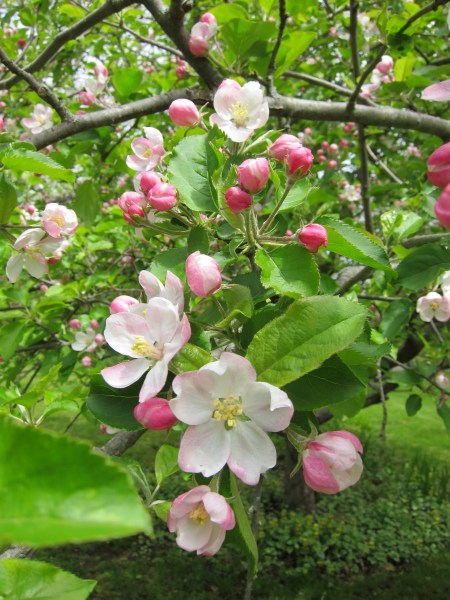
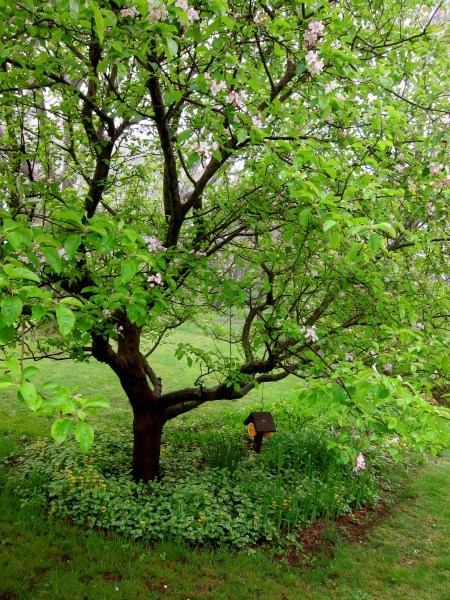
Last week’s hard frost left the tips of some of our trees damaged. With the apple tree beginning to flower, we were glad to see that it was spared.

The number of  blooms gives us hope that this year’s harvest will be equally abundant.

 With their feeders fully loaded with oranges, a pair of flighty Baltimore orioles showed up just in time to settle in before Mother’s Day.

Posted in garden | Tagged | 16 Comments

5.7.12 Kale florets

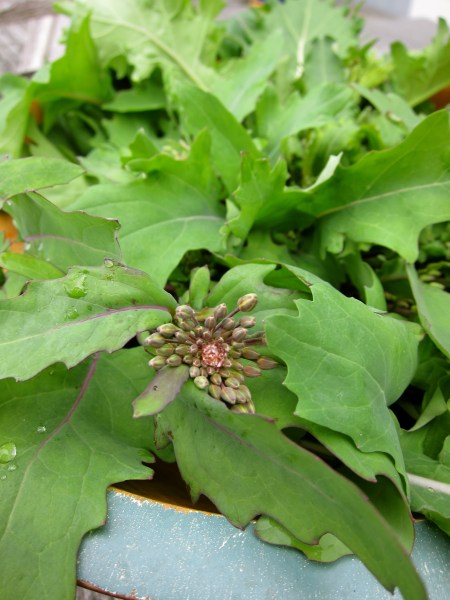
A not so obvious reason to overwinter kale is for the florets that appear in spring. Once the row cover came off, we cleaned the kale plants of dead debris and nipped off the forming seed heads to encourage the growth of side shoots and additional florets.

These are a mix of florets from Siberian and Red Russian kales. We’ve been grazing on them while in the garden, or tossed in a salad. With a harvestable amount of florets this week, there’s enough to serve on their own.

They can be treated much like any flowering brassica, such as rapini or broccoli raab. At its simplest, steam or saute the florets briefly, then season with some good olive oil, a bit of salt and freshly ground black pepper.

Posted in garden | Tagged | 16 Comments

Montreal Bagels

I’d stumbled upon a recipe for Montreal bagels while thumbing through HomeBaking, by Jeffrey Alford and Naomi Duguid, and was intrigued by what seemed an entirely different kind of bagel. Where New York-style bagels are puffy and moist, Montreal bagels are meant to be skinnier, denser and sweet. That I’ve never 1) been to Montreal, 2) tasted  a Montreal bagel, nor 3) tried any of Alford and Duguid’s recipes presented a challenge.

As a comparison, a search of Eat Your Books came up with only two references (a third one was for stuffing), and most other online sources pointed to a recipe either from the New York Times or Marcy Goldman. The ingredients lists are similar enough, with the biggest difference in given amounts of sugar. I was willing to sacrifice tradition for something less sweet and, after some consideration, chose to go with Alford and Duguid’s recipe after all. The expected yield of 32 bagels seemed like a lot but, in the end, turned out not to be.

Judging hydration is always a challenge, especially when flour amounts are given by volume rather than weight. A friend advised me to trust Alford and Duguid, and after some kneading, the sticky, egg-enriched mass finally transformed itself into a smooth and elastic dough.

After portioning the dough, forming it was a little tricky, and I was glad to have had some previous experience to rely on. With some experimenting, I found letting the dough relax between steps allowed me to shape them into skinny rings with a more pronounced hole. The bagels are immersed briefly in a hot bath of honey-sweetened water, then dipped on both sides, some in sesame seeds, others in poppy seeds.

Baking in a wood-fired oven is reportedly what gives Montreal bagels their distinctive flavor and crunch. Making do with my standard oven, my first batch came out undercooked, with a chewy, pretzel-like texture. Nice, but hardly memorable. Increasing the cooking time, though, was a simple adjustment, and made all the difference. Soon I had a bagel with a delicate crunch, and a satisfying proportion of crust to crumb. I was tempted to make these bagels plain, but the seeds lend crispness, their slight bitter edge mingling with and offsetting the sweetness.

Fresh from the oven, I ate one, then two, then another, returning later in the day to snack on some more. The next morning they were heavenly, split and toasted, then topped simply with some freshly smoked salmon from Popper’s Artisanal Meats, the taste of fired wood completing the harmony of flavors. While these bagels may lack in authenticity, their addictive nature did give me a sense of what the fuss is all about.

Baking notes:
– “Montreal Bagel” recipe from HomeBaking by Jeffrey Alford and Naomi Duguid.
– Recipe yielded 26 bagels, portioned at 1.5 ounces each.
– Work in single batches of 8, enough to fill a half-sheet pan lined with parchment paper.
– Skim the boiling water bath when using local (unfiltered) honey.
– Bake at 8 minutes, then flip each bagel, and finish baking for another 6 minutes.
– Best eaten within three to four hours of baking; otherwise, needs to be toasted.

YeastSpotting 5.4.12

Posted in cooking | Tagged | 5 Comments