6.27.12 Post-heatwave

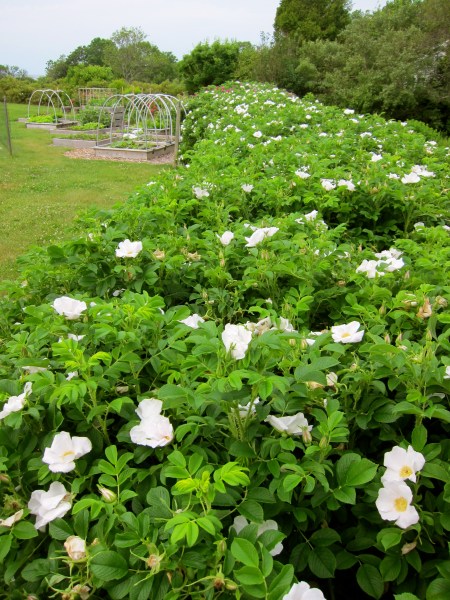
A thicket of rosa rugosa borders the vegetable garden — we’ve never seen it this full of blooms and it’s literally vibrating with the buzzing of wild pollinators. Much of the garden not only survived but seemed to have benefitted from last week’s high temperatures.

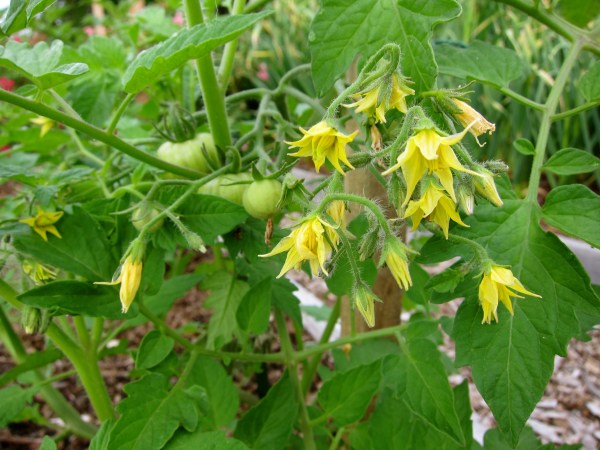
Certainly the tomato plants did. The boost of heat was just what they needed to get themselves settled in and busy at the task at hand.

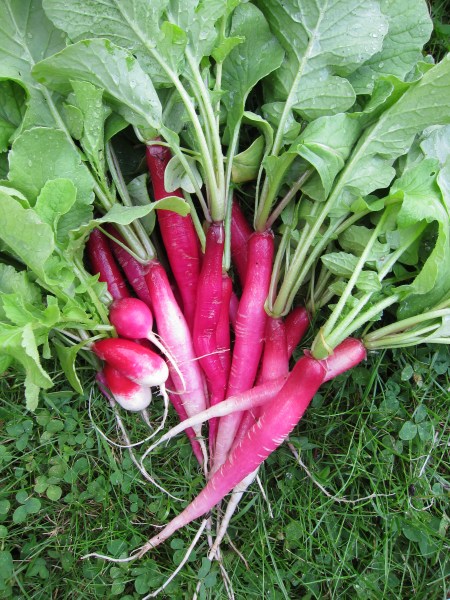
These Cincinnati Market radishes, an heirloom from Seed Savers, are also called Long Scarlet. We’ve grown these for several years, and harvest them when they get around 6 to 7 inches long. They’re on the spicy side from the heat, but remain tender and crisp.

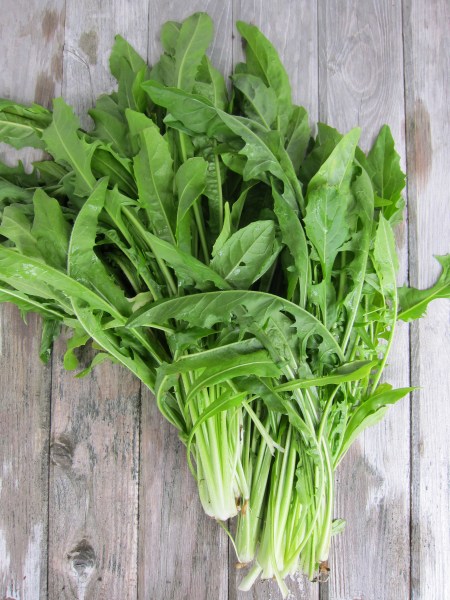
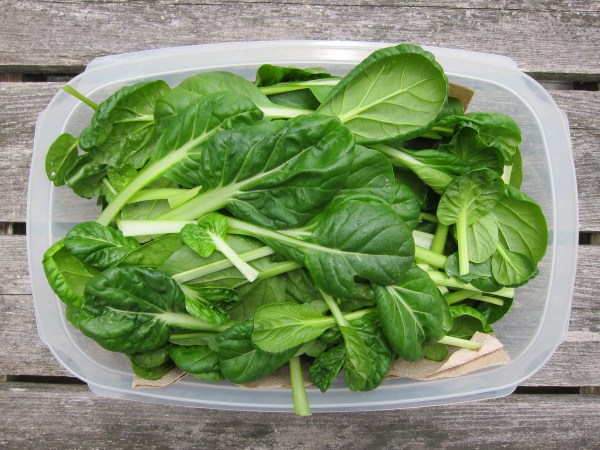
The tatsoi that are beginning to bolt were harvested. We’ll make use of them, along with the radishes, in trying out this recipe for quick kimchee.

Posted in garden | Tagged , , | 8 Comments

6.25.12 Pre-heatwave harvest

To stave off damage from last week’s heat wave, we watered heavily — including carrying buckets of it out to the rhubarb patch — and tented the raised beds with row cover to provide some shade, harvesting all that we could before it bolted.

We’d been picking the Catalogna Emerald Endive while it was young, and adding it to salads. Now that it’s later in the season, these may no longer be suitable raw but might be perfect for making fave e cicoria, or pureed favas topped with sauteed chicory.

The fun jen is filling out, their rows thinned to give them more room to form heads. We’ve been eating it in salads and adding it to sandwiches, and have been experimenting with cooking it. Salad greens, garlic scapes, and tatsoi rounded out the day’s harvest. As for the rest left in the garden, all we could do was try to stay cool and hope for the best.

Posted in garden | Tagged , , , , | 16 Comments

Pesto Variations: Broccoli with Garlic Scape Pesto + Cannellini Bean Spread with Sage Pesto

Hello, summer. This week’s solstice was accompanied by torrid temperatures, finding us limp from the heat and as wilted as the garden. Luckily, a couple of pestos residing in the fridge gave us components for two quickly assembled and improvised dishes, no small thing when the weather is stuck in the 90’s (degrees, that is, not the decade) and cooking is the furthest thing from our minds.
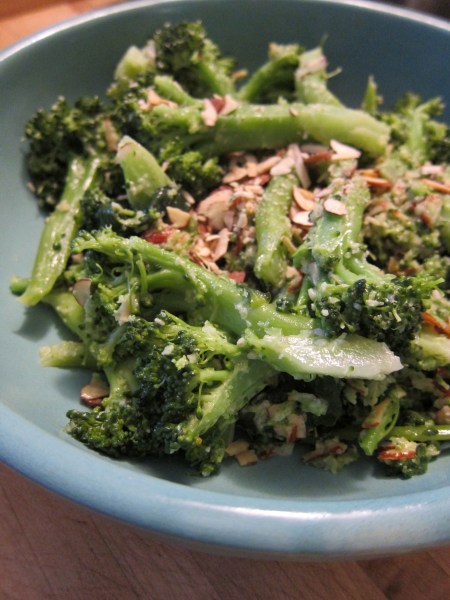
Broccoli with Garlic Scape Pesto & Toasted Almonds

We haven’t had much luck with growing broccoli, so when we come across it at the farmers’ market, we greedily snatch up masses of it. With inspiration from Heidi’s market salad and some garlic scape pesto already made, a satisfying dish came together speedily: Divide the broccoli into large florets, with some stem left attached; peel the stems if they’re large or seem fibrous. Steam the broccoli until it reaches desired tenderness, and toss it while still warm with a couple of scoops of garlic scape or other pesto. A handful of toasted sliced almonds adds some crunchy texture if, like me, your attention wanders to cooler places and the broccoli ends up on the soft side. Serve warm or cold, depending on the weather, accompanied by a luscious burrata bought for the occasion, and explain that the Italians prefer their vegetables well-done.

Local ingredients: Broccoli from Wake Robin Farm; burrata from Maplebrook Farm; garlic scapes from the garden.
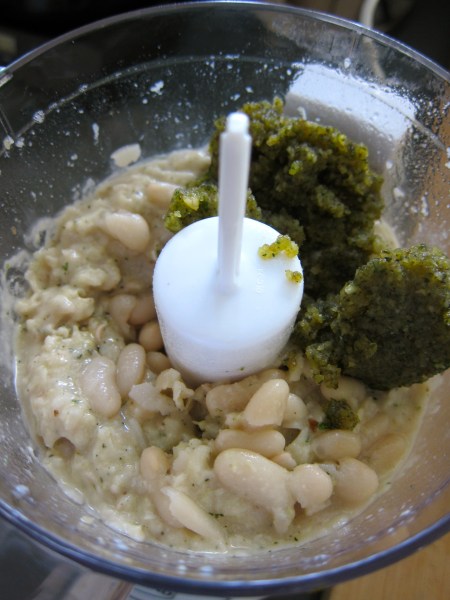
Cannellini Bean Spread with Sage Pesto

We usually have some cooked beans on hand, whether in the fridge or stored for later in the freezer. Before the heat hit, I’d simmered up a pot of cannellini for another dish, but they proved the perfect foil to a leftover batch of herbacious sage pesto: Process a cup or two of cooked white beans with a generous scoop of sage pesto, adjusting amounts to taste. For a creamier texture, add a splash of water or pot liquor from the beans, but not so much that it’s too soft to spread. We had this slathered on a fresh, crusty baguette, and topped with some festive slivers of sage. Alternatively, dispense with the bread and eat straight up by the delicious spoonful.

There you have it, two ways of using pesto and neither of them pasta. If you are whipping up a batch of garlic scape or sage pesto, make sure there’s extra to keep in the freezer. Because eating well doesn’t have to end when summer does.

Local ingredients: Cannellini beans from Meadow’s Mirth; sage from the garden.

Posted in cooking | Tagged , , , | 9 Comments

6.20.12 Flowering, fruiting, and scaping

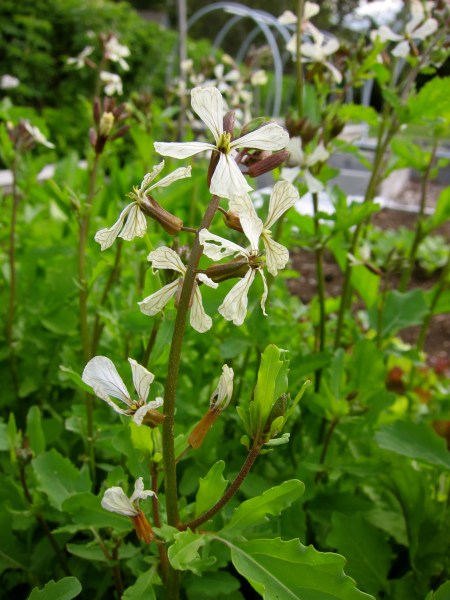
Our arugula is going to seed. We continue to add its spicy leaves to salads along with the flowers, but the blooms signal the end is nearing for this round of planting.

Whereas here, each pea bloom is a new beginning and a cause for joy. It takes 25 plants to produce little more than 1 cup of peas. That is, if they make it into the kitchen.

The garlic scapes, the flowering ends of hardneck garlic, have appeared. We’ll be harvesting them this week as they complete their first curly rotation. 

The Egyptian onion, a top-setting allium, in all its reproductive glory. A couple of well-developed heads of these went into a recent pot of stock.

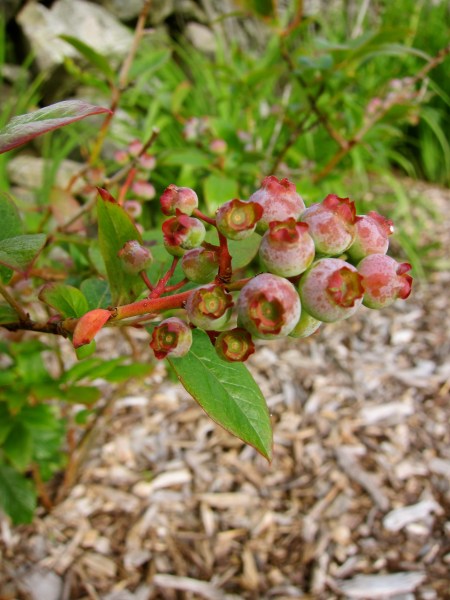
The blueberry bushes we planted three years ago are still small but loaded with fruit this year. It looks promising but we’ll be competing with the birds to get to these first.

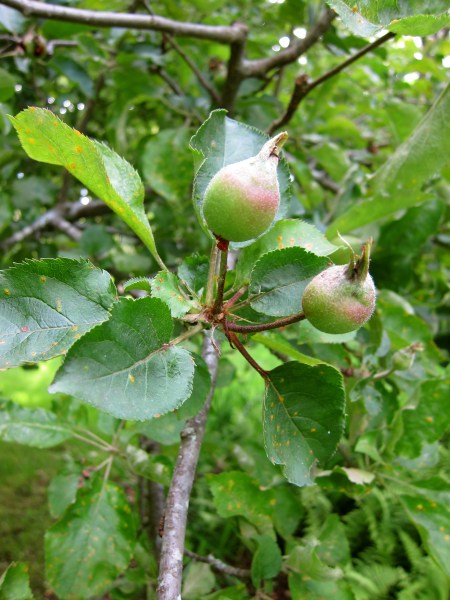
While the rest of the garden takes center stage, the apple tree tends to be neglected once it’s past flowering. There’s fruit developing, with many months to go before harvest.

Posted in garden | Tagged , , , , | 6 Comments

6.18.12 Rhubarb, asparagus and garlic scapes

A friend advises picking asparagus between Mother’s and Father’s Day. As the asparagus season wanes, we begin harvesting the first of the garlic scapes. 

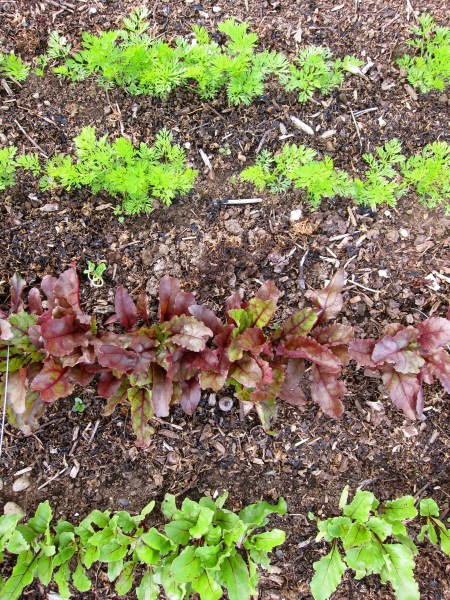
Greens are coming in strong, including our plantings of tatsoi and fun jen.

Carrots and beets will need thinning soon, and we’re looking forward to having these root crops to add to our meals.

Posted in garden | Tagged , , , , , , | 12 Comments

Local Food: Strawberries at Applecrest Farm, Hampton Falls

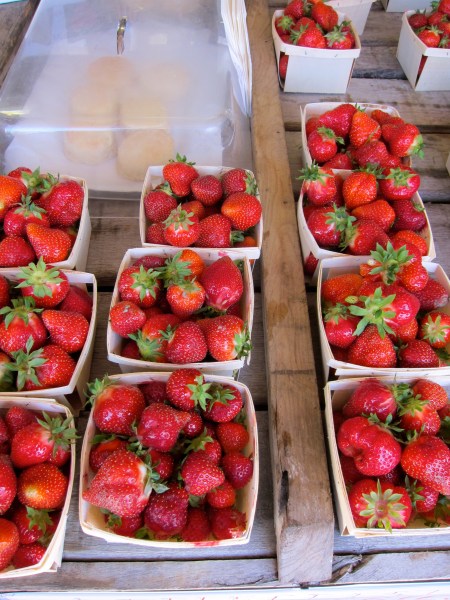
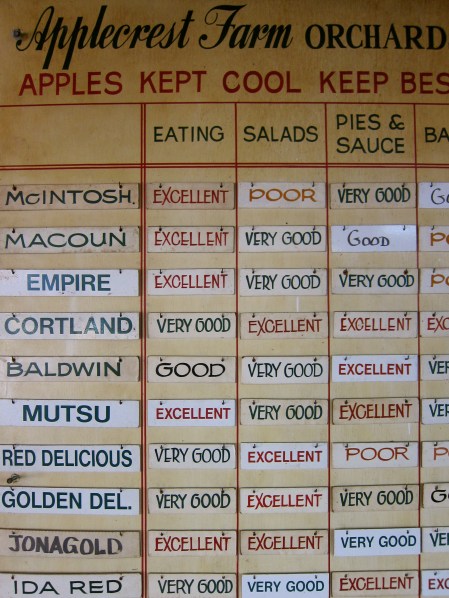
If ever you’ve read The Cider House Rules by John Irving, Applecrest Farm will feel familiar. Irving drew inspiration for the book from his experience working there as a teenager. We used to live just down the road from here, and marked the season by what was available at the farm stand. Right now: pick-your-own strawberries or just-picked by the basket.

Blueberries will soon follow, with peaches, nectarines, and pears next. Fall raspberries accompany the arrival of a bountiful selection of apples, then pumpkins and gourds. It all seems to come in a rush, and all we can do is set ourselves to enjoying every minute of it.

A version of this post also appears at Seacoast Eat Local.

Posted in local food | Tagged , | 3 Comments

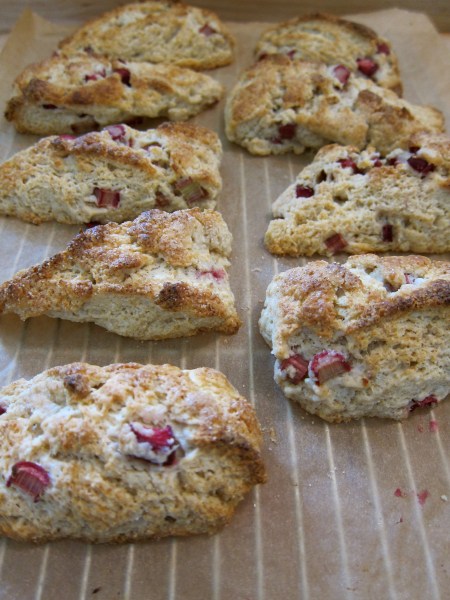
Rhubarb & Buttermilk Scones

Sweet or savory, I’ve come to appreciate how versatile rhubarb can be, though its burgeoning presence in the garden is cause enough to expand my repertoire of rhubarb cookery. At first glance, rhubarb in scones would seem impossibly tart. However, I found adding a cup of rhubarb to my basic scone mix gives both color and zest, in pleasing contrast to the richness of the other ingredients. With a nod to its healthful benefits, replacing some of the flour with whole wheat lends a hint of nuttiness, and helps take the guilt out of this summer morning or afternoon treat.

Rhubarb & Buttermilk Scones

1 cup or 4 ounces rhubarb (around 3 stalks), cut into ¼” thick pieces
2½ cups flour (2 cups all purpose + ½ cup whole wheat pastry)
1 tablespoon baking powder
½ teaspoon sea salt
8 tablespoons or 1 stick butter
3 tablespoons + ¼ cup sugar
1 scant cup buttermilk
Sugar for sprinkling

– Heat oven to 425°F. Toss rhubarb pieces with 3 tablespoons of the sugar. Sift flour, baking powder and salt together in a large bowl. Cut butter into flour mixture until butter is size of small peas. Blend in ¼ cup of sugar, then the sliced rhubarb. Blend in buttermilk until a soft dough forms. If dough is sticky, blend in a bit more flour. Lightly knead dough and form into a rough ball.

– Transfer dough to a floured surface and divide in half. Pat each piece into 6-inch disks, and cut each circle into 6 triangular scones. Brush with buttermilk and sprinkle with sugar. Arrange on a parchment-lined or ungreased cookie sheet. Bake for 20 minutes, turning pan halfway through cooking time. Remove from oven and transfer scones to a rack and let cool. Makes 12 scones.

Local ingredients: Whole wheat pastry flour and butter from Brookford Farm; homemade buttermilk from Harris Farm milk; rhubarb from the garden.
Posted in cooking | Tagged , | 7 Comments