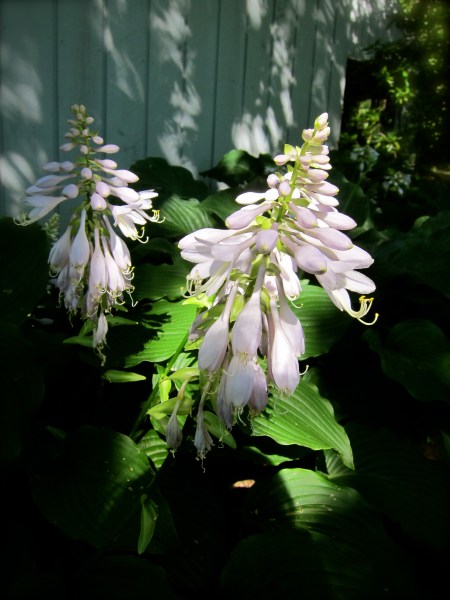
7.23.12 Sunday to Sunday

A kitchen garden has a rhythm of its own, and this is the time of year when the garden needs to be picked daily. And the more you pick, the more the plants will produce. Here’s a week’s worth of midsummer harvests.

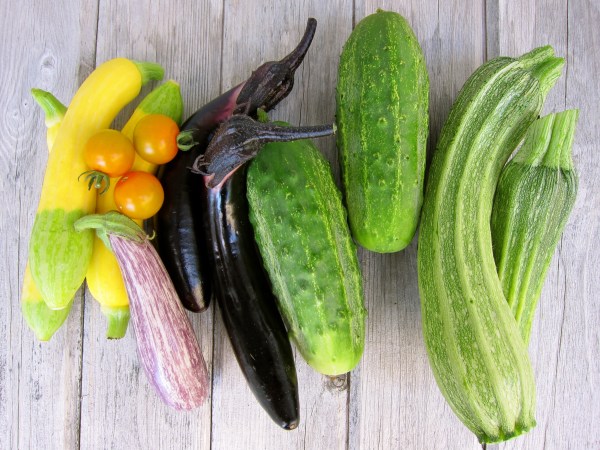
Sunday: (above) Zephyr summer squash, Sungold cherry tomatoes, Fairy Tale and Orient Express eggplant, National Pickle cucumbers, Costada Romanesco zucchini. We’ve been sauteing up the summer squash, having cucumber sandwiches, and the eggplant went into a mixed grill. Like peas, these early cherry tomatoes barely make it into the kitchen.

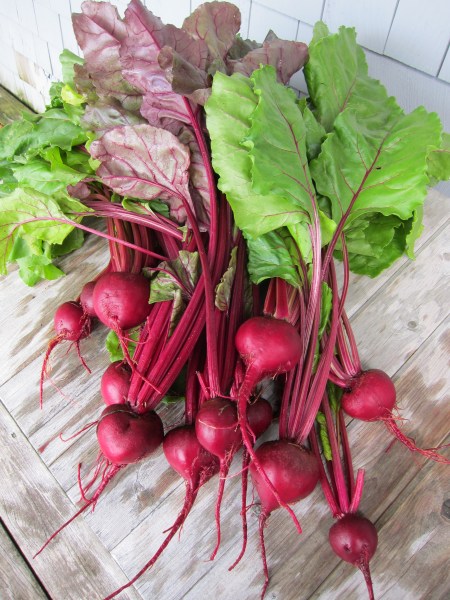
Monday: Bull’s Blood and Early Wonder beets. The greens were blanched and frozen for later, the beets roasted with herbs and turn up in salads or eaten on their own with a side of goat cheese.

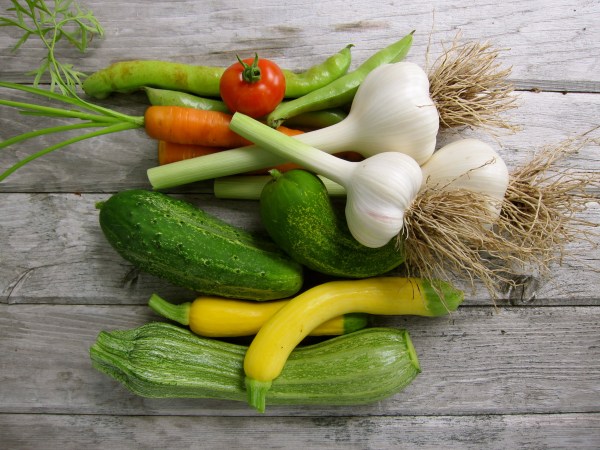
Tuesday: Favas, Peacevine tomato, carrots, cucumbers, and summer squash. We also pulled one each of the German Extra hardy, Music and Phillips garlic to see how they’re developing, and will harvest soon.

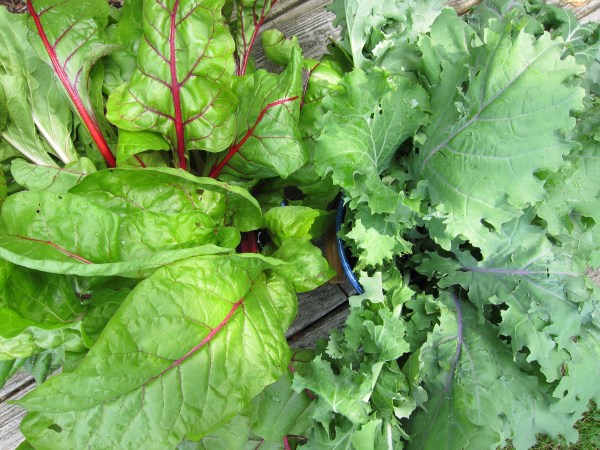
WednesdayRainbow chard, Red Russian and Siberian kales, along with salad greens. The kale was shredded up for topping pizza, the chard tossed in a dish with crusty beans.

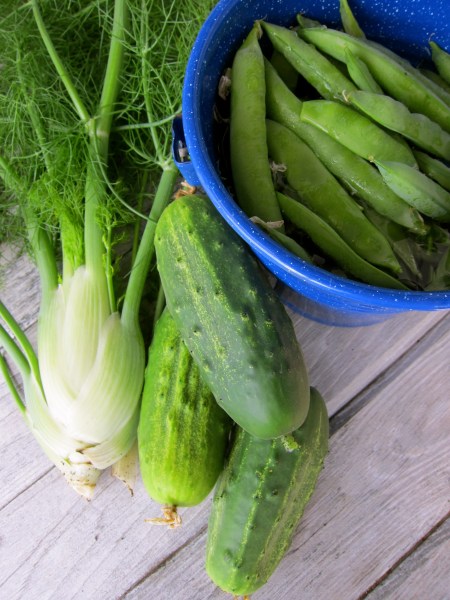
Thursday: Perfection fennel, summer squash and another cucumber. We picked up our first CSF share and made fish in parchment, with shaved fennel tossed with olives and basil as a base, and the summer squash sauteed for a side dish.

Friday: Favas, cherry tomatoes, and summer squash. It was cool enough to make paella with favas, and slicing tomatoes from the farmers market.

Saturday: Summer squash, cherry tomato, and cucumbers. We’ve been accumulating the cucumbers all week to make into a quick pickle. The summer squash, along with their blossoms, went into an herby frittata.

Sunday: Carrots, beets, uno zucchino, cucumber, and first of the season’s Masai and Dragon Langerie beans. A salad of arugula and roast beets with the beans simply steamed went with a dinner of grilled local beef.

If ever this is true, now is the time when every day is truly a banquet — enjoy!

Posted in garden | Tagged , , , , , , , , , , | 27 Comments

Mastering Food Preservation: Jams & Jellies

I came away from our first hands-on lab with a new-found appreciation for homemade jams and jellies, the topic of our next class in the Master Food Preserver Program. Timed to coincide with strawberry season, flats of fragrantly ripe strawberries from Fairwinds Farm in Bowdoinham, ME, awaited us for processing.
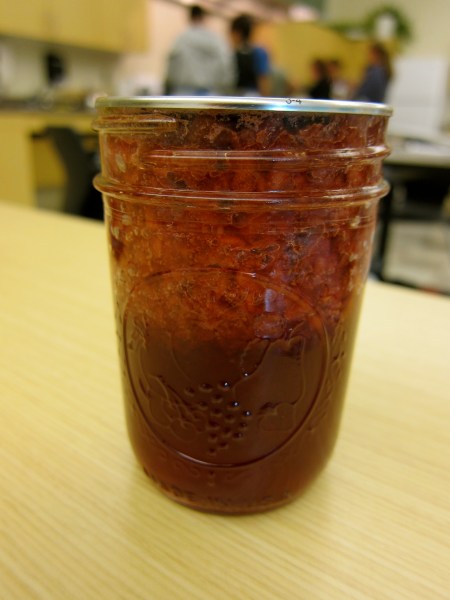
We began the class by examining a sample jar of strawberry jam (above) made by our teacher, Kathy Savoie. We noted that it lacked headspace, and that the fruit fiber had separated from the juice, both problems common to homemade jams, particularly those made with strawberries. To gel properly, jams and jellies need to contain the right combination of fruit, pectin, sugar and acid. Even so, fruit can be fickle and have differing levels of naturally occurring pectin that may affect the end results.

If you’ve ever looked at a jam or jelly recipe, the amount of sugar required can be off-putting. In a nod to modern tastes, we tested and compared different ways of making strawberry jams and jelly using low/no sugar pectins, including one method using no added pectin.

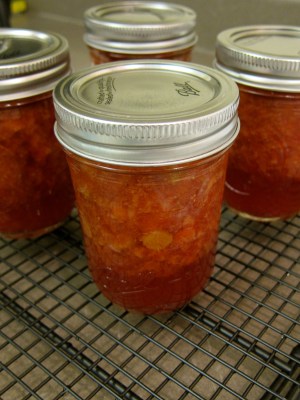
The first group made strawberry-rhubarb jam, sweetened with honey and using Pomona’s Universal Pectin. Since Pomona’s doesn’t need sugar to gel, jams and jellies can be made with less or no sugar, or an alternative sweetener.

Pomona Universal Pectin:
• Pros: Little or no sugar needed; may use alternative sweetener; allows doubling of batch; indefinite shelf life.
• Cons: Tendency to separate (need to stir before eating); doesn’t hold color.
• Contains: Citrus pectin, calcium (monocalcium phosphate).
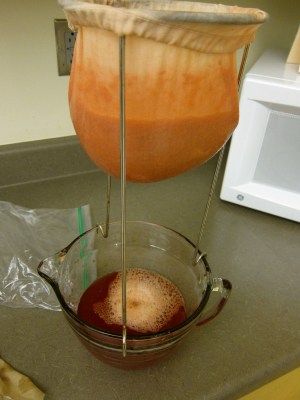
The second group made low-sugar strawberry jelly with Sure-Jell (pink box), another pectin that sets with little or no sugar. After washing, crushing and simmering the strawberries, the juice was strained off with a jelly bag. Instead of sugar, the jelly was sweetened with fruit juice, which made for a more subtle tasting jelly.

Sure-Jell:
• Pros: Little or no sugar needed; may use alternative sweetener.
• Cons: Shorter shelf life, advise replacing yearly.
• Contains: Dextrose, fruit pectin, fumaric acid (for tartness), sodium citrate.

The third group was assigned making no/low sugar strawberry jam using Ball’s No-Sugar Needed Fruit Pectin (green box). The process was the same as when using regular pectin, but allowed us to use honey as a sweetener, though we could have also used fruit juice.

Ball’s No-Sugar Needed Fruit Pectin:
• Pros: Little or no sugar needed; may use alternative sweetener.
• Cons: Shorter shelf life, advise replacing yearly.
• Contains: Dextrose, fruit pectin, citric acid (assists gel), calcium ascorbate (retains color).
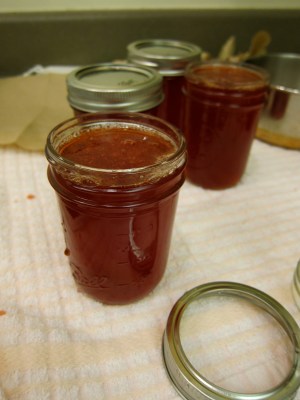
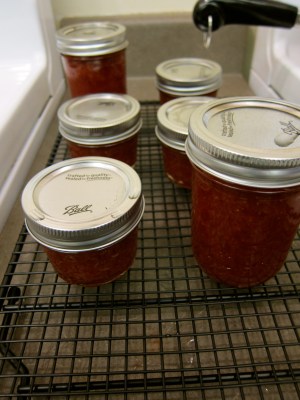
The last group made a classic strawberry jam with no added pectin. The recipe from So Easy to Preserve required 6 cups of sugar to 2 quarts of crushed strawberries, and was rapidly boiled until thick, about 40 minutes, before canning.

No added pectin:
• Pros: No pectin necessary; even dispersal and consistency; true strawberry color.
• Cons: Large amounts of sugar; tendency to scorch while cooking.

The lineup for comparison (left to right): low sugar strawberry jelly (Sure-Jell), low sugar strawberry jam (Ball’s), strawberry jam (no added pectin), and low sugar strawberry rhubarb jam (Pomona’s).

What I learned: Read the recipe or package directions; follow the recipe or package directions; make one batch at a time; don’t reduce the amount of sugar or make a substitute unless the pectin is designed for it.
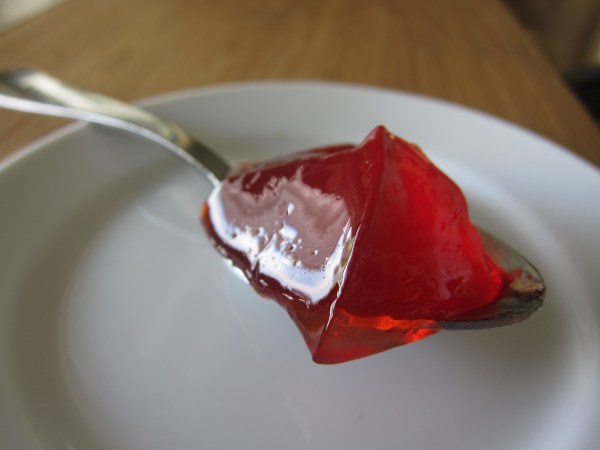
It’s a matter of individual taste which method you end up choosing, each has its own set of trade-offs. This recipe for Small Batch Fresh Strawberry Jam is a good alternative. For larger batches, my personal preference is Pomona’s Universal Pectin; I’m willing to overlook its drawbacks in terms of consistency and color for something with a more natural set. Another choice would be to use homemade pectin.

This is second in a series of posts following the Master Food Preserver Program, offered through the University of Maine Cooperative ExtensionNext: “Drying & Herbs”

Posted in preserving | Tagged , , , , | 17 Comments

Local Food Report: Gardening For Good

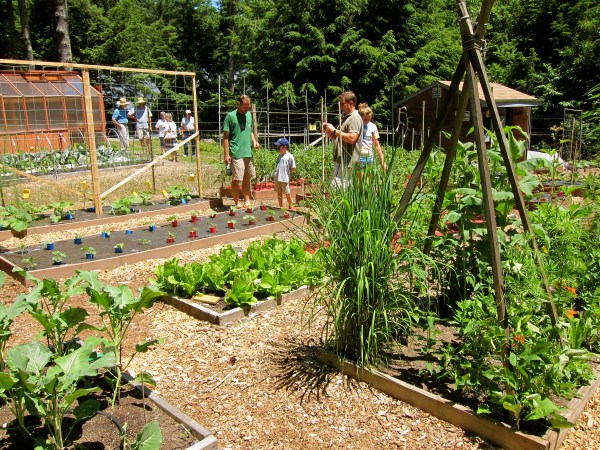
You can’t get any more local than growing your own. Combined with the desire to give to others, Denny Chasteen maintains over 20 raised beds at his home in Lee, NH, with the majority of the produce going to the Seacoast Family Food Pantry in Portsmouth.

We’ve long been admirers of his efforts, and we’re excited to see his garden included in a recent tour. The first harvest of lettuces has already been delivered to the food pantry, and the garden is well into its second planting.

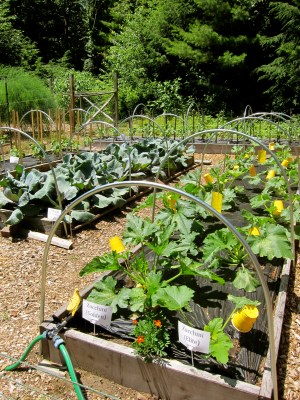
Denny grows organically and we were especially interested to learn more about his practices. He employs yellow sticky traps in his squash and cucumber beds to monitor and capture cucumber beetles, and in the onion patch for thrips. He recommends setting these traps out only when you suspect or anticipate a problem, as they’ll trap beneficial insects as well. His homemade traps are made from yellow plastic cups covered with a sticky coating — it’s their attraction to the color yellow that lures the insects in.

Sold as animal feed, Denny uses alfalfa pellets as an organic fertilizer. He broadcasts them in the garden and waters immediately to disperse it into the soil, where it will release nitrogen slowly and serve as a general fertilizer. He found it’s also an excellent way to increase the worm population in his raised beds.

With 7 bacterial, 28 fungal and 17 viral diseases affecting tomatoes, growing them is a special challenge, and Denny is constantly experimenting with ways to ensure healthy plants. Some of his recommendations include:

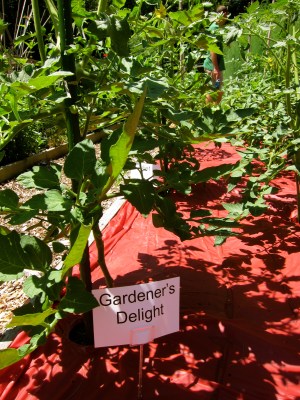
– Use red plastic mulch to form a barrier between the plant and soil, which prevents the soil from spattering onto the leaves and transferring pathogens.
– Remove lower branches up to a height of at least 1 foot up the stem once the plant is 2 to 3 feet tall, as leaf disease typically starts with lower leaves and moves up the plant.
– Continue removing diseased leaves daily.
– Consider planting in pots with sterile soil.
– If garden space allows, plant tomatoes in a distant location from that used the previous year.

In Denny’s summation, “Often it is a race between having the fruit ripen and the disease totally consuming the plant.”

A version of this post also appears at Seacoast Eat Local.

Posted in local food | 2 Comments

7.16.12 Baby carrots, summer squash and tomatoes

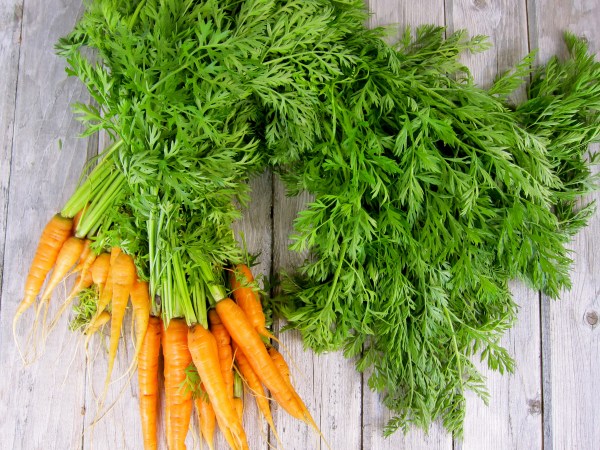
It was time for the carrots to be thinned, giving us a harvest of stubby Red Core Chantenay and slender Napoli baby carrots attached to a mane of greens. The Napoli is known as Eliot Coleman’s favorite for winter, and seems to thrive equally well in summer. Both the Red Core Chantenay and Napoli were planted at the same time but differ by 10 days to maturity, accounting for some of the difference in size. They’ll be perfect for making this.

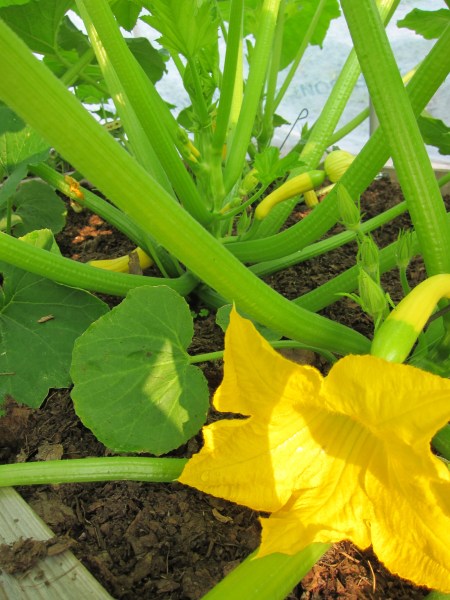
The squash plants are bursting out of their protective covering, put in place to help prevent the squash vine borer from getting to them.

A peak into the Squash Casbah reveals that pollinators have been sneaking in despite the covering and have been busily making baby Zephyrs.

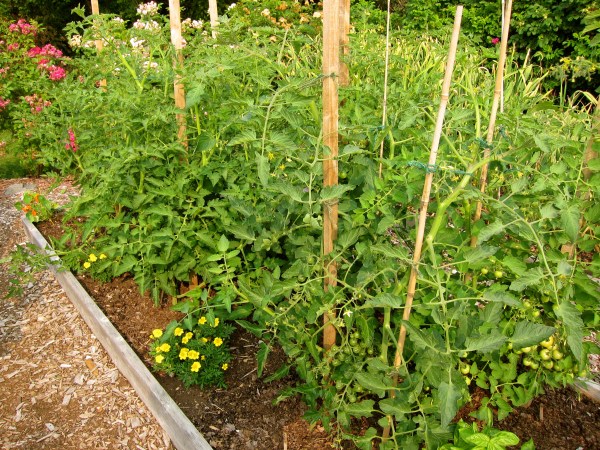
The tomato plants are thriving in this warm weather we’ve been having. We marvel at how healthy and lush they are, and hope they remain so as the season progresses.

This is a new variety of cherry tomato we’re trying this year called Peacevine, and is setting masses of fruit.

The peas are winding down as the fennel and cucumbers are starting to come in. We’ve been continuing to eat primarily from our garden with enough to start freezing a few greens, and much more on the way.

Still harvesting: fennel, salad greens, kale, chard, peas, favas, radishes, fennel
Newly harvested: cucumbers, summer squash, baby carrots
To come: tomatoes, green beans, beets, eggplant

Posted in garden | Tagged , , , , , | 21 Comments

Mastering Food Preservation: An Introduction

Here in Maine, eating locally year round requires some familiarity with the art of preserving food. Through experience — mostly trial and error — I’ve built up a working knowledge of canning, drying, freezing and storing these past few years, but not in any organized fashion. Luckily, Maine is one of the handful of states to have a Master Food Preserver Program run by the University of Maine Cooperative Extension. Offered on an annual basis, the program has experienced a growing increase in applicants since its inception. The limited class size makes enrollment selective, and I was excited to be one of those admitted to the current training session.

Now in its fifth year, the class consists of a dozen of us gathered from around the state, brought together by a shared desire to learn more and continue the tradition of passing these skills onto others. Our first meeting was in June, and included an orientation and an overview of food preservation, primarily issues surrounding food safety. The stack of materials we received consisted of a binder of selected readings, and copies of So Easy to Preserve (book and video), the USDA Complete Guide to Home Canning, and Ball’s Blue Book Guide to Preserving — all available to the public and worthwhile references for any home library. Along with the in-class labs, we’re also required to complete the self-study course, Preserving Food At Home, also accessible to the public.

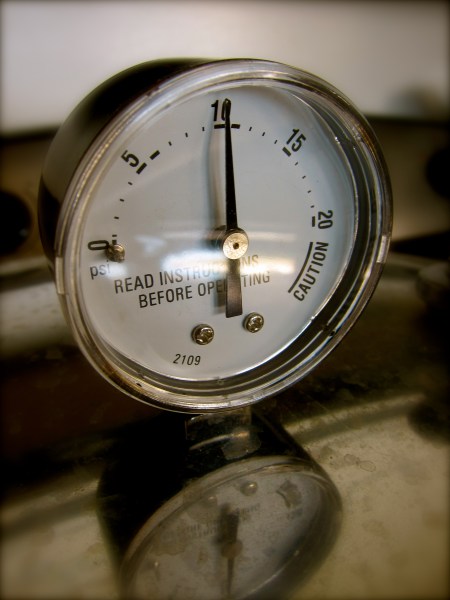
The Cooperative Extension also offers testing of pressure canner dial gauges, and recommends that they be tested yearly. It’s especially a good idea to have the gauges from secondhand or older pressure canners tested before using. Kathy Savoie (above), our Extension Educator, checked my gauge for accuracy — it was slightly off (I admit to dropping the lid), but still within tolerance. More than 2 pounds off and it should be replaced.

Session question: What’s the difference between a pressure cooker and a pressure canner, aren’t they the same thing?

A pressure canner is one that is designed to can low-acid foods, such as vegetables, meats and beans. According to the USDA, a pressure canner must be able to hold at least 4 quart jars, and have a gauge or weight that allows you to measure 5, 10 and 15 lbs. pressure. While you may pressure cook in a canner, the converse, using a pressure cooker for canning, may be problematic. Processing times for canning factor in specifically the larger size of a pressure canner, and the time it takes to heat up and cool down. My Presto pressure canner is labeled for both canning and cooking, but I find it’s too large to use for anything other than canning.

Note: When purchasing a new pressure canner, make sure it will fit in the space between your cooktop and any cabinets or vent hood above. If you have a glass cooktop, look for a pressure canner that is designed to be used on it. My canner has an extra plate on the bottom that allows it to sit flat and fit within my cooktop’s rings.

This is second in a series of posts following the Master Food Preserver Program, offered through the University of Maine Cooperative ExtensionNext: “Jams & Jellies”

Posted in preserving | Tagged , , | Leave a comment

7.12.12 Hosta blooms

Though not usually known for their blooms, the hostas have benefitted from the warm weather and are flowering in a most spectacular way this year.

Posted in garden | Tagged | Leave a comment

Barndiva: Eat the View

Part of my work involves advising chefs on sourcing local food. They, much like the rest of us, appreciate knowing the people behind the ingredients. There’s an element of trust, respect, and joy in the exchange that, in a sort of transmutation, is wondrously transmitted through the food and onto the plate. In this video, the folks at Barndiva, a restaurant in Healdsburg, California, show us what farm to table means to them. Via InsidescoopSFEat the View! from Barndiva.

Posted in interlude | Leave a comment