6.24.13 Greens, Scapes, and Rhubarb

6.24.13

The long spring allowed us to put off picking rhubarb until this week. It’s rare that their season coincides with that of local strawberries, and, to celebrate, we straight away made a strawberry rhubarb galette.

6.24.13

All of the garlic is now scaping. The Music ones have completed their first turn, a good point to harvest at. Some say that the garlic bulbs will store better if the scapes are left on; we found it worth cutting them off for the larger bulbs that result. Leave them on and they’ll eventually straighten, a sign that the garlic is ready for harvesting.

6.24.13

Though the arugula bolted while barely past the seedling stage, the first planting of salad greens is still going strong.

6.24.13

Masai filet beans making an appearance, with their seeds still attached.

6.24.13
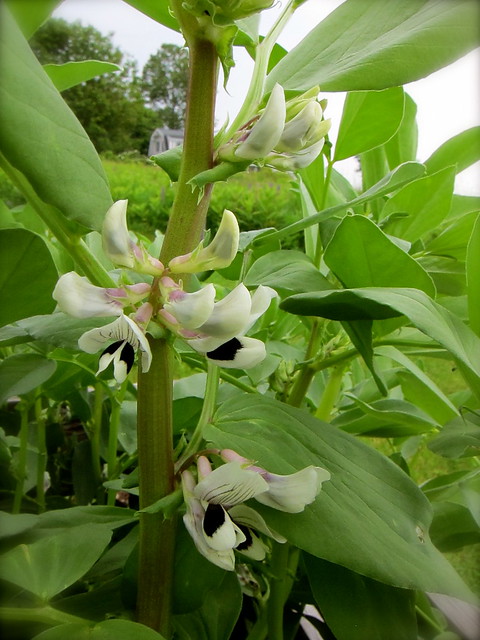
So far, favas are progressing beautifully this year. They’d be worth growing just for their orchid-like flowers.

6.24.13

The first year we grew English peas, we were disappointed to find the pods looking more like snow than shelling peas. We didn’t know the pods start out flat and fill out later, and made the mistake then of harvesting them too early. 

6.24.13

Container potatoes will need hilling up soon.

6.24.13

Summer solstice marks our last harvest of asparagus; the bed will be left to nourish the crowns. We’ve still tomatoes that need to be put in the ground, though we’re holding back until this week’s sultry weather breaks. In the meantime, we’ll take care to make sure everything has enough water, including ourselves.

This week’s harvest:
Asparagus, garlic scapes, salad greens, tatsoi, fun jen, and rhubarb.

Posted in garden | Tagged , , , , , , | 25 Comments

6.19.13 Everyday Magic + 5 links

IMG_5672

At the end of an especially trying day, we looked up mid-conversation and saw a rainbow appearing. We drifted out alongside neighbors, drawn out of our daily life by the absurd beauty of it all. As daylight shifted into night, we were astonished to see the rainbow’s full arc, stretching from one side of the horizon to the other. Such was the evening, we wouldn’t have been surprised to see a unicorn wandering onto the scene.

IMG_1687IMG_1688

These 5 links are what made me happy lately, I hope they do the same for you. Because, sometimes, even if you know how it’s done, it’s still magic.

• It’s complicated: How to make a Tuna Melt, via The Improvised Life

• More cooking sleight of hand: Tortino di Carciofi, or Artichoke Tart, from Elizabeth Minchilli

• First, take a handful of salt: Gathering Shellfish, via Diary of a Locavore

• You mean, it’s not always like that?: Waterlily House, from What ho Kew!

• When you’re not looking: What Plants Talk About, from PBS

Posted in garden, interlude | Tagged | 8 Comments

6.18.13 Good Weather Days

IMG_5577

Though, by the calendar, Solstice is near, it remains very much spring here. The scent of lilacs mingles with that of their later companions, peonies and roses, in our daily rounds of the garden.

6.17.13 Good Weather Days

Hailstorm aside, the warming days, cooler nights, and occasional rains of June make for good planting weather. Above: French and lemon gem marigolds, basil and a couple of cucumber seedlings.

6.17.13 Good Weather Days

We’ve been picking our way around the fennel volunteers that have appeared in the  pathway. Their vigor has us considering direct seeding next season for an earlier start.

6.17.13 Good Weather Days

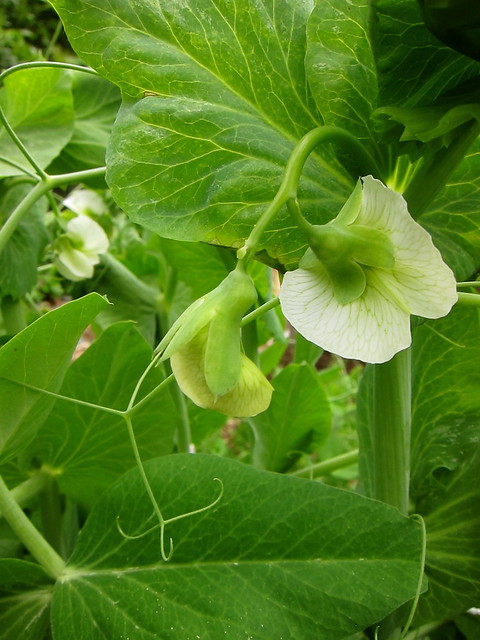
Pea (above) and fava blossoms are appearing, each a step towards another eagerly anticipated pod.

6.17.13 Good Weather Days

Newly planted potatoes quickly pushed their way back up through the soil. We’re again experimenting with growing them in containers, each with a different configuration.

6.17.13 Good Weather Days

A promising start for the second planting of Agretti, which gave us the confidence to start two other Italian specialty greens, erba stella and scuplit.

6.17.13 Good Weather Days

This week’s harvest: Garlic scapes, asparagus, salad greens, fun jen, and tatsoi.

This week’s planting: Potatoes, cucumbers, fennel, summer and winter squash, green beans, peppers, salad greens, radishes, herbs, and rice.

Posted in garden | Tagged , , , , , , , , , | 10 Comments

Cooking with Spring Roots: Kohlrabi, Turnips and Radishes

Spring Roots

At the moment, local farmers’ markets are overflowing with greens, and the spring roots appearing alongside, or even attached, complement them well. At their simplest, radishes, small turnips and kohlrabi add color, flavor and texture to tender salad greens. Some recent forays into cooking with these crops shows how versatile they can really be, and shine on their own.

Spring Roots

One’s first taste of kohlrabi (above, with scarlet turnip) is often at its simplest — raw, peeled and sliced, either in a salad or on its own. We also like round planks of kohlrabi grilled, or in chunks and roasted. Though, strictly speaking, kohlrabi’s not a root, it seems useful to include them with these fellow brassicas. The couple of bunches we picked up this week came with their full head of greens attached, and offered a chance to cook with both the leaves and their bulbous stems.

Spring Roots

Kohlrabi puree proved to be a wonderfully adaptable preparation. The basics: Steam or boil the bulb until tender; mash, rice or process to a puree; season to taste. With leaves on hand, we sautéed them with some garlic, then pureed them at the same time as the bulb. To accompany freshly caught local scallops, we seasoned the kohlrabi puree with a splash of lemon juice, salt and pepper, and a dollop of creme fraiche to even things out. Cooking kohlrabi brings out a sweetly delicate flavor, and is surprisingly delicious boiled and left as is. As a puree, it takes on a lightness, with a pleasing texture binding it together. The leaves are an optional addition, and, when they’re no longer available, we’re imagining the puree tinted pale green with spring onions or just-emerging garlic scapes, or lavender pink with chive blossoms. Later, as the days shorten, the puree can be plumped up with the comforting addition of potatoes or celeriac, and apples.

Spring Roots

Small turnips, either red or white, are often referred to as salad turnips. In this preparation, they’re virtually interchangeable with radishes. Cut into bite-sized wedges, pan-roasting these scarlet turnips and white radishes is a quick way to prepare them, especially when they’re ready in the garden all at once, or your CSA share contains several bunches.

Spring Roots

In the pan, the exposed surfaces become caramelized; some prefer braising over this method for a milder flavor. The edible greens were put aside for another meal, though could have just as easily been slivered into ribbons, tossed into the pan, and cooked until wilted or braised.

Spring Roots

Sautéing turnips and radishes leaves just enough bite to counter peppery slices of duck pastrami. Some Limpa rye bread and a mayonnaise-based mustard sauce completed this riff on a New York deli staple. For another time, we’d consider adding toasted mustard seed to the pan, or dressing the cooked roots with a mustardy vinaigrette, or maybe a pesto made from the leaves.

Spring Roots

Ordinarily, we’re able to rely on our garden for radishes, especially at this time of year. However, as many others are experiencing, the flea beetles have been fierce, stripping the developing foliage and leaving nothing for the roots to feed on. It was cheering then to find such an array of radishes being offered at the Portsmouth Farmers’ Market — red Cherry Belle, baby white daikon, slender French breakfast, and golden russeted Zlata.

Spring Roots

We adapted Jim Lahey’s recipe for potato flatbread, swapping in radish cut into coins for the potatoes, feta for the cheese, and zahtar for the herbs. This Middle Eastern spice blend combines sesame seeds, sumac, and other dried herbs such as oregano and thyme, for a nicely sweet-sour note. After a long winter of storage roots, cooking with these fresh ones is a welcome way of bringing the change of season to the table.

Local ingredients: Kohlrabi from Wake Robin Farm; scarlet turnips and French breakfast radishes from Two Toad Farm; white radishes from Osprey Cove Organic Farm/Stone Wall Farm; Zlata and red radishes from Garen’s Greens; scallops from FV Rimrack; duck pastrami from Popper’s Artisanal Meats; feta cheese from Brookford Farm; salad greens from the garden.

Posted in cooking | Tagged , , | 8 Comments

6.10.13 Agretti (Monk’s Beard)

6.10.13 Agretti

After our first planting of agretti failed, we thought we’d missed the season. However, with the return of cooler June temperatures and near to 2,000 seeds still on hand, we’re giving it another try. Reports of germination rates vary between 30% to 80%; we erred on the side of caution and seeded with abandon.

Agretti

If curious about growing agretti yourself, both Seeds of Italy and Gourmet Seeds have seed available, and, due to its short viability, are now offering special pricing. A round-up of growing information:

Seeds from Italy (US):

Agretti Also known as Barba di Frate, Salsola Soda, and Roscano. Agretti is an annual with long, chive-like foliage. It is very popular in Italy and has become the latest trend in high-end Italian restaurants in the U.S.. When mature (50 or so days) Agretti is a 12″ wide, 24″ tall bush that looks like a huge chive plant. Flavor is a bit bitter, a bit sourish. You can just braise them in some olive oil with garlic and serve as a side dish. You can also boil them and dress with olive oil.

Plant as soon as the ground can be worked. Sow and cover with 1/2 inch soil. Space seeds 4-6 inches apart. Thin to one plant 8-12 inches apart in row or raised bed. Germination time: 7-10 days. Start cutting from the plants when they are about 6-8 inches tall. Cut the green tops or sections of the plant; it then will regrow. 100 gram (3.5 ounce) box contains approximately 2,000 seeds. Minimum germination 65 percent.

Seed to Plate by Paolo Arrigo:

Agretti growing tips — Agretti Gows very easily, tolerating cold, heat, wet or dry, but is is an absolute bastard to get viable seeds from — and that isn’t too strong a word! That’s why you probably don’t know what it is: it’s so volatile and unpredictable that some years we have it and other years we don’t. The seed will keep for only a few months, hence its rarity. Most seed companies won’t touch it with a barge pole, but if you can get hold of it then try and grow some, because it is a worthwhile ingredient.

Sow — when you have viable seed — any time from February to November. Cover seeds with 1 cm of soil and space 10 cm apart. Thin to one plant every 16–20 cm apart in a row or raised bed. Germination takes between seven and ten days. When mature (in about 50 days) they form a bush 30 cm wide, 60 cm high. You can start cutting from the plants when they are about 20 cm tall. Cut the green tops or sections of the plant; it will then regrow.

Crop Profile: Monk’s Beard (Agretti), Urban Farm Online (Rick Gush)

Agretti, A Kitchen Garden Notebook

Sons of the Pioneers, The Ladybug Letter (Mariquita Farm)

Note: Not to be confused with garden cress, which is also commonly known in Italy as agretto or agretto d’orto. From The Slow Food Dictionary to Italian Regional Cooking: “In some Italian regions, the term barba di frate [or agretti] also refers to crescione inglese, garden cress.”

There are different species of salsola (sometimes called “sea mustard”). Agretti is the Italian salsola soda, while salsola komarovii is said to be one of the oldest vegetables in Japan, where it’s called oka hijiki, or land seaweed. While similar in appearance, salsola soda is larger and with more succulent leaves.

Posted in garden | Tagged | 14 Comments

6.3.13 Beneficial Procrastination

6.3.13 Beneficial Procrastination

Touring other’s gardens online, we see that we’re woefully behind in our own. We’ve flats of seedlings to get into the garden, while the overwintered plants have yet to be pulled up. Several weeks ago, we’d harvested what we thought would be the last of the remaining chard and kales. Other obligations prevailed, and we haven’t been tending to the garden since then. Our procrastination gave the stripped plants a chance to recover, and a bonus harvest of Fordhook chard (above) and kale (below) was the result.

6.3.13 Beneficial Procrastination 6.3.13 Beneficial Procrastination

Asparagus (above, right) continues to produce, we gather at least a handful several times a week, and the walking onions almost every day.

6.3.13 Beneficial Procrastination

Carrot seedlings (above) under row cover, protection from cold as well as heat. Keeping them well-watered gives us a nice rate of germination.

6.3.13 Beneficial Procrastination

And tatsoi seedlings (above), alsunder row cover. The flea beetles have been ferocious this year, leaving many of our spring greens and radishes decimated.

6.3.13 Beneficial Procrastination 6.3.13 Beneficial Procrastination

Peas (above, left) are getting established; the garlic bed (right) looking stressed from last week’s excessive heat.

6.3.13 Beneficial Procrastination

We put in twice as many favas as last year. So far, the plants are looking as healthy as they’ve ever been.

6.3.13 Beneficial Procrastination

We’ve just begun thinning the salad greens, and have been enjoying how tender and sweet spring lettuces can be.

6.3.13 Beneficial Procrastination

After a busy week-end, the beds are cleaned and ready for the next wave of planting.

This week’s harvest: Overwintered chard and kale; asparagus; walking onions; baby salad greens.

Posted in garden | Tagged , , , , , , , , , | 10 Comments

Agretti Spaghetti with Spring Onions and Lemon

Agretti Spaghetti

Nothing excites a cook more than discovering a new tool, a new technique, or, in this particular case, a new ingredient. We came across agretti, an Italian specialty green, last season through Seeds from Italy, and vowed to give this annual succulent a try. Though purportedly easy to grow, the seeds have a notoriously short period of viability. It was with some trepidation that we direct seeded a short row, and were thrilled when they began to sprout. And then they dismally failed, not because of the seed so much as something ate them before they could get past the seedling stage.

Agretti Spaghetti

So, when we caught a flurry of agretti recipes being pinned by Abby Wiggin at Wake Robin Farm in Stratham, we immediately contacted her. As luck would have it, Abby had planted some agretti this year as a trial. Declaring it her new favorite thing to cook with, she generously offered us a bunch to try for ourselves. This description by Paolo Arrigo, the owner of Seeds of Italy, from his book From Seed to Plate may give an indication of what all the fuss is about, especially with something we’ve never tried:

Agretti

This is difficult to describe, like describing a truffle. It has some other names: barba di frate (monk’s beard), roscano and salsola soda. It’s a mild-flavoured green, which is a little bit bitter, but a lot wonderful. Really only known in Rome (Lazio generally) and Umbria, it’s impossible to find in the UK and very, very gastronomic. It’s a bit like sea samphire, but you grow it in the ground rather than on salt marshes, which, let’s face it, not many of us have in our back gardens.

It’s the flavor that makes agretti so alluring. It tastes like spinach, asparagus and sea water, and looks like chives with fat, rounded leaves. Agretti goes well with fish and seafood. You can use it raw in salads or you can cook it and use it in pasta. Try it braised with a little garlic and served as a side dish, boiled and served with olive oil, or take a large handful and slap a sea bass in the middle to steam.

Agretti Agretti

Raw, it’s fleshy leaves are crunchy and slightly saline, perfect as a salad ingredient. For cooking, it’s often suggested to blanch the agretti beforehand; this would seem advisable further along in the season, however, at this stage, the bunch we had was still young and tender. We began by stripping the leaves from the central stem, much as we would with rosemary. An experimental handful was thrown onto a pizza, where it mingled companionably with shredded kale, spring onions and fresh mozzarella. The dry heat of the oven had the unfortunate result of making the pizza look as if it were strewn by grass clippings but, one bite and it’s appeal was immediately clear — the agretti holds onto its sprightly texture even when cooked.

Agretti Spaghetti

There are numerous ways to use agretti — Mariquita Farm in California has a notable collection of suggestions they’ve crowdsourced from their CSA. For the most part, and understandably so, the recipes available online are in Italian.

Agretti Spaghetti

We wanted to make sure that however we cooked it, that it didn’t overwhelm the agretti, and the preparation Spaghetti con gli agretti per la Veronica caught our eye. We gathered that this recipe’s adapted from someone named Felix, though, even with many years of studying Italian (past absolute, sul serio?), we could never figure out who Veronica was.

Agretti Spaghetti

In this dish, the agretti is seasoned with anchovies, garlic, and spring onions, to which we added a pinch of peperoncino, or red pepper flakes, and the zest from a lemon. The anchovies meld into the olive oil-based sauce and ground the dish flavor-wise, though can be omitted for those of you who’re phobic. The half pound of agretti we had on hand was about the right proportion for a pound of pasta, though don’t hesitate to add more if you have it. This beguiling combination of flavors and juicy toothy texture left us hopelessly addicted, and we can’t wait to see it start appearing at our local farmers’ market. Thank-you, Abby!

Agretti Spaghetti with Spring Onions and Lemon (for Veronica)

1 pound spaghetti
½ to 1 pound agretti
⅓ cup olive oil
2 cloves garlic, minced
4 to 6 spring onions, chopped
4 fillets anchovy
Pinch of peperoncino (red pepper flakes)
Zest of 1 lemon

– Place a large pot of water on heat, and bring it to a boil. Meanwhile, wash the agretti well, then remove the leaves from the woody stems, discarding the stems. If the leaves are mature, blanch the agretti briefly in the boiling water, drain and set aside.
– Salt the boiling water and add the spaghetti. While the pasta is cooking, sauté the garlic, spring onions, anchovies and peperoncino until fragrant. Add the agretti and continue to cook until tender but still crunchy. Remove pan from heat.
– When the pasta is al dente, add the spaghetti to the sautéed agretti; loosen with more pasta water if it seems too dry. To finish, toss with the lemon zest, some fresh olive oil, and season to taste.

Local ingredients: Agretti from Wake Robin Farm; garlic and spring onions from the garden.

Posted in cooking, garden | Tagged , , , , | 18 Comments