Pasta alla Norma

I’ve been thinking a lot about passata di pomodoro lately. As it turns out, the Principe Borghese are particularly well suited for making this. For a home cook, this simple, unadorned puree of tomatoes is like having money in the bank. I don’t rest easy until I have a full shelf put up and stored for the season, knowing it’ll serve as a base for many meals to come.
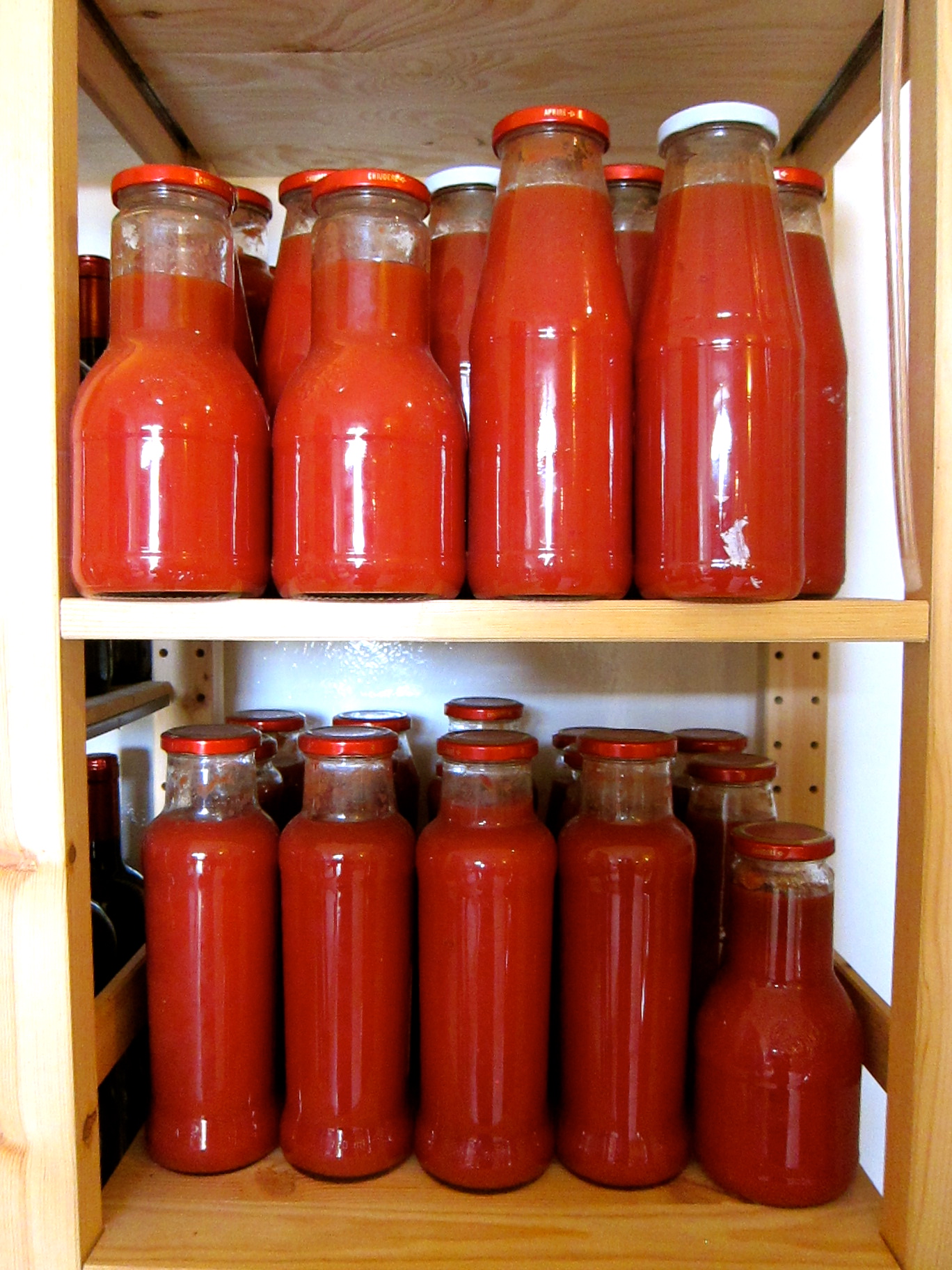
Passata di pomodoro at Masseria Aprile.

Though things are winding down, there was still enough eggplant and basil in the garden to make the Sicilian dish, Pasta alla Norma — a last bit of summer before we head into the new season. Though eggplant is the main ingredient, some say the success of Pasta alla Norma depends on the sauce. Since the Sicilians always put sugar in their tomato sauce, I do the same here. It won’t taste right unless you do. The same for the ricotta salatayou can make a substitute, it just won’t be Pasta alla Norma.
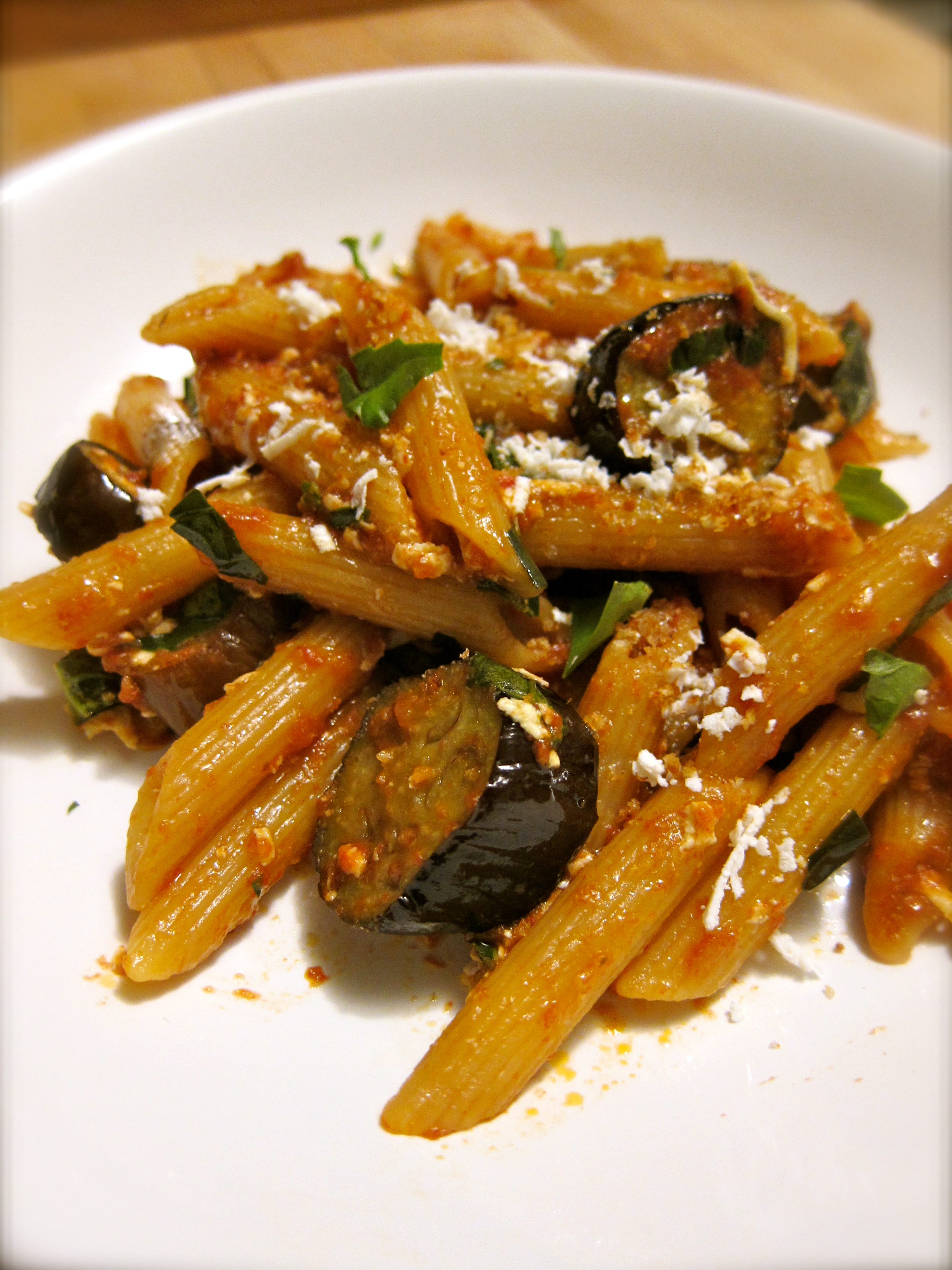
Pasta alla Norma

2 or 3 small eggplants (about 1 pound)
Extra virgin olive oil
2 cups tomato sauce (recipe below)
Pinch of red pepper flakes
1 pound penne (also ziti or spaghetti)
6 large basil leaves, torn or shredded
2 cups ricotta salata, grated

– Trim the stem off the eggplants, and cut them (skin on) into 1/4 inch slices or 1/2 inch chunks. Pat dry, and fry in hot olive oil until browned, about 10 minutes. If necessary, cook the eggplant in batches to avoid overcrowding the pan. Eggplant should be soft and cooked through, with some color, but not falling apart. Remove and drain eggplant on paper towels.
– Wipe out the pan and add the tomato sauce. Season the tomato sauce with a pinch of red pepper flakes, and bring to a low simmer to keep warm.
– Cook the pasta until al dente, drain and add to tomato sauce. Off heat, toss with 1 cup of the ricotta salata and the basil, then the eggplant. Season with salt and black pepper, and finish with some good Sicilian olive oil. Serve at table with the rest of the ricotta salata alongside.

Sugo di Pomodoro
Tomato Sauce

1 small onion, chopped
2 tablespoons extra virgin olive oil
1 clove garlic, chopped (optional)
4 cups tomato puree
Several basil leaves
1/2 – 1 teaspoons sugar

– Saute the onion and garlic in olive oil until soft. Add the tomato puree, basil, sugar and some salt, and simmer 20–30 minutes. This isn’t meant to be a long-cooked tomato sauce, the shorter cooking time makes for a brighter flavor.
– Remove the basil. Pass the rest of the tomato sauce through a food mill for a smoother texture.

Note: With such a short growing season here in Southern Maine, we’ve had more success growing the smaller varieties of eggplant. We’ve been growing 2 kinds — Fairy Tale and Orient Express, both hybrids with shorter days to maturity. Some heirloom varieties that we’re considering for next year are the Listada di Gandia and the Violetta Lunga.

Recipe adapted from “Cucina Siciliana” by Clarissa Hyman.
Posted in cooking | Tagged , , | 4 Comments

Field Notes: Yellow House Farm

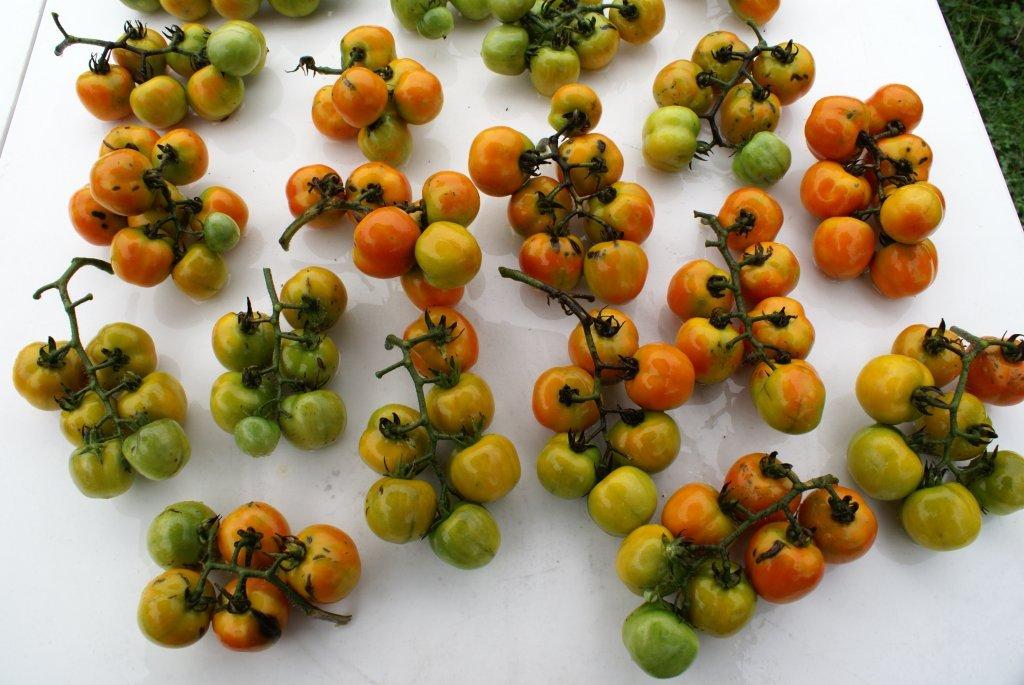
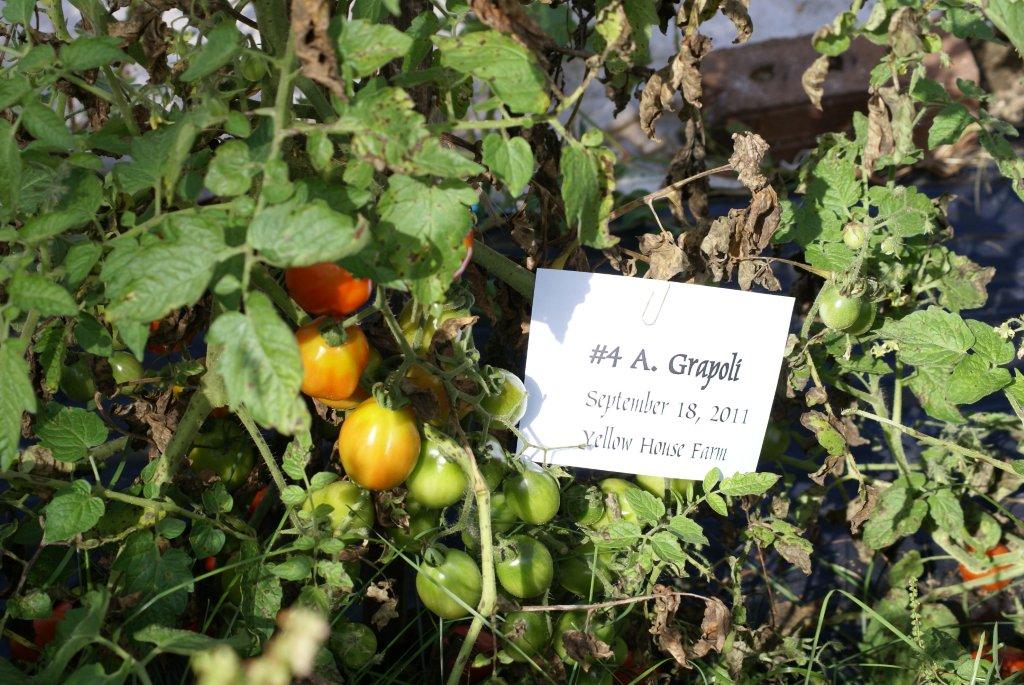
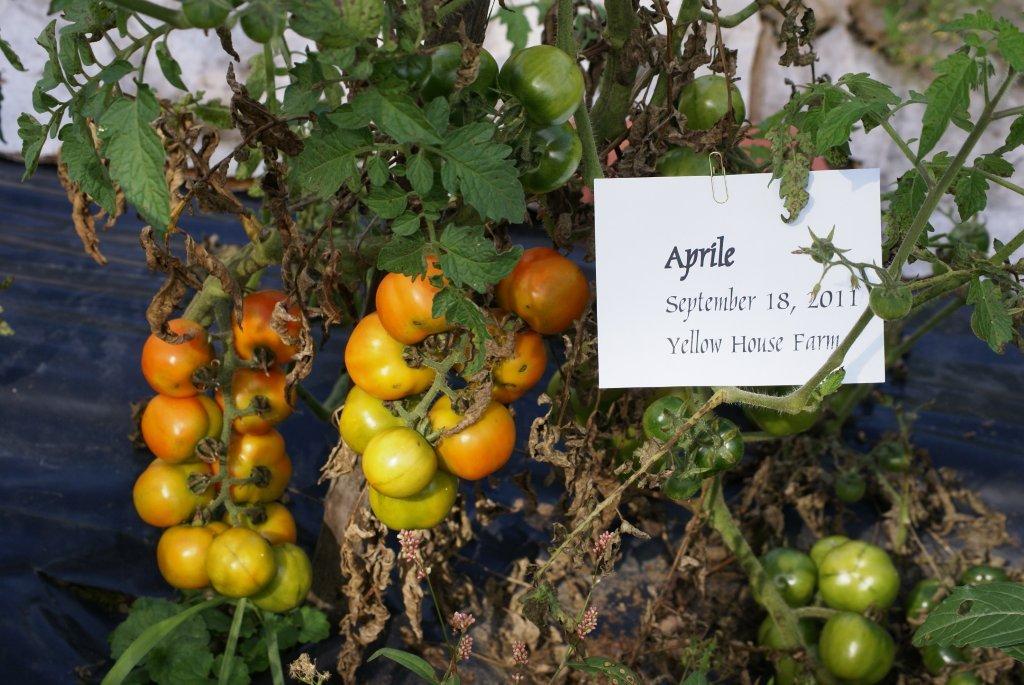
Many thanks to Robbie of Yellow House Farm in Barrington, NH, for helping us grow out this beautiful crop of hanging tomatoes — here’s his report on how they fared:

These were taken following two frosts the nights before so some of the ripe fruit had already been picked. These were also taken very late in the season so the plants weren’t looking as good either. I found that the Aprile stayed on the vine very strongly, and formed nice clusters. The other varieties fell off the vine more easily.Aprile at Yellow House Farm, September 18, 2011.

The image of these [Aprile] clusters on the table was taken later than the images on the vine.

Ponderosa at Yellow House Farm, September 18, 2011.

Grappoli d’Inverno at Yellow House Farm, September 18, 2011.

Posted in field notes, tomatoes / pomodorini | Tagged , | Leave a comment

Puntarelle alla Romana

The word amaro, sometimes mistaken for amore or “love,” instead translates as “bitter.” It can be said that both are essential in Italian cooking, but there is a certain bitter flavor I most often miss. With the arrival of fall, I find myself craving Puntarelle alla Romana—a dish so closely identified with Rome it dates back to ancient times. It’s taken some trial and error to grow the puntarelle ourselves, but we’re starting to get some edible results.

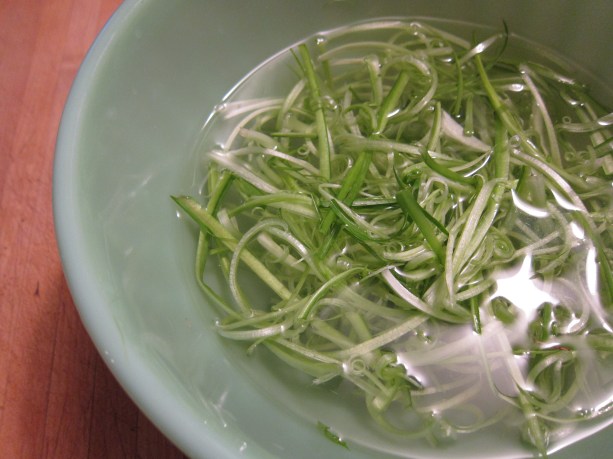
A member of the chicory family, cicoria puntarella or catalogna is available seasonally in Rome, usually from November to February. It is a cool weather crop, with lower temperatures keeping the plant more tender and sweet. I remember the vendors at the outdoor market in the Campo de’ Fiori patiently slicing the stalks into thin slivers, a seemingly dying art. The puntarelle are then left to soak in cold water, becoming crisp and curling up on themselves in the process. Once soaked, the puntarelle are then sold ready to eat. Though this particular chicory may now be found elsewhere, it’s only in Rome that it can be bought pre-prepared this way.

Traditionally, the tangles of puntarelle are drained and served raw con la salsa, dressed with a pesto of anchovy and garlic mashed together in a mortar with olive oil and vinegar. While you can add more or less of the anchovy, don’t leave it out entirely—the briny saltiness of the anchovy serves as a counterpoint to the bitterness of the puntarelle, and is what gives this Roman dish its distinctive flavorIf you can’t find puntarelle or it’s too late to grow your own, Belgian endive would be a good substitute.

Puntarelle alla Romana
Roman chicory with anchovy sauce

1 head puntarelle (about 1 pound), washed and trimmed
2 to 4 anchovies
2 tablespoons red or white wine vinegar
1 garlic clove
Pinch of red pepper flakes (optional)
Freshly ground black pepper
4 tablespoons extra virgin olive oil

– Slice the puntarelle stalks very thinly lengthwise, about the size of long matchsticks. Though I use only the pale stalks, you may also include the green leaves. Place in a bowl of cold water, and let it sit until the strands curl up and are crisp, about 1 hour, more if you want a gentler bite.
– With a mortar and pestle, mash together the garlic, anchovies, vinegar and, if using, the red pepper flakes. Once it becomes a creamy paste, work in the olive oil to create a dressing. Season with a generous amount of black pepper, and salt to taste.
– When ready, drain and dry the puntarelle. Toss with anchovy sauce to coat evenly, and it’s ready to serve.

It seemed only apt to pair the puntarelle with another quintessential Roman dish, abbacchio, or lamb, grilled along with a contorno of eggplant, also from the garden. It doesn’t take the place of being in Rome, but the flavors certainly come close.

Posted in cooking | Tagged , , | Leave a comment

World Pasta Day, October 25

“Everything you see I owe to spaghetti.”
— Sophia Loren

Somehow, we never got around to eating pizza during our first trip to Italy. We were simply too busy eating pasta, and, when I’m there, I still look forward to having it every day. Not only is October National Pasta Month, October 25th also marks World Pasta Day — just in case you need an excuse.

Posted in cooking | Tagged | Leave a comment

Le orecchiette con le cime di rapa

“Us cooks are nothing without farmers and gardeners that grow their crops with intention and love. It makes a world of difference especially in a cuisine that is only based on ingredients and their quality.” — Beatrice Tosti di Valminuta

With the pomodorini now tucked away, my attention turns to the other Italian vegetables now growing in our garden. When a Roman friend found out we were visiting Puglia last fall, we discovered that her family was originally from Lecce, the town we planned to stay at. Among the Pugliese dishes she remembered with rapture was le orecchiette con le cime di rapa, or “little ears” pasta with rapini, similar to broccoli rabe.

We learned to make orecchiette while in Lecce, and sampled many versions of this dish during our travels through the region. Since then, I’ve continued to make orecchiette at home. Now that the cime di rapa is in season, come by if you ever want a lesson — it’s best when made with others. This recipe is for Robbie, who, when he heard me describe this dish, gave me the seeds to grow the cime di rapa.

Orecchiette con le cime de rapa
Orecchiette or “little ears” pasta with rapini

1 lb. orecchiette pasta (home-made or dried)
2 large bunches of cima di rapa, or broccoli rabe, washed and drained
Extra virgin olive oil
2 cloves garlic, thinly sliced
Pinch of red chili flakes
2 anchovies (optional)
Breadcrumbs toasted with olive oil

– Chop the leaves and the tender stems of the cime di rapa, leaving the flower heads whole. The finer the texture, the more evenly the cime di rapa will coat the pasta.
– Bring a pot of water to a boil.
– In a large frying pan, heat some olive oil, enough to coat the bottom of the pan generously. Saute the garlic and chili flakes, until the garlic is fragrant but not overcooked. If using, add the anchovies and continue to cook until the anchovies have broken down. While the oil is still hot, toss in the cime di rapa with some salt to season, and cook until wilted. Depending on the age and type of cima di rapa, if necessary, cook longer until tender. Remove pan from heat.
– Salt the pasta water and cook the orecchiette until al dente. Drain and add to the frying pan. Toss to coat with the cime di rapa, adjust the seasoning, and finish with some luscious olive oil and toasted breadcrumbs.
– Serve with extra breadcrumbs alongside at the table, never with cheese.

Note: The cime di rapa, or rapini, that we saw growing in the Salento is more leafy than the broccoli rabe usually found here. This dish can be made with most any other cooking greens — radish tops, beet greens, chard, kale, asian greens — just adjust the seasonings to suit the bitterness or sweetness of the greens.

Recipe adapted from The Awaiting Table.

Posted in cooking | Tagged , | 1 Comment

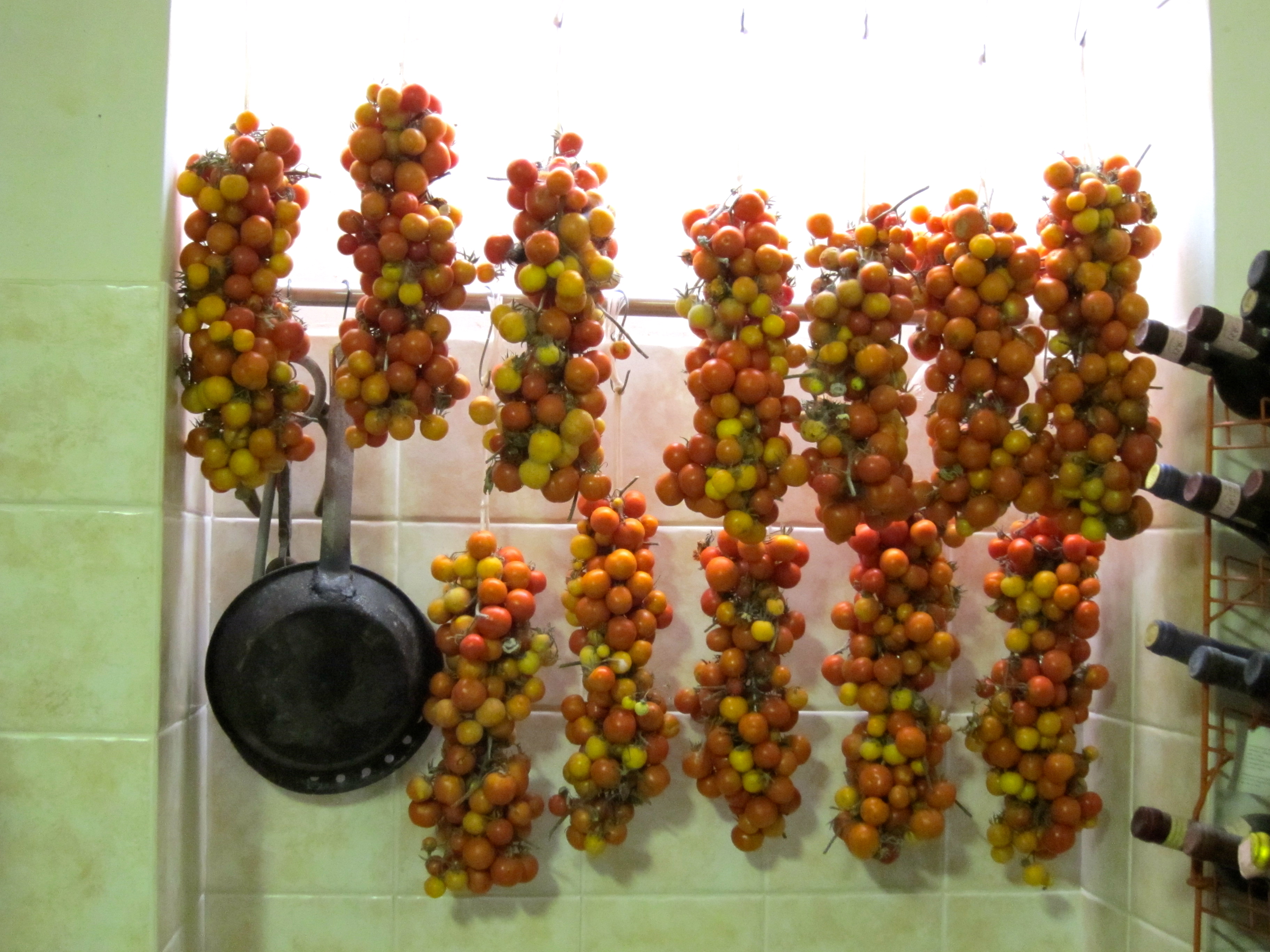
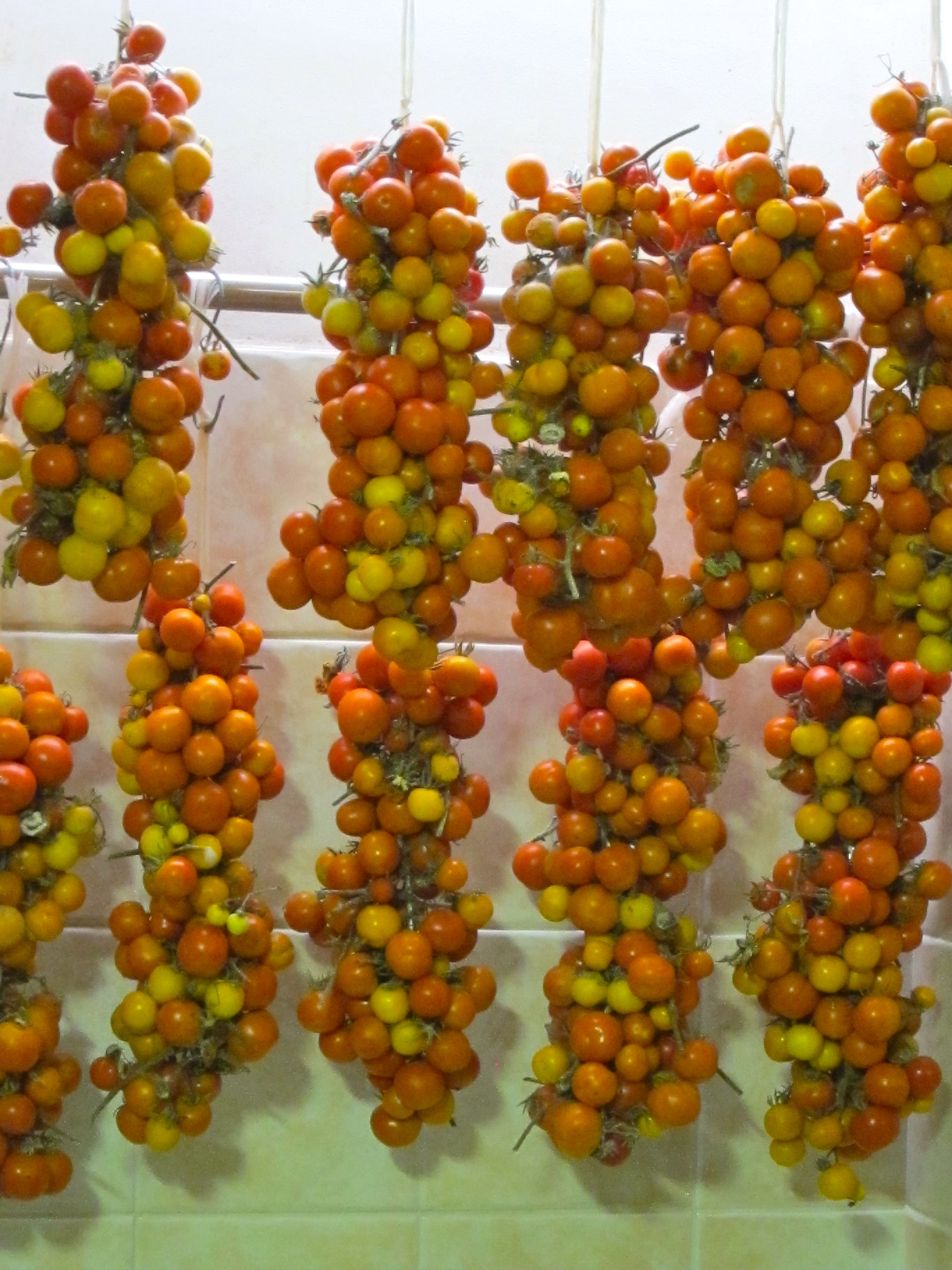
Hanging tomatoes in storage at Masseria Aprile

While staying at Masseria Aprile last fall, we were given a tour of the farm and shown how the pomodorini were kept. The tiled walls of this storage room help to hold the temperatures down through warmer fall days, while the window behind provides necessary air circulation. These pomodorini were harvested in late August–September, and shows how they’re faring in early November. 

Posted in tomatoes / pomodorini | Tagged , | Leave a comment

Every day is a banquet

We met Beatrice Tosti di Valminuta when she was one of the presenters at the North Hill Symposium, “The Kitchen Garden and the Table,” in Vermont. The co-owner of two New York restaurants, Beatrice is also the chef, a title that barely begins to describe her lifelong love of cooking. She was scheduled to speak on “Seasonal Bounty: The Roman Way with Vegetables,” and her generous nature was clear from the start. She walked on to the stage, followed by a table being carried out and laden with food representing her birthplace, the gorgeous abundance spilling off the table looking like something out of a Caravaggio painting. Beatrice went on to captivate the audience with her stories and passionate advice — to make the best of humble ingredients, the more the better, and that every day is a banquet.

We were especially thrilled to discover that though a native Roman, she has family ties to Napoli and was intimately familiar with the tomatoes we’re experimenting with. We are grateful to Beatrice for not only offering her thoughts on the Pomodori del Piennolo, but for also sharing her recipe for the dish that, for us, that started this all.

Whenever in Napoli I see the Pomodorini del Piennolo (or hung tomatoes) everywhere. They hang from the ceiling of every old school “Verduraio” vegetable shop, and the important thing in the storage tecnique is the ventilation. I am sure the balmy air of the Vesuvio and of Puglia play a huge role in giving the pomodorini that delicious taste come Christmas, and up until April or May. It cannot be too cold, Napoli rarely goes below 40/45 degrees so pick a room that is ventilated and will not get too cold or too warm.

Did you know that the pomodorini in Napoli have been such a staple for centuries that they are always represented in Christmas Creches? There is not one Neapolitan that will forget the Pomodorini del Piennolo for their Linguine con le Vongole always present on their Christmas Eve menu. Of course you can use the Pomodorini del Piennolo in the same way you use any other tomato.

— Ciao, Beatrice

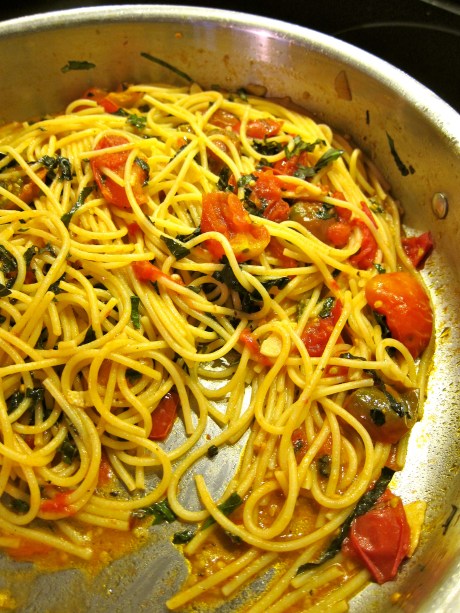
Spaghetti con Pomodorini del Piennolo
Spaghetti with hanging tomatoes
Serves 4

1 lb spaghetti
3/4 lb pomodorini del piennolo [about 2 pints]
Extra virgin olive oil, let’s start with 4 tablespoons add as you see fit
3 garlic cloves
Basil
Coarse and fine sea salt
1 glass of wine for the cook

Preparation:
Have a nice sip of wine breathe and smile.
Place your favorite pasta cooking pot with water over stove on high heat add coarse sea salt when boiling.
Wash the pomodorini and cut them in half.
Place oil, garlic and a pinch of salt in a large saute pan over medium low heat and let the garlic turn blond.
Add the pomodorini and taste for salt adding some in case you feel your sauce is bland. Cook for about 7 minutes and spaghetti is super al dente. Let cook for 2 or 3 minutes add basil and serve warm adding some raw extra virgin olive oil if you feel it can use it.
Remember to always save the cooking water from the pasta, it is the best remedy if you feel that the pasta is becoming a little dry.

If you find yourself in New York, plan to visit Beatrice’s trattorias, Il Bagatto and Il Posto Accanto. We hope you bring some pomodorini for her. For more recipes and cooking advice, see also her Allora videos.

Posted in cooking, tomatoes / pomodorini | Tagged , , | 1 Comment